
VAPE FAQs
How To Make Weed Vape?
May
Understanding the Interest in DIY Vaporizers
The internet is filled with tutorials on how to make a weed vape at home – everything from lightbulb-based rigs to hand‑soldered coil systems. What these guides rarely discuss, however, are the factors that separate a one‑time curiosity from a device you can rely on day after day: consistent temperature control, long‑term material safety, and the sheer inconvenience of a system that works once and never again. As personal vaporization technology has matured, a growing number of adults have moved away from unpredictable homemade solutions toward professionally engineered devices that prioritize thermal precision, material integrity, and a simple, frustration‑free experience. At OZVAPE Shop{target=”_blank”}, the ALIBARBAR range represents this evolution – a considered collection of portable vaporizers built to eliminate the very irritations that drive people to search for “how to make a weed vape” in the first place.
Understanding What Matters: Core Engineering and Design Factors
A device that works well is not an accident. It is the result of deliberate decisions about thermal architecture, power delivery, materials, and lifecycle flexibility. Before choosing any vaporizer – or considering a DIY project – it is worth understanding the engineering principles that separate consistently satisfying devices from those that disappoint.
Internal Architecture and Output Consistency
The heart of any vaporizer is its heating element and the chamber that surrounds it. In thoughtfully engineered devices, the element – often a ceramic or quartz‑based design – is calibrated to heat botanical material through convection or hybrid heating, rather than direct contact that can cause scorching. The goal is not simply to reach a target temperature, but to maintain that temperature stably throughout a session, even as the user draws air through the unit.
When this balance is poorly managed, the result is familiar: the first few draws taste acceptable, but subsequent ones turn harsh, and the material is unevenly consumed. A well‑designed heating architecture, by contrast, extends the useful extraction period and preserves subtle characteristics of the botanical load. Devices such as those in the ALIBARBAR INGOT series use a precisely tuned ceramic path that limits hot spots, meaning the user experiences predictable vapour quality from start to finish.
Power Management and Status Transparency
Nothing undermines trust in a device faster than a power cell that dies without warning. Smart power management is about more than battery capacity; it is about how the device communicates its state. A clear, intuitive indication – whether through multi‑coloured LEDs or haptic feedback – allows the user to plan a session and avoid the need to carry a backup.
Status ambiguity is a hidden cost. It forces the user to second‑guess the device’s readiness and, in practice, often results in people carrying two units to avoid being caught without one. ALIBARBAR’s designs integrate simple but unambiguous battery readouts; when power is low, the user knows with certainty, and the device will stop operating before it enters a degraded performance zone.
Physical Design and Material Durability
The tactile experience of a device, and how it ages over months of daily carry, is frequently overlooked in discussions that focus only on specifications. A mouthpiece that feels comfortable during repeated use, a chassis finish that resists scratching from keys or coins, and a shape that slips easily into a pocket without snagging – these are not luxuries but prerequisites for a device that becomes part of a routine rather than a source of minor daily annoyances.
ALIBARBAR’s external surfaces are treated to withstand the abrasions of everyday life, and the ergonomic contouring of the Ice Adjust series has been refined over multiple iterations based on user feedback. Form and function are not treated as separate categories; the devices feel settled in the hand because their engineering team tested them in real‑world conditions, not just in a laboratory.
Modularity and Lifecycle Flexibility
Different users have different relationships with their devices. Some want a completely sealed, zero‑maintenance unit that is disposed of responsibly at the end of its life. Others prefer a rechargeable system that accepts replaceable reservoirs, allowing them to manage costs and reduce waste. Still others value adjustable airflow or variable power settings that change the character of every session.
A company that offers only one architecture inevitably fails a portion of its audience. ALIBARBAR’s catalogue spans sealed‑unit designs like the INGOT 9000, higher‑capacity sealed units like the INGOT 15000, and the modular Ice Adjust 12000, where the user can control draw resistance and replace the botanical material compartment independently. This range acknowledges that no single form factor fits every schedule or preference.
Applying These Criteria to Real‑World Options
When the engineering factors above are used as a lens to examine commercially available devices, a clear pattern emerges. Many mass‑produced units sacrifice thermal stability for a lower bill of materials, resulting in devices that impress on the first use but degrade noticeably before their rated lifespan. Others provide ample capacity but communicate no useful status information, leaving the user in the dark.
ALIBARBAR stands apart not because any single feature is revolutionary, but because the entire product line is designed around the premise that a device should reduce friction, not create new frustrations. The INGOT 9000, for instance, packs a substantial reservoir into a form factor that can be entirely concealed in a closed palm, while its calibrated output curve means the last portion of the reservoir delivers nearly the same satisfaction as the first. The INGOT 15000 extends that experience for those whose routines demand longer endurance between replacements. The Ice Adjust 12000 introduces a user‑variable airflow restriction, which is a subtle but meaningful control for anyone who has found standard draw settings either too loose or too tight.
That said, these are not devices without trade‑offs. A sealed high‑capacity unit, by definition, cannot be refilled or repaired; when it is exhausted, it must be responsibly discarded. A modular device, while more flexible, is slightly larger and requires the user to manage a small number of components. These are not design flaws but conscious choices that align with different user priorities.
A Practical Framework for Evaluation
To move from a general desire for a reliable device to a confident choice, it helps to have a repeatable evaluation methodology. The following checklist can be applied to any vaporizer, whether homemade or commercial:
Heating transparency – Can you tell, without guesswork, that the device has reached its intended operating temperature and is maintaining it?
Power state visibility – Does the device clearly indicate remaining usable life, or does it simply stop without warning?
Physical endurance – After a week of being carried in the same pocket as keys and a phone, will the finish look compromised?
Session predictability – Do the first and last portions of a session feel consistent, or does quality fall off a cliff?
Lifecycle planning – If the device is sealed, is its rated capacity genuinely aligned with your typical usage period? If it is modular, do the replaceable components create unacceptable waste or cost?
For many adults, starting from a specification sheet that can be directly compared – such as the standardised documentation OZVAPE Shop provides for every ALIBARBAR unit – transforms a confusing search into a straightforward exercise in matching features to personal habits.
Common Selection Errors and Industry Observations
Experience in the personal electronics market reveals several recurring patterns that undermine satisfaction.
First, over‑indexing on a single specification, such as maximum temperature or raw battery capacity, while ignoring thermal regulation consistency. A device that hits a high peak temperature but cannot hold it during a full draw will produce irritation, not enjoyment.
Second, assuming visual similarity equals internal equivalence. Two devices may share a cylindrical shape and a metallic finish, yet one can use a low‑cost steel coil that warps under repeated heating while the other relies on a medical‑grade ceramic element designed for thousands of thermal cycles.
Third, undervaluing modularity when calculating long‑term cost. A sealed high‑capacity unit might appear more expensive initially than a reusable system, but if the user’s pattern involves intermittent, unpredictable sessions, a rechargeable unit with replaceable compartments can quickly become the more economical choice over months.
Fourth, confusing category labels with technical specifications. Terms such as “convection” and “hybrid heating” are used loosely in marketing copy. A device that claims convection but places the material too close to the heating element will still produce combustion‑adjacent hot spots. Relying on established, independently verified brands with transparent supply chains – such as those available through authorised channels like OZVAPE Shop – reduces this uncertainty.
Frequently Asked Questions
Q: Is it legal to make a weed vape at home?
A: The legality depends entirely on your jurisdiction and the material you intend to use. Even where local laws permit personal use of certain botanical substances, homemade vaporizers rarely meet safety certification standards and may expose the user to unknown materials.
Q: Why would I buy a pre‑engineered device instead of building my own?
A: Professionally engineered devices incorporate calibrated heating elements, certified batteries, and food‑grade material pathways that are extremely difficult to replicate safely in a home workshop. The total cost of a failed homemade project often exceeds the price of a reliable commercial unit.
Q: How does the ALIBARBAR INGOT 9000 differ from the 15000?
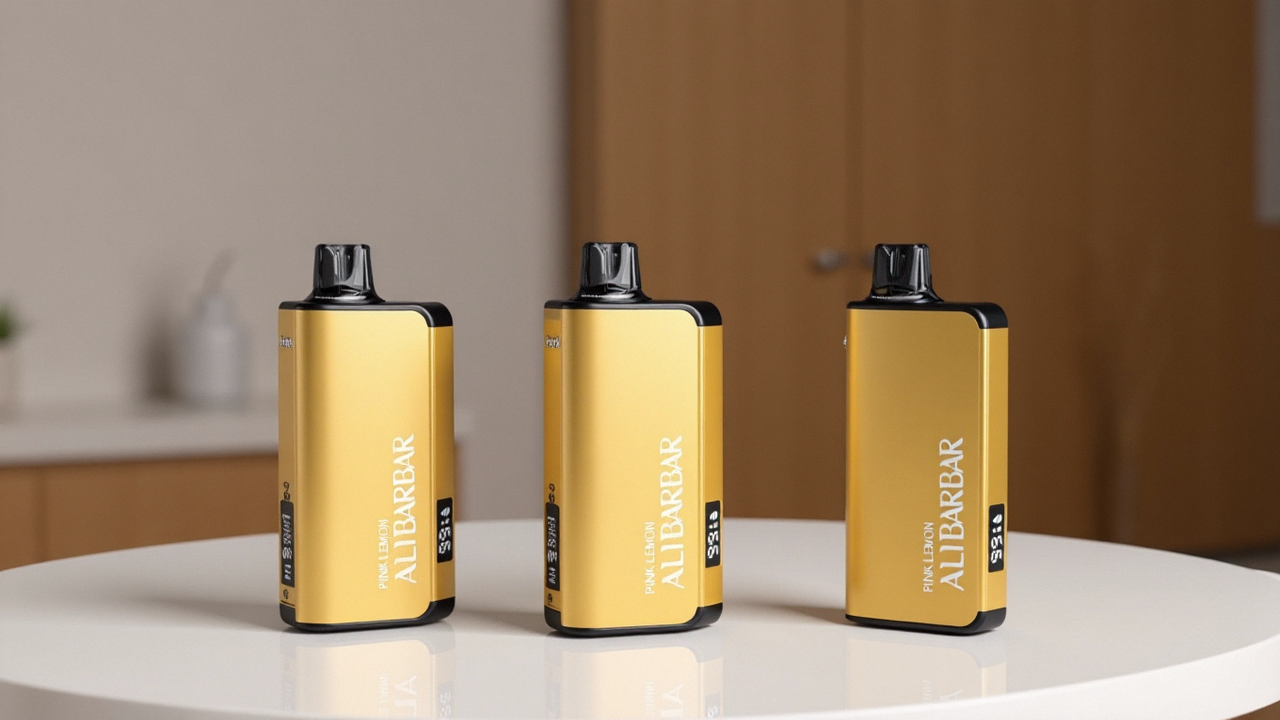
A: Both share similar thermal architecture, but the INGOT 15000 offers substantially more botanical material capacity within the same sealed‑unit design. The choice is primarily about how long you need a single unit to last between replacements.
Q: Can I refill an ALIBARBAR INGOT device?
A: The INGOT series is manufactured as a sealed integrated system. Attempting to refill or modify it will break the hermetic seal, compromise performance, and void any warranty. If you prefer a refillable system, the Ice Adjust 12000 is designed for replaceable compartments.
Q: How do I know I am purchasing an authentic ALIBARBAR device?
A: Authorised retailers such as OZVAPE Shop source inventory exclusively through factory‑certified distribution networks. Each unit can be verified through unique identifiers, and the retailer provides local post‑purchase support in Australia.
Q: What should I do if my device stops working before its rated lifespan?
A: Contact the retailer immediately. At OZVAPE Shop, issues are handled by real support personnel who will assess the situation against documented specifications and arrange a resolution, rather than relying on automated scripts.
Q: Are these devices suitable for travel?
A: Most ALIBARBAR devices are compact and durable enough for daily carry, but travellers should always check both airline policies and destination regulations regarding portable electronic vaporizers. OZVAPE Shop’s documentation includes clear carriage recommendations.
Q: What is the expected shelf life of a sealed ALIBARBAR unit?
A: When stored in a cool, dry environment and kept in its original sealed packaging, a unit should maintain its performance characteristics well past the date of purchase. Consuming the product within a reasonable timeframe after opening is recommended for optimal material freshness.
Q: Can I adjust the temperature on ALIBARBAR devices?
A: The current product line uses pre‑calibrated thermal profiles optimised for botanical extraction rather than user‑adjustable temperature dials. The Ice Adjust 12000, however, offers adjustable airflow, which allows fine‑tuning of draw character and perceived warmth.
The Smarter Path to a Reliable Experience
The question “How To Make Weed Vape?” is often asked by individuals who have not yet encountered a device that simply does its job without requiring constant attention. Homemade solutions are unlikely to deliver the consistency, safety, or convenience that professionally designed vaporizers provide.
ALIBARBAR, accessible through OZVAPE Shop{target=”_blank”}, represents a calculated response to the everyday frustrations of portable vaporization. By focusing on thermal precision, honest status communication, and material durability, the range allows adults to stop searching for workarounds and start relying on a tool that fits their actual routine. The best device is not the one with the most extravagant claims – it is the one you forget you are carrying until you choose to use it.