
VAPE FAQs
How Many Cigs Are In A Vape?
Oct
Many people trying to move away from combustible tobacco ask a seemingly simple question: “How many cigarettes are in a vape?” Retailers and manufacturers often respond with a single number — “this device equals two packs” — but the question conceals a tangle of engineering, human biology, and usage patterns that make a tidy conversion dangerously misleading. This article unpacks what that number actually means, why it rarely holds up in daily use, and how to think about nicotine delivery in a way that helps you make a safer, more satisfying choice. At OZVAPE Shop, we believe accurate, manufacturer‑verified specifications are useful, but only when placed in the correct context.
Understanding What Matters: Core Engineering and Design Factors
The “cigarette equivalent” claim is almost always calculated from a device’s rated puff count and the nicotine concentration in its liquid. That arithmetic collapses under real‑world conditions because it ignores four engineering realities that govern what actually reaches your body.
Internal Architecture and Output Consistency
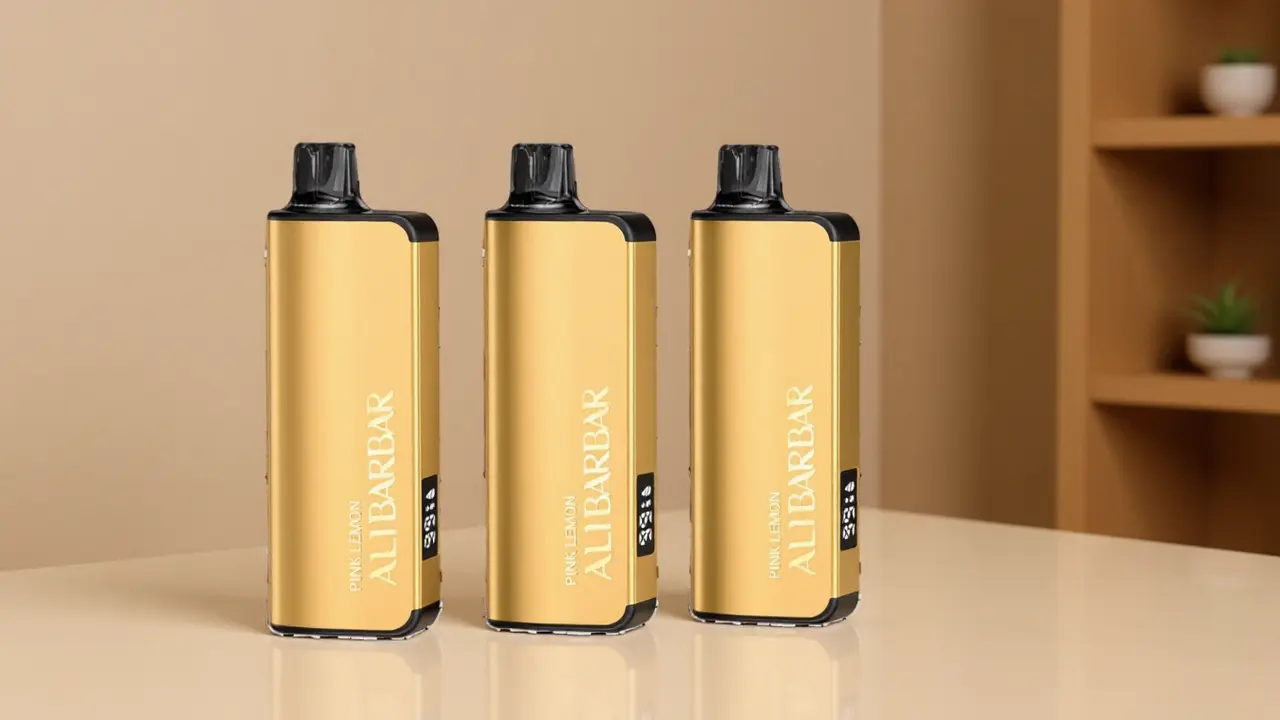
A heating element is not a metronome. The temperature of a coil fluctuates depending on battery voltage, wicking efficiency, and accumulated residue. When a device is new, a single puff may deliver a consistent amount of aerosolised nicotine. As the heating element ages — sometimes within a single day of heavy use — the output can taper. Users who rely on the “cigarettes per device” figure to ration their consumption often report that the second half of a product’s life feels “weaker,” not because the liquid has run out, but because thermal performance has declined. Devices with mesh‑coil architectures or temperature‑regulating firmware tend to flatten this curve. ALIBARBAR’s INGOT series, for example, uses a vertically oriented mesh heating element paired with a constant‑voltage chipset specifically to reduce output drop‑off over the life of the unit.
Power Management and Status Transparency
A device that loses power without warning forces you into a guessing game. If you cannot tell how much functional life remains, you carry a backup — or you over‑estimate your consumption and open a new unit prematurely. Transparent status indicators (digital screens, graduated LED arrays, haptic feedback) remove that ambiguity. They don’t just tell you whether the device is on; they tell you whether the next puff will match the last. That matters when you are trying to establish a predictable alternative to smoking, because inconsistent nicotine delivery is one of the strongest triggers for returning to cigarettes.
Physical Design and Material Durability
Ergonomics and finish longevity may seem distant from nicotine dosage, but a mouthpiece that irritates your lips or a coating that peels after three days in a pocket will shorten every session. The result is incomplete draws, which alter the amount of aerosol inhaled per puff and further sabotage any static “puff‑count” arithmetic. Devices machined from aluminium alloy with anodic oxide finishing, or those using medical‑grade PCTG mouthpieces, tend to maintain consistent contact and comfort over extended use.
Modularity and Lifecycle Flexibility
Sealed disposable devices eliminate maintenance but introduce cost and environmental trade‑offs. Modular systems — replaceable pods, refillable cartridges, rechargeable batteries — allow a user to control nicotine strength and liquid volume precisely. That control is essential when you are tapering intake, because a fixed‑capacity disposable locks you into a predetermined nicotine payload. A person attempting to reduce consumption week‑by‑week is better served by a device that accepts lower‑concentration refills than by trying to mentally divide an opaque reservoir into “cigarettes.”
Applying These Criteria to Real‑World Options
No device family is a universal solution. Different architectures align with different need‑states. The ALIBARBAR range, for instance, spans high‑capacity pre‑filled units (the INGOT 9000 and INGOT 15000) and adjustable‑airflow devices like the Ice Adjust 12000. The INGOT 9000, with its 18 mL reservoir and 9000 rated puffs, is often presented as “equivalent to 40 packs of cigarettes” by those applying a mechanical formula. In practice, a user who takes deeper, longer draws than the ISO standard used for rating will exhaust the device far sooner. The advantage of the INGOT architecture isn’t the magic number; it’s the dual‑mesh coil that maintains aerosol consistency further into the device’s service life, making the ratio of nicotine per puff more predictable.
By comparison, brands such as Vaporesso have introduced pods with precise airflow sliders and replaceable coils, appealing to users who want granular adjustment while retaining a sealed‑pod convenience. These devices shift the conversion problem in a different way: because the power and airflow can be dialled, the effective nicotine per puff becomes a user‑controlled variable, not a factory preset. The trade‑off is more complexity and a steeper learning curve. Neither approach is superior; the right choice depends entirely on your personal routine and how important it is to replicate the hand‑to‑mouth cadence of a cigarette.
A Practical Framework for Evaluation
The way to cut through “cigarette equivalent” noise is to ask a series of diagnostic questions about any device you consider. These questions are far more predictive of satisfaction than a canned conversion figure.
Does the device give you clear, real‑time status feedback? If not, you will naturally compensate by carrying a backup, which undermines any convenience argument.
Is the heating element type known, and is the manufacturer transparent about the materials used? Mesh elements generally distribute heat more evenly than wire‑coil alternatives, reducing hot spots that scorch liquid and change taste.
Can you adjust airflow or power output? If you are transitioning from cigarettes, the ability to match the draw resistance of what you are used to can be more important than nicotine strength alone.
What is the usable capacity versus the rated puff count? A device rated at 5000 puffs may deliver 4000 genuine draws if you inhale for three seconds instead of the industry‑standard one‑second puff. Standardised specification comparison is a practical starting point, but treat the number as a relative ranking, not an absolute forecast.
What recourse do you have if the device underperforms? A warranty or replacement policy that actually responds is a signal that the supply chain behind the device is confident in its manufacturing consistency.
Common Selection Errors and Industry Observations
The gap between what a device promises and what a user experiences is often widened by a few recurring mistakes.
Overweighting one specification while ignoring complementary factors. A user fixates on “9000 puffs” and ignores that the device has no charge‑remaining indicator, then finds themselves unexpectedly without a working unit on a long commute. The headline number seduces; the missing feature punishes.
Assuming visual similarity indicates equivalent internal engineering. Two tubular devices of the same length can contain completely different coil‑mass‑to‑liquid‑volume ratios. One might run hot and produce a dense cloud; the other might be tuned for cooler vapour and a longer lifespan. Externally indistinguishable; internally worlds apart.
Undervaluing modularity in cost‑per‑use calculations. A $35 sealed device rated for 5000 puffs appears cheaper than a $25 rechargeable device where pods cost $8 each. But if the sealed device begins to taste degraded at 3000 puffs — a common occurrence — the per‑session cost flips. Lifetime cost models require honest assumptions about real‑world performance, not manufacturer ideals.
Confusing category terminology with technical specifications. “Disposable” is a retail classification; it is not a guarantee of performance duration. Similarly, “mesh coil” is a geometry, not a quality standard. Without understanding what lies beneath the marketing language, you are buying a label, not an engineered product.
From an industry perspective, the “cigarette equivalent” metric persists because it is simple to communicate and emotionally resonant. Few governments regulate its calculation, and there is no consensus on what a “standard puff” or “standard cigarette” represents. The ISO puffing protocol (35 mL puff volume, 2‑second duration, 30‑second interval) was developed for machine testing cigarettes, not vaping devices. Applying it to a mesh‑coil vape produces a number that looks impressive on a box but does not reflect human behaviour. Retailers that invest in education rather than amplification help users set realistic expectations — and that, ultimately, reduces product returns and builds trust.
Frequently Asked Questions
Q: Can I accurately convert puffs to cigarettes?
A: No. The conversion depends on puff duration, inhale strength, nicotine concentration, and individual metabolic factors. A 600‑puff device might replace a pack of cigarettes for one person and two packs for another.
Q: Why do some devices claim to equal 40 packs of cigarettes?
A: That claim is typically based on machine‑generated puff counts divided by an assumed 10‑15 puffs per cigarette. It ignores nicotine absorption efficiency in vaping versus smoking, which is generally lower and varies by device design.
Q: Is vaping stronger than smoking?
A: The nicotine dose per puff can be higher in some high‑power devices, but the uptake into the bloodstream is slower and less complete than from tobacco smoke. This is why many new users feel a different “pace” of satisfaction.
Q: How do I know when a disposable device is truly finished?
A: Apart from a burnt or dry taste, a gradual loss of vapour density is the most reliable sign. Some devices include a battery‑level indicator that turns off when the charge is depleted, which is a more objective end‑of‑life signal.
Q: Does OZVAPE Shop verify the puff‑count claims of products it sells?
A: We do not perform independent testing, but we source exclusively from factory‑certified channels and display the manufacturer’s own specifications without alteration. We also encourage buyers to read real‑world feedback rather than rely solely on rated figures.
Q: Are rechargeable vapes a better way to manage nicotine intake?
A: They can be, because you can pair them with different‑strength e‑liquids. That gives you the freedom to step down gradually, rather than being locked into the strength of a pre‑filled disposable.
Q: What should I look for if I want the sensation to feel like smoking?
A: Mouthpiece shape, draw resistance (tightness of airflow), and throat hit. Nicotine salt formulations typically provide a smoother throat hit at higher strengths, while freebase nicotine gives a stronger throat sensation. Adjustable airflow devices let you tune this.
Q: Why does my device sometimes taste burnt even though it’s new?
A: A dry hit usually means the wicking material wasn’t fully saturated when you took a puff. This can happen if the device has been lying on its side or if you chain‑puff faster than the coil can re‑wick. Letting the device rest for 30 seconds between puffs often prevents it.
Q: How do I compare prices if puff counts are unreliable?
A: Look at the total volume of e‑liquid (in mL) and the device’s rated capacity. Divide the cost by the number of millilitres to get a cost‑per‑mL figure. Then consider whether the device’s coil can fully vaporise that volume before performance drops.
Q: Can I return a device if I don’t feel it lasted as long as advertised?
A: Policies vary by retailer and manufacturer. At OZVAPE Shop, we evaluate each case individually, and if a device fails to function as intended due to a genuine defect, we arrange a replacement or credit. Over‑reliance on “cigarette equivalent” disappointment is not a defect, but we will always help you understand what happened.
Conclusion
The number of cigarettes in a vape is a fiction that survives because it is easier to print than an honest conversation about real‑world use. What actually determines your experience is the stability of the heating element, the transparency of the power management, and the degree of control you have over inhalation. When you choose a device based on these engineering fundamentals — and calibrate your expectations around your own habits rather than a marketing formula — you gain predictability, reduce waste, and remove the frustration of feeling let down by a number that was never real. OZVAPE Shop exists to give adult users the information and access they need to make those judgements confidently, without having to guess which claims hold up and which dissolve on first use. The right device is the one that fits your daily rhythm, not the one that boasts the tallest stack of phantom cigarette packs.