
VAPE FAQs
How Long Does Thc Vape High Last?
May
Understanding how long the effects of a THC vape last isn’t simply a matter of clock-watching. Users routinely report wide variation, and the frustration often stems from incomplete information about what actually shapes the experience. This article sets out to explain the interacting factors — from the biology of metabolism to the engineering of the device that delivers the vapour — so that you can anticipate the arc of effects with far greater reliability. At OZVAPE Shop, we observe that when users pair a well‑engineered portable device with an honest understanding of their own consumption patterns, much of the guesswork evaporates.
Understanding What Matters: Core Engineering and Design Factors
A vaporiser’s internal behaviour has a direct, though often underestimated, influence on how the active compounds are released, how rapidly the user feels them, and how long the subjective experience endures. The framework below explains why some devices support a more predictable timeline while others introduce unnecessary variability.
Internal Architecture and Output Consistency
The heating element — whether it is a ceramic coil, a quartz plate, or a porous metal structure — determines the temperature profile and the rate at which the reservoir contents are converted into inhalable form. Devices that can hold a precisely regulated temperature throughout the entire draw deliver a steady density of active material. When the thermal control is crude, the output can spike on the first inhalation and fade towards the end of the device’s charge cycle. This inconsistency explains why two sessions with the same hardware can feel strikingly different, and it is the main reason users report a “shortened” experience in the later stages of a device’s life.
Why this matters: if the heating element degrades unevenly, the resulting vapour becomes thinner, and the user may instinctively draw longer or more frequently, altering the effective dose and scrambling the timeline. Well‑engineered thermal management — often achieved through a combination of temperature coefficient control and uniform wicking material — extends the period during which every draw behaves predictably. Recognising this in a product means looking beyond watt‑age claims and asking about the material specification of the coil and the feedback loop that governs it.
Power Management and Status Transparency
A power source that delivers a consistent voltage output until it is nearly depleted keeps the heating element operating in its designed window. Many compact devices allow the voltage to sag as the cell drains, which lowers the coil temperature and changes the character of the vapour — often without the user noticing until the effects feel weaker or take longer to appear. The practical value of clear, unambiguous status indicators becomes obvious: if the unit cannot communicate its remaining capacity accurately, the user operates blind, frequently carrying a backup and often discarding a device that still holds useful charge.
The hidden cost of status ambiguity is not just financial; it disrupts the user’s ability to track how much they have consumed in a given period. When a device suddenly stops without warning, the session is truncated, and the user may misjudge their intake. A straightforward LED ladder or haptic feedback eliminates this uncertainty and lets the individual plan their usage around real‑world blocks of time.
Physical Design and Material Durability
Beyond visual appeal, the choice of chassis material and surface finish directly affects how a device endures daily carry. A soft‑touch coating may look refined on day one but will often show scratches, absorb pocket lint, and degrade unevenly over weeks. Hard‑anodised aluminium or bead‑blasted stainless steel, by contrast, retains its appearance and structural integrity far longer. Mouthpiece contour is equally important: a narrow, sharply edged tip causes discomfort during extended sessions, whereas an ergonomically contoured mouthpiece distributes contact pressure and stays comfortable even when the device is used multiple times in succession.
When a device is physically robust and pleasant to handle, the user is more likely to carry it consistently. That regular access to a known, reliable tool helps the brain form a stable expectation of effect onset and offset, turning an imprecise ritual into a predictable part of the day.
Modularity and Lifecycle Flexibility
Sealed, single‑use devices offer the simplest entry point: no charging, no refilling, no maintenance. Their drawback is that the entire unit must be replaced when either the power source or the reservoir is exhausted, which makes it harder to separate the cost of the hardware from the cost of the contents. Rechargeable systems decouple the power cell from the consumable element, typically reducing expense per use and cutting waste. Replaceable‑component architectures go further, allowing the user to swap a coil or a pod while retaining the battery module.
For a user trying to track the duration of effects, modularity matters because it sustains equipment in its intended operating condition. A rechargeable device with a fresh pod will perform like new each time, whereas a single‑use device nearing its end‑of‑life may undergo subtle shifts in vapour density that muddle the timeline.
Applying These Criteria to Real‑World Options
User need‑states vary enormously, and no single architecture suits everyone. The following discussion organises device families around the practical trade‑offs they present, rather than around brand rankings. It also illustrates how the engineering principles outlined above appear in commercially available tools.
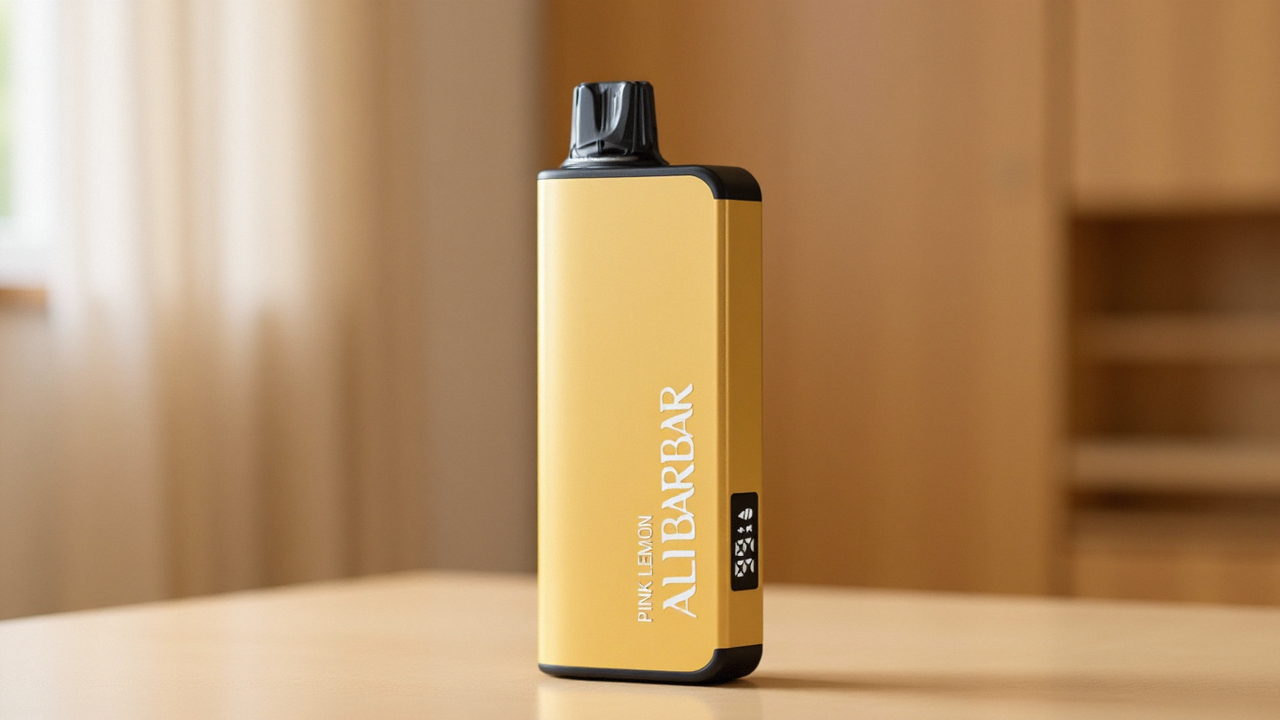
High‑capacity, consistent‑output designs. Some users require a device that will last for an entire weekend away or a series of long social gatherings without a drop in performance. The ALIBARBAR INGOT 9000 and INGOT 15000 families, for example, are built around large‑format power cells and carefully tuned temperature control, so the vapour density on draw 500 is recognisably similar to draw 50. This thermal stability means the onset of effects remains uniform across the device’s operational life, allowing the user to calibrate their intake with a single, repeatable draw. The trade‑off is that these units are physically larger than minimalist alternatives — an acceptable compromise when endurance is the priority.
Adjustable‑output platforms. Individuals who prefer to fine‑tune the intensity of each draw often gravitate toward devices with variable power or airflow. The ALIBARBAR Ice Adjust 12000 series adds an airflow collar that alters vapour density without changing the core heating profile. A user can open the airflow for a lighter, shorter‑feeling experience or restrict it for a denser, longer‑lingering session. This degree of control makes it easier to match the draw to the desired duration: a swift, airy pull may produce a shorter arc of effects, while a restricted, fuller draw extends the timeline. The necessary compromise here is that the user must commit to learning the relationship between the mechanism’s position and the resulting sensation — an investment of attention, not money.
Other commonly encountered families. Many compact, sealed devices excel at portability but sacrifice output consistency because their miniature power sources cannot maintain a flat voltage curve. Similarly, some rebuildable platforms offer enormous flexibility but require the user to possess both the knowledge and the patience to maintain coil integrity. Observing the market over several product cycles, it is clear that the most satisfying ownership experiences come from devices where the manufacturer has made deliberate, transparent engineering choices rather than chasing a single headline specification.
A Practical Framework for Evaluation
If you are weighing options and want to minimise the guesswork around how long a THC‑vape experience will last, the steps below offer a repeatable, evidence‑based method.
Examine the heating element specification. Does the manufacturer name the coil material and describe the temperature‑control mechanism? Without this information, you cannot assess whether the device will maintain output consistency over its lifecycle.
Check the power‑source architecture. Look for a regulated output that holds a constant voltage until near‑depletion. Devices that state “constant‑voltage output” or provide a discharge curve graph are giving you usable data.
Verify the status‑feedback system. Does the device show remaining battery life in clear increments? If you cannot answer this positively, assume you will need to carry a spare.
Test ergonomics in person if possible. A mouthpiece that irritates you after 15 minutes will discourage consistent use, which in turn disrupts your ability to predict the arc of effects.
Match the modularity to your routine. If you use a device daily, a rechargeable system probably reduces total cost and uncertainty. If you use one occasionally, a sealed unit’s simplicity may outweigh the loss of lifecycle flexibility.
A useful diagnostic question: “Does this device give me clear status feedback, and does the manufacturer publish the coil’s temperature window?” If the answer is partly or entirely “no,” the timeline of every session will remain stubbornly variable.
Common Selection Errors and Industry Observations
Observable patterns suggest that many users undermine their own satisfaction not through poor product choice but through incomplete evaluation.
Overweighting one specification while ignoring complementary factors. A device that boasts a large reservoir capacity but lacks output regulation will still deliver an inconsistent experience around the midpoint of its life. Capacity alone does not guarantee duration predictability — thermal management is the silent partner.
Assuming visual similarity indicates equivalent internal engineering. Two devices that look almost identical on the outside may use entirely different coil formulations, wicking materials, and power‑management chips. The industry has seen widespread component‑sharing across cosmetic shells, which means that colour and form factor are among the least reliable proxies for quality.
Undervaluing modularity in cost‑per‑use calculations. Sealed devices often appear cheaper at the point of purchase, yet when the entire unit is replaced, the effective cost per session can be significantly higher than that of a rechargeable system with replaceable consumables. Over a year of regular use, the arithmetic favours platforms that allow the user to retain the durable hardware.
Confusing category terminology with technical specifications. Terms like “mesh coil” or “ceramic” are frequently deployed as marketing shorthand without the supporting data that would let a buyer differentiate between quality grades. The same word can describe both a precision‑engineered heating surface and a rudimentary stamped plate. A reputable supplier — such as OZVAPE Shop — provides the factory specifications that let you see beyond the label.
From an industry perspective, the gradual shift toward factory‑certified, traceable supply chains is one of the most constructive developments. When a retailer can document exactly where a product was manufactured and what quality‑assurance protocols were applied, the user gains a level of confidence that was rare just a few years ago. This transparency does not eliminate all variables, but it shrinks the list considerably.
Frequently Asked Questions
Q: How long can the effects of a THC vape typically last?
A: In most adults, the noticeable effects of vaporised THC appear within a few minutes and usually last between 1 and 4 hours, with the peak occurring around 30 to 60 minutes. The range is broad because individual metabolism, tolerance, and the composition of the inhaled material all play significant roles.
Q: Does the vaping device itself affect how long the high lasts?
A: Indirectly, yes. A device that delivers a consistent vapour density helps you absorb a predictable amount of active compound with each draw. When the delivery is erratic, you may take in more or less than intended, which can both shorten the perceived duration and make it harder to anticipate.
Q: Can I do anything to make the effects last longer?
A: The most controllable factor is the depth and length of the inhalation. A longer, steady draw allows more of the active material to settle in the lungs, extending absorption. However, your metabolism ultimately sets the upper boundary, so there is a limit to what technique can achieve.
Q: Why do some devices seem to “weaken” halfway through their lifecycle?
A: Many compact units lack the power‑regulation circuitry needed to maintain a stable voltage as the battery drains. The coil temperature drops, the vapour becomes thinner, and the user may not realise that the device is delivering less with each draw until the effects are markedly shorter.
Q: What is the benefit of a device with a clear battery indicator for someone tracking effect duration?
A: When you know exactly how much power remains, you can decide whether a session will be full, partial, or postponed. That awareness prevents a sudden cut‑off that leaves you uncertain about how much you actually consumed.
Q: Are sealed single‑use devices less reliable in terms of consistent effect duration?
A: Not necessarily less reliable, but they are less transparent. Without a voltage readout or a known discharge curve, the user cannot verify whether the last draws of a unit’s life are delivering the same heat as the first. For sessions where consistency is critical, a rechargeable platform with documented output stability often produces a more predictable timeline.
Q: How does adjustable airflow influence the duration of effects?
A: Restricting airflow creates a denser vapour, which can increase the amount of active material inhaled per draw. This may prolong the perceived onset and length of the experience. Opening the airflow yields a lighter draw and often a shorter‑feeling arc, though the total biologically active dose may be similar.
Q: If a product does not perform as described, what recourse do I have?
A: Reputable retailers that supply factory‑certified inventory typically offer a defined return or replacement policy for units that malfunction within a specified period. At OZVAPE Shop, for example, the post‑purchase support framework is laid out plainly, and the team treats each case as a diagnostic opportunity rather than a transaction to be closed quickly.
Q: Is it better to choose a device based on reservoir capacity rather than output stability?
A: Capacity matters only if the device can use what it stores evenly from first draw to last. A large reservoir paired with poor temperature regulation leads to a longer period of mediocre performance, not a longer period of satisfactory use.
Q: Do I need to understand electronics to pick a device that gives a consistent experience?
A: No. You simply need to ask the right questions — about coil material, discharge curve, and indicator granularity — and buy from a source that provides clear answers. When a retailer makes this information easily accessible, the technical complexity stays on the business side where it belongs.
Conclusion
The duration of a THC vape high is not a fixed number; it is the product of a chain of decisions — about the material you inhale, the device you use, and your own biological makeup. A well‑informed user who pairs an understanding of their metabolism with a device that delivers stable, transparent performance can transform what often feels like a lottery into a repeatable, comprehensible experience.
At OZVAPE Shop, the conviction that adult users deserve this level of clarity is what drives the commitment to factory‑certified inventory and product documentation that goes well beyond marketing copy. When the hardware does exactly what it is supposed to do, the user can focus on the experience itself rather than on troubleshooting unpredictability. The right choice is the one that aligns with your actual daily rhythm, your tolerance, and your need for consistency — not the one that simply claims the highest numbers on the shelf.