
VAPE FAQs
Does Blackpink Vape?

May
The question circulates in comment sections and fan forums with predictable regularity, often accompanied by zoomed-in photographs and speculative timestamps. It reflects a broader curiosity about public figures and private habits — but as a question on which to base a purchasing decision, it carries zero informational value.
While no verified evidence supports the claim that any member of Blackpink uses electronic vaping devices, the inquiry itself highlights a recurring pattern: people look to admired figures for cues on what to buy. This article does not indulge the rumour. Instead, it uses the question as a departure point for something more practical: a clear-eyed framework for evaluating portable electronic devices, so that any adult user who is genuinely in the market can make a choice based on engineering, reliability, and personal needs — not on fleeting social signals.
If you are considering a device from the personal electronic device category, sourcing from a channel that prioritises factory-certified products and transparent specifications — such as OZVAPE Shop [internal link placeholder] — means you are working with consistent data, not word-of-mouth or third-party hearsay.
Understanding What Matters: Core Engineering and Design Factors
Talk to anyone who has relied on a portable electronic device for more than a few weeks, and the same frustrations surface: output that degrades long before the power cell is depleted, indicators that communicate almost nothing, and surfaces that look worn after a handful of pocket insertions. These are not minor annoyances; they are engineering shortcuts that users pay for in daily inconvenience.
To evaluate a device systematically, focus on four areas where design choices directly shape the user experience.
Internal Architecture and Output Consistency
The heating assembly is the component most responsible for long-term satisfaction, yet it is the one most often glossed over in marketing material. Devices built around a single, mass‑market heating element tend to follow a predictable degradation curve: satisfactory initial performance that gradually becomes uneven, muted, or inconsistent after sustained use.
Why this matters: users regularly report that units lose their character in the second half of their operational life. A well‑engineered thermal management system, by contrast, meters energy in a way that compensates for resistance drift and preserves a stable output profile throughout the entire rated lifespan. When examining product specifications, look for any indication that the manufacturer has considered thermal regulation rather than simply stating a resistance value.
Power Management and Status Transparency
The relationship between a device’s power-source calibration and its reliability is rarely explained at the point of sale, yet it is the leading cause of premature failure. A power cell that is subjected to unregulated discharge cycles will degrade well before its engineered cycle life, leaving the user with a device that no longer holds a charge but otherwise appears intact.
Equally important are status indicators. A device that provides clear, unambiguous feedback on remaining capacity removes the anxiety that drives people to carry a backup unit “just in case.” The cost of status ambiguity is not theoretical — it plays out every day when an adult user leaves the house with a device that dies unexpectedly, eroding trust in the entire product category.
Physical Design and Material Durability
A device’s exterior finish is not only about aesthetics. The choice of coating material, the way it bonds to the substrate, and the level of abrasion resistance determine whether a unit still looks presentable after a month of sharing pocket space with keys and coins. Some surface treatments micro-fracture under repeated stress; others develop a polished patina that users actually appreciate. Ergonomics matter too. A mouthpiece contour that looks sleek in a photograph may prove uncomfortable during prolonged use, especially when held at the natural angle the hand adopts during a commute or a long conversation.
Modularity and Lifecycle Flexibility
The engineering decision that has the greatest long-term financial and environmental impact is whether the device is a sealed unit, a rechargeable system with a fixed power cell, or a platform that supports replaceable components. A sealed unit trades convenience for disposability. A rechargeable device extends useful life but still hits a cycle-count ceiling. Replaceable-component architectures offer the highest flexibility, allowing the user to replace a drained power cell or a spent heating chamber without discarding the entire assembly. The right choice depends entirely on how a person plans to use the device — daily, intermittently, or only in specific contexts.
Applying These Criteria to Real-World Options
Within the current Australian market, the ALIBARBAR collection illustrates how a manufacturer can address these four factors systematically. The range includes multiple architectures, each targeting a distinct user need-state rather than a single “flagship” approach.
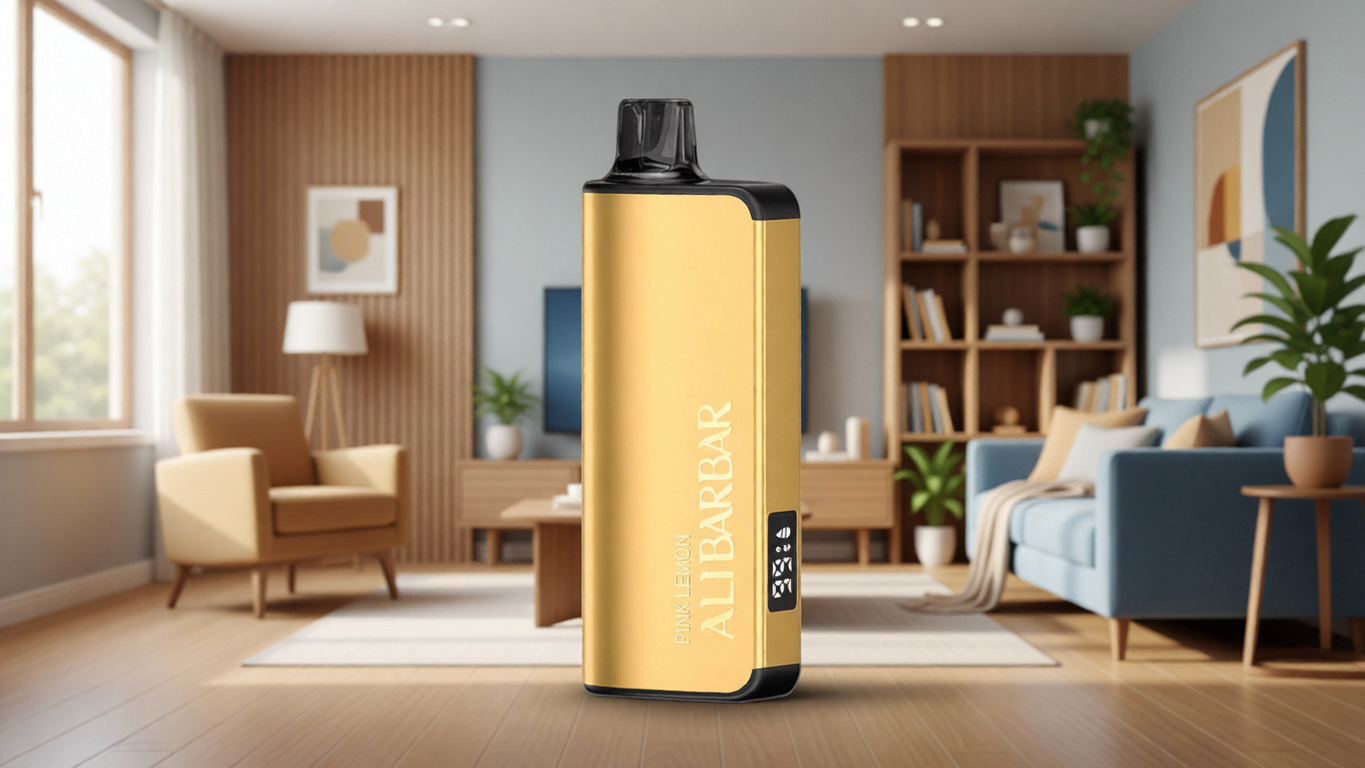
The ALIBARBAR INGOT 15000, for instance, incorporates a high‑capacity integrated power cell paired with a thermal management system engineered for stability across the entire rated cycle life. Users who require predictability during long workdays tend to gravitate toward this configuration. Status transparency is delivered through a multi‑level indicator, removing the guesswork that plagues simpler designs.
For those who prioritise portability and physical restraint, the compact body of the INGOT 9000 reduces dimensions without sacrificing the material integrity that defines the family. The external finish resists micro‑abrasions noticeably better than vapour‑deposited coatings found on some competing units, a detail that only reveals itself after weeks of daily carry.
Meanwhile, the ICE Adjust 12000 introduces a modular adjustment mechanism that allows the user to fine‑tune an airflow parameter. This speaks to a frequently overlooked truth: satisfaction often depends not on maximising a single specification, but on being able to match the device’s behaviour to the moment — whether that is a quiet afternoon or a particularly demanding day.
None of these devices is perfect. A high‑capacity integrated unit cannot match the dimensional discretion of a compact sealed device. A modular system introduces additional user steps. But these are explicit trade-offs, not hidden compromises, and they reflect the kind of honest design logic that adult users can evaluate for themselves.
A Practical Framework for Evaluation
Before consulting a single product listing, work through this diagnostic sequence. It is designed to surface genuine needs rather than catalogue features.
Map your typical day. When are the moments you would reach for the device? How long do those intervals last, and how predictable are they? If your schedule is erratic, prioritise a device with unambiguous status feedback.
Identify your tolerance for management. Are you comfortable monitoring a replaceable power cell and reordering components as needed, or do you prefer a zero‑maintenance unit that you replace entirely once exhausted?
Ask the transparency question: Does this device give me clear, at-a-glance information about its current state? If the answer is no, you will very likely end up carrying a backup, which increases your total cost and contradicts the purpose of purchasing a reliable unit.
Check for standardised specifications. When a retailer presents specifications in a consistent, comparable format across all models, it reduces the cognitive load of decision-making. A channel that refuses to normalise its data — or that buries key metrics in narrative prose — is often obscuring trade-offs it would rather you not examine.
Common Selection Errors and Industry Observations
The personal electronic device market is awash in good-enough alternatives, which makes it surprisingly easy for an otherwise careful adult to walk away with a product that doesn’t actually fit their life. Below are four patterns that industry insiders recognise, but that are rarely discussed in consumer-facing materials.
Overweighting a single metric while ignoring complementary factors. A large capacity number means nothing if the thermal management cannot sustain consistent output across that entire capacity. Users who chase the highest quoted figure without examining regulation technology frequently report that the device “fades” well before the indicator shows empty.
Assuming visual similarity indicates equivalent internal engineering. Two devices that share a comparable silhouette and finish may house completely different heating assemblies, power management circuits, and quality-control tolerances. The chassis tells you almost nothing about what happens inside.
Undervaluing modularity in total‑cost calculations. When a sealed unit fails, the entire purchase price is written off. A modular unit may have a higher initial outlay, but the ability to replace only the exhausted component can result in lower cost-per‑use over a year of operation. The savings compound for anyone who uses a device daily.
Confusing category terminology with technical specifications. Terms that sound precise — “mesh,” “coil,” “airflow” — are sometimes used generically, without providing the measurable data that would allow a real comparison. Look for documentation that explains what the component does, not just what it is called.
From a manufacturing and supply-chain perspective, the gap between a well‑engineered unit and an imitative one often comes down to how much budget was allocated to thermal management versus external styling. Factories that receive detailed, proprietary design briefs produce instruments. Those working from generic templates produce commodities. That distinction is invisible on a screen but unmistakable after a week of use.
Frequently Asked Questions
Q: Is there any verified information linking Blackpink members to vaping devices?
A: No. No verified photograph, official statement, or credible reporting confirms that any member uses such devices. The speculation is driven entirely by unverified social media posts.
Q: How can I be sure a device I purchase is authentic and not a copy?
A: Purchase through a retailer that documents its supply chain and can trace inventory to authorised distribution. Factory‑certified products should arrive in sealed packaging with batch-level traceability.
Q: What does a device’s rated operational life actually mean in everyday use?
A: Ratings are typically based on standardised laboratory conditions. Real-world usage can vary by 10–20% depending on ambient temperature, draw duration, and rest intervals. Treat the rating as a comparative benchmark, not a precision guarantee.
Q: How can I tell if a device provides genuine status feedback or just decorative lights?
A: Operate the device through a partial cycle and observe whether the indicator changes meaningfully before the unit stops functioning. A single‑stage LED that remains lit until the very end is not feedback; it is a power-on light.
Q: What is the practical difference between a rechargeable unit and a replaceable-component system?
A: A rechargeable unit has a finite number of charge cycles before the internal power cell degrades. A replaceable‑component system allows the user to swap the exhausted element and continue using the main body, extending total service life significantly.
Q: What should I do if a device does not perform as described?
A: Contact the retailer immediately with the batch number and a clear description of the issue. A responsible retailer will have a documented process for verification and resolution, rather than generic customer-service scripts.
Q: How should I store a device between intermittent uses?
A: Keep it in a cool, dry environment away from direct sunlight. For longer storage periods, ensure the power cell is neither fully charged nor fully depleted, as extreme states accelerate chemical degradation.
Q: Are devices with adjustable airflow worth the added complexity?
A: If your usage context varies — quiet settings versus more active environments — the ability to adjust the draw profile increases versatility. If you always use the device in a consistent manner, a fixed-architecture unit may be simpler and equally satisfying.
Conclusion
The question that started this article turned out to be a dead end, as most celebrity‑rumour questions do. But it did lead somewhere useful: to a set of engineering and design principles that any adult can apply, regardless of what prompted their initial curiosity.
Informed users make better decisions. When you evaluate a device based on its internal architecture, power management, material durability, and lifecycle flexibility, you are no longer shopping in the dark. You are comparing instruments against a framework that actually predicts daily satisfaction.
For those who value standardised information and certified product access, OZVAPE Shop [external link placeholder] provides a channel where specifications are consistent and sourcing is documented. That doesn’t make the choice for you — no retailer can or should. But it does remove the ambient noise that so often clouds a straightforward evaluation.
The right device is the one that aligns with your actual routine, not the one attached to the loudest claims or the most visible faces. That truth remains even when the faces in question turn out to be entirely absent from the story.