
VAPE FAQs
How Long Does A 8000 Puff Vape Last?
Oct
How Long Does A 8000 Puff Vape Last?
The label on the box says 8000 puffs. Two weeks later, the device feels exhausted, the output turns thin, and you are left wondering what you actually bought. At the other extreme, someone else nurses a unit long past the stated figure, genuinely surprised it keeps performing. The disconnect between the printed number and the real‑world experience is one of the most common irritations in the personal electronic device market, and it almost always comes down to a handful of engineering and usage factors that are rarely explained with the clarity they deserve.
This article steps back from the marketing claim and examines the determinants that govern how long an 8000‑puff device truly lasts in your pocket. It is written for the adult user who wants to evaluate devices on their actual merits, not on the boldest number on the packaging. At OZVAPE Shop, conversations with customers consistently circle back to this question, and we believe that a transparent, technically grounded answer is worth more than any slogan.
Understanding What Matters: Core Engineering and Design Factors
A puff‑count rating is not a promise; it’s a laboratory benchmark produced under controlled conditions. To translate that number into something meaningful for your daily routine, you have to look beyond the rating and examine the architecture of the device itself. Four interconnected factors most often separate a unit that performs reliably from one that leaves you frustrated.
Internal Architecture and Output Consistency
The heating element and the wicking system are the engine of any portable device. In a high‑capacity unit, the design must deliver a consistent volume per puff from the first draw to the last, otherwise the effective number of satisfying uses drops dramatically, even if the tank still holds liquid.
Well‑engineered devices use precision mesh heating elements rather than simple wire coils. The mesh distributes heat across a larger surface area, minimising hot spots that can prematurely degrade the wick or burn through liquid at an uneven rate. In a unit rated for 8000 puffs, the combination of a stable mesh architecture and optimised airflow yields draws that feel full and predictable throughout the device’s operational life. When that consistency is absent — a slow‑motion transition from dense output to thin, barely perceptible draws — the user understandably considers the device “finished” well before the rated count.
Why this matters: real‑world data from device performance trackers shows that perceived end‑of‑life frequently occurs after only 60–70% of the rated puffs, almost always because of output degradation, not because the e‑liquid is exhausted. A properly engineered thermal system is what preserves the puff you paid for.
Power Management and Status Transparency
An 8000‑puff device nearly always incorporates a rechargeable power cell. How the device manages that cell during discharge and recharging cycles has a direct impact on longevity. A poor power regulation circuit may allow the voltage to sag as the battery depletes, which in turn weakens the heating element output. The user receives a series of increasingly unsatisfactory puffs long before the liquid runs out, effectively cutting the useful lifespan of the unit.
Equally critical is what the device communicates. Clear status indicators — a multi‑stage LED showing remaining charge, a brief vibration or colour change when the battery is critically low — eliminate the anxiety that forces you to carry a backup. Without that feedback, you operate blind. You either start a long day with a device that dies unexpectedly, or you waste capacity by discarding a unit that still had dozens of good puffs left. The hidden cost of ambiguous status is not just inconvenience; it’s the erosion of trust in the product itself. When a high‑puff‑count device forces you to pack a spare, the rating becomes a theoretical number rather than a practical assurance.
Physical Design and Material Durability
Durability of the housing, the finish, and the mouthpiece contour matters more for a high‑capacity device than many users initially expect. You will be carrying this unit for several weeks, perhaps longer, recharging it repeatedly, and subjecting it to pocket‑carry abrasion. A device that looks scuffed and feels unpleasant to hold after a few days becomes a nuisance, and users frequently retire it before the functional life ends.
A well‑designed mouthpiece is another silent contributor to perceived longevity. If the contour irritates the lips during prolonged use, the user naturally reaches for the device less often, making the 8000‑puff claim feel inconsequential. Robust surface treatments, such as bead‑blasted or soft‑touch coatings that resist fingerprinting and minor scratches, keep the unit feeling fresh far longer. This may not appear on a spec sheet, but in daily use, it directly determines whether you get the full value of what you purchased.
Modularity and Lifecycle Flexibility
High‑puff‑count devices fall broadly into two architectures: closed‑system rechargeable units (often described as “disposable‑style” but with a rechargeable battery) and open modular platforms with replaceable pods or cartridges. The distinction matters because it defines whether the advertised puff count represents the end of the device’s life or just one stage in a longer relationship.
A closed rechargeable unit delivers convenience: no separate power source to manage, no loose parts, and a pre‑filled reservoir sized to match the rated puffs. Once the liquid is consumed, the entire device is retired. An open modular system, on the other hand, separates the power source and the reservoir. The device may be rated for a certain number of puffs per pod, but the overall lifespan can stretch indefinitely as you replace only the consumable portion. Choosing between them is not about which is superior; it is about matching the architecture to your willingness to manage components versus your desire for zero‑maintenance operation. Recognising this helps you avoid purchasing an 8000‑puff closed unit when what you actually wanted was a platform that lasts for years.
Applying These Criteria to Real‑World Options
Understanding the engineering factors is one thing; seeing how they manifest in actual products is where the informed choice happens. A useful comparison isn’t about brand names, but about device families that illustrate different approaches to the same problems.
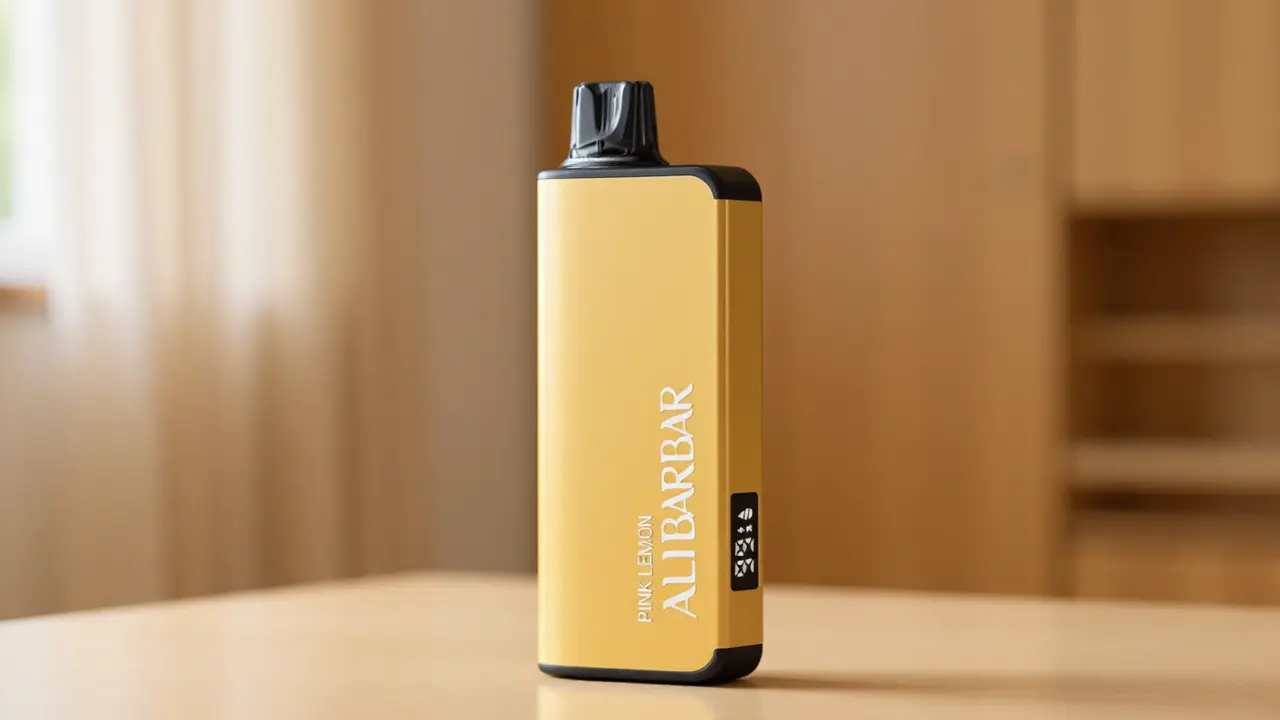
Take, for example, the ALIBARBAR INGOT series. These devices are built around a precision mesh coil that supplies steady thermal output over the full life of the 20 ml integrated reservoir (rated up to 9000 puffs, a realistic adjacent benchmark). The power system uses an 850 mAh cell with USB‑C recharging and a multi‑stage LED that leaves no doubt about battery status — exactly the kind of transparency our earlier analysis identified as essential for trust. The housing is finished with a durable matte coating that holds up under daily pocket wear, and the mouthpiece contour is subtle enough for extended use without discomfort. Because the INGOT is a closed rechargeable system, there is a trade‑off: you sacrifice the ability to refill, but you gain a fully self‑contained unit that requires zero maintenance. That trade‑off is not hidden; it is a deliberate engineering choice, and for many adult users it matches their preference for simplicity.
Elsewhere in the market, you will find 8000‑puff devices that claim a similar rating but rely on simpler coil designs and smaller e‑liquid capacities. The engineering explains why two devices with the same number on the box can behave so differently in your hand: a less efficient atomiser consumes more liquid per puff for the same perceived output, so the tank depletes earlier. Meanwhile, devices that lack clear status indicators or use unregulated power output will inevitably give you a declining experience long before the liquid is gone. The puff count in such cases is not incorrect; it is simply based on a set of usage parameters that bear little resemblance to the real world.
The point is not to name winners and losers. It is to illustrate that the number printed on the packaging is only as good as the architecture behind it. When you encounter an 8000‑puff device, ask yourself: does the internal design align with the criteria that actually determine longevity, or is the rating being asked to do all the work?
A Practical Framework for Evaluation
You do not need an engineering degree to assess whether a high‑puff‑count device will serve you well. A simple step‑by‑step approach can replace guesswork with informed judgement:
Check the tank capacity and estimated consumption per puff. A responsible manufacturer publishes the volume of e‑liquid inside. Divide that by the puff count to get a rough per‑puff consumption rate. If the figure seems implausibly low (for instance, significantly less than 0.1 ml per 100 puffs), the rating is likely based on extremely short draws.
Examine the power cell and its management. Rechargeable? Good. Does the product listing mention over‑discharge protection or a regulated chipset? If not, you risk voltage sag that kills the device prematurely.
Look for mesh coil technology. The presence of a mesh heating element, rather than a conventional wire, is a strong predictor of consistent output across the entire rating. It is one of the simplest differentiators available to the user.
Insist on status transparency. A device without a meaningful battery indicator forces you into guesswork. Ask yourself: “Does this device let me know when I need to recharge, or will I only find out when it stops responding?”
Evaluate the construction honestly. Hold the device if you can, or read about its surface treatment and mouthpiece materials. Will it survive weeks in a pocket or bag without becoming unpleasant to use?
Factor your own usage pattern. Most laboratory puff ratings assume a 1‑second draw. If you habitually take longer, deeper draws, you will almost certainly obtain fewer total puffs. Adjust your expectations accordingly.
Standardised specification comparisons, such as those provided on OZVAPE Shop product pages, turn this checklist into something you can run through in under a minute. When specifications are presented in a uniform format, side‑by‑side evaluation removes the guesswork and lets you see which devices are backed by serious engineering.
Common Selection Errors and Industry Observations
Even careful users fall into predictable traps. Recognising these errors will save you from a purchase that looks good on a screen but disappoints in real use.
Overweighting the rating while ignoring complementary specs. The number “8000” is seductive, but a device that lacks a substantial battery or efficient coil will never deliver that many satisfying puffs. A unit with a tiny power cell may be rated for 8000 puffs but need to be recharged seven or eight times, each cycle wearing on the battery and degrading the experience. The puff count matters only in concert with the rest of the engineering.
Assuming visual similarity means identical internals. Two devices can look nearly identical on the outside — same shape, same mouthpiece angle — yet house entirely different heating technologies and power control circuits. The market is filled with generic‑looking high‑puff‑count units that rely on the least expensive internal components. Buying based on appearance alone is how you end up with a device that fails to meet its rating.
Undervaluing modularity in cost‑per‑use calculations. A closed rechargeable unit is often presented as an economical option, but if your usage pattern is heavy, you may go through several such devices every month. An open modular system with replaceable pods might have a higher initial cost but a much lower cost per puff over time. Ignoring this lifecycle cost is a frequent cause of buyer’s remorse.
Confusing category terminology with technical specifications. Terms like “high capacity” or “long‑lasting” are marketing language, not engineering properties. A device labelled “long‑lasting” tells you nothing about coil stability or battery regulation. You must look past the adjectives to the actual specs.
From an industry perspective, it is well understood that puff‑count claims operate within a wide tolerance band. Some manufacturers rate their devices conservatively, performing tests that approximate real‑world usage with average draw durations and pauses between puffs. Others use accelerated bench tests with the shortest possible draw and no rest interval, producing a number that is technically attainable but misleading. This is not necessarily fraudulent; it is a mismatch between the laboratory scenario and the living room sofa. A brand that openly publishes its testing methodology, or that has built a reputation for honest ratings, is worth noting.
Frequently Asked Questions
Q: What does the ‘8000 puff’ rating actually measure?
A: It is a laboratory benchmark that indicates the number of 1‑second draws a fully charged, freshly manufactured device can produce under tightly controlled conditions. It is a useful relative comparison, not a personalised guarantee.
Q: How long will an 8000 puff device last me in days?
A: There is no single answer. A light user taking 100 puffs a day might see roughly 12 weeks. A heavy user at 400 puffs daily could finish it in less than three weeks. Your draw duration, rest time between puffs, and the device’s own efficiency all modify that timeline significantly.
Q: Why did my device run out of puffs much earlier than the label stated?
A: Several possibilities: you were taking longer draws than the 1‑second standard; the battery degraded after repeated recharges before the liquid was exhausted; or the device’s coil and power management were not optimised for consistent output, causing you to discard it when the experience declined. Also, counterfeit devices with inflated claims can be an issue.
Q: Are all 8000 puff devices built to the same standard?
A: No. Internal architectures vary enormously. A unit with a mesh coil, regulated output, and a matched liquid‑to‑battery ratio will far outperform a generic device that simply prints “8000 puffs” on the box but lacks those refinements.
Q: Does the way I inhale affect how many puffs I get?
A: Absolutely. Deep, slow draws consume significantly more liquid and power than short, light ones. The standard rating assumes a 1‑second draw; a 3‑second draw will yield roughly one‑third the number of puffs, all else being equal.
Q: Can a rechargeable 8000 puff device last longer than the advertised puffs?
A: Rarely in a meaningful sense. The liquid volume is finite and fixed. If the device continues to produce output after the rated puff count, it is likely producing weaker, less satisfying draws. A well‑designed device will deliver consistent density until the reservoir is nearly empty, then stop.
Q: What should I check before buying an 8000 puff device?
A: At minimum: tank capacity (in ml), battery size (in mAh), coil type (mesh or traditional), presence of battery‑status indicators, and whether the manufacturer has a documented testing methodology or reputation for accuracy. Compare these specs side‑by‑side rather than relying on the puff count alone.
Q: How does OZVAPE Shop ensure the devices it sells meet their puff‑count claims?
A: OZVAPE Shop sources inventory exclusively from authorised distribution networks, which eliminates the risk of counterfeit units with fabricated ratings. Every product page presents standardised specifications, so you can verify the underlying engineering before buying. The team also gathers feedback from the Australian user community to flag any model that consistently underdelivers in practice.
Q: Is there any way to extend the life of a high‑capacity device?
A: You can optimise usage by taking controlled, moderate‑length draws, allowing a few seconds of rest between puffs to maintain wick saturation, and recharging the battery when it drops to one bar rather than letting it fully deplete. These practices help preserve the heating element and the overall experience, though they cannot increase the total liquid volume.
Q: What are the environmental considerations of using a high‑capacity rechargeable device?
A: A closed rechargeable unit reduces waste compared to lower‑capacity non‑rechargeable alternatives, because the battery and housing are used until the liquid is fully consumed. However, the entire device still ends up being disposed of. An open modular system with replaceable pods reduces waste further by keeping the power source and chassis in use across multiple tanks. The environmental impact is one more factor to weigh alongside cost and convenience.
Conclusion
The 8000‑puff rating is not a lie, but neither is it a promise. It is a starting point — a number that becomes meaningful only when you examine the engineering that enables it. Devices that combine a precision heating element, consistent power delivery, transparent status feedback, and durable build materials tend to honour their ratings in the real world. Those that rely on the number alone frequently fall short, not because the rating was dishonest, but because it was never meant to stand without supporting architecture.
If you approach the purchase with a clear evaluation framework, you remove the gamble. You stop buying based on the largest number and start buying based on what actually determines longevity. At OZVAPE Shop, we see our role as putting accurate, comparable information in front of you, because we know that an educated adult user makes confident decisions. The devices are out there; the only missing piece is the understanding you bring to them. The right choice for you is never the one with the flashiest claim. It is the one that fits your actual routine, and that you can rely on to perform, puff after puff, without playing detective.