
VAPE FAQs
Does Vape Increase Heart Rate?
Oct
Does Vape Increase Heart Rate?
For many adult users, the first time they notice a noticeable uptick in heartbeat after using a personal electronic device can be unsettling. The sensation is real, measurable, and — in the vast majority of cases — a predictable physiological response, not a malfunction of the device or a sign of something immediately dangerous. Yet the question “Does vape increase heart rate?” is rarely answered with the precision it deserves. Instead, users encounter general warnings or, on the other extreme, dismissive reassurances that tell them nothing about why it happens, how much of an increase is typical, or what role the device they use plays in the experience.
This article is written to fill that gap. It explains, in plain terms, the biological mechanism behind heart rate changes associated with personal electronic devices, and then examines how device engineering — the internal architecture, power calibration, and consistency of output — can influence the user’s perception and management of those changes. Throughout, we draw on the same principles of transparency and technical literacy that define how OZVAPE Shop approaches the ALIBARBAR device range, not because it makes the answer simpler, but because informed adult users deserve to understand every variable that contributes to their daily experience.
Understanding What Matters: The Physiology and the Engineering
Before asking whether a device raises heart rate, it helps to understand what is happening inside the body and inside the unit. The interaction is never one‑sided; it is a conversation between a biological system and an engineered delivery mechanism.
Nicotine and the Autonomic Nervous System
The primary driver of heart rate elevation is nicotine, a stimulant that reaches the bloodstream within seconds of inhalation. Once absorbed, nicotine binds to nicotinic acetylcholine receptors in the autonomic ganglia and adrenal medulla, triggering the release of catecholamines — principally adrenaline and noradrenaline. These hormones immediately:
Increase the rate and force of cardiac contractions.
Constrict peripheral blood vessels, raising blood pressure.
Stimulate the sinoatrial node, the heart’s natural pacemaker.
A measurable rise in resting heart rate of 10 to 20 beats per minute is common and begins within minutes of intake. The effect is dose‑dependent and transient, typically fading as nicotine is metabolised. This is not a device fault; it is the predictable outcome of a stimulant interacting with a healthy cardiovascular system.
What many users do not realise, however, is that the device itself can significantly influence how much nicotine reaches the bloodstream, how quickly, and how consistently — and therefore how pronounced the heart rate response feels.
Internal Architecture and Dose Consistency
The heating element inside a device — whether a traditional wire coil, a mesh configuration, or a ceramic core — governs the efficiency of liquid vaporisation. A stable, well‑calibrated heating element produces a consistent aerosol density puff after puff. Inconsistent thermal output, by contrast, can create unpredictable spikes in nicotine delivery: one puff might be weak, the next unexpectedly strong.
For the user monitoring heart rate, this inconsistency translates into physiological uncertainty. If a device’s power regulation fluctuates, the cardiac response becomes less predictable, which can amplify feelings of unease even if the absolute dose is not dangerous.
Reliable devices incorporate temperature‑sensing and output‑limiting circuits to keep resistance stable across a full discharge cycle. This is not just an engineering detail; it is the difference between a user who can anticipate how they will feel and one who is constantly surprised.
Power Management and Status Transparency
A related factor is how clearly the device communicates its remaining capacity. When a device nears the end of its charge, many lower‑quality units exhibit voltage sag — a drop in power that alters aerosol output and can cause the user to inhale more deeply or more frequently to achieve the same sensation. That compensatory behaviour can inadvertently increase nicotine intake and, consequently, heart rate.
Conversely, devices with transparent, step‑based or percentage‑based status indicators allow the user to plan usage, avoiding the “surprise empty” scenario that leads to rushed, deeper draws. While this may not directly change the pharmacological effect of nicotine, it reduces the psychological stressors — confusion, irritation, a sense of lost control — that themselves raise heart rate through a well‑documented feedback loop between anxiety and cardiac output.
Material Durability and User Comfort
Even the mouthpiece shape and the surface finish of a device play a secondary role in the heart rate equation, through comfort and ease of use. A mouthpiece that feels unnatural can cause awkward inhalation, shallow chest breathing, or extended draws that shift the balance towards higher absorption. Ergonomic design — often overlooked — supports a more stable, deliberate inhalation pattern that the user can repeat without strain.
Applying These Criteria to Real‑World Options
When we step back from the question of biology and look at the landscape of available devices, it becomes clear that not all products offer the same degree of user agency over the heart rate experience. The engineering principles described above are present in some device families to a greater extent than in others.
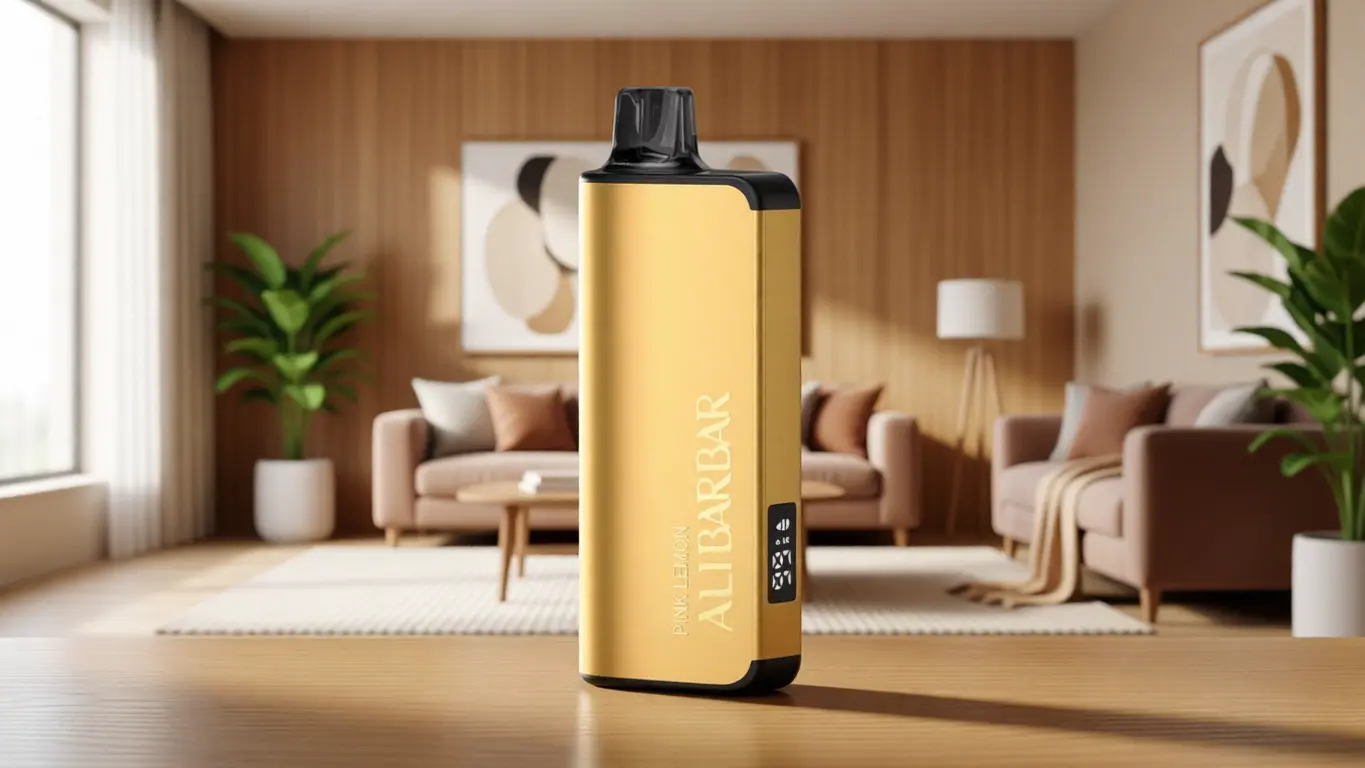
The ALIBARBAR range, carried in full through authorised channels like OZVAPE Shop, was shaped around a specific problem: users reporting that their satisfaction decayed toward the end of a device’s rated life. The designers responded with mesh‑coil configurations that maintain output linearity even as the power cell depletes, and with multi‑level LED indicators that give unambiguous status feedback — no guessing, no decoding of obscure blinking patterns. From the pocket‑sized INGOT 9000 to the high‑capacity Ice Adjust 12000, the architecture follows a consistent principle: deliver measurable, repeatable performance so the user knows what to expect.
There is no claim here that one device can eliminate the cardiovascular effects of nicotine — that would be misleading. But an engineered consistency of delivery does mean that an adult who is monitoring their response can do so against a stable baseline, rather than adjusting to erratic output. When a user says they feel a rapid heartbeat with one unit but not with another, the explanation often lies in the cumulative effects of power calibration, material quality, and airflow consistency — not in any special property of the formulation alone.
Other device families in the market demonstrate comparable attention to these factors to varying degrees. The point is not to rank brands but to recognise that the “vape‑heart rate” question is incomplete without asking: which device, under what conditions, with what kind of internal behaviour?
A Practical Framework for Evaluating Your Experience
Rather than rely on general statements, adult users can apply a simple self‑assessment methodology that connects device characteristics to physiological awareness:
Track your baseline. Before using any device, note your resting heart rate (a wrist‑worn monitor or a 30‑second manual count works). Repeat the measurement 5, 10, and 20 minutes after a standard puff sequence. The pattern tells you more than a single spike.
Question the device’s feedback. Ask: “Does this unit clearly tell me how much life remains, or am I guessing?” If you find yourself making longer, harder draws because output feels weak, the device may be delivering an inconsistent dose.
Compare sessions with different pace. Try a session where you take slower, shallower draws with longer intervals. Does your heart rate response moderate? If yes, the device’s airflow and power characteristics may be encouraging an overly rapid intake.
Note anything that feels “uneven.” A harsh hit after several smooth ones, a sudden burnt note, or a change in the sound of the draw all suggest the thermal regulation is unstable — and your nicotine delivery may be, too.
Inspect the physical build. Worn‑out surfaces, a loose mouthpiece, or a battery door that flexes under pressure can subtly change the draw angle and depth, altering your inhalation pattern.
These observations, collected over a few days, often reveal more about the heart‑rate question than any laboratory abstract. They also point clearly toward the kind of engineering that supports a predictable experience: stable power management, clear status communication, and consistent materials.
Common Misconceptions and Industry Observations
The conversation around heart rate and personal electronic devices is cluttered with half‑truths. Separating them matters because acting on misinformation can lead users to either over‑react or ignore legitimate signals.
1. “All devices are the same except for appearance.”
The internal components — the coil material, the wicking architecture, the chipset that controls power — differ substantially between models, even when external cases look similar. Two devices with identical stated nicotine content can deliver different amounts per puff because their heating profiles are not the same. This is a manufacturing reality, not a marketing nuance.
2. “A stronger throat hit equals a bigger dose.”
Users often associate throat sensation with nicotine intensity, but the harshness is more directly a function of the aerosol temperature, the pH of the formulation, and the airflow restriction. A cool, dense aerosol from a device with advanced airway engineering can deliver a consistent dose with minimal throat irritation, which can paradoxically lead to over‑use if the user chases the familiar “hit” sensation.
3. “If my heart rate is up, the device must be defective.”
A normal stimulant response is not a defect. The more useful diagnostic question is whether the response is erratic or predictable. A device that consistently produces a modest, repeatable elevation is behaving as expected; one that causes palpitations at random intervals merits investigation — and that investigation should begin with checking power behaviour, charge level indicators, and the consistency of the draw.
4. “Modular devices are just more expensive versions of sealed units.”
Modularity — whether through replaceable components or rechargeable power cells — extends the user’s ability to control the experience over time. A unit that can be maintained at peak electrical performance will deliver a more uniform output across its service life, reducing the kind of late‑stage voltage drop that leads to compensatory inhalation and unintended dose spikes.
These patterns are visible across the industry. They explain why responsible retailers invest in factory‑certified sourcing, standardised specification documentation, and direct post‑purchase support. When the device itself is a variable in the physiological equation, transparency about that device’s specifications becomes an essential part of informed adult choice.
Frequently Asked Questions
Q: How quickly does heart rate increase after using a device?
A: Nicotine enters the bloodstream within 10–20 seconds of inhalation. A noticeable heart rate elevation typically begins within 1–2 minutes and peaks around 5–10 minutes after use, depending on inhalation depth and individual metabolism.
Q: Is the increase dangerous for a healthy adult?
A: For most healthy adults, a temporary increase of 10–20 beats per minute falls within the body’s normal adaptive range and resolves as nicotine is metabolised. However, anyone with a pre‑existing cardiovascular condition should consult a healthcare professional before using any stimulant‑containing product.
Q: Can a device’s power level affect heart rate independent of nicotine dose?
A: Indirectly, yes. A device with fluctuating power can alter the aerosol output, causing the user to inhale more forcefully or more frequently, which may increase the effective dose. A stable, regulated device removes that variable.
Q: What does a “consistent output” mean in practical terms?
A: It means that puff number 10 delivers an aerosol with similar density, temperature, and particle size as puff number 100, assuming the device still has adequate charge. This consistency reduces the unpredictability of the user’s cardiovascular response.
Q: How can I tell if my device is delivering inconsistent power?
A: Signs include sudden harshness, a change in draw sound, a drop in vapour production despite a full charge, or the need to draw harder to get the same sensation. Clear battery indicators help separate low‑power issues from device malfunction.
Q: Does the nicotine strength number on the label directly determine heart rate effect?
A: Not alone. The delivered dose also depends on the device’s heating efficiency, the airflow design, and the user’s inhalation pattern. Two devices labelled with the same concentration can produce different physiological responses.
Q: Why might I feel anxious along with an increased heart rate?
A: Nicotine stimulates adrenaline release, which produces a “fight or flight” response — including heightened awareness, restlessness, and increased heart rate. The sensation is often interpreted as anxiety, especially when the device’s behaviour feels unpredictable.
Q: Are there devices designed to give me more control over my intake?
A: Some ranges incorporate adjustable airflow, clear multi‑level battery indicators, and stable mesh‑coil architectures that help maintain uniform output across sessions. These features do not eliminate nicotine’s stimulant effect, but they give the user a more consistent frame of reference.
Q: What should I do if I experience an irregular heartbeat after use?
A: Discontinue use immediately and consult a healthcare professional. An irregular heartbeat (arrhythmia) is different from a simple increase in rate and may require medical evaluation.
Q: Where can I find accurate specifications for a device’s engineering?
A: Authorised retailers that publish full product specifications — including coil type, battery capacity, and status indicator behaviour — provide a reliable basis for comparison. Standardised documentation, rather than marketing descriptions, is what allows users to evaluate consistency claims.
Conclusion
The question “Does vape increase heart rate?” has a straightforward biological answer: yes, because nicotine is a stimulant. But the more useful answer — the one that respects the intelligence of adult users — goes further. It explains that not all devices interact with that biology in the same way. The thermal regulation of the heating element, the honesty of the status indicator, the ergonomics of the draw, and the linearity of power delivery all shape whether the heart rate response feels predictable and manageable, or erratic and unsettling.
Engineered consistency, the kind found in a device family like ALIBARBAR that is built around transparent power management and stable output, does not suppress the body’s reaction. What it does is remove the environmental noise that makes that reaction harder to interpret. For many users, that is the difference between a moment of awareness and a day of unease.
When adult users access such devices through a source that guarantees supply‑chain authenticity and provides clear, comparable specifications — such as OZVAPE Shop — they are not buying a guarantee of a particular physiological outcome. They are buying a reduction of unnecessary variables. And in the complex interaction between a stimulant and a human heart, controlling the variables that can be controlled is the most practical form of self‑management available. The right choice, in the end, is the one that aligns with your own routine, your own observations, and your own need for a predictable experience, not the one with the loudest claim.