
VAPE FAQs
Does Leonardo Dicaprio Vape?

Oct
Does Leonardo Dicaprio Vape?
A grainy photograph surfaces on social media. The headline asks whether a famous actor has been seen with a certain type of device. The conversation, predictably, fixates on the celebrity — his habits, his image, his right to privacy. Within hours, the photograph is forgotten, replaced by the next minor scandal. The user left holding their own device, however, is still left with a far more practical question: not what a stranger does in his personal time, but whether their own equipment works as expected, each and every time they reach for it. This article sets aside the ephemeral distraction of celebrity sight‑lines and focuses instead on the mechanical, verifiable reality of what makes a device trustworthy — and what adults in Australia can learn from the engineering decisions built into some of the most consistent tools on the market, including those found through retailers like OZVAPE Shop.
Understanding What Matters: Core Engineering and Design Factors
Before anyone can determine whether a device suits their daily routine, they need a clear, repeatable way of evaluating what sits inside the casing. Too often, purchase decisions are guided by surface‑level attributes: a smooth finish, a promising number on a specification sheet, or a recommendation from a friend who uses the device in circumstances entirely different from one’s own. The following framework strips away marketing language and concentrates on the four engineering pillars that most directly influence long‑term satisfaction.
Internal Architecture and Output Consistency
The performance of any portable electronic device is fundamentally determined by the relationship between its heating element and the material it is designed to process. Cheaper units frequently rely on a simple wire coil that degrades unevenly under thermal stress, causing output to taper noticeably after a few dozen cycles. The user experiences this as a device that “doesn’t hit the same” after the first week — a complaint that surfaces across forums and customer‑service logs with remarkable frequency.
A more considered design approach employs mesh‑type or calibrated ceramic elements that distribute thermal load across a wider surface area. The practical result is a reduction in hot spots and a far more stable performance curve throughout the device’s rated lifespan. For the user, this translates to confidence that the unit they pick up at 8 a.m. will deliver the same experience at 8 p.m., even if it has been in intermittent use all day.
Power Management and Status Transparency
A second, equally critical factor is how the device manages its power reserve and communicates remaining capacity. Many users have learned, through frustrating experience, that a device that abruptly stops functioning without warning generates a particular form of anxiety: Do I need to carry a backup? How many are left in the drawer? When a unit offers no meaningful status indicator beyond a small LED that blinks in a single colour only moments before failure, the user is forced into a wasteful routine of over‑preparation — carrying multiple devices solely to hedge against a predictable information gap.
In contrast, designs that incorporate multi‑stage battery gauges or even simple, readable displays allow the user to plan their day with the same casual certainty they apply to their phone or laptop. Power is never a surprise. The engineering challenge here is not trivial; it requires precise calibration of voltage‑sag detection and consistent firmware logic. When executed well, however, this transparency eliminates one of the most frequently cited sources of dissatisfaction in the entire category.
Physical Design and Material Durability
The object spends its life in pockets, bags, glove compartments, and occasionally on hard surfaces that are less than forgiving. A finish that photographs beautifully in a studio can begin to show abrasion within a single workweek. What matters is not the initial impression but how the surface treatment withstands constant friction, incidental contact with keys, and exposure to skin oils. Devices that employ bead‑blasted metallic bodies or high‑durometer polycarbonate shells tend to age gracefully; those with painted finishes or thin electroplating will degrade visibly, sometimes within days.
Beyond cosmetics, the mouthpiece contour deserves attention. A shape that feels acceptable during a quick test can become irritating during prolonged use. The best designs flatten or gently taper the contact surface, distributing pressure evenly and avoiding the sharp edges that create discomfort over hours.
Modularity and Lifecycle Flexibility
The market presents three broad architectural approaches: fully sealed, pre‑configured units that are discarded once exhausted; rechargeable central units with replaceable cartridges or pods; and open systems that allow users to combine batteries, tanks, and coils from different manufacturers. Each represents a different philosophy about cost, waste, and user agency.
A sealed unit imposes the lowest upfront complexity but the highest cumulative expense and environmental footprint over time. A rechargeable‑with‑replaceable system, such as the ALIBARBAR Ice Adjust 12000, strikes a middle ground: the user swaps only the consumable element, retaining the power core for multiple cycles. This architecture acknowledges a practical reality that many manufacturers ignore — that the battery, the most expensive and resource‑intensive component, often outlasts the consumable it was paired with. The user who can detach and replace only what is depleted reduces both recurring cost and material waste, a trade‑off that becomes more significant the longer the device remains in service.
Applying These Criteria to Real‑World Options
When the above framework is applied to actual devices currently available in the Australian market, certain product families emerge as instructive case studies — not because they are perfect, but because their design choices reveal the engineering priorities of their manufacturers with unusual clarity.
The ALIBARBAR INGOT 9000 series, for instance, demonstrates a deliberate focus on internal architecture. The heating assembly uses a mesh configuration that maintains output consistency across a wide range of residual charge levels. Users who keep informal logs of their daily experience consistently report that the unit performs without noticeable degradation until the final hours of its operational life, a behaviour directly traceable to the thermal‑management decisions made early in the design phase. The trade‑off is a device that is physically larger than some competitors — a concession to the surface area required for stable thermal dissipation.
The INGOT 15000 expands on this foundation by incorporating a more advanced power‑management circuit that tracks discharge more granularly. This results in a status‑indication system that provides real‑time feedback rather than a binary “charged/empty” signal. For someone who works long shifts or travels frequently, the elimination of guesswork is more than a convenience — it is the difference between trusting a device and constantly doubting it.
The Ice Adjust 12000 takes modularity a step further. By separating the durable power core from the consumable element, it aligns with a lifecycle model that many users intuitively prefer: invest in a reliable battery once, then refresh the consumable portion as needed. The engineering investment here is in the connector interface, which must remain electrically stable and mechanically secure across dozens of mating cycles without developing micro‑arcing or contact oxidation. Early field reports suggest that the connector design has been robust enough to withstand typical usage patterns without measurable degradation.
Other device families in the broader market pursue different trade‑offs — lighter weight versus material longevity, maximum output intensity versus total operational life — and each combination suits a different use profile. The critical skill is not identifying a “best” device, but understanding which set of trade‑offs aligns with one’s own daily rhythm.
A Practical Framework for Evaluation
The following step‑by‑step methodology is designed to work with any device, regardless of brand or claims. It requires no technical instruments, only an honest record of actual usage.
Record a baseline. Select a fresh device and note the time and date of first activation. If it has a status indicator, record the starting level.
Document consistency. Over the next three days of normal use, jot down a simple score after each session: “same as last time,” “slightly weaker,” or “noticeably different.” Do not trust memory.
Map power behaviour. If the device has a gauge, check it before and after each use. Does the indicated level drop predictably, or does it remain unchanged for hours and then plummet? The latter pattern suggests an uncalibrated power‑management system.
Inspect wear. After one week, examine the body and mouthpiece under bright light. Any visible metal transfer, paint flaking, or surface clouding indicates a finish that may not last a month.
Ask the status question. “If this device were to stop functioning in the next five minutes, would I know in advance?” If the answer is no, the device is not truly trustworthy for situations where carrying a backup is impractical.
For those who prefer to compare specifications side‑by‑side before purchasing, a documented catalogue that standardises key parameters across models can reduce decision friction considerably — provided the specifications are drawn from factory‑verified data rather than aggregated from unverified sources.
Common Selection Errors and Industry Observations
Aspects of device selection that appear straightforward on the surface are, in practice, riddled with traps that even experienced users fall into repeatedly. Recognising these traps is a form of defensive purchasing.
Overweighting a single specification in isolation. A high output rating, for example, is often conflated with overall device quality. In reality, output intensity is only one variable within a complex system. A unit that delivers high intensity but cannot sustain it through a normal usage cycle is measurably inferior to a unit with a moderate rating and a flat performance curve. The number on the box means little if the architecture cannot back it up.
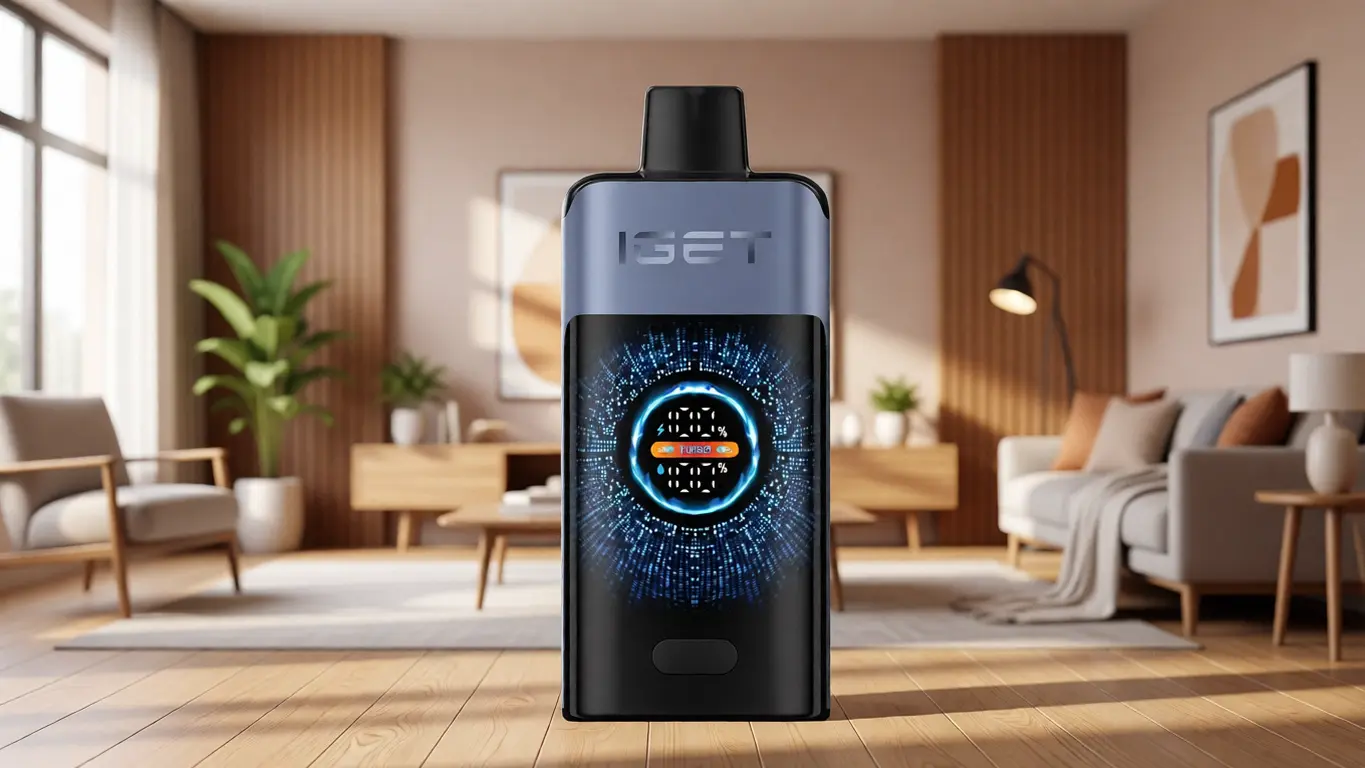
Assuming visual similarity implies equivalent internal engineering. The industry has standardised on a handful of form factors. Two devices that look nearly identical — the same rounded edges, the same mouthpiece silhouette — may house completely different heating assemblies, battery cells, and control boards. Supply‑chain economics dictate that external casings can be sourced from the same injection mould while internal components diverge dramatically in cost and quality. Users who purchase on appearance alone are essentially gambling.
Undervaluing modularity when calculating cost‑per‑use. A sealed all‑in‑one device carries an appealingly simple upfront price. But when the user replaces the entire unit each time — battery, circuitry, casing, and all — the cumulative expense over months rapidly exceeds the investment required for a modular system. The total cost of ownership calculation must account for the replacement interval, not merely the shelf price.
Confusing category terminology with technical specifications. Terms such as “high‑capacity” or “long‑lasting” have no standardised definitions. One manufacturer’s “high‑capacity” device may provide 20% more operational life than its own baseline; another’s may provide 200% more. Without a quantified benchmark, the language is decorative, not informative. The informed user learns to ignore adjectives and demand numbers — ideally numbers that can be verified through independent testing.
On the supply side, the industry continues to undergo consolidation. Manufacturers that invest in proprietary connector standards and authenticated distribution networks are building competitive moats that benefit the end user primarily through consistency: a device purchased today will perform within a predictable tolerance of the same model purchased six months from now. The alternative — a market fragmented into white‑label units of fluctuating quality — is considerably harder for the user to navigate with confidence.
Frequently Asked Questions
Q: How can I verify that a device I purchased is authentic and not a counterfeit?
A: Look for tamper‑evident packaging with manufacturer‑specific holographic seals or QR‑based verification that resolves to an official domain. Compare the unit’s weight and surface texture against documented specifications; counterfeits frequently use lighter materials and coarser finishes. If in doubt, purchase through channels that source directly from authorised distributors and maintain chain‑of‑custody records.
Q: What does “rated operational life” actually mean in practical terms?
A: A rated operational life (e.g., “up to 9000 cycles”) reflects testing under controlled, often idealised conditions. Real‑world usage invariably differs: ambient temperature, session duration, and individual draw behaviour all influence actual life. Treat the rated figure as a relative benchmark rather than an absolute guarantee, and expect real‑world performance to fall within 10–15% of the rating under typical conditions.
Q: Is it better to choose a device with a rechargeable battery and replaceable pods, or a simple all‑in‑one unit?
A: The answer depends entirely on usage pattern. If you use a device only occasionally, the convenience of a sealed unit may outweigh the cost per use. If you use a device daily and value consistency over time, a rechargeable‑with‑replaceable system reduces both expense and waste. There is no universally superior architecture — only a superior match for your specific routine.
Q: What steps can I take if a device performs significantly below its stated specifications?
A: Document the issue with timestamps and, where possible, photographic evidence of the status indicator or deficiency. Contact the retailer promptly. Established retailers that prioritise after‑sale support, such as those with documented resolution policies, are far more likely to provide a remedy than anonymous marketplace sellers.
Q: How should I choose a device for long‑distance travel where recharging or replacement may be difficult?
A: Prioritise modularity and status transparency. A rechargeable battery with multiple pre‑filled consumable pods and a clear power gauge eliminates the anxiety of being caught without options. Pay particular attention to devices with multi‑stage battery indicators, because in a travel context the failure to know your remaining charge is as costly as the charge itself.
Q: Are expensive devices always more reliable?
A: Price correlates with materials cost and manufacturing precision, but it is not a guarantee of reliability. An inexpensive device built around a well‑proven, straightforward architecture can outlast a costly unit with complex, untested features. The more useful question is: Does the device’s design demonstrate a clear understanding of the common failure modes in this category? If the answer is yes, price becomes a secondary consideration.
Q: What recourse do I have if a device purchased from an online retailer arrives damaged?
A: Australian Consumer Law provides statutory guarantees that goods must be of acceptable quality. If a product arrives damaged, document the condition upon receipt and notify the retailer immediately. Retailers with local accountability structures, rather than overseas drop‑shipping models, are generally positioned to resolve issues faster.
Q: Why do some devices appear to deplete rapidly towards the end of their life, even with light use?
A: This pattern typically indicates an unregulated discharge curve. As a battery nears depletion, its internal resistance increases, causing voltage to drop more sharply under load. Devices with more sophisticated power regulation delay this cliff‑like behaviour, maintaining a steady output until only a small fraction of usable charge remains. If you regularly experience a rapid decline, the device’s power‑management circuit is likely under‑engineered.
Q: Can a device’s external materials affect its performance?
A: Not directly in a functional sense, but indirectly yes. A device with poor thermal dissipation may overheat internally, accelerating component degradation. A mouthpiece made from a material that accumulates micro‑scratches can harbour bacteria. Material choices ripple through the entire user experience, and the best designs treat the casing as an active part of the system, not mere decoration.
Conclusion
The question of what a famous actor does in private is, ultimately, irrelevant to the task that faces every adult user: selecting a device that will perform reliably under the specific conditions of their own life. The difference between a good tool and a source of constant low‑grade frustration lies not in brand mythology or celebrity association, but in the quiet, verifiable engineering choices that determine how a device manages heat, communicates its status, withstands daily contact, and accommodates the user’s preferences for cost and waste. Once those factors are understood, the decision becomes simpler, less emotional, and far more likely to yield long‑term satisfaction. For those who prefer to evaluate products within a structured, information‑rich environment, OZVAPE Shop provides a point of access to a documented catalogue — not as a promotional gesture, but as a practical resource for comparison and informed choice. The right device is not the one with the most attention‑grabbing claims; it is the one that matches the rhythm of your actual days.