VAPE FAQs
How Long Does A 12000 Puff Vape Last?
Aug
It’s a familiar scene: you unbox a slim, pocketable device labelled “12000 puffs” and, a few days later, it’s no longer producing anything. The number on the box feels disconnected from the experience, and you wonder what went wrong — or what actually governs that number. Understanding how long a 12000‑puff device lasts is not simply a matter of arithmetic; it’s a conversation about engineering intention, usage reality, and the quiet details that separate a designer’s laboratory assumption from your daily routine.
At OZVAPE Shop, where the full ALIBARBAR range — including the widely discussed Ice Adjust 12000 — is supported by documented, real‑world specifications, this question comes up constantly. Answering it properly means peeling back the layers of how such a device is built, what its rating actually represents, and which factors determine whether you’ll feel satisfied when the last puff arrives.
Understanding What Matters – Core Engineering and Design Factors
The “12000 puff” label isn’t a countdown timer; it’s an engineering target. To interpret it usefully, you need to look at the design choices that govern consumption, consistency, and longevity.
Internal Architecture and Output Consistency
A puff rating is meaningless if the device loses its character halfway through. The heating element — often a mesh coil in modern designs — and the liquid-delivery system must work together so that puff number one and puff number 11 900 feel essentially similar. Devices with tightly controlled wicking and stable coil resistance maintain their temperature profile across the rated lifespan, delivering a predictable experience. When these systems are poorly matched, users report a stale or diminished output long before the liquid reservoir is empty, effectively “retiring” the device early.
Why this matters for the 12000‑puff question: if a unit’s taste or delivery degrades after the equivalent of 8000 puffs, the remaining 4000 exist only on paper. A well‑executed design preserves usability across nearly the entire charge of liquid, making the puff figure a more honest indicator of actual service life.
Power Management and Status Transparency
Many devices in this category integrate a rechargeable battery sized to outlast the liquid supply. A thoughtful design will include a clear, intuitive status indicator — something that communicates remaining charge without guesswork. When you’re blind to battery level, you tend to carry a spare, often unnecessarily. The hidden cost of that ambiguity is that you might never reach the rated puff count because the battery dies before the liquid is fully consumed, or worse, you have to charge the device mid-session without warning.
In practice, a device that tells you exactly where you stand allows you to plan usage naturally. You know when a charge is low, and you can stretch the remaining puffs without suddenly being stranded. For someone calculating “how long will this last me,” that feedback loop reduces anxiety and makes the numerical rating something you can trust.
Physical Design and Material Durability
Longevity isn’t just about internal consumables. A device that rides in a pocket, bag, or car compartment must withstand constant friction, pressure, and temperature changes. The mouthpiece shape, surface finish, and overall build quality directly affect how the device wears over weeks of use. A matte, soft-touch coating may look premium at first but can quickly show fingerprints and scratches; a hard-anodized metallic finish tends to hold its appearance much longer. Considering a 12000‑puff device might be in your hand for months, that physical resilience matters — if the mouthpiece cracks or the casing delaminates at puff 4000, the high puff count becomes irrelevant.
Modularity and Lifecycle Flexibility
Here, the market splits. Some 12000‑puff devices are entirely sealed units — you use them until they stop, then recycle them. Others, like the rechargeable ALIBARBAR Ice Adjust 12000, pair a large pre‑filled reservoir with a battery that can be recharged multiple times, ensuring the liquid is fully depleted before disposal. The latter design typically comes closer to honouring the full puff rating, because the power cell never falls short of the liquid volume. For users who value predictability, a rechargeable system with a clear battery gauge removes a major variable from the “how long” equation.
Applying These Criteria to Real‑World Options
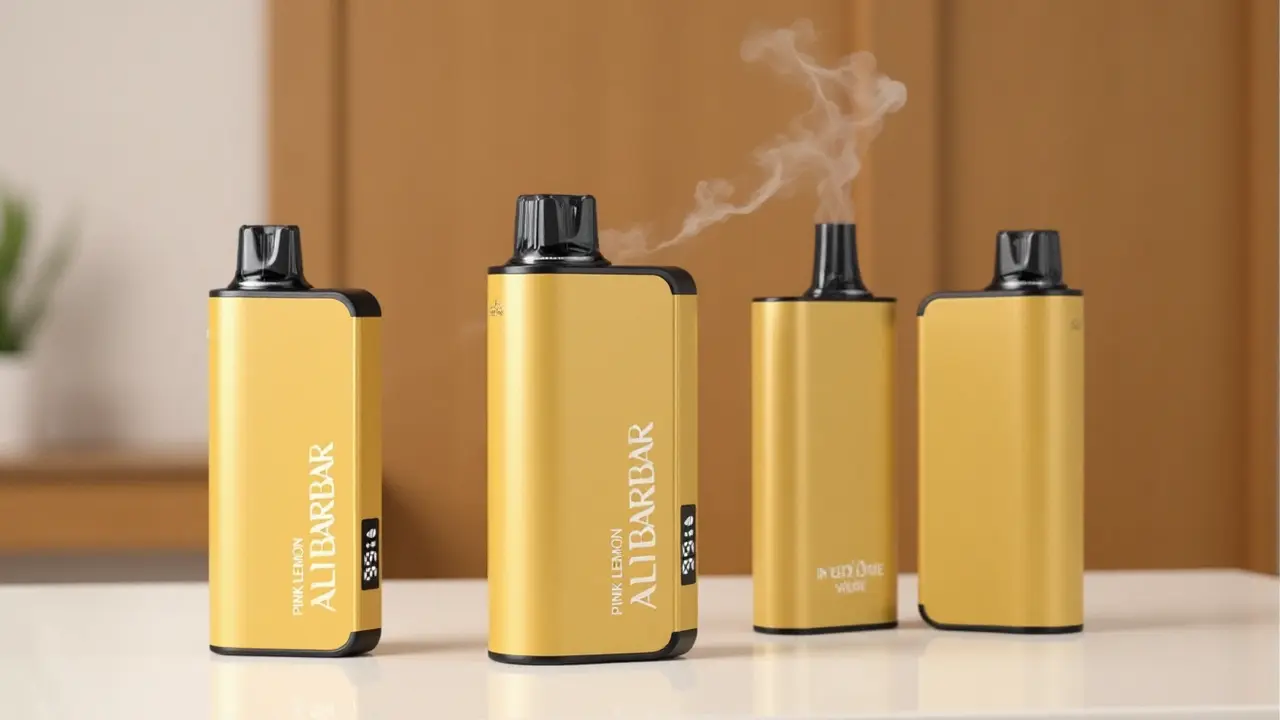
The ALIBARBAR Ice Adjust 12000 demonstrates many of these principles in a practical form. Its dual‑mode airflow adjustment allows the user to tune draw resistance, which indirectly influences consumption rate: a tighter draw may yield shorter puffs while a more open setting encourages longer, deeper inhalations. The mesh coil architecture is engineered to maintain flavour consistency across the device’s operational window, and the integrated battery is scaled to the liquid capacity such that, under typical use, the device rarely needs recharging before the liquid is exhausted.
Yet, even this considered design faces the same reality as any 12000‑puff unit: the rating was established in controlled laboratory conditions — short, precisely timed draws with consistent rest intervals. In actual daily life, individuals vary widely. Someone who habitually takes three‑second puffs will extract more from each activation than the 1‑second standard used in testing. Consequently, the perceived lifespan could be substantially shorter than the numerical claim implies.
Other widely available devices with similar puff numbers may lack the adjustable airflow or the reliable power management that helps a user get closer to the rated capacity. Some budget‑oriented competitors cut corners on coil quality or status indication, leading to earlier flavour fade or unexpected battery depletion, effectively erasing a portion of the promised 12000 draws.
A Practical Framework for Evaluation
If you want to move past the headline number and estimate real‑world duration, apply a simple diagnostic checklist to any 12000‑puff device you’re considering:
Check the battery specification. A capacity of at least 1000 mAh is common; if it’s significantly lower, the device may struggle to power all 12000 puffs without recharging, especially with longer draws.
Note the liquid volume. Most reputable manufacturers state it in millilitres. Larger volumes correlate with more puffs, but efficiency of atomisation also matters.
Assess your own pace. If you take roughly 200 activations per day, a true 12000‑puff lifespan could translate to 60 days. But if those activations are long and deep, halve that figure.
Look for status feedback. A device with a clear battery gauge and puff‑progress indicator (even if just by liquid visibility) gives you the information needed to forecast remaining life.
Consider modularity. Rechargeable units that also allow monitoring of liquid level help ensure you use almost the entire reservoir, whereas a non‑rechargeable unit may stall if the battery gives out first.
Using a standardised checklist like this, you can compare devices on their engineering merits rather than reacting to marketing numbers. If a seller publishes all these specifications openly, it’s a small but meaningful signal of confidence in the product.
Common Selection Errors and Industry Observations
Through years of observing how users interact with these devices, several patterns emerge that work against a satisfying experience:
Over‑weighting the puff number while ignoring complementary factors. A user sees “12000” and assumes superior longevity, but if the coil degrades at 7000 puffs because of cheap materials, or the battery is too small, the device fails its promise. The number alone is a fragile measure without the supporting architecture.
Assuming visual similarity indicates identical internal engineering. The market is full of generically styled cylindrical units that look alike. Externally, one may resemble an ALIBARBAR Ice Adjust, but the internal heating element, battery management chip, and liquid formulation can be completely different, leading to wildly divergent real‑world experiences.
Undervaluing modularity in cost‑per‑use calculations. A sealed, non‑rechargeable 12000‑puff unit might be cheaper upfront, but if it leaves 15% of its liquid unusable because the battery dies too soon, the effective puff count drops. A rechargeable unit that extracts every last puff can offer better long‑term value, even if it costs slightly more.
Taking the puff count literally without understanding the test protocol. Almost all ratings assume a 1‑second puff with a 30‑second pause. Very few users puff that briefly. A real 3‑second puff consumes about three times the material, so the usable number of puffs drops accordingly. Manufacturer specification sheets hardly ever mention this.
From an industry perspective, the move toward adjustable airflow and rechargeable, high‑puff‑count devices is partly a response to these complaints. It acknowledges that users want control over their experience and expect the battery and liquid to be in sync. Brands that invest in coil longevity and transparent communication are gradually raising the standard for what that “12000” label actually represents.
Frequently Asked Questions
Q: How exactly is a “12000 puff” rating determined?
A: Typically, it is measured using a laboratory machine that takes a 1‑second draw at a fixed wattage, pausing 30 seconds between puffs, until the device stops producing an acceptable output or the liquid is depleted. These conditions rarely match real‑world use.
Q: Can I expect a 12000‑puff device to last exactly 12000 puffs?
A: Not in practice. Actual puff count depends on draw length, draw strength, ambient temperature, and even storage conditions. Most users will experience a lower number, sometimes by 20–40%.
Q: How long does a device rated at 12000 puffs usually last in days?
A: If you take around 200 moderate puffs a day, a well‑built device might last roughly 50–60 days. Heavy users who take 400+ longer draws per day might exhaust it in 15–25 days.
Q: Does the adjustable airflow on the ALIBARBAR Ice Adjust 12000 affect puff count?
A: Yes, indirectly. A more open airflow setting encourages deeper draws, which consume more liquid per puff, thereby reducing the total number of puffs you’ll get relative to the standard test. A tighter draw uses less material per activation.
Q: Why does my device taste different after several hundred puffs?
A: Gradual coil fouling and subtle changes in the liquid’s composition can alter taste. Higher‑quality devices use coil materials and liquid formulations that delay these changes, but some evolution is normal.
Q: What should I do if a sealed 12000‑puff unit stops before I’ve used all the liquid?
A: Check if the battery is depleted. In a non‑rechargeable device, a flat battery means the remaining liquid cannot be aerosolised. If the unit is still under warranty and seems defective, contact the authorised retailer.
Q: Are rechargeable 12000‑puff devices more reliable than non‑rechargeable ones?
A: They tend to deliver more of the rated puff count because the battery can be topped up mid‑life, preventing premature cutoff. However, the overall longevity still hinges on coil quality and liquid consistency.
Q: How can I verify I’m buying an authentic ALIBARBAR device, not a counterfeit?
A: Purchase from an authorised channel like OZVAPE Shop that sources directly from factory‑certified distributors and provides verifiable batch information. Counterfeit products often fail to meet safety and performance standards.
Q: Is it safe to use the device until it stops producing entirely?
A: Yes, these devices are designed to be used until the liquid is depleted. However, avoid sustained chain‑puffing that generates excessive heat, which can degrade materials prematurely.
Q: Where can I see detailed specifications for ALIBARBAR devices?
A: OZVAPE Shop lists battery capacity, liquid volume, coil type, and other relevant data for every ALIBARBAR model, making it easier to apply the evaluation framework discussed above.
Conclusion
A 12000‑puff rating is not a guarantee of a specific number of days; it’s a clue that must be read alongside battery management, coil architecture, and your own daily rhythm. The most consistent outcomes come from devices where the engineering matches the ambition — where the power source, the liquid reservoir, and the feedback indicators are designed to work in concert. In a market crowded with superficially similar options, that kind of coherence isn’t always present.
For anyone looking to navigate these choices with accurate data rather than guesswork, OZVAPE Shop serves as a reference point for the entire ALIBARBAR family, complete with transparent specifications and factory‑backed authenticity. The right device is the one that fits your actual routine, not the one that simply claims the highest number on the packaging. A little technical scrutiny, applied calmly and systematically, is all it takes to bridge the gap between the laboratory and your pocket.