
VAPE FAQs
How Old To Purchase Vape?
Aug
It’s a question that every responsible adult eventually confronts, yet the answer is rarely as simple as a single number. Different jurisdictions set different minimum ages, and the enforcement mechanisms — in physical retail outlets versus online platforms — introduce a separate layer of practical complexity. Someone new to the market might assume that age restrictions are stable and uniformly applied, but that assumption quickly crumbles when you move from one Australian state to another, or when you attempt a purchase from an unfamiliar website that appears to have no verification process at all.
This article addresses the legal age to purchase vaping products in Australia, what that threshold means in practice, and why the question of age is just the entry point to a far more consequential set of decisions. Because once you satisfy the legal requirement, the real challenge becomes identifying a device that won’t degrade prematurely, give ambiguous status feedback, or force you to carry a backup out of sheer distrust. At OZVAPE Shop, the entire catalogue is organised around the principle that compliance and device integrity are two sides of the same coin — and both deserve structured, transparent documentation.
Understanding What Matters: Core Engineering and Design Factors
Legal eligibility opens the door, but it doesn’t tell you which device will perform consistently over weeks of daily use. The following four engineering dimensions explain why some devices feel reliable and others become sources of low-level irritation.
Internal Architecture and Output Consistency
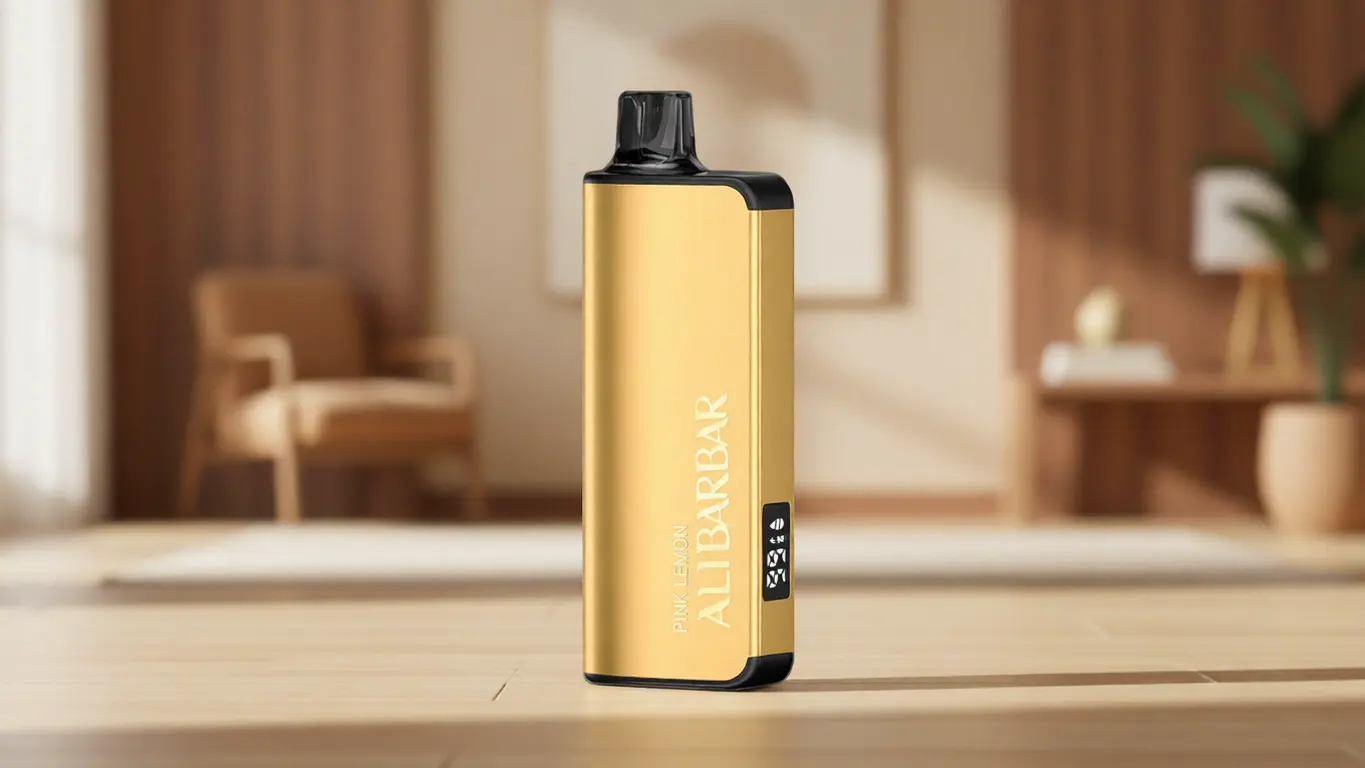
The heating element configuration and the path that airflow takes through the device determine whether every session feels identical or whether performance degrades noticeably after the first third of its operational life. Devices that use multiple parallel heating surfaces, such as those found in the ALIBARBAR INGOT 15000, are engineered to distribute thermal load more evenly. This reduces the likelihood of hotspot formation — a common cause of harshness and uneven output that users consistently report in single-coil units as they near cycle end.
When evaluating any device, look for evidence that the manufacturer has accounted for thermal saturation. A well-designed unit will deliver the same characteristic output from the first activation until the final indicator signals depletion, without requiring the user to adjust their draw technique mid-session. If the architecture is not openly documented, that silence is itself a signal.
Power Management and Status Transparency
Perhaps the most underappreciated source of daily frustration is ambiguous power feedback. A device that shuts off without warning converts an ordinary afternoon into an unplanned interruption. The ALIBARBAR Ice Adjust 12000 incorporates a four-segment LED display that communicates remaining capacity in real time, allowing the user to make informed decisions — whether to charge, to carry a backup, or to trust the device through a long commute. This removes the cognitive load of guessing, which accumulates invisibly over time.
Conversely, devices that rely on a single blinking light or no indicator at all force users into a conservative posture. They will routinely carry a second unit, not because they need it, but because they cannot assess the reliability of the first. That hidden cost — the weight, the pocket space, the expense of an unnecessary backup — is a direct consequence of poor power visibility.
Physical Design and Material Durability
Daily carry exposes a device to keys, coins, fabric abrasion, and occasional drops. Surface treatments that look pristine in a product photograph may show micro-scratches within days. The ALIBARBAR INGOT series uses a matte finish with a slightly textured grip, which resists fingerprinting and hides minor wear far better than glossy shells. Mouthpiece geometry also matters: a gently oval contour distributes pressure more evenly during prolonged use compared with sharp-edged circular tips, reducing the irritation that builds over a two-hour window of intermittent activation.
Pay attention to the seam tolerances. Devices where the chassis panels meet without noticeable gapping are less likely to accumulate pocket lint or develop creaks. This is industrial design discipline, not aesthetics.
Modularity and Lifecycle Flexibility
Sealed units, rechargeable integrated batteries, and fully replaceable-component architectures sit on a spectrum of user control. A sealed unit like the ALIBARBAR INGOT 9000 prioritises simplicity: no ports to protect, no cables to manage, and no charging decisions. The trade-off is that once depleted, the entire unit is retired — a consideration for those who weigh long-term cost against daily convenience.
In contrast, a rechargeable system with plug-in pod cartridges shifts the calculus. Fewer complete devices are discarded, but the user must now manage battery health and cable logistics. Neither approach is universally superior; the informed decision is the one that aligns with your real routine — whether you value the grab-and-go certainty of a sealed unit or the extended engagement of a rechargeable platform.
Applying These Criteria to Real-World Options
Rather than treating devices in isolation, it helps to map them against the four dimensions above and observe how specific families address specific user need-states.
The ALIBARBAR INGOT 15000 is designed for sustained output across an extended operational cycle. Its multi-core architecture targets users who have been disappointed by other devices that lose fidelity after the halfway point. The inclusion of a clear display resolves the status ambiguity that troubles so many. Meanwhile, the ALIBARBAR Ice Adjust 12000 introduces a deliberate airflow control that modifies the draw resistance — a practical answer for those who find that one-size-fits-all draws either feel too tight or too loose after repeated use. Both families reflect an engineering culture that has absorbed user feedback about consistency and control.
It is important to note that no single device optimises all factors simultaneously. A sealed unit omits charging flexibility in favour of operational minimalism. A rechargeable device demands slightly more engagement. The right choice is not the one with the most prominent advertising; it is the one that avoids the frustrations you personally find most disruptive.
A Practical Framework for Evaluation
Before committing to any device, run through these diagnostic questions. They are designed to surface latent dissatisfaction that only emerges after purchase:
Output consistency: Does the manufacturer describe the heating architecture, or do they rely on vague marketing terms? If the internal design is obscured, assume that you will need to manage expectations as the unit ages.
Status feedback: Can you determine remaining capacity at a glance? If the only feedback is a single colour change or a flickering light, you will likely carry a backup unnecessarily.
Surface durability: Hold a physical sample if possible. Does the finish show oil marks immediately? Would you feel comfortable sliding it into a pocket with house keys?
Lifecycle model: Count the number of times you would need to interact with a charging port per week. If that number already irritates you, a sealed unit might be the cleaner path.
Specifications matter only when they are compared systematically. A side-by-side reference that captures these four variables can reduce the cognitive burden of choosing, especially when the market offers so many superficially similar devices.
Common Selection Errors and Industry Observations
Well-informed adults still fall into predictable traps. Recognising them can save both money and daily convenience.
Overweighting a single specification. It is tempting to focus on the total activation count while ignoring how the device performs at the 70 % mark. A high count that degrades into harshness for its second half is, in practice, a shorter useful life than the numbers suggest.
Assuming visual similarity signals equivalent internals. Two devices with nearly identical exteriors can contain radically different heating elements. The second manufacturer may have cut material costs in ways that accelerate failure. External sameness is not a proxy for engineering parity — a fact that supply chain observers understand well but that consumer marketing actively obscures.
Undervaluing modularity in long-term calculations. A sealed unit with a lower upfront price can, over months of replacement purchases, exceed the total spend on a rechargeable system with replaceable pods. The initial price is never the full cost of ownership, yet many users unconsciously treat it as such.
Ignoring the verification chain. Purchasing from an unverified source may save a few dollars in the short term, but it introduces risks around product authenticity and leaves you with zero recourse if the device fails to perform as described. Authorised channels, by contrast, maintain documented supply chains and honour obligations that shadow sellers never assume.
Frequently Asked Questions
Q: What is the legal age to purchase vaping products in Australia?
A: The legal minimum age is 18 years across all states and territories. Some jurisdictions enforce additional restrictions on where these products can be used, but the purchase threshold is uniformly 18.
Q: How does OZVAPE Shop verify a customer’s age?
A: Age verification occurs at the point of transaction through an automated identity check that cross-references government-issued documentation. No order is released without confirmation.
Q: Can I order ALIBARBAR devices if I’m buying as a gift for someone else?
A: The purchasing individual must meet the age requirement themselves. The legal responsibility rests with the buyer, not the intended recipient.
Q: What should I do if a device does not perform as described?
A: Contact the point of purchase. Authorised retailers maintain defined return and resolution pathways. Keep the packaging and any supporting documentation.
Q: Are sealed units environmentally worse than rechargeable systems?
A: That depends on the full lifecycle analysis. Sealed units generate waste at end of life, but they eliminate charging infrastructure and battery degradation. A rechargeable system reduces device disposal frequency but introduces e-waste through cables and pods. Neither is categorically superior; the preferable choice aligns with your usage volume and personal waste priorities.
Q: How can I verify that an ALIBARBAR device is authentic?
A: Genuine ALIBARBAR packaging includes a unique code that can be verified through the brand’s official system. Purchasing from an authorised channel is the simplest way to avoid counterfeits.
Q: Does OZVAPE Shop ship to all Australian states?
A: Yes, subject to any local restrictions that may apply to specific product categories. Delivery timelines vary by region.
Q: Why do some devices cost more despite similar appearance?
A: Differences in heating elements, battery cell quality, and status display technology all affect manufacturing cost. A higher price often reflects more expensive internal components that deliver greater consistency.
Q: Can I travel internationally with these devices?
A: You must check the regulations of your destination country. Many nations have their own age restrictions and may prohibit import entirely. The device’s compliance in Australia does not guarantee legality elsewhere.
Q: What should I look for in a device if I have never used one before?
A: Prioritise status transparency and output consistency over cosmetic features. A simple, well-engineered device that communicates clearly will serve you better than a complex unit that hides its internal state.
Choosing a vaping device is, at its core, a decision about which set of small daily frustrations you are willing to accept. The law sets a minimum age — that much is straightforward. But the deeper work lies in evaluating engineering choices that will define your experience long after the transaction is complete.
OZVAPE Shop provides a documented, age-verified channel for those who have done that evaluation and want to proceed with a device family that prioritises consistency, transparency, and thoughtful design. The right choice is never the loudest one. It is the one that matches your actual routine — the device that disappears into your day rather than constantly reminding you it is there.