
VAPE FAQs
Can Bring Vape To Australia?
Aug
Few questions trigger as much contradictory advice as whether you can bring a vape into Australia. Ask three people and you’ll get three answers: “Absolutely not,” “Sure, just don’t get caught,” and “You need a prescription.” The confusion is understandable—the country’s regulatory landscape has shifted dramatically in just a few years, and the rules continue to evolve in ways that leave even frequent travellers uncertain. This guide is designed to replace guesswork with a structured, factual examination of what is allowed, what isn’t, and how to approach the situation if you plan to travel with a vaping device.
At OZVAPE Shop, we regularly hear from customers planning international trips, and we’ve found that the most common point of failure isn’t bad intent—it’s misinformation passed down through forums and social media. By the time you finish reading, you’ll know exactly which factors matter, how to check your own situation, and where to obtain reliable confirmation before you leave home. No promotional fluff, just the operational reality.
Understanding What Matters: Core Regulatory and Operational Factors
To make sense of Australia’s position on vaping devices, you need more than a simple “yes” or “no.” The answer depends on a network of interconnected regulations that cover device type, nicotine content, personal use quantities, import licensing, and the legal status of the individual importing the goods. The following factors form the framework you should use to evaluate any scenario.
Legal Status of Vaping Devices in Australia
Australia is not like the United States or the United Kingdom. Nicotine is classified as a Schedule 4 medicine under the Poisons Standard, meaning it is available only through prescription. In practical terms, this means that any vaping device intended to deliver nicotine cannot be legally obtained without a prescription from an Australian doctor. The hardware itself—the coil, the battery, the cartridge—is not inherently illegal, but its use with nicotine outside the prescription pathway is.
Since March 2024, the importation of disposable single-use vaping devices has been prohibited entirely, regardless of nicotine content. That alone eliminates a significant portion of what many travellers assume is harmless. Reusable devices face scrutiny too. A visitor carrying a refillable pod system with nicotine pods is subject to requirements that don’t apply to empty hardware.
Customs and Border Control Rules
The Australian Border Force (ABF) is empowered to seize goods that interfere with the operation of the Therapeutic Goods Act 1989. When you arrive in Australia, you are required to declare all goods that may be prohibited or restricted. Failure to declare a vaping device containing nicotine—or even one that appears to contain nicotine—can result in confiscation, monetary penalties, and in the most serious cases, criminal prosecution.
Officers use both direct inspection and detection technology. It is not a matter of whether you get caught; it is a matter of whether the binary declaration you make matches the physical reality of what’s in your luggage. If there is any ambiguity, customs will err on the side of enforcement.
Quantity Limits and Prescription Requirements
The personal importation of nicotine vaping products is permitted only under specific conditions. Currently, an adult traveller may bring a supply of nicotine for personal use if they hold a valid prescription from an Australian-registered medical practitioner. Typically, this allowance corresponds to a maximum of three months’ supply, though the TGA can issue permits for larger quantities under exceptional circumstances.
It’s important to note that only nicotine containing products require a prescription. Non-nicotine devices, while also regulated, are not controlled under the same schedule. However, the definition of “nicotine containing” extends to products that claim to be nicotine-free but are actually contaminated—so the burden of proof is on you as the importer.
Personal Use vs. Commercial Importation
Bringing a device for your own use is categorically different from importing devices to sell or supply to others. Australia has closed most loopholes that previously allowed parallel commercial importation. Any commercial activity requires a valid import licence and product compliance with TGA standards. Travellers caught with a suitcase full of devices—even if they claim they’re gifts—are often treated as commercial importers, and the consequences escalate accordingly.
Applying These Criteria to Real-World Trips
Understanding the regulatory factor leads you to the next question: how does this apply to actual travel situations? Let’s examine a few realistic scenarios, each mapping back to the framework above.
Scenario 1: The tourist with a disposable vape. If you purchased a disposable e-cigarette from a convenience store in Singapore, London, or Los Angeles, you are almost certainly bringing something that violates Australian law. Disposable vapes are banned wholesale. Even if the product has no nicotine, the device itself falls under the import restriction. Your only realistic option is to leave the item behind or check it into checked luggage if you have some legitimate exemption—which, in practice, doesn’t exist for a typical tourist.
Scenario 2: The registered patient travelling to Australia. If you hold a valid Australian prescription for nicotine or nicotine-containing products, you may bring a supply of up to three months’ worth. You must carry the prescription documentation with you and declare the products upon arrival. This is the only legitimate pathway for a passenger to arrive with a vape containing nicotine pods. It is worth noting that the prescription must be issued by a doctor who is registered to practise in Australia—overseas prescriptions are not accepted.
Scenario 3: The resident returning home. Australian residents face the same rules as visitors, but there is an added layer: you must also consider whether your regular GP is willing to prescribe nicotine. Many residents are surprised to learn that their doctor will not authorise a nicotine product for a condition that was previously treated over the counter. If you don’t have a prescription, you cannot legally bring back your usual supplies.
Scenario 4: The vape collector with empty hardware. If you wish to bring a device without nicotine—as a collector or hobbyist—you may satisfy the abf’s requirements, provided you declare it and the device does not contain any residual liquid. However, if the device appears used or tests positive for nicotine traces, you will be in a grey zone. It is advisable to pack the device clean, remove the cartridge, and be prepared to explain its purpose without referencing nicotine.
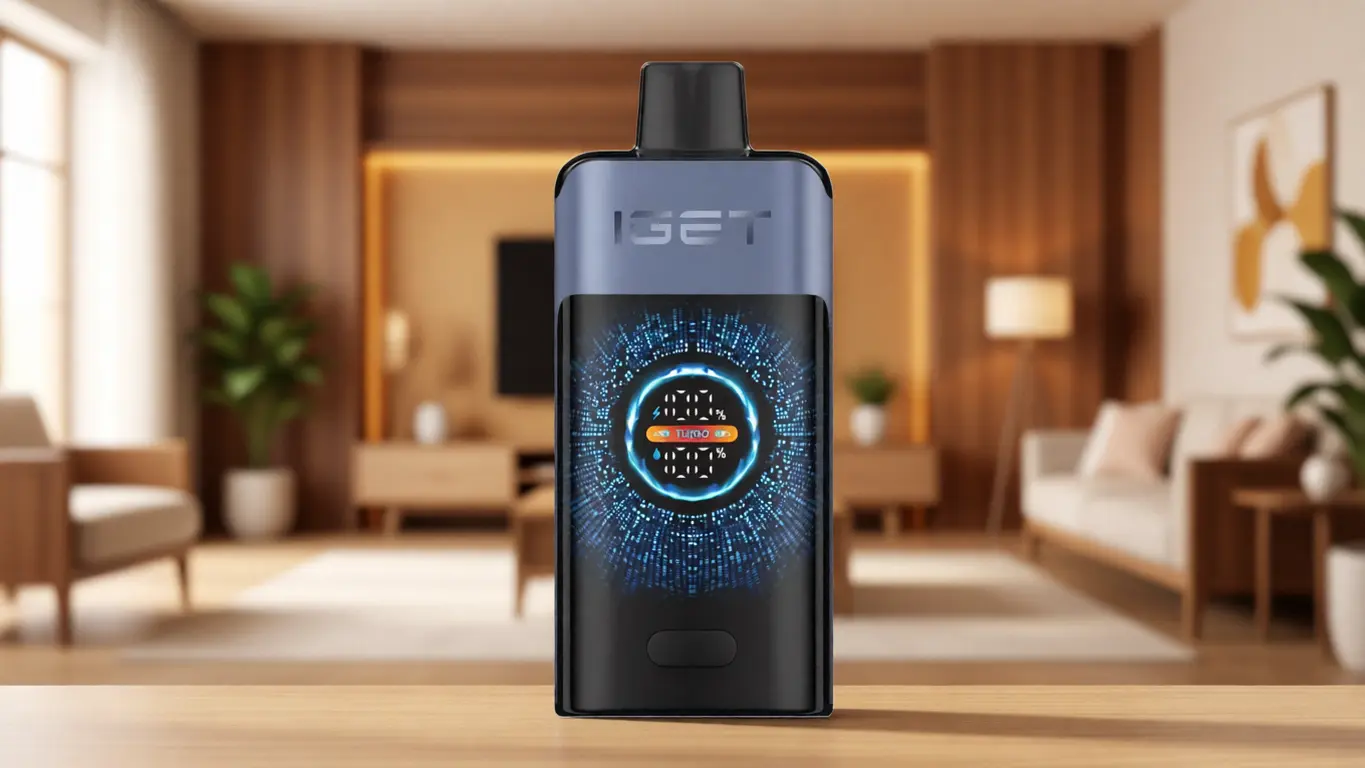
For those already in Australia and looking to purchase a compliant device domestically, OZVAPE Shop carries the ALIBARBAR range, including the INGOT 9000, INGOT 15000, and Ice Adjust 12000 series. These devices are engineered for consistent performance and transparent status feedback—but it must be stressed that they are only lawful to use with an authorised nicotine prescription or with nicotine-free formulations. Owning the hardware is not the same as having legal capacity to use it with prohibited substances.
A Practical Framework for Evaluating Your Situation
If you are unsure whether you can legally bring a vape into Australia, walk through the following steps methodically. It will take less than ten minutes and will save you the risk of surprise enforcement action.
Step 1: Identify the device and its contents. Write down the exact model, whether it’s disposable or reusable, and what liquid is in it. Check the label for “nicotine” and its concentration in milligrams per millilitre. If the product doesn’t state its nicotine content, treat it as containing nicotine.
Step 2: Determine if your device qualifies for an import exemption. Disposables are automatically disqualified. Reusables with nicotine containing e-liquid require a valid Australian prescription. Reusables without nicotine may be allowed, but you still must declare them.
Step 3: Obtain the necessary documentation. If you have a prescription, print a copy and keep it in your carry-on luggage. If you do not have one, do not attempt to bring nicotine. You could, in theory, visit a travel clinic in Australia upon arrival and get a prescription—but you would not be allowed to have the product in your luggage at the border.
Step 4: Consider your departure country’s rules. Some airlines prohibit vapes in checked luggage because of battery fire risks, while others allow them in carry-on but with restrictions. The TSA (or equivalent) requires that any spare lithium-ion cells be carried in carry-on luggage only. Confirm with your airline before departure to avoid being forced to dispose of an expensive device during security screening.
Step 5: Declare everything. On your Incoming Passenger Card, tick “Yes” when asked about tobacco, drugs, or other controlled substances—even if you believe your item is allowed. Volunteers to declare are treated with more leniency than those who fail to disclose. A declaration does not guarantee it will be allowed, but failure to declare virtually guarantees seizure and penalties.
Step 6: Be prepared to surrender the item if uncertain. If an ABF officer decides that your situation does not meet the exception, you have no practical recourse at the border. You may be able to appeal, but the process takes weeks. The financially prudent decision is to surrender the device and buy a legal one later.
Common Mistakes and Industry Observations
Even experienced travellers fall into predictable traps. Here are several recurring errors that show up in ABF seizure data and in our own helpdesk conversations.
Mistake 1: Overweighting one aspect of the law. People fixate on the nicotine angle and ignore the ban on disposables. A tourist might think, “I’ll just bring my non-nicotine disposable” and be surprised to learn the entire category is prohibited. Conversely, someone might concentrate on the quantity limit and wrongly assume that having a prescription is optional if they stay under the limit.
Mistake 2: Assuming similarity in hardware means equivalence in regulation. The law does not care that a device looks like a USB stick. The classification is based on the chemical composition of the liquid, the presence of a cartridge, and the overall design intent. A refillable system with an empty tank is different from a sealed pod with a nicotine salt label.
Mistake 3: Undervaluing the prescription requirement. Some travellers believe that obtaining a prescription from a doctor in their home country is sufficient. It is not. Australia recognises only prescriptions from doctors registered in Australia. The Australian Health Practitioner Regulation Agency (AHPRA) maintains the registry, and you can check your doctor’s status online.
Mistake 4: Relying on “grey market” advice. There are thousands of posts online claiming that “no one actually checks,” or that you can simply pay a fine and move on. This is dangerous. Enforcement has become more rigorous over the past two years, and the ABF has publicly communicated that vape smuggling is a priority. The odds of intercept may be high or low depending on your point of entry, but why risk a criminal record for a temporary convenience?
Industry observation: Regulations are unlikely to loosen. In fact, the trend across Australia is toward tightening—extending bans to refillable systems and increasing penalties. Retailers like us pay close attention to each enforcement notice because they change our stock planning and the advice we give to customers. The current environment demands that any adult who wishes to continue using vapor products after entering Australia be prepared to obtain a prescription and purchase locally.
Frequently Asked Questions
Q: Can I bring a vape in my carry-on luggage?
Yes, a device without nicotine can be brought on board, following airline safety rules for lithium-ion batteries. Devices with nicotine require a valid Australian prescription and must be declared. Spare batteries must accompany the device in carry-on, never in checked bags.
Q: Can I bring disposable vapes to Australia?
No. As of March 2024, the importation of all disposable vape devices is prohibited. This applies even to zero-nicotine disposables. Do not bring them.
Q: What happens if I don’t declare my vape and it’s found?
The ABF can confiscate the item, issue an infringement notice with a fine (typically A$370 for a first offence), and potentially refer you for prosecution if the volume is large or repeated. Non-declaration is treated as a deliberate act, not a simple oversight.
Q: I have a prescription from my home country. Does it work?
No. Only prescriptions issued by Australian-registered medical practitioners are accepted for importation purposes. You would need to see an Australian doctor after arrival to obtain a valid prescription.
Q: Can I have someone ship a vape to me in Australia?
Bringing via postal services is also regulated. Importation through the mail is only lawful with a TGA permit or a valid prescription, and many parcels are x-rayed. If anything arrives without approval, it will be seized and may trigger a notice to the recipient.
Q: What is the maximum amount of nicotine vape I can bring with a prescription?
The typical allowance is a maximum of three months’ supply, as defined by the TGA. The prescription should be written to cover that period. Amounts beyond three months require a separate permit.
Q: Are empty vape tanks and cartridges allowed?
Generally, yes, providing they are empty and clean. However, “clean” must mean no residual liquid traces that could contain nicotine. If the item tests positive, you may face the same consequences as if you had brought nicotine intentionally.
Q: Can I use a vape in Australia after I land?
Even if you legally brought the device, usage is still governed by state and territory laws. In most public places—including indoor areas, transport hubs and near school premises—vaping is prohibited. You can only use it in private spaces or designated smoking areas, if any exist.
Q: What should I do with my vape if I want to return home with it?
If you are legally in Australia with a device, you may take it out with you when you leave, subject to airline rules. You don’t need to abandon it, but if the device contains nicotine and you intend to return to Australia later, you will need to apply the new prescription and declaration rules again on your next arrival.
Q: Does OZVAPE Shop ship internationally?
No, OZVAPE Shop serves adult customers in Australia only. We offer local delivery for the ALIBARBAR range, and we encourage anyone travelling here to consider their legal position before buying a device that may not pass customs on entry.
Conclusion
The answer to “can you bring a vape to Australia” is not a single word. For the vast majority of travellers, the correct answer is no—particularly if the device is disposable, contains nicotine, or lacks an Australian-issued prescription. For a small number of people—those with a local prescription and a compliant reusable device—the answer is yes, but only under strict conditions that include declaration and adherence to quantity limits.
Regulations in this area have a short shelf life, and what is true today may be outdated next year. The Australian Border Force and the Therapeutic Goods Administration publish official guidance, and you should treat those as the final authority before you pack. If you are already in Australia and need a reliable, factory-certified device that meets local retail requirements, OZVAPE Shop carries the ALIBARBAR family, and our team can clarify the documentation you’ll need when travelling. But no retailer can override federal law.
In the end, the right choice isn’t the one that feels easiest in the moment—it’s the one that keeps you compliant and free from unexpected encounters with customs officers. Plan ahead, secure the right paperwork, and you can travel with confidence. If the paperwork isn’t available, leave the vape at home and take the simpler path: buy what you need legally after you land.