
VAPE FAQs
How Does Vape Pen Work?
Sep
The everyday object that slips into a pocket without a second thought — a slender, sealed cylinder or a compact rectangular device — seems almost too simple to invite careful analysis. Yet the quiet, dependable function that a well-engineered personal electronic vaporiser delivers conceals a deliberate arrangement of components that must cooperate under variable conditions: fluctuating ambient temperatures, inconsistent draw strengths, and the cumulative strain of repeated activation cycles. When that cooperation breaks down, the user notices immediately. The output weakens, the battery expires without warning, or the device simply refuses to respond. Understanding how a vape pen actually works transforms an opaque, disposable gadget into a knowable system, and it empowers the user to distinguish genuine engineering from superficial design.
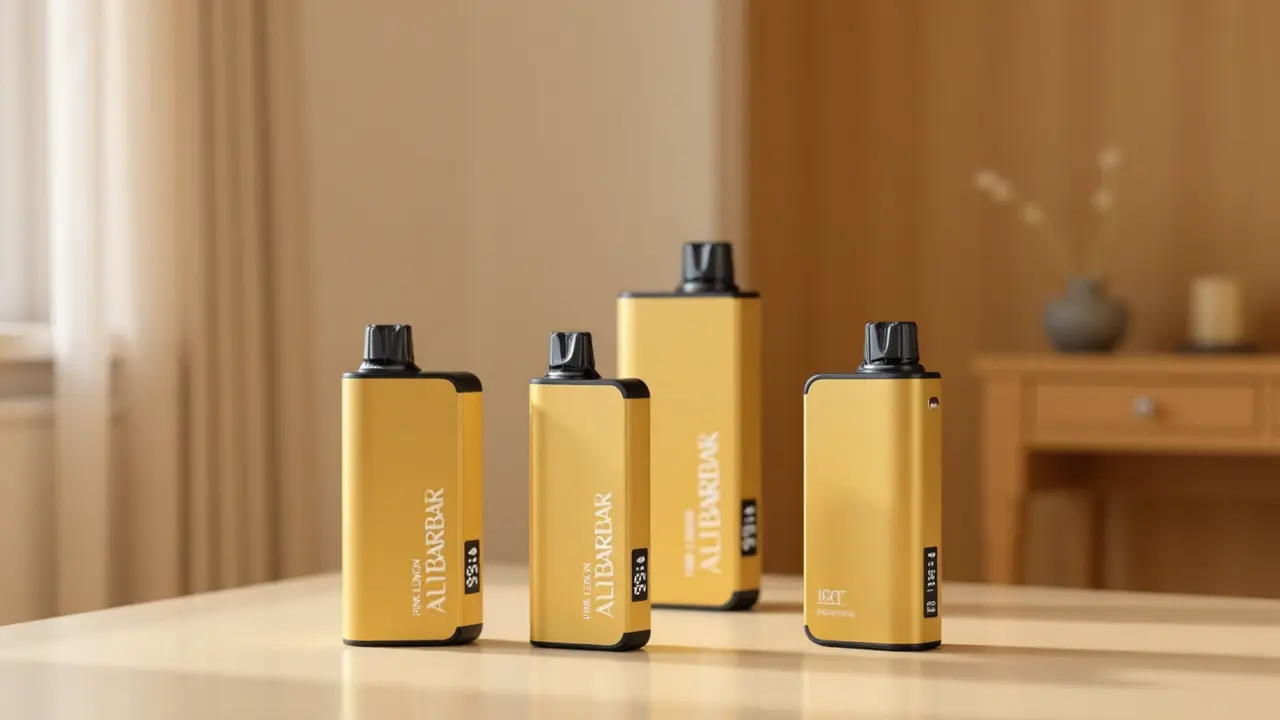
At OZVAPE Shop, we have observed that the most common source of dissatisfaction among adult users is not a lack of options but a lack of accessible, technically precise information that allows them to evaluate those options on their own terms. This article provides a thorough, component-level explanation of how modern personal vaporisers operate, using observable industry patterns and proven design principles as a foundation. No brand is the subject; rather, carefully selected device families — including the ALIBARBAR range — appear where they usefully illustrate the engineering concepts under discussion.
Understanding What Matters: Core Engineering and Design Factors
Before examining any specific device, it is necessary to establish the functional architecture that all vape pens share, regardless of form factor or brand positioning. Every device in this category integrates three fundamental subsystems: a power source, a heating element, and a reservoir that holds the liquid to be vapourised. The sophistication with which these subsystems are calibrated and protected from one another determines whether the device delivers a consistent experience from the first activation to the last.
Internal Architecture and Output Consistency
The heating element lies at the heart of the system. In most contemporary devices, this takes the form of a resistive coil — typically a wire made from Kanthal, nichrome, or stainless steel — wrapped around a wicking material that draws liquid from the reservoir through capillary action. When current flows through the coil, electrical resistance converts that energy into heat. The wick, saturated with liquid, reaches a temperature sufficient to produce an inhalable vapour without combusting the carrier fluid.
Why this matters: Users consistently report that performance degrades unpredictably toward the end of a device’s operational life. The explanation is often thermal. Poorly designed heating assemblies allow hot spots to develop along the coil, causing localised overheating of the wick. Over repeated cycles, the wicking material — commonly organic cotton or silica fibre — compresses, chars, or loses its capillary efficiency. A device with a robust coil geometry and evenly distributed heating surfaces will exhibit far less drift in output volume and flavour character over its rated lifespan.
One recognisable approach appears in the ALIBARBAR INGOT series, where the heating architecture is engineered to maintain thermal equilibrium across the entire coil length. This is not a marketing claim; it is a structural choice visible in the consistency of output reported across the device’s duty cycle. When evaluating any device, a user can recognise well-engineered thermal management by noting whether the draw remains stable from the first use through to the depletion point, without developing a sharp, hot, or thin quality that signals uneven wick saturation.
Power Management and Status Transparency
The power source — almost invariably a lithium-ion cell — must deliver a stable voltage to the coil under varying load conditions. A poorly regulated power circuit will sag as the battery depletes, resulting in progressively weaker output. More critically, over-discharge protection and short-circuit safeguards are not luxury features; they are minimum safety requirements. Yet beyond these protective mechanisms, the practical user needs to know exactly where the device sits in its charge cycle.
Devices that provide ambiguous or absent status feedback impose a hidden cost: the user compensates by carrying a backup unit, effectively doubling the investment to solve a problem that clear indicators would eliminate. A battery indicator that communicates remaining capacity in discrete steps — rather than a single colour change moments before shutdown — gives the user agency. Multi-tier LED systems, haptic feedback, or digital readouts allow the user to plan usage around real data rather than anxious guesswork.
Physical Design and Material Durability
The exterior surfaces of a personal vaporiser endure constant contact with skin oils, pocket lint, keys, and coins. Anodised aluminium alloys and certain polycarbonate blends resist micro-scratching and colour fade better than cheaper ABS plastics or painted finishes that can peel within days. Beyond aesthetics, the mouthpiece contour matters greatly. A poorly radiused tip concentrates pressure on a narrow area of the lip, causing discomfort during prolonged use. Devices that taper gently and distribute contact over a broader surface — such as the ergonomic shaping found on the ALIBARBAR Ice Adjust 12000 — demonstrate that the designer paid attention to the minutes and hours of actual human interaction, not just the spec sheet.
Modularity and Lifecycle Flexibility
Personal electronic devices in this category fall along a spectrum of modularity. Fully sealed, pre-filled units offer simplicity but commit the user to discarding the entire assembly — battery, circuitry, and heating element — when the reservoir is empty. Rechargeable but non-refillable devices extend battery life but still treat the heating system as a consumable whole. Interchangeable pod or cartridge systems allow separate replacement of the reservoir and coil, reducing both long-term cost and material waste.

The choice depends on the user’s priorities. Someone who values ultimate grab-and-go convenience will accept a sealed design. A user who calculates cost over months or years will gravitate toward a modular architecture. Understanding this spectrum helps avoid the error of paying a premium for a device whose lifecycle assumptions do not align with actual usage patterns.
Applying These Criteria to Real-World Options
The value of an analytical framework lies in its application. Consider a user who travels frequently for work and needs a device that will last through a full day of intermittent use without requiring a top-up charge or a second unit. They value consistent output, clear status feedback, and a form factor that disappears into a jacket pocket.
The ALIBARBAR INGOT 15000, with its high-capacity reservoir and rechargeable battery architecture, addresses the endurance requirement directly. Its LED indication system offers granular charge-state visibility, removing uncertainty. The coil design, based on a mesh configuration that distributes heat more uniformly than a standard round-wire coil, contributes to the output stability noted earlier. The trade-off is size: a device built for endurance cannot be the slimmest option on the market, and a user whose priority is absolute minimalism might find it less suitable.
For someone in an extended social setting who wants to avoid frequent recharging but keep size manageable, the INGOT 9000 offers a middle ground. Its capacity is substantial yet the device remains pocketable, and it shares the same mesh-coil thermal characteristics. In contrast, the Ice Adjust 12000 introduces a user-adjustable airflow mechanism, a feature that allows the individual to fine-tune draw resistance. This moves the device out of the “preset experience” category, giving the user a degree of control usually reserved for more complex, modular systems. The engineering challenge here — and one that ALIBARBAR appears to have addressed — is maintaining seal integrity around an adjustable component, which, if poorly executed, can introduce air leaks and inconsistent activation.
No device is uniformly superior. The correct choice emerges when the user matches design priorities to their own daily routine, not when a marketing comparison table declares a winner.
A Practical Framework for Evaluation
The following step-by-step methodology can be applied to any personal vaporiser, regardless of brand, before purchase:
Identify your primary frustration. Are you tired of devices dying without warning? Do you find yourself carrying a backup out of habit? Is the output inconsistent from start to finish? Name the problem explicitly. This determines which technical factor deserves the most scrutiny.
Request or locate the full specification. Capacity, battery rating (mAh), coil resistance, and material composition are not peripheral details. A device that omits these from its product page is hiding something. Ask: Does this device give me clear status feedback? If not, you will likely end up carrying a second unit.
Examine the airflow path. Fixed or adjustable? If adjustable, how is the mechanism sealed? A device that draws air across internal electronics — a design flaw present in some low-cost units — can introduce condensation-related failures over time.
Calculate the realistic cost-per-use. Divide the total cost by the rated number of activations or the reservoir volume, then compare across modular and sealed formats. A sealed device with a lower upfront price frequently carries a higher cost-per-use than a rechargeable system with replaceable pods when viewed over a three-month period.
Verify sourcing. Authorised distributors maintain documented supply chains. At OZVAPE Shop, inventory is factory-certified, which means each device can be traced back to its manufacturing batch. This may seem like an operational detail, but it is the only reliable defence against the counterfeit units that have appeared in parallel import channels.
Common Selection Errors and Industry Observations
Years of watching the market have revealed patterns in how users inadvertently undermine their own satisfaction.
Overweighting a single capacity number. A high puff count on a spec sheet is meaningless if the power regulation cannot sustain output quality across that span. Some devices are rated optimistically; others deliver. Without understanding the underlying power management and coil endurance, a capacity number is just a number.
Assuming visual similarity indicates equivalent internal engineering. Two devices that look nearly identical on a store page can contain vastly different heating architectures, battery management ICs, and quality of wicking material. The external shell reveals nothing about what happens when current meets coil.
Undervaluing modularity in cost calculations. A sealed device priced at $30 that lasts a week appears cheaper than a $40 rechargeable system with $10 replacement pods that lasts a month. Do the maths over a quarter, and the sealed option costs $360 against $70 for the modular alternative. The industry knows this; users often do not.
Confusing category terminology with technical specifications. Terms such as “mesh coil” or “adjustable airflow” describe design features, not performance guarantees. Mesh coils offer better thermal distribution when implemented correctly, but a poorly wicked mesh coil performs worse than a properly built round-wire alternative. Always seek evidence of the outcome — consistent draw, stable flavour — not just the presence of the buzzword.
From an industry perspective, the trend toward integrated, highly automated manufacturing has raised baseline quality across most major product families, including ALIBARBAR. However, it has also created a parallel market of devices that mimic the external appearance of established designs while cutting costs on the internals: thinner battery tabs, cheaper wick material, minimal PCB protection. Retailers that do not disclose their sourcing are betting that consumers will not notice the difference until the device has already failed.
Frequently Asked Questions
Q: What actually causes the vapour in a vape pen?
A: An electrical current passes through a resistive coil, which heats a wick saturated with liquid. The liquid reaches its boiling point and transitions into an inhalable aerosol. There is no combustion; the process relies entirely on thermal energy transfer.
Q: Why do some devices produce weak vapour before they are fully used up?
A: Most commonly, this indicates reduced wicking efficiency. As the wick degrades or becomes compressed, less liquid reaches the coil, and the output thins. Poor battery regulation can also depress coil temperature as the cell voltage falls.
Q: How many charges can a rechargeable device safely undergo?
A: Lithium-ion cells typically retain 80% of their original capacity after 300–500 full charge cycles, though actual lifespan depends on discharge depth, ambient temperature, and the quality of the battery management circuit. Well-designed devices will stop accepting a charge if cell health drops below a safe threshold.
Q: Is an adjustable airflow mechanism worth the added complexity?
A: For a user who has strong preferences about draw resistance, yes. It allows the device to match personal inhalation style. However, the mechanism must be sealed against internal condensation. If the adjustment ring feels loose or has no visible sealing gasket, it may become a point of failure.
Q: How can I verify that a device is authentic and not a counterfeit?
A: Purchase only from retailers that document their supply chain. Look for batch codes that can be verified with the manufacturer. Authorised channels, such as OZVAPE Shop, maintain factory-certified inventory with traceable provenance.
Q: Does a higher mAh battery rating always mean longer device life?
A: Not necessarily. Device life is the product of battery capacity and the efficiency of the power regulation circuit. A 500 mAh battery with efficient step-down regulation can outlast a poorly regulated 650 mAh cell. Moreover, higher capacity often comes with increased size and weight.
Q: Why do some devices develop a burnt taste abruptly?
A: A burnt taste indicates that the wick material has been scorched, usually because it ran dry momentarily while the coil was still hot. This can happen when chain-activating the device without allowing time for capillary action to re-saturate the wick, or when a device’s liquid level drops below the wicking ports.
Q: Can environmental temperature affect device performance?
A: Yes. Cold temperatures increase the viscosity of the liquid, slowing wicking. Extreme heat can accelerate battery self-discharge and degrade cell chemistry. Devices perform most consistently within a moderate temperature range, typically 10–30 °C.
Q: What should I do if a device arrives and does not function?
A: First, verify the battery isolation tab — many devices ship with a protective tab that must be removed before activation. If the issue persists, contact the retailer. At OZVAPE Shop, post-purchase support handles such cases directly, including replacement for confirmed factory defects.
Q: How do I choose between a sealed device and a modular system?
A: Consider your usage volume and your willingness to manage separate components. Light, occasional use may make a sealed device perfectly cost-effective. Regular daily use almost always favours a modular or rechargeable system when you examine the three-month cost.
Conclusion
A vape pen is not a mystery; it is a compact electromechanical system governed by the same physical principles that apply to any precision-engineered consumer device. When the heating element, power circuit, wicking material, and reservoir are designed to cooperate honestly — without cutting corners, without overpromising on a spec sheet — the user experiences a quiet reliability that asks for very little in return. Inferior engineering, by contrast, announces itself daily through small, accumulating frustrations.
Informed users make better decisions. This article has provided a set of analytical tools that any adult can use to move past packaging claims and peer into the actual workings of a device. When you are ready to apply these criteria to real options, OZVAPE Shop offers a fully documented, factory-certified selection that includes the ALIBARBAR range alongside other carefully evaluated product families, allowing you to compare specifications transparently and choose based on your own priorities.
The right choice is not the one with the most attention-grabbing claims. It is the one whose engineering aligns with your actual daily routine, whose status indicators give you confidence, and whose lifespan matches your expectations because the manufacturer respected the physical limits of the components inside. That device exists, and the ability to find it is entirely within your reach.