
VAPE FAQs
How Does A Vape Work Diagram?

May
The quietest seat on a morning train, a work break with ten minutes to spare, a night out that stretches longer than expected — these are the moments when a device simply needs to work. No hesitation. No ambiguity. Yet the conversations we overhear, the questions that land in our support inbox, and the troubleshooting posts that surface in online forums all point to the same gap: very few users have been shown what actually happens inside the device they’re holding. They sense when something is off, but they lack the vocabulary to name it.
A functional understanding of the internal layout — what could be called a mental wiring diagram — changes that. It strips away the guesswork. It makes performance predictable and buying decisions deliberate rather than hopeful. This article reconstructs that diagram, component by component, and then demonstrates how the principles show up in real devices, including those within the ALIBARBAR family available through OZVAPE Shop (opens in a new window). The goal is not to celebrate a particular brand, but to give you a durable framework for evaluating any device you encounter.
Understanding What Matters: The Architectural Layers of a Heated Delivery System
Strip a portable electronic vaporisation device to its skeleton and you’ll find the same five functional organs, regardless of shape, colour, or price tag. Differences in user experience almost always trace back to how carefully each organ is implemented, how they communicate with one another, and what the manufacturer chose to prioritise.
Power Core and Energy Regulation
The battery — typically a lithium-ion cylindrical cell — is the least visible yet most consequential single component in determining whether a device will serve you for a full day or leave you stranded by early evening. Its rated capacity in milliampere-hours (mAh) is a starting point, but equally important is the voltage regulation logic that sits between the cell and the heating element. Cheap regulation drifts under load, causing output to weaken as the stored charge drops. A well-regulated system maintains a flat discharge curve, so the final fifty draws feel indistinguishable from the first ten.
In practical terms, a device with high-grade power management erases the nagging anxiety that forces many users to carry a backup unit. You charge less frequently and experience fewer of the weak, unsatisfying draws that occur when voltage sags. The ALIBARBAR INGOT series, for instance, integrates draw‑activated circuitry that throttles output only when the cell genuinely reaches its safe discharge floor, not before. This is not marketing language; it’s a design choice that becomes visible when you stress‑test the device across two consecutive days of heavy use.
Heating Architecture and Vapour Consistency
At the centre of the diagram sits the atomizer — a housing that contains a resistive wire coil and a wicking material. Current passes through the coil; the coil’s resistance converts electrical energy into precisely localised heat; the surrounding liquid‑saturated wick reaches its boiling range and produces an inhalable aerosol. The engineering choices here ripple outward: coil geometry affects ramp‑up time, wire composition affects resistance stability over hundreds of heat cycles, and wick density determines whether you’ll ever taste the acrid note of an under‑supplied burn.
The frustration users describe as “the device tastes great for the first day, then goes flat” is most often a wicking failure. Mass‑produced units that sacrifice wick quality for cost exhibit early degradation. Properly engineered systems — where the wicking material maintains capillary action consistently — deliver even saturation from the first draw until the reservoir is nearly dry. That consistency is what turns a device from a novelty into a dependable tool.
Fluid Path and Airflow Sensor Logic
A mouth‑to‑lung device typically uses a diaphragm‑based airflow switch that detects negative pressure when you inhale, triggering the battery circuit. The reliability of that switch governs the entire interaction. If it requires an unnaturally forceful pull, the experience becomes a chore. If it’s too sensitive, the device may activate in a pocket or bag, draining the battery and potentially producing unwanted vapour.
Additionally, the physical path that incoming air takes — whether it passes directly over the coil or through separate cooling channels — determines throat feel and temperature. ALIBARBAR engineers have paid particular attention to this in their Ice Adjust 12000 design, where the airflow channel length and placement are tuned to deliver a consistent mouth temperature without heat spikes, even during prolonged back‑to‑back sessions. This is not a unique capability; it is simply a visible example of an engineering practice that separates considered design from generic assembly.
Status Transparency: The Indicator System
The visual feedback loop between device and user turns out to be one of the most undervalued elements in the entire architecture. A single‑colour LED that blinks three times before dying communicates almost nothing. A multi‑stage indicator — gradient lighting, segmented display, or colour‑coded pulsing — gives the user a live estimate of remaining charge and alerts them before the device becomes useless.
When a device fails to offer this transparency, the user naturally adapts by purchasing and carrying a second unit. That hidden cost — the cost of uncertainty — makes transparent status communication a genuine feature, not an aesthetic flourish. Devices like the INGOT 9000 incorporate a clear, graduated battery meter that is visible from multiple angles. The practical result: users report fewer instances of completely dead devices in situations where access to a charger is hours away.
Structural Integrity and Daily Wear Resistance
The final slice of the diagram is the chassis. What looks like an identical aluminium alloy body across two competing products can behave entirely differently after four weeks in a pocket alongside keys and coins. Anodising quality, seam construction, mouthpiece attachment — each point of contact is a potential failure point. A device that survives a waist‑height drop onto concrete without cracking the housing or dislodging the internal assembly passes a real‑world stress test that a polished marketing photo can never replicate.
Mouthpiece design, too, belongs in this category. A poorly contoured tip fatigues the lips during extended use; a well‑engineered one disappears into the background. Many users don’t notice the difference until they’ve spent an hour with each, but it directly shapes whether a device gets used for five minutes or stays in hand throughout a long social engagement.
Applying These Criteria to Real‑World Options
The abstract description above becomes tangible when we hold it up against specific, widely available devices. The ALIBARBAR catalogue offers a convenient range of form factors that map neatly onto different user need‑states. This is not an endorsement, but an illustration of how the architectural layers manifest in products you can actually examine.
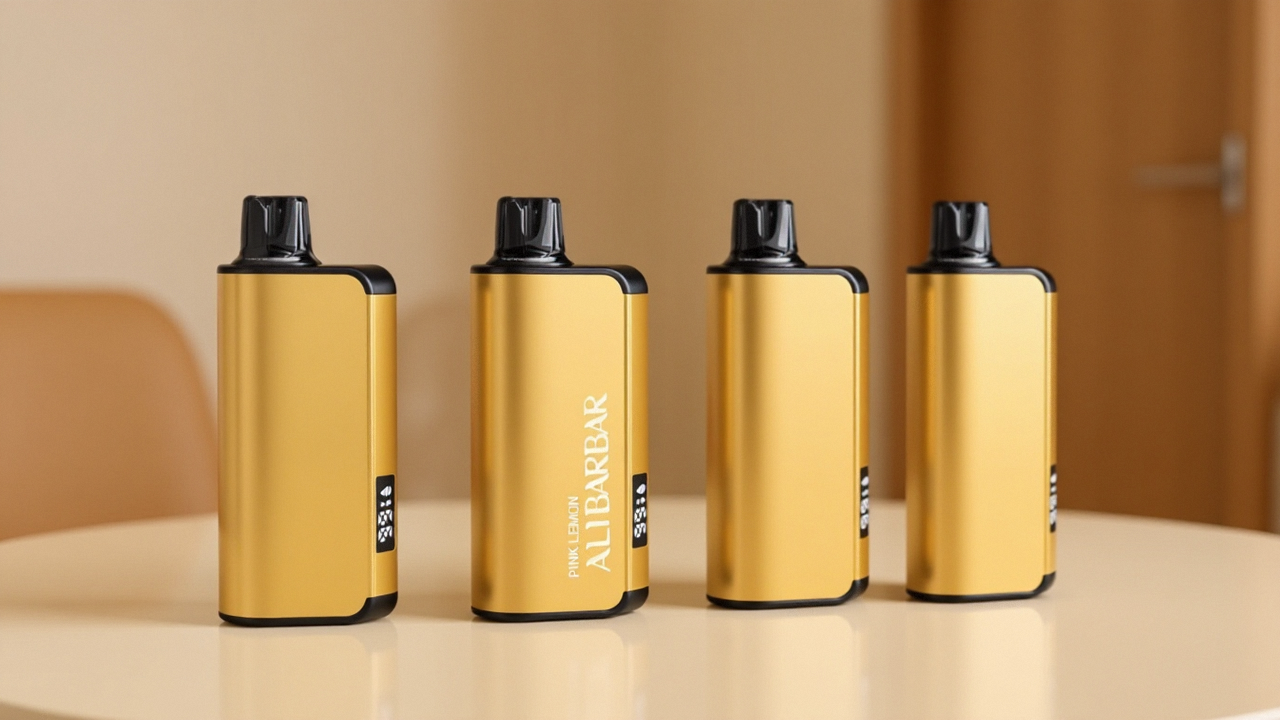
For the user seeking maximum duration with minimum intervention: the INGOT 15000. Its high‑capacity reservoir and optimised power curve mean the device delivers a consistent output across an unusually long operational window. The internal coil is designed for low‑resistance ramp so that the very first draw of the morning feels no different from the hundredth. The status indicator is segmented, providing granular battery feedback rather than a binary “charged/not charged” signal. The trade‑off is physical size: this is not the most pocketable option, and users who value extreme discretion may find it too prominent.
For the user who values a familiar, compact profile: the INGOT 9000. This model exemplifies the flat‑discharge regulation we discussed earlier. It sustains a stable voltage output until the usable energy is nearly depleted, meaning the satisfaction of a draw doesn’t taper off prematurely. The streamlined chassis resists scratches remarkably well in everyday carry, and the mouthpiece contour was clearly subjected to user testing: prolonged use creates far less fatigue than the angular alternatives that still dominate some market segments. The compromise here is capacity — it’s designed for a full day, not a multi‑day excursion.
For the user who wants perceptible cooling and adjustability: the Ice Adjust 12000. This device introduces an adjustable airflow collar, a feature that allows the user to shift between a tighter mouth‑to‑lung draw and a slightly more open, airier experience. It’s a simple mechanical adjustment, but it addresses a real frustration: the feeling that a fixed‑airflow device was designed for someone else’s preferences. The cooling sensation is achieved via additional air channel routing, not through any add‑on cartridge, which keeps the total unit count at one. The potential drawback is that the sliding mechanism requires periodic cleaning if the device lives in a lint‑filled pocket; neglect can cause the adjuster to stiffen.
These three devices are not the only valid choices in their respective categories, but they serve as concrete reference points for the engineering factors we outlined. When you encounter another brand that claims equivalent longevity, you can now ask concrete questions: Does it regulate power all the way to depletion? How transparent is its battery feedback? Has anyone stress‑tested its chassis over 30 days of daily carry? Those questions are far more valuable than any star rating.
A Practical Framework for Evaluation
Before committing to any portable device, walk through this mental checklist. It converts the architectural knowledge from earlier sections into a decision‑making sequence.
Operational window: Multiply the rated capacity by realistic consumption. If you typically take between 50 and 80 draws daily, and the device offers a reservoir rated for a certain number of draws, assume you’ll hit that number minus 15% due to usage pattern variance. Does that still cover your longest typical day without a recharge?
Output consistency: Look for evidence of regulated voltage or a “constant output” claim that is backed by user feedback, not just product copy. If the manufacturer does not explicitly address power sag, assume the experience will degrade as the battery drains.
Status feedback: Can you, within one second, determine the approximate remaining battery life? If the indicator only activates when the device is about to shut down, you will inevitably carry a backup or experience unexpected downtime.
Physical resilience: Test the finish in the store if possible. Run a fingernail across the surface. Does it feel like a coating that will absorb scratches, or a true anodised layer that resists them? The mouthpiece — does it fit naturally between the lips without requiring you to purse awkwardly? These are instant indicators of design maturity.
Support ecosystem: Can you reach a human being if the device exhibits a fault? Is the retailer’s supply chain documented? This may not be part of the device diagram itself, but it is the final safeguard in the user experience. A sophisticated internal architecture means little if a failure leads to a dead‑end support loop.
Common Selection Errors and Industry Observations
Even with a solid understanding of the internal diagram, users routinely undermine their own satisfaction through incomplete evaluation. Here are three patterns we see frequently.
Confusing visual similarity with internal equivalence. Two devices can share nearly identical exterior dimensions, button layout, and finish. Inside, however, one may use a well‑regulated power module and quality wicking, while the other uses the cheapest available coil assembly. The result is that device A lasts for its rated full cycle, while device B begins to taste muted after 60% depletion. The error is assuming that because they look the same, they are the same.
Overweighting a single specification. Capacity numbers are easy to understand and market aggressively. But a device with a huge reserve tank and a poorly managed coil will simply deliver a high volume of mediocre draws. The user would have been better served by a smaller, better‑engineered unit. Judging a device on capacity alone is like choosing a car based solely on its fuel tank size while ignoring the engine.

Undervaluing modularity in total cost of ownership. Users who go through several fixed‑reservoir devices per month often resist rechargeable or refillable options because the upfront cost seems higher. But over three months, the arithmetic shifts sharply. The long‑term price per draw is lower, and waste output drops significantly. Yet the initial hesitation remains, rooted in a short‑term view. A small architectural choice — modular battery versus integrated cell — can silently shape finances and convenience across an entire year.
From an industry perspective, the market is currently experiencing a quiet consolidation where competent engineering is becoming the minimum standard rather than a differentiator. Brands that invested early in power regulation and wicking consistency now find themselves in a position of trust, while those that relied on aggressive styling alone are being exposed by user forums and review aggregators. This is a healthy development for informed consumers: it means that reliable information, not just advertising reach, increasingly drives outcomes.
Frequently Asked Questions
Q: What happens when I draw on a device — what exactly triggers the heating?
A: Most draw‑activated devices contain a small diaphragm sensor that detects the pressure drop when you inhale. This sensor closes the circuit between the battery and the heating coil. The coil then rapidly warms to a temperature sufficient to aerosolise the liquid soaked in the surrounding wick. The entire sequence from the start of your draw to vapour production takes less than a second.
Q: Why do some devices deliver strong draws early and then weaken long before the tank is empty?
A: This is generally caused by either voltage sag (the battery’s output dropping as it discharges, with insufficient regulation) or wick degradation (the material losing its ability to draw liquid efficiently toward the coil). Both issues point to cost‑cutting in the internal architecture, not a fundamental battery problem.
Q: Can a device fire accidentally in my pocket or bag?
A: Yes, if the airflow sensor is too sensitive or lacks adequate shielding, movement or pressure changes can activate the heating circuit. Better‑engineered devices incorporate a threshold calibration and sometimes a physical power‑off mechanism (five rapid clicks, for example) to prevent unintentional activation. Always check whether a device offers a lockout function.
Q: How can I verify that a device I purchased is genuine and not a counterfeit?
A: Authentic devices typically carry a unique verification code on the packaging that can be checked against the manufacturer’s official database. Purchasing through an authorised channel — where inventory is factory‑certified — removes nearly all risk of counterfeits. If a price appears too low to be sustainable, it often indicates a supply chain irregularity.
Q: Does the size of the device affect the vapour temperature I experience?
A: Physical size alone does not determine temperature, but the length of the airflow path does. A longer path allows the vapour to cool more before reaching the mouth. Some compact devices compensate with additional cooling channels or materials that dissipate heat. The ALIBARBAR Ice Adjust 12000, for instance, routes air through a longer internal channel to achieve perceptible cooling without increasing the external dimensions excessively.
Q: What should I do if my device indicates a fault — flashing lights I don’t recognise?
A: Consult the device’s manual for the specific flash pattern meaning. Common indicators include short‑circuit protection (low resistance), low battery cutoff, and over‑time protection (draw exceeding a safe duration). If the pattern persists after charging and cleaning contacts, the device may have a hardware fault. Contact the retailer from whom you purchased it, as a reputable seller will offer troubleshooting or warranty support.
Q: Is it safe to leave a device charging overnight?
A: Most modern portable electronic devices include overcharge protection that stops current once the battery is full. However, no circuit is immune to failure. It is prudent to unplug the device once charging is complete and to avoid charging on soft surfaces that can trap heat. Following the manufacturer’s guidance is the safest path.
Q: Why do some mouthpieces become uncomfortable after extended use while others don’t?
A: The difference lies in the contour design and material. A mouthpiece with a gradual, ergonomic curve and a slightly matte, non‑sticky surface distributes lip pressure evenly. Angular or glossy mouthpieces concentrate pressure and can cause fatigue. This is entirely a design choice, and it’s one you can evaluate within seconds of handling the device.
Q: How can I compare two devices with different draw‑count ratings on a fair basis?
A: Draw‑count ratings are estimates based on laboratory conditions — typically short, consistent draws. Real‑world usage produces variance. To compare, normalise the ratings against a standard second‑long draw (most labs use around 1.5–2 seconds). Then factor in the battery’s discharge characteristics. A device that maintains full output for 80% of its reservoir will feel more satisfying than one that fades after 50%, even if the latter’s total draw count is numerically higher.
Q: If I prefer a device that produces very little visible exhalation, what should I look for?
A: The property you’re seeking is related to vapour density, which is influenced by coil temperature, liquid composition, and airflow. There is no universal “low‑odour” or “low‑cloud” architectural standard, because visible output depends on many variables. However, devices tuned for a tighter mouth‑to‑lung draw at lower power often produce a smaller vapour cloud than high‑airflow, high‑power units. Check community feedback for the specific model you’re considering.
The central insight of any technical diagram is that no component operates in isolation. The battery’s regulation influences the coil’s performance; the coil’s health depends on the wick’s integrity; the user’s confidence depends on the indicator’s clarity. Understanding those relationships protects you from the most common trap in this product category — judging a device by one number on a box.
When you approach a shelf or a product page, you are now equipped with the internal map of what you’re actually buying. The question becomes not “Which one is best?” but “Which architecture aligns with how I actually live?” That is a far more useful question. The ALIBARBAR range, available with documented specifications through OZVAPE Shop (opens in a new window), is one set of answers — and there may well be others — but the process of evaluation remains the same. Apply the framework, ignore the hype, and choose the device that disappears into your routine rather than demanding your attention.