
VAPE FAQs
Can U Take A Vape On Plane?
May
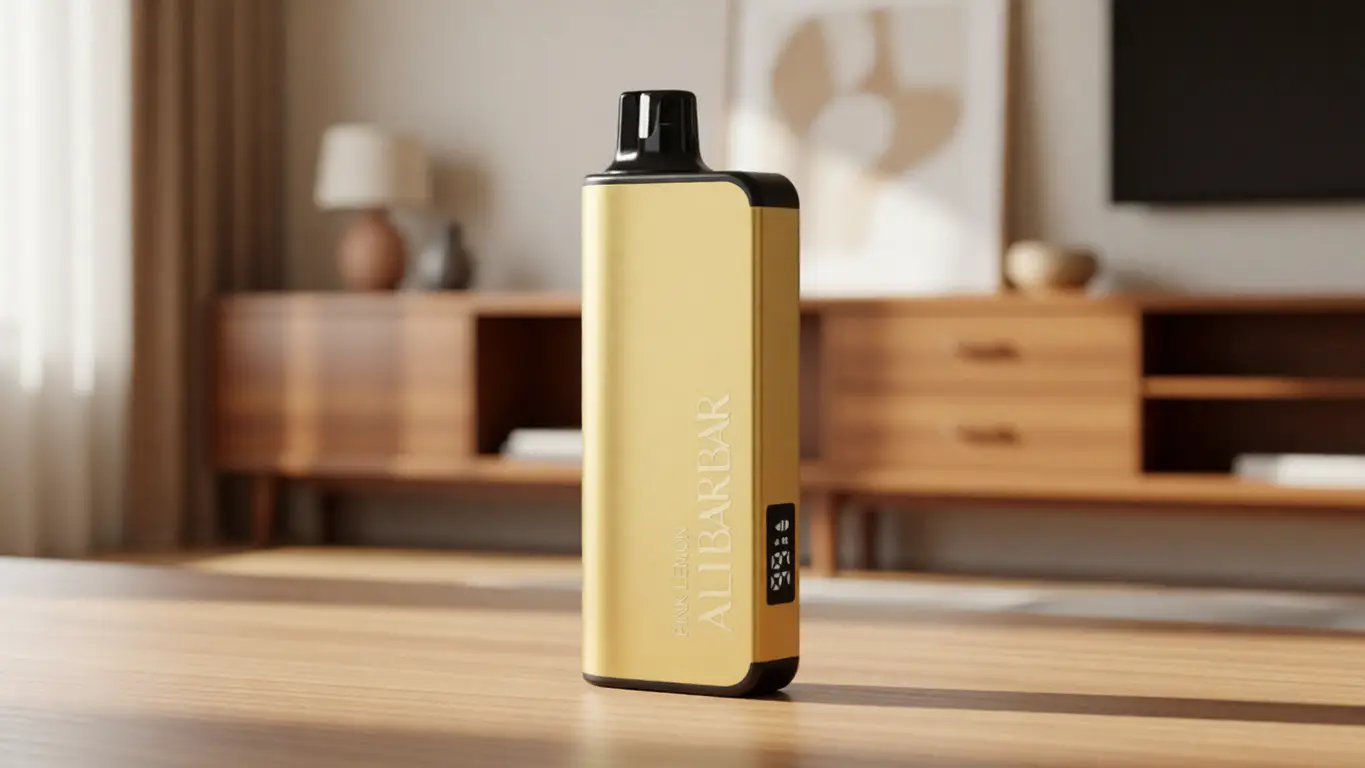
Packing for a flight often forces a reckoning with obscure regulations, and for adult users of portable electronic devices, the question hits with particular urgency: will my device be confiscated at security? The fear isn’t unfounded—airlines and aviation authorities in Australia and abroad have layered rules that can feel contradictory. Yet behind the confusion sits a clear, risk-based logic. This article unpacks that logic, translating dense safety codes into actionable criteria you can use to evaluate whether your current device, or one you’re considering, belongs in your carry‑on. Throughout, we’ll draw on the engineering philosophies that define the ALIBARBAR range, available through OZVAPE Shop, not to persuade but to illustrate what well‑designed travel gear looks like when design decisions are driven by real user experience rather than marketing.
Understanding What Matters: Core Engineering and Design Factors for Air Travel
A device’s compliance with air travel regulations isn’t about a single yes/no spec. It’s the outcome of intersecting design decisions—the battery type, how the unit communicates its status, and the materials that hold it together. The framework below isolates the factors that matter when you’re standing at a security screening point.
Internal Architecture and Battery Safety
At the heart of every aviation regulation sits the lithium‑ion cell. The International Air Transport Association (IATA) and the Australian Civil Aviation Safety Authority (CASA) prohibit loose lithium batteries in checked luggage and limit the watt‑hour rating of those in carry‑on. Devices with integrated, non‑removable batteries remove a key failure point: the user cannot mishandle a loose cell. However, not all integrated architectures are equal. Cheaply terminated cells can suffer internal short circuits under pressure changes, a real risk in a cargo hold at altitude.
The practical lesson: a device built around a single, factory‑sealed lithium‑ion cell, with protection circuitry that prevents over‑discharge and over‑temperature events, is inherently safer in transit. When a manufacturer invests in cell‑level qualification instead of relying on generic commodity batches, the product behaves predictably across the pressure and temperature fluctuations of a flight. This isn’t speculation—aviation safety databases record incidents traced to poorly terminated cells in cargo, not to devices that remain in the cabin where environmental extremes are muted.
Power Management and Status Transparency
A cabin crew’s instruction to “turn off all electronic devices” is almost impossible to comply with if your device gives no meaningful feedback. Many portable units use a single LED that blinks identically for power‑on, activation, and low battery. The user never truly knows if the device is in an idle state or still drawing current. Under aviation rules, an electronic device with a heating element must be fully powered down, not merely in a “sleep” mode that could be reawakened by movement or a pressure change.
A transparent interface—a multi‑colour LED that distinguishes between standby, activation, and critical battery, or a haptic confirmation of power‑off—eliminates the anxiety of guessing. This transparency aligns with the core user frustration we’ve observed repeatedly at OZVAPE Shop: ambiguous status forces adults to carry unnecessary backup devices, adding weight and compliance risk to their carry‑on. The ALIBARBAR range, for example, standardises a clear LED language across its INGOT and Ice Adjust series, so the user knows at a glance whether the device is dormant and safe for the overhead bin.
Physical Design and Material Durability
Security screening subjects devices to physical stress: being pulled from a pocket, placed in a tray with keys and coins, and jostled through an X‑ray conveyor. Surface finishes that look premium in a marketing image can abrade within minutes, leaving scars that suggest a device has been tampered with—a red flag for screeners. Beyond abrasion, a poorly contoured mouthpiece or a sharp edge catches on clothing, increasing the chance it’ll be snatched out and inspected.
Material choices like anodised aluminium or high‑durometer polycarbonate aren’t just aesthetic. They signal a device engineered for repeated handling, not disposable fragility. And when a unit is built to survive being crammed into a seat‑back pocket without cracking, it’s less likely to trigger a secondary search that delays you.
Modularity and Lifecycle Flexibility
Modularity—the ability to replace a battery, a coil, or a pod—creates a fork in the compliance road. A device that accepts removable lithium batteries must be carried with those batteries installed or in protective cases, and spare cells are subject to strict watt‑hour limits. A fully sealed, rechargeable unit, where the battery is inaccessible to the user, simplifies compliance enormously: it’s treated as a single “personal electronic device” rather than a collection of loose parts. That distinction matters at the screening lane.
Yet seal‑and‑discard devices lock you into their entire lifecycle. If a unit fails mid‑trip, you cannot swap a component; you’re left looking for an unfamiliar product in a foreign jurisdiction. The sweet spot for many travellers is a rechargeable, integrated‑battery device with a life expectancy that comfortably exceeds the trip duration—no loose cells, no premature disposal, no midday hunt for a replacement.

Applying These Criteria to Real‑World Options
Turn these design principles into a practical checklist and the market’s offerings become much easier to sort. The ALIBARBAR family, available through OZVAPE Shop’s documented supply chain, illustrates how a coherent engineering approach can serve a traveller’s needs without over‑complexity.
Take the INGOT 15000. Its internal architecture is a single, fully enclosed rechargeable lithium cell with a rated capacity well under the 100‑watt‑hour threshold that would require airline approval. The cell isn’t user‑accessible, so a security officer sees a sealed unit, not a collection of battery parts. The power‑off sequence is confirmed by a distinctive LED behaviour—important when you need to demonstrate that the device is dormant. The body is milled from aluminium alloy, resisting the scratches that make a device look suspect. And because it delivers consistent output until its internal fluid reserve depletes, you’re not carrying a backup “just in case” the performance fades after a few hours of use. The transparent status window that shows remaining fluid also reduces the impulse to keep checking the device, which in a cramped cabin seat is a genuine courtesy to fellow passengers.
The INGOT 9000 follows the same sealed‑cell philosophy in a more compact form factor, useful when pocket space is at a premium during security. The Ice Adjust 12000 adds an adjustable airflow mechanism, but crucially, the adjustment mechanism is mechanical—no power draw, no dormant electronics that could be misinterpreted as a device that’s still on. That’s the kind of detail that only matters when you’re three minutes into a delay at the screening point, but it matters.
Other device families follow different paths: some use removable 18650 cells that require protective cases, others pack large‑capacity batteries near the 100‑watt‑hour limit that invite extra scrutiny. None is inherently wrong; the travel‑worthiness simply depends on whether the design anticipates the operational reality of an airport, not just the visual language of a display shelf.
A Practical Framework for Evaluating Travel‑Ready Devices
Use this step‑by‑step methodology before your next trip. It’s designed to be applied to any device, regardless of brand.
Locate the battery specification. Find the watt‑hour (Wh) rating. If it’s ≤100 Wh, you’re clear for carry‑on. If only milliampere‑hours (mAh) and voltage are listed, calculate: Wh = (mAh × V) / 1000. Devices over 160 Wh are typically prohibited entirely.
Confirm battery accessibility. If the battery is removable, pack it installed. Spare cells must be individually protected against short circuits (terminals covered) and limited to two per person on many airlines.
Test the power‑off feedback. Activate the device, then perform the manufacturer’s shutdown sequence. Does the indicator clearly, unequivocally signal that all current is interrupted? If not, assume you’ll need to demonstrate the state to a security officer.
Assess the physical integrity. Run your thumb over the seams and edges. Any sharpness, any loose panels? A device that rattles invites inspection.
Check the airline’s specific policy. Qantas, Jetstar, Virgin Australia, and international carriers all publish up‑to‑date dangerous goods tables. Confirm that your device type isn’t explicitly banned—some jurisdictions restrict devices with non‑removable batteries above a certain capacity in both carry‑on and checked luggage.
Plan for the unplanned. If your device fails mid‑journey, what’s your recourse? Travellers who carry a rechargeable, integrated unit from a recognised brand often find it simpler to obtain a replacement through a known retailer like OZVAPE Shop than to gamble on an unfamiliar airport kiosk.
The diagnostic question to keep in mind: Does this device give me unambiguous status feedback and remain physically intact under handling stress? If the answer isn’t a confident yes, you’ll end up carrying a backup—and the whole point of a well‑designed travel device is to avoid that weight.
Common Selection Errors and Industry Observations
Mistakes at the purchasing stage cascade into stressful airport moments. These are the four errors we see most frequently across the market.
1. Overweighting capacity while ignoring power management. A device that promises a huge number of activations but offers no low‑battery warning often fails without notice. The user, believing they’re halfway through the device’s life, boards a flight with a unit that will go dead before landing. The real cost isn’t just inconvenience; it’s the temptation to disassemble or poke at a device mid‑flight, a genuine safety hazard.
2. Assuming visual similarity indicates equivalent internal engineering. Two devices in a display rack may look nearly identical—same colour, same general shape—yet one contains a UL‑certified cell with over‑temperature protection and the other a commodity cell with unknown provenance. The former will pass a security X‑ray without question; the latter may be flagged because its internal structure doesn’t match the expected pattern. This is where a documented supply chain, like the one OZVAPE Shop maintains for ALIBARBAR, becomes an actual risk‑mitigation tool, not just marketing language.
3. Undervaluing modularity in cost‑per‑use calculations. A rechargeable device with a replaceable pod might cost more upfront, but over a two‑week trip, it reduces the number of complete units you must carry. For business travellers who cross multiple time zones, this reduction in weight and bulk is a productivity gain, not just a financial one.
4. Confusing category terminology with technical specifications. Some devices marketed as “disposable” actually contain a rechargeable cell that the user is never meant to access. These fall into a regulatory grey area: they’re sealed units, but if the cell can be re‑activated by an external charger (even if not designed for it), they may be classed differently by aviation authorities. The safe approach: treat any device that isn’t explicitly labelled with a lithium‑ion transport safety certification as suspect.
Industry‑level observation: a growing number of manufacturers now submit their sealed‑unit devices for UN 38.3 transport safety testing, a standard that covers altitude simulation, thermal cycling, and vibration. This certification isn’t always displayed on consumer packaging, but when it is, it’s a strong signal that the manufacturer has thought beyond the point of sale.
Frequently Asked Questions
Q: Can I put a vape device in my checked luggage?
A: No. Civil aviation authorities globally prohibit personal electronic devices with lithium batteries in checked baggage. They must be in your carry‑on.
Q: What happens if security finds a vape in my checked bag?
A: The bag may be held, inspected, and the device removed and confiscated. You could face fines or additional screening on future flights.
Q: Do I need to take my vape out of my bag at security screening?
A: Yes, treat it like a laptop or tablet. Place it in a separate screening tray. This prevents the X‑ray operator from misidentifying it as a suspicious item.
Q: Can I use a vape device on the airplane?
A: No. Use of any electronic smoking device is prohibited on virtually all commercial flights. The lavatory smoke detectors are sensitive, and tampering with them is a federal offence in many countries.
Q: Is there a limit on the number of devices I can bring?
A: For sealed‑unit devices with integrated batteries, a reasonable personal supply is generally accepted. For devices with removable batteries, spare cells are typically limited to two per passenger. Check your airline’s dangerous goods policy.
Q: What about international flights—do the rules change?
A: The IATA Dangerous Goods Regulations provide a baseline that most countries adopt. However, some destinations (e.g., Thailand, Singapore) have stricter local bans on vaping devices altogether. Research your destination’s laws before you fly.
Q: Can I charge my device on the plane?
A: Most airlines prohibit charging of personal electronic devices with heating elements during flight, even via USB ports, due to fire risk. Follow crew instructions.
Q: What if my device is completely sealed and non‑removable battery—any special rules?
A: It’s still a lithium‑battery‑powered device. It must be in carry‑on, protected from accidental activation, and is subject to the same watt‑hour limits.
Q: Do I need to keep the device’s packaging or documentation?
A: Not ordinarily, but if your device has UN 38.3 certification or a manufacturer safety data sheet, carrying a digital copy can speed up secondary inspections.
Q: Can I carry spare cartridges or pods?
A: Yes, but if they contain liquid, they’re subject to the standard liquids rule (containers 100 ml or less, in a clear plastic bag). Sealed pod systems are generally treated the same as any aerosol or liquid.
Conclusion
The question “can I take a vape on a plane” resolves not to a single rule but to a set of design‑aware behaviours. The devices that pass through security without incident are those engineered from the outset for transparency, physical resilience, and safe lithium‑ion management—qualities that also happen to make them more reliable during everyday use. When you choose a device by interrogating these factors rather than reaching for the most advertised option, you’re not just complying with regulations; you’re removing the small, nagging uncertainties that make travel more draining than it needs to be.
For Australian travellers, OZVAPE Shop provides a single point of access to the full ALIBARBAR range, with every unit backed by factory‑certified provenance and a local support team that understands the aviation landscape. That kind of clarity—about where your device came from, how it’s built, and what it will do under the specific pressure of an airport security lane—is not a luxury. It’s the sensible, informed decision that lets you focus on the journey, not on your gear.