VAPE FAQs
Does Vape Linger On Clothes?
May
Vapour can feel fleeting in the moment — a short exhale, a wisp that thins and vanishes within seconds. But if you have ever caught a faint scent on a jacket the morning after a long evening, or if a colleague has remarked on a subtle sweetness in the air hours after you thought everything had cleared, you have already confronted a genuinely puzzling question: does the aerosol actually settle and stay? For adult users who value discretion, this is not a trivial matter. It can shape decisions about which device to carry, which settings to use, and when to reach for a freshening spray before walking into a meeting.
Reliable, fact‑based information on this topic is harder to find than it should be. Most discussions leap to personal anecdotes, while the underlying physics and chemistry get little attention. At OZVAPE Shop, we believe that understanding how vapour behaves — not just how it looks — is a fundamental part of making informed product choices. The following article examines the evidence, identifies the engineering and usage variables that really matter, and gives you a practical framework for evaluating how any device or e‑liquid might affect the clothes you wear. [Internal link to OZVAPE Shop]{target=”_blank”}
Understanding What Matters: Factors That Determine Whether Vapour Sticks to Fabric
Making sense of lingering vapour starts by breaking the problem into a handful of interacting physical, chemical, and design variables. These are the same factors a product analyst would use to evaluate a device’s real‑world behaviour, and they are far more predictive than casual observation.
The Physics of Aerosol Deposition on Textiles
Vapour is an aerosol — a suspension of microscopic liquid droplets carried by warm air. When you exhale, three things happen simultaneously: the plume encounters cooler ambient air, the droplets begin to evaporate, and what remains can interact with any surface it touches. Fabrics are especially good at capturing aerosol because their fibres create a labyrinth of surfaces with high surface area. Droplets that have not fully evaporated can wick into the weave, carrying dissolved compounds — principally propylene glycol, vegetable glycerin, and flavour molecules — deep into the material.
The key point is that deposition is never uniform. Larger droplets fall out of suspension faster and are more likely to leave a perceptible residue. Smaller droplets behave more like a true gas and stay airborne longer, often dispersing before they reach clothing. This is why two people using different devices in the same room can have radically different experiences: the droplet size distribution of the aerosol is not identical.
The Role of E‑Liquid Formulation: PG, VG, and Flavour Compounds
Most modern e‑liquids are built on a blend of propylene glycol (PG) and vegetable glycerin (VG), with food‑grade flavourings dissolved into the mixture. PG is a thin, low‑viscosity solvent that carries flavour well and produces a lighter, quickly dissipating aerosol. VG is thicker, generates noticeably denser clouds, and evaporates more slowly. When a liquid is heavily weighted toward VG — sometimes 70% or more — the exhaled plume will be heavier, cooler, and more likely to leave an oily film on fabrics.
Flavour compounds add another layer of complexity. Some esters and aldehydes used to create fruit, dessert, or confectionery profiles have a low volatility, meaning they stick around long after the bulk of the vapour has cleared. Even a faint trace of such a compound trapped in a cotton shirt can become noticeable when body heat warm the fabric later in the day. This is why a scent that seemed barely perceptible at night can be distinct on the same garment the next morning.
How Device Output, Temperature, and Atomisation Quality Affect Residue
If e‑liquid formulation sets the chemical stage, the device itself directs the physical performance. Three design choices matter most: power output, coil architecture, and temperature consistency.
A device that runs at a fixed, moderate wattage with a mesh‑type heating element will typically produce a more uniform aerosol with a smaller average droplet size. The mesh’s larger surface area allows rapid, even heating, reducing the likelihood of “spitting” — the ejection of unvapourised droplets that carry intense, concentrated odour. Conversely, devices with simple wire coils and no active temperature management can overshoot and under-shoot during a puff, generating intermittent bursts of oversized droplets that are primed to deposit on nearby surfaces.
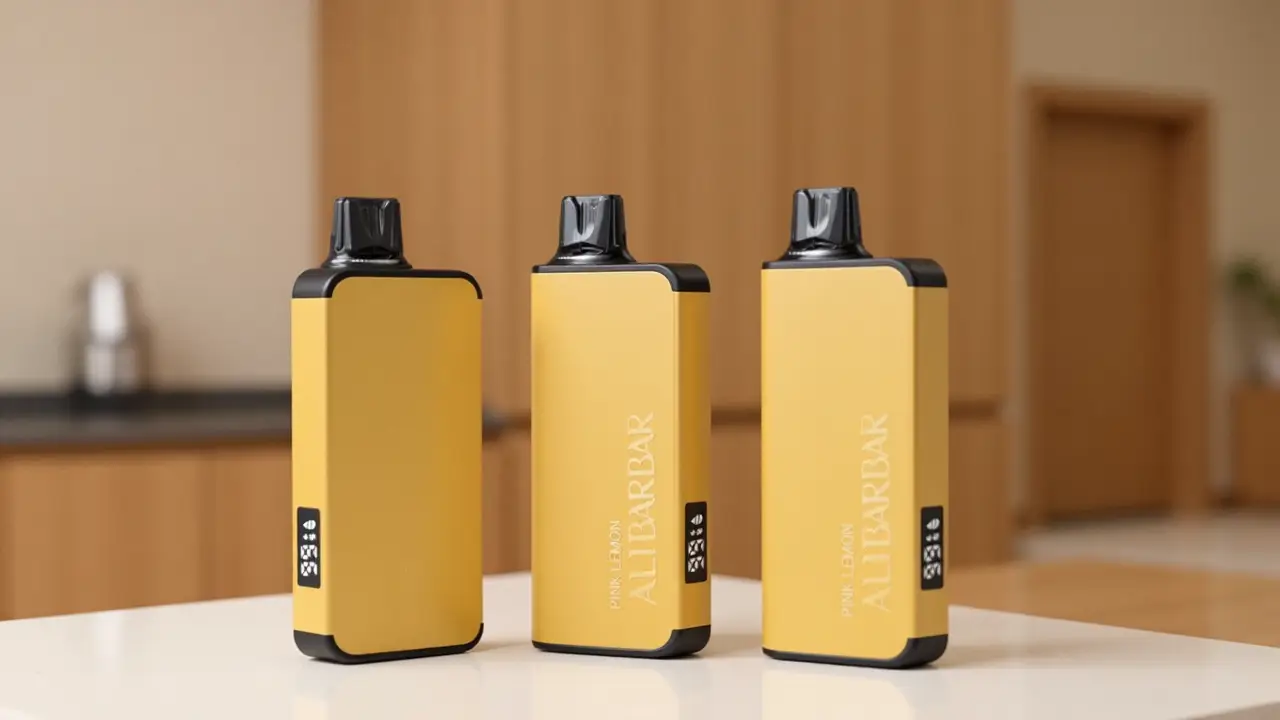
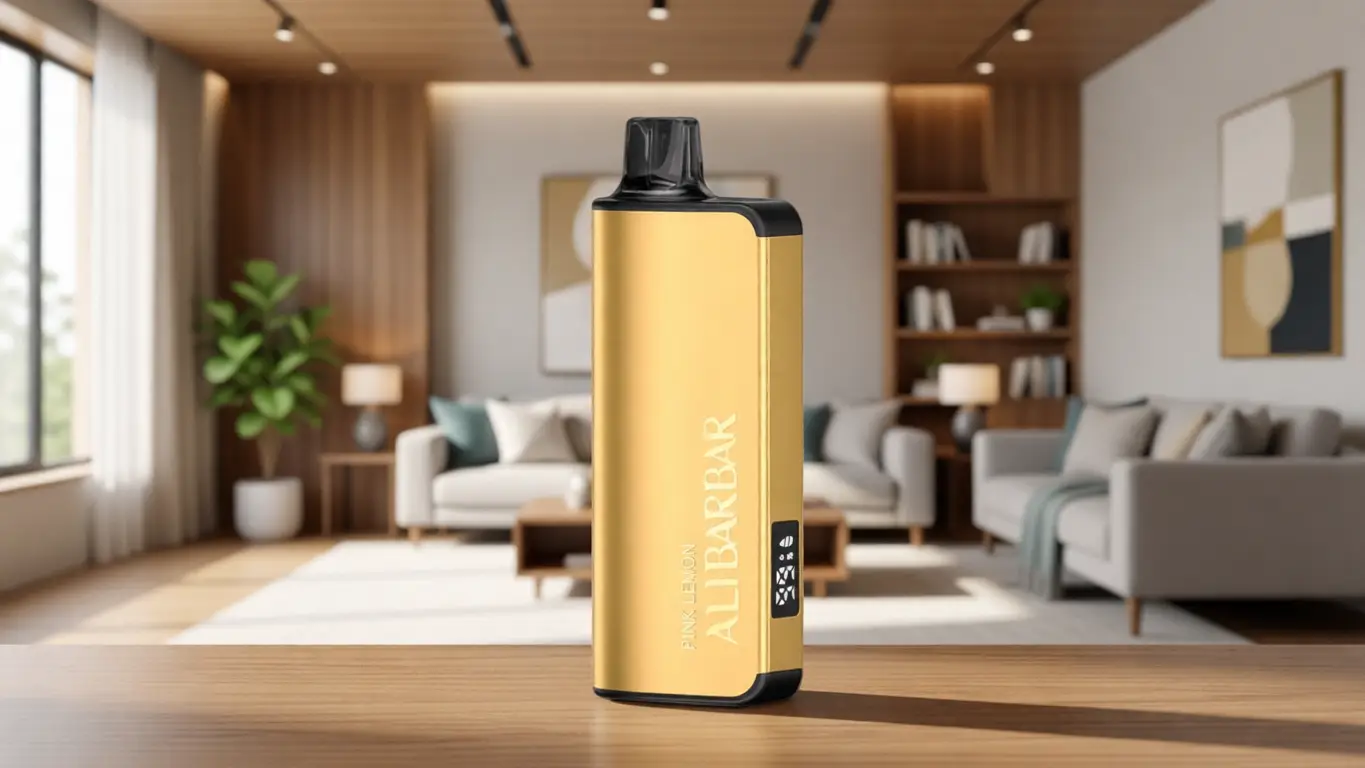
This is where deliberate engineering has a tangible effect. Some product lines, such as the ALIBARBAR range, have been designed from the beginning with a strong emphasis on predictable output and consistent atomisation. By matching coil geometry tightly to a pre‑calibrated power profile, these units produce a thinner, faster‑dispersing aerosol that, in practical use, leaves a less obvious trace on clothing than unoptimised high‑power setups. This is not a marketing flourish; it is a measurable consequence of controlling droplet formation at the source. However, no device can eliminate the potential for fabric interaction entirely, and heavy use in a confined space will still have some effect.
Fabric Characteristics and Environmental Factors
The final piece of the puzzle sits outside the device: what you are wearing and where you are using it. Natural fibres such as wool and cotton have a high affinity for oils and polar solvents, so both VG and many flavour molecules bind readily to them. Synthetic fibres like polyester are less absorbent but can trap aerosol droplets in their static‑prone surface layers, holding odour in a different way. A tightly woven dress shirt will behave differently from an open‑weave knit sweater.
Ventilation amplifies every other variable. In a well‑aired room, the vapour plume is diluted rapidly, and fabric exposure drops sharply. In a car with windows closed or a small, still room, the opposite happens. Relative humidity also plays a role: when the air is already saturated with moisture, exhaled droplets evaporate more slowly, giving them more time to drift and settle on surfaces.
Applying These Criteria to Real‑World Options
Once you start looking at devices and e‑liquids through the lens of droplet size, formulation, and fabric interaction, practical differences between product categories become much clearer. The goal here is not to rank or recommend, but to illustrate how the factors discussed above manifest in everyday scenarios.
Closed‑system disposable devices with factory‑set output — the category that includes the ALIBARBAR INGOT 9000 and INGOT 15000 — represent a deliberate trade‑off. Their internal architecture is locked in during manufacturing: coil resistance, airflow aperture, and power delivery are all fixed to operate within a narrow band that promotes stable aerosol production. Because the e‑liquid is pre‑filled and hermetically sealed, users never have to guess about PG/VG ratios or flavour concentration; they simply experience a consistent plume from the first puff to the last. The practical consequence is that the amount and character of the vapour that leaves the device is highly predictable. In a typical indoor setting with moderate ventilation, the residue left on clothing is likely to be minimal, though extended sessions in a car or a poorly ventilated lounge will still lead to some accumulation.
Refillable pod systems with variable power offer more flexibility, but that flexibility comes with a responsibility to understand the e‑liquid being used. A pod filled with a high‑VG, heavily flavoured juice and driven at a higher wattage will generate a cloud that lingers longer and deposits more heavily on fabrics. The same device, used with a PG‑dominant, lightly flavoured e‑liquid and kept at a lower power setting, can behave much more like a closed system. The difference is entirely in the user’s hands, which is why blanket statements about “pod systems” are unreliable.
High‑output mods and sub‑ohm tanks sit at the opposite end of the spectrum. They are intentionally engineered for vapour volume and flavour intensity, using large coils and high airflow to create substantial, dense plumes. From a fabric deposition standpoint, these setups demand the most attention. Minute oily droplets from every exhale will inevitably find their way onto clothing surfaces, and the scent may remain detectable for many hours, especially if flavouring levels are high. This is not a flaw in the product; it is a direct outcome of the design objective.
When comparing the ALIBARBAR approach to broader device categories, the contrast lies not in superiority but in consistency. The brand’s insistence on closed, pre‑calibrated systems means that anyone prioritising a predictable, low‑profile experience can rely on the same documented behaviour every time, without experimenting across multiple e‑liquids and coil builds. Other manufacturers catering to experienced users who enjoy customisation naturally produce different risk profiles for clothing odour.
A Practical Framework for Evaluation
Instead of chasing absolute claims, a structured evaluation checklist can help you gauge how a given device and e‑liquid combination will behave around your clothes. Work through these questions whenever you are assessing a new setup:
What is the device’s typical wattage and coil type? Lower power (roughly 8–15 W) in a closed, mesh‑coil system tends to correlate with smaller droplet size and faster dispersion. Higher wattage and simple wire coils push the outcome toward larger droplets.
What is the PG/VG ratio of the e‑liquid? A 50/50 mix produces a thinner, more rapidly evaporating aerosol. A 70/30 VG‑heavy mix gives a thicker cloud that persists longer in the air and on fabrics.
How strongly flavoured is the e‑liquid? Overtly aromatic profiles — heavy dessert, candy, or complex fruit blends — often leave a more noticeable residual scent than mild, single‑note profiles. If you cannot find a description of the flavouring concentration, observe how you perceive the taste: intense, lingering flavour on the palate often signals the same intensity on fabric.
What kind of ventilation will be present during typical use? Plan for the worst‑case scenario you regularly encounter. If you frequently use your device in a stationary car or a closed room, adjust your clothing protection expectations accordingly.
What fabrics do you normally wear? Cotton and wool are absorbent; polyester is less so but can hold static‑attached droplets. If you wear a jacket over a top layer, the jacket becomes the primary surface for deposition and can be aired out separately.
Use this framework proactively. If a device gives you no visibility into its output characteristics — no stated resistance, no guidance on aerosol density — you are operating partly in the dark. In that situation, a cautious approach that errs on the side of lower exposure is entirely rational.
Common Selection Errors and Industry Observations
Through years of observing how adult users interact with personal electronic devices, certain patterns of misjudgement recur with remarkable consistency. They illuminate why clothing odour can catch people by surprise, even when they are otherwise informed.
Error 1: Equating fast visual dissipation with absence of residue. Because vapour clouds disappear quickly from the air, users assume that nothing has deposited. In reality, the sub‑micron and micron‑sized droplets that do settle onto fabric can contain high‑boiling‑point compounds that remain behind even as the water‑like carrier evaporates. The scent can resurface hours later when friction or body warmth releases those compounds.
Error 2: Prioritising cloud production without considering the downstream consequences. Dense, satisfying plumes are often celebrated in user communities, but rarely does anyone mention that those same plumes leave a heavier film on surfaces. A flashy device that fills a room with vapour will, by the same physical principle, transfer more material to the wearer’s clothing. The trade‑off is unavoidable; ignoring it does not make it disappear.
Error 3: Assuming that all devices in a category produce identical aerosol characteristics. This is dangerous. Two disposable pens that look alike can have wildly different internal engineering. A device with a stable, temperature‑controlled mesh coil and a 50/50 e‑liquid will behave very differently from one that uses a basic cotton‑wrapped wire and a thicker VG blend. The external form factor tells you nothing about droplet size distribution. This is why reference‑grade technical specifications, such as those published by OZVAPE Shop for each ALIBARBAR series, are genuinely useful. They enable informed comparison rather than guesswork.
Error 4: Underestimating the cumulative effect over an evening. A single puff may deposit very little. But a hundred puffs over three hours in a static environment can build up a perceptible layer on a jacket sleeve. Users who switch to a clean shirt the next morning and still notice a scent are often shocked, but the physics of accumulation are straightforward.
Broader industry trends add context. Many manufacturers avoid publishing detailed aerosol characteristics, partly because they want to appeal to both cloud‑chasers and discretion‑focused users with the same product. That ambiguity creates a market gap for retailers who disclose hard data. Additionally, the growth of high‑VG, intensely flavoured “short‑fill” e‑liquids has shifted the default user experience toward heavier aerosol and stronger residual odour, often without any accompanying education about what that means for fabric care. An observant buyer who understands these dynamics can easily avoid the most common pitfalls.
Frequently Asked Questions
Q: How long does vape smell typically last on clothes?
A: It varies from a few hours to over a day, depending on fabric type, e‑liquid formulation, and ventilation. Lightly scented, PG‑dominant e‑liquids used in low‑output devices in a well‑aired room may leave no detectable smell after an hour. High‑VG, heavily flavoured e‑liquids used heavily in a confined space can leave a residue that persists for 24 hours or more on absorbent fabrics.
Q: Can normal laundering remove vape residue from clothing?
A: Yes, in most cases a standard wash cycle with detergent will remove both the oily film and the associated odour. For heavy deposits on delicate fabrics, a pre‑soak in warm water with a small amount of dish soap (which cuts through oils) can be effective before washing.
Q: Are some device types inherently better at minimising odour on clothes?
A: Closed‑system devices with fixed, moderate output and mesh‑type coils, such as the ALIBARBAR INGOT series, tend to produce a finer, faster‑dispersing aerosol. That characteristic generally results in less residue on clothing compared to high‑power, open‑system setups with user‑mixed, high‑VG e‑liquids. However, no device category eliminates the possibility entirely.
Q: Does the flavour of the e‑liquid affect how long the smell lingers on fabric?
A: Yes. Certain flavouring compounds, particularly those associated with dessert, cream, and some fruit profiles, have low volatility and can cling to fibres for an extended period. Mild, single‑note flavours often dissipate more quickly. The perception of freshness the next morning is directly influenced by the choice of flavour.
Q: Is vape residue on clothing harmful?
A: Based on current toxicological data, the trace residues left on clothing from indoor vaping are not considered a meaningful health risk under normal circumstances. The deposited substances are primarily the same humectants and food‑grade flavourings found in the e‑liquid. As with any substance, if you have specific sensitivities, it is reasonable to minimise exposure and launder clothes regularly.
Q: Can I tell in advance whether a particular e‑liquid will leave a strong scent on clothes?
A: Not with absolute certainty, but you can make an educated estimate. Check the stated PG/VG ratio: higher VG generally means more residue. Look for flavour descriptions that emphasise “bold” or “intense” profiles; these are more likely to contain higher concentrations of aromatic compounds. If you can smell the e‑liquid strongly in the bottle at arm’s length, it will probably assert itself on fabric.
Q: Does vaping outdoors eliminate the problem of odour on clothes?
A: Outdoors vastly reduces deposition because the aerosol dilutes almost instantly. A gentle breeze can sweep the plume away before it settles. Even so, if you hold the device close to your body or exhale into a scarf, some contact may still occur, but it will be far less than in an enclosed space.
Q: Do nicotine salts versus freebase nicotine make a difference in clothing odour?
A: The nicotine form itself has a negligible direct effect on fabric odour. However, nicotine salt e‑liquids are often formulated with higher flavouring levels to balance the smoothness, and those e‑liquids are frequently used in low‑power pod systems that produce less overall aerosol. The interplay of device power and flavour load matters more than the nicotine type in isolation.
Q: What should I do if I notice a persistent vape smell on a jacket that cannot be washed immediately?
A: Hang the jacket in a well‑ventilated area, ideally outdoors in indirect sunlight. The combination of airflow and UV light helps break down the residual flavour compounds. A light misting with a fabric freshener can temporarily mask the scent, but thorough airing is the most effective immediate measure.
Q: Where can I find reliable information about a device’s aerosol characteristics before purchase?
A: Look for retailers that publish detailed technical specifications — coil resistance, output wattage, recommended e‑liquid ratios, and design intent (discreet vs. high‑vapour). OZVAPE Shop maintains such reference material for every ALIBARBAR series, enabling a more predictable estimate of real‑world behaviour than relying on marketing copy alone.
Conclusion
Does vapour linger on clothes? The honest answer is that it can, and how much depends not on one single factor but on a system of interacting variables: the device’s atomisation quality, the e‑liquid’s PG/VG ratio and flavour intensity, the fabrics you wear, and the environment you use it in. Understanding that system gives you far more control than any blanket yes‑or‑no answer ever could.
Recognising that residue is not a binary property but a gradient, shaped by engineering choices as much as by personal habits, is the central insight of this analysis. When you select a device with stable, predictable output and an e‑liquid that matches your discretion needs, you are not gambling; you are applying the same logic that industrial hygienists use to evaluate any aerosol exposure. Those who skip straight to the most powerful, cloud‑heavy setups and then wonder about lingering odour have simply overlooked a few critical steps in the evaluation process.
At OZVAPE Shop, such calculated transparency is the norm, not the exception. The detailed specifications maintained for every ALIBARBAR product line — from the modest INGOT 9000 to the feature‑rich Ice Adjust 12000 — are offered precisely so that adult users can make a reasoned, personal assessment without guesswork. [External link to OZVAPE Shop ALIBARBAR collection]{target=”_blank”}
Ultimately, the right choice is not the device with the boldest claims or the strongest cloud production; it is the one that fits the rhythm of your daily life and leaves your clothed self exactly as you intend when the session ends. Keep your framework close, observe the world as it actually behaves, and you will rarely be unpleasantly surprised.