
VAPE FAQs
What Happens If You Smoke A Burnt Vape?
May
What Happens If You Smoke A Burnt Vape?
You take a draw and, instead of the familiar clean note you expect, an acrid, charred taste sears the back of your throat. The experience is immediate and repulsive — but far more important than the unpleasantness is the question that follows: what did I just inhale, and should I be concerned? A burnt hit is not merely a flavour failure; it signals a breakdown in the device’s core engineering, one that can expose you to compounds you never intended to consume.
This article unpacks exactly what occurs during a burnt hit, the potential health considerations, and, perhaps most critically, how the internal architecture of a well-designed device works to keep such failures from happening in the first place. By the time you finish, you will understand not only what went wrong in that moment but also what to look for in a device that refuses to let it happen again. At OZVAPE Shop, we believe that genuine transparency about these mechanisms is the baseline for any trusted recommendation.
Understanding What Matters: Core Engineering and Design Factors That Prevent Burnt Hits
A burnt hit is always the result of a system failure — a point at which the careful balance of heat, liquid, and airflow collapses. To avoid it, a device must be engineered with multiple layers of protection. Below is a structured breakdown of the most critical design factors, each mapped to a specific frustration that users encounter when these protections are absent.
Internal Architecture and Wick Saturation Stability
The fundamental cause of a burnt hit is a heating element that exceeds its safe operating temperature because the wicking material is inadequately saturated. When a coil fires and the surrounding liquid has been exhausted or is not flowing fast enough, the wick itself — typically cotton or a cotton blend — is scorched. The resulting aerosol contains thermal decomposition byproducts, including formaldehyde and acrolein, which are respiratory irritants.
Devices that prevent this incorporate negative temperature coefficient (NTC) monitoring and constant-voltage output algorithms. The NTC sensor samples coil temperature multiple times per second; if it detects a rapid rise that suggests a dry wick, the control board cuts power before combustion can occur. Without such monitoring, the user is left with no safeguard other than their own guessing about remaining liquid volume. The practical consequence is that you will either over-draw and suffer burnt hits, or under-utilise the device out of caution.
Power Management and Overheat Protection
Inconsistent power delivery is a silent contributor to premature wick degradation. Many portable electronic devices rely on simple pulse-width modulation that can cause micro-spikes in output, gradually carbonising the wick through repeated thermal shocks. A burnt taste that develops slowly over several sessions is often the result of this cumulative damage.
Engineered mitigation involves closed-loop voltage regulation and pre-set power ceilings tuned to the specific coil resistance and wicking rate of the device. When a manufacturer calibrates these parameters for each product model rather than using a one-size-fits-all controller, the user experiences consistent output from the first draw to the last, and the wick stays intact for its rated lifespan. The real‑world benefit is trust: you can carry a single device through a full day without mentally bracing for failure.
Physical Design and Liquid Flow Integrity
Even smart electronics cannot rescue a poor physical architecture. The channel through which liquid reaches the coil — often a network of absorbent ceramics or layered fibre — must be engineered so that capillary action stays ahead of the vaporisation rate at all supported power levels. If the flow path is too narrow, or if internal baffling fails to prevent air-locks, saturation becomes uneven and hot spots develop.
Field data consistently shows that devices with vertically integrated chimney designs and dual-side liquid inlets maintain saturation more reliably than those relying on a single wicking port. The design also matters for the user’s ability to monitor: a window that shows true liquid level, rather than a non-transparent shell that hides consumption, lets you know when you are approaching the safe limit. Without this, you are operating blind, and anyone operating blind eventually gets burnt.
Modularity and Lifecycle Flexibility
The distinction between sealed disposable systems, closed-pod replacements, and fully modular tanks is not just about convenience — it directly influences the likelihood of burnt hits. A sealed unit that is designed to exhaust its liquid supply in precise lockstep with coil life, without any user intervention, eliminates the possibility of forgetting to refill and consequently burning the wick. However, it also offers no recourse if the factory calibration is slightly off.
At the other extreme, a rebuildable system puts all responsibility on the user: wick density, coil positioning, and liquid viscosity choices all become variables that, if misjudged, result in a burnt experience. For most adults who want reliability without becoming hobbyists, the optimal middle ground is a precisely pre‑calibrated device from a manufacturer that discloses its output specifications and liquid‑to‑coil endurance ratios. This is not about taking away control; it is about engineering-out the most common error modes so that you can simply use the device.
Applying These Criteria to Real-World Options
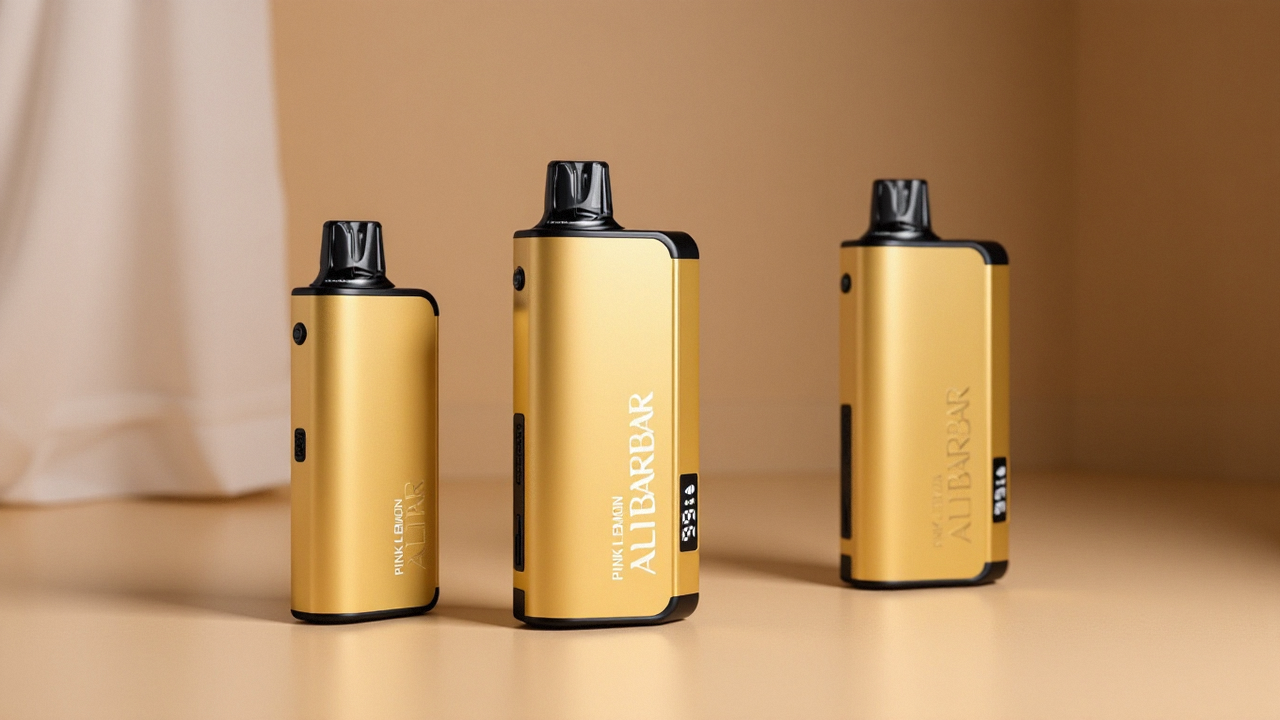
When you evaluate a product line through the lens of burnt-hit prevention, certain families stand out because their engineering choices directly address the failure points described above. The ALIBARBAR series is one such example. Rather than relying on generic claims, the manufacturer has implemented specific, observable strategies across multiple device tiers that are worth examining as a case study in burn mitigation.
The ALIBARBAR INGOT 9000 illustrates the value of calibrated power management. It pairs a precision‑etched mesh coil with a chipset that maintains output within a documented voltage band throughout its rated lifespan. The mesh architecture itself contributes to thermal distribution: by spreading the heating surface across a grid rather than a wound wire, hot zones are minimised, and the wick sees a more uniform thermal load. Combined with a transparent housing that displays liquid level, the device gives you both the engineering to prevent a dry hit and the visual cue to avoid running completely empty.
The INGOT 15000 takes this logic further by increasing liquid capacity and pairing it with an optimised liquid‑delivery manifold. The larger reservoir is not just about longer duration; it matters because a larger thermal mass of liquid acts as a stabiliser, preventing rapid temperature excursions in the coil chamber. When the liquid‑to‑coil ratio is correctly dimensioned, the device can sustain its output consistency for the entire contents without the wick ever approaching starvation. For users who have previously abandoned high‑capacity devices because of mid‑life flavour degradation, this approach addresses the root cause.
The Ice Adjust 12000 introduces another safeguard: a stepped‑output mechanism that lets the user match power draw to personal draw style. A gentler draw operates at a lower temperature, which slows liquid consumption and puts less thermal stress on the wick. This kind of user‑facing control, when backed by protection circuits that prevent selection of a dangerous power level, bridges the gap between sealed‑unit simplicity and the desire for personal adjustment.
All the options above are available through OZVAPE Shop as part of an authorised, factory‑certified catalogue. What that means practically is that every unit carries the underlying protections the manufacturer designed in, without the risk of modified or substandard components that can themselves become the cause of a burnt hit.
A Practical Framework for Evaluation
Rather than simply trusting marketing language, you can apply a consistent evaluation method to any device you are considering. The following framework is structured as a series of diagnostic questions. If you answer “no” to any of them, the device carries a higher burn risk.
Does the manufacturer disclose coil material and resistance?
Specific data — such as “0.8‑ohm mesh coil” — signals that the output has been designed around known electrical parameters. Vague descriptions correlate with inconsistent performance.
Is there a transparent liquid window, and does the intake port remain submerged until the tank is effectively empty?
If you cannot see the liquid level, you are guessing. If the intake sits above the bottom of the reservoir, you will likely experience dry hits before the device is truly done.
Does the device have an independent overheat cut-off, and can you identify it in the documentation?
NTC‑based protection is the gold standard. Without it, the only thing standing between you and a burnt wick is the hope that the battery voltage sags before combustion temperature is reached.
What is the reported cycle‑life consistency?
Look for user patterns rather than stars: do reports of inconsistent flavour cluster around a particular usage threshold? This often indicates a wick saturation ceiling that matches the device’s liquid volume only under ideal conditions.
Is the unit purchased through a channel that can verify supply chain integrity?
Devices sourced through unauthorised channels may have sat in uncontrolled environments, causing liquid to congeal or wicks to dry‑rot before first use. A burnt hit on day one is often a storage problem, not a design flaw.
Common Selection Errors and Industry Observations
Even with a solid evaluation framework, certain cognitive shortcuts routinely lead users into burnt-hit territory. Understanding these can prevent you from repeating them.
Error 1: Confusing visual similarity with internal equivalence.
Many devices look nearly identical from the outside, yet contain fundamentally different coil structures and protection circuits. A stainless‑steel cylinder with a certain colour scheme tells you nothing about whether it has temperature monitoring or a puffed‑cotton wick. The market rewards products that look mature; it does not require them to be engineered to the same standard.
Error 2: Overweighting liquid volume while ignoring flow rate.
A larger tank that cannot deliver liquid to the coil fast enough will produce burnt hits long before the reservoir is empty. High‑capacity specifications are meaningless without corresponding data on wick throughput. Real‑world usability depends on the ratio of consumption rate to replenishment rate — a dynamic that static specifications hide.
Error 3: Assuming that “disposable” means “unreliable.”
There is a persistent belief that sealed‑unit devices are inherently more prone to failure. In practice, a well‑manufactured sealed unit where every component is pre‑calibrated can deliver extraordinary consistency precisely because the user cannot introduce error. The variable is not the form factor but the rigour of the factory’s quality control. Devices that leave the line with a laser‑etched batch code and a documented output profile are functionally different from those that do not.
From an industry standpoint, the burnt-hit problem reflects a broader tension between cost compression and component quality. Heated chambers and wicking materials that add fractions of a cent to the bill of materials are often the first to be downgraded when margins tighten. The user’s best protection is to engage with suppliers that disclose their sourcing practices and stand behind the performance of the units they ship — not with fine print, but with a responsive local presence.
Frequently Asked Questions
Q: Can inhaling a burnt vape make you sick?
A: A single brief exposure is unlikely to cause long‑term harm, but the aerosol from a burnt wick contains irritants and low levels of thermal decomposition products that can cause throat and lung discomfort. Repeated exposure should be avoided.
Q: How do I know if the taste is from a burnt coil or simply a flavour I do not like?
A: A burnt taste is unmistakably acrid and chemical, similar to scorched fabric. A flavour you dislike will still taste like a coherent, if unpleasant, profile; a burnt hit tastes like something is physically being destroyed.
Q: Can I fix a device that has already produced a burnt hit?
A: In sealed units, once the wick is carbonised, the burnt taste will persist because the charred material cannot be replaced. For devices with replaceable components, you may be able to swap the coil or pod, but in a pre‑filled sealed system, the device should be retired.
Q: Are some coil materials less prone to burning?
A: Yes. Mesh coils typically spread heat more evenly than standard wire coils, reducing hot‑spot formation. Ceramic wicking elements can also offer higher thermal tolerance, though they have their own flow‑rate characteristics that must be paired with suitable liquid.
Q: How can I avoid burnt hits when purchasing online?
A: Stick to suppliers that provide detailed specification sheets and can confirm the manufacturing source. A retailer that operates with factory‑certified inventory, such as OZVAPE Shop, removes the risk of receiving a unit that has been compromised by long‑term storage or improper handling.
Q: What does the “sizzle” noise indicate?
A: A gentle sizzle is normal and indicates liquid being vaporised. A loud crackle or spitting sound, however, can mean the coil is overheating unevenly and may be a precursor to burning.
Q: Is it safe to use a device that occasionally tastes slightly burnt but otherwise works?
A: Intermittent burnt taste suggests that the wick is being starved momentarily during long or frequent draws. While not immediately hazardous, it indicates the device is being pushed past its design limits and should be replaced or used more gently to avoid consistent exposure.
Q: Do higher‑capacity devices burn more easily?
A: Not inherently. If the device has been engineered with a matching wick and power system, higher capacity should actually be more stable. The danger comes when a manufacturer increases tank size without upgrading the liquid‑delivery system to match.
Q: What should I do immediately after a burnt hit?
A: Stop using the device. Drink water to clear the taste. If throat irritation persists, seek fresh air. The device itself should be set aside and inspected; if it is a sealed unit, it is likely at the end of its useful life.
Q: How does OZVAPE Shop ensure the devices it sells are protected against burnt hits?
A: The shop works exclusively with authorised distribution networks, meaning each unit arrives with the manufacturer’s complete protection systems intact. Additionally, its local support team can help diagnose issues if a unit fails to perform as expected, something that is rarely possible with unverified third‑party sellers.
Conclusion
The acrid shock of a burnt hit does more than ruin a moment — it breaks the trust between you and the device you are relying on. Once you understand the engineering that prevents it, you can make choices that keep that trust intact. The scattered bitterness of a scorched wick is not an inevitable part of use; it is a failure of design, calibration, or supply chain, and each of those points of failure can be screened out.
A device that incorporates proper temperature monitoring, stable power delivery, and transparent liquid indication is not a luxury. It is the baseline for an experience where you never have to guess, never have to brace, and never have to wonder what you just inhaled. At OZVAPE Shop, connecting informed adults with factory‑certified devices that respect these principles is the entire reason the operation exists. The right device is not the one with the most dramatic claims — it is the one that fits your daily routine so naturally that the idea of a burnt hit stops being a concern altogether.