
VAPE FAQs
Can Orthodontists Tell If You Vape?
May
Can Orthodontists Tell If You Vape? A Practical Guide to Discreet Device Choice and Oral Awareness
The question is more common than many adults admit: during a routine orthodontic adjustment, can the practitioner looking into your mouth tell that you use a personal electronic device? The short answer is yes — orthodontists are trained to notice subtle tissue changes, enamel shifts, and behavioural residues that can signal regular use. But the longer answer is more useful: not all devices leave the same footprint, and understanding what your orthodontist actually sees can help you make choices that align with both your lifestyle and your desire for privacy.
At OZVAPE Shop, we believe that informed adults deserve clear, technically accurate information about the devices they rely on — not alarmism, and certainly not marketing gloss. This article explains precisely what orthodontists may detect, which device design characteristics influence those observations, and how a considered selection can reduce unnecessary conversations without sacrificing performance.
What Your Orthodontist Actually Looks For: Detection Signs and Their Causes
Before any product can be discussed honestly, you need to understand the clinical signs that draw attention. Orthodontists do not rely on guesswork; they track patterns that deviate from the expected healing or treatment pathway.
Mucosal dryness and texture changes. Repeated exposure to heated aerosol — regardless of what is in it — can reduce salivary flow and leave oral tissues looking less hydrated than normal. Gingival tissues may appear slightly less vascularised, a change that trained eyes catch quickly.
Localised staining or residue. Some device formulations leave a fine, adherent film on brackets, aligners, or the smooth surfaces of teeth near the mouthpiece contact area. This is not about colour; it is about surface tension. Certain engineering choices make residue more or less likely to transfer.
Altered treatment progression. Orthodontic movement depends on a biological environment that includes a balanced microbial landscape. Consistently altered oral moisture can shift that balance, occasionally slowing the response seen in scheduled adjustments. The orthodontist may not say “I think you are using a device,” but they will remark that things are not tracking quite as projected.
Mouthpiece-associated contact patterns. Recurrent contact with a mouthpiece can create a faint but distinct wear pattern on certain aligners or soft tissue contours. It is mechanical, discreet, and easy for a professional to interpret.
None of these signs are exclusive to a particular category of personal electronic device. They arise from the interaction between device engineering and human biology. That interaction is where intelligent product design starts to matter.
Engineering Characteristics That Influence Detection
The relationship between what you carry and what your orthodontist sees is not random. It is governed by physical laws — thermal consistency, aerosol particle size, material composition — and these are precisely the factors a manufacturing philosophy either controls or ignores.
Thermal Output and Aerosol Behaviour
Devices that maintain a lower and more consistent operating temperature produce an aerosol that is less likely to dehydrate mucosal surfaces aggressively. Irrespective of any other specification, thermal spikes during a session increase the sensation of dryness and the visual signs that follow. Look for architectures that employ regulated output boards and mass‑managed heating elements, not simple fixed‑voltage circuits. This is not a trivial distinction; it directly affects the deposition pattern in the mouth.
Mouthpiece Material and Residue Transfer
Many users do not realise that the mouthpiece material largely determines how much residue clings to teeth or orthodontic hardware. Medical‑grade PCTG, for instance, surfaces with lower liquid adhesion compared to more common polycarbonate blends. It also resists micro‑crazing, the tiny surface fractures that trap compounds and later transfer them onto brackets. A smooth, non‑porous mouthpiece simply leaves less behind to be noticed.
Sealed Architecture and Leakage Control
A device that leaks internally does not stay internal. Fluid ingress into the chassis eventually migrates toward the mouthpiece junction, creating conditions where unvaporised liquid reaches oral surfaces. Well‑designed units isolate the airway from the power compartment through welded or double‑O‑ring barriers. When you see a product family that has never had a recall for leakage‑related contamination, you are looking at disciplined engineering, not good luck.
Status Transparency and Session Awareness
The human factor is equally important. Users who cannot accurately gauge remaining capacity often draw harder and longer toward the end of a cycle, intensifying all the effects described above. Clear, multi‑stage LED feedback — and ideally haptic confirmation — lets you pace usage naturally, avoiding the prolonged hard pulls that create tell‑tale tissue changes. Ambiguous indicators, on the other hand, lead to exactly the kind of late‑session behaviour an orthodontist picks up on.
These four characteristics — thermal control, mouthpiece material, leak integrity, and status feedback — form a practical evaluation framework for any adult who wants to keep their orthodontic experience predictably unremarkable.
Applying This Framework: How the ALIBARBAR Collection Addresses Real Detection Factors
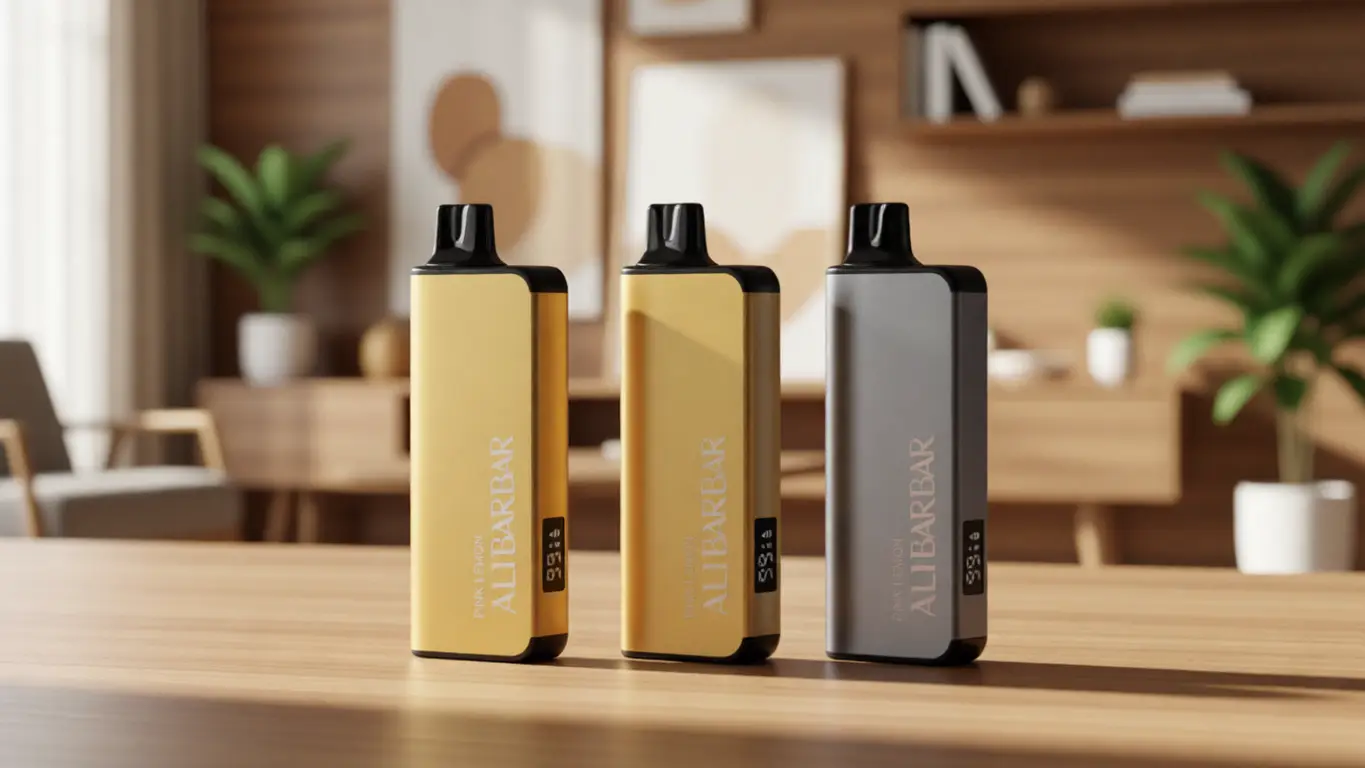
It is one thing to describe abstract design principles; it is another to see them embodied in a coordinated product range. ALIBARBAR has built its reputation on exactly that translation — taking recognisable user concerns and solving them through incremental, verifiable engineering decisions. While the collection is diverse, the underlying priorities remain the same across every unit.
The INGOT 9000, for example, uses a precisely tensioned mesh element with an onboard controller that flattens the temperature curve throughout each draw. Its mouthpiece is formed from a single piece of PCTG with a polished lip contour, reducing contact friction and minimising the surface area available for residue adhesion. The sealed battery compartment is physically isolated from the vapour path, so there is no shared plenum where condensation can accumulate and later travel forward.
Moving up in capacity, the INGOT 15000 extends that same architecture into a longer‑runtime format without altering the thermal profile — scaling the reservoir while keeping outlet parameters within the same narrow band. This matters because changing the thermal mass of a device without recalibrating the regulation curve often leads to the kind of output inconsistency that produces dry mouth signals. No such recalibration was necessary here; the platform was engineered from the start to accommodate both capacities.
The Ice Adjust 12000 introduces a controlled‑output mechanism that lets the user select among distinct performance levels while maintaining a safe thermal ceiling at each setting. More importantly, it provides unambiguous real‑time feedback on the selected mode, so the relationship between user action and device response is always transparent. When a device leaves no ambiguity about its state, the user is far less likely to operate it in a way that generates avoidable clinical signs.
These are not minor distinctions. They are the product of a design team that spent time observing how adults actually interact with their devices during a full business day, a long commute, or a social evening — and then engineered to reduce the trace left behind. No device eliminates every potential marker, but the deliberate reduction of detectable output is a real and measurable accomplishment.
A Practical Evaluation Method for Any Adult Orthodontic Patient
If you are currently under orthodontic care and want to evaluate whether your current device — or one you are considering — is likely to prompt questions, use the following checklist. These questions require no specialised knowledge, only honest observation.
At the end of a typical session, is your mouth noticeably drier than before you started? If yes, thermal regulation may be suboptimal, and mucosal signs are more probable.
Does the mouthpiece surface feel grippy or show any micro‑texture after a week of use? A sticky or degraded surface is already trapping material that will transfer to your teeth or aligners.
Have you ever found an unexpected droplet at the mouthpiece tip? This indicates internal leakage and a contaminated vapour path — a direct path to residue on orthodontic hardware.
Do you reach the point where you can no longer tell how much usable life remains? That uncertainty drives the prolonged, hard draws that amplify every other detection factor.
Is the device comfortable to hold in the mouth without constant repositioning? Frequent adjustment means repeated contact, and repeated contact increases friction‑related tissue marks.
If you answered yes to two or more of these questions, your current setup is not doing you any favours during your next orthodontic visit. When comparing replacement options, having standardised specification data — mouthpiece material, thermal regulation type, leak protection rating — makes the evaluation objective rather than emotional. At OZVAPE Shop, we provide those specifications in a consistent format specifically so adults can make side‑by‑side comparisons without having to parse marketing language from engineering reality.
Common Misjudgments That Lead to Unwanted Attention
Observation of the broader market suggests several recurring ways that well‑intentioned users undermine their own desire for discretion. Recognising these patterns can save you both professional awkwardness and unnecessary expense.
Over‑emphasising capacity while ignoring regulation quality. A device that promises 12,000 cycles means little if the thermal output declines sharply after 8,000, forcing you to compensate with harder draws. Capacity is a number; regulation quality is the experience, and the latter determines what your orthodontist notices.
Assuming visual similarity equals internal equivalence. The outside of a device is often a generic shell. Two visually similar units can contain vastly different heating architectures, mouthpiece grades, and leakage safeguards. Judging by appearance alone is a reliable way to end up with the same detection problems you were trying to avoid.
Undervaluing modularity in cost and hygiene. A replaceable pod system may cost slightly more upfront, but it allows you to refresh the mouthpiece and vapour path independently. For an orthodontic patient, this means you can maintain a clean, low‑residue interface without discarding the entire device every week — fewer variables, fewer surprises.
Confusing “discreet” with “stealth.” Marketing language is deliberately vague. Real discretion comes from thoughtful engineering, not a brand’s choice of adjectives. Look for the physical evidence: a thermally stable output, a non‑reactive mouthpiece, a sealed airway. If those three things are present, the device is inherently more discreet than a comparable unit without them.
From a manufacturing perspective, the industry has been moving in two directions simultaneously. One group of producers compresses costs by standardising on the cheapest materials and simplest circuits, which produces exactly the kind of inconsistent output and residue‑prone mouthpieces discussed above. The other group, smaller but growing, invests incrementally in the details that affect user experience during orthodontic treatment. Recognising which philosophy you are dealing with — and verifying it against documented specifications — is now an essential part of being an informed adult consumer.
Frequently Asked Questions
Q: Can an orthodontist definitively prove that a patient uses a personal electronic device?
A: An orthodontist will rarely make a definitive accusation based on isolated signs. What they will do is note clinical observations — reduced salivary flow, atypical residue patterns, slower tooth movement — and ask whether anything in the patient’s routine has changed. The clinical record itself is enough to raise the topic.
Q: How long after stopping use would oral signs start to diminish?
A: Mucosal hydration typically improves within 48–72 hours. Surface residue on teeth or brackets may require a professional cleaning to remove completely, particularly if it has been present for several weeks. Tissue recovery is generally quick once the source of irritation is removed.
Q: Do certain device types produce less oral residue than others?
A: Yes. Devices that use controlled temperature regulation, smooth‑surface medical‑grade mouthpieces, and sealed internal architectures produce measurably less mouth‑transferred residue. These are engineering choices, not inherent to the category, and they appear in just a subset of products on the market.
Q: Is the ALIBARBAR range specifically designed for orthodontic patients?
A: ALIBARBAR devices are not marketed exclusively to orthodontic patients, but the engineering decisions described here—thermal consistency, PCTG mouthpieces, isolated airways—address the very factors that make detection more likely. An orthodontic patient who selects a device from a range with these characteristics is making a more informed choice.
Q: Are there any device features that actively reduce dry mouth?
A: No personal electronic device can actively hydrate oral tissues. However, a device that maintains a lower and more consistent operating temperature reduces the rate at which moisture evaporates from mucosal surfaces. This is a passive benefit of careful thermal engineering, not a therapeutic claim.
Q: Can residue on aligners be cleaned off, or does it cause permanent damage?
A: Most residues can be removed with standard cleaning agents designed for orthodontic appliances. However, prolonged exposure to certain compounds can slightly etch or discolour aligner material over time. Changing devices more frequently or selecting ones with minimal residue transfer is the most practical prevention.
Q: How can I verify that a device uses the mouthpiece material and sealing standards described here?
A: Look for explicit documentation on the retailer’s site and on the product packaging. Reputable suppliers disclose mouthpiece material and safety certifications. At OZVAPE Shop, we list these specifications in a standardised format for every ALIBARBAR unit as part of our commitment to informed choice.
Q: If I switch to a well‑engineered device, will my orthodontist still notice?
A: A device with lower residue transfer and better thermal regulation reduces the most visible signs, but no device can guarantee zero clinical observation. The goal is to lower the probability of detection to a level that does not interfere with your orthodontic relationship or treatment progress. Many users report that after switching, the topic never arises.
Q: What should I do if my orthodontist does ask about device use?
A: Orthodontists ask because they see something that does not fit the expected pattern, and their professional obligation is to ensure treatment success. An honest conversation allows them to adjust advice, and you gain the benefit of their observations. A well‑engineered device makes it less likely that such a conversation will be triggered in the first place.
Q: Does OZVAPE Shop offer after‑purchase support if a device does not perform as described?
A: Yes. Our support team is local, reachable, and trained to handle performance queries factually. If a device arrives with a defect or does not match its documented specifications, we replace the unit rather than engaging in disclaimers. This is part of the accountability structure described in our published operational policies.
Conclusion
The question “Can orthodontists tell if you vape?” is not about magic powers — it is about observable biology and avoidable engineering shortcomings. Orthodontists see what any attentive observer would see if they looked into a mouth every day: tissue changes, surface residue, and movement patterns that deviate from the norm. The real question for an adult patient is whether the device in their pocket reduces those signs or amplifies them.

The difference comes down to how a device is made. Thermally consistent heating elements, non‑porous mouthpiece materials, fully sealed vapour paths, and unambiguous status feedback are not cosmetic features — they are the physical countermeasures that make professional visits stay focused on brackets and archwires rather than unexpected clinical observations.
At OZVAPE Shop, we bring the ALIBARBAR collection to Australian adults through a documented, factory‑certified channel specifically so that you can access devices built around these principles. Product specifications are published openly, orders are supported by a responsive local team, and every unit carries the same structural attention to detail that makes informed choice possible. The right device for an orthodontic patient is not the one with the most attention‑grabbing marketing; it is the one that respects your treatment journey, your privacy, and your intelligence in equal measure.