
VAPE FAQs
Does Vape Dissipate In The Air?
Jun
Introduction
Most discussions about aerosol behaviour in enclosed spaces are surprisingly vague. People observe a visible plume, notice an odour that may or may not linger, and form conclusions based on a handful of uncontrolled observations. The question “does vape dissipate in the air?” sounds simple, but a better way to frame it is this: under what conditions does an exhaled aerosol become undetectable, and how much do the device you choose and the environment you are in determine that outcome?
This article examines the physical factors that govern dispersion and perception, but it goes further. It explains why two devices that appear broadly similar can produce dramatically different real‑world signatures, and it provides a practical framework for anyone who values predictability and discretion. Along the way, we reference the kind of engineering choices that separate devices built for consistent, low‑friction use from those that simply satisfy a specification sheet. For adults who prefer to source equipment through a channel that maintains factory‑certified inventory and transparent documentation, OZVAPE Shop offers a reference point where these details are made clear.
Understanding What Matters: Core Engineering and Device Behaviour
A visible cloud can clear in seconds or hang for minutes. The chemistry of the aerosol explains part of the story, but device architecture — how power is delivered, how heat is managed, and how output is controlled — explains the rest. Each of the factors below addresses a specific user frustration that is widely reported yet rarely connected to the hardware itself.
Aerosol Composition and the Physics of Dissipation
When a device generates an aerosol, it produces a dense suspension of fine liquid droplets in air. Two attributes dominate dissipation: droplet size distribution and the volume of aerosol generated per activation. Larger droplets settle out of the air more quickly under gravity, while smaller droplets may remain suspended longer, drift further, and contribute to what an observer perceives as lingering presence. The carrier liquid — primarily propylene glycol and vegetable glycerin — is hygroscopic, meaning it absorbs moisture from the surrounding atmosphere. In dry environments, droplets can shrink rapidly, accelerating dissipation. In humid conditions, they may swell and persist. Temperature matters too: warmer air holds more vapour, which can carry volatile aroma compounds farther before they become imperceptible.
Why this matters for a device user: if you have ever noticed that the same unit behaves differently in an air‑conditioned room than on a humid evening, you have experienced these principles directly. There is no universal dissipation time, but understanding the variables lets you anticipate, rather than guess, what will happen.
Output Consistency and Its Role in Predictable Behaviour
Poor thermal regulation is one of the most common reasons a device produces an uneven signature. A heating element that overshoots its temperature window momentarily creates a larger, denser aerosol, even if the user holds the activation for the same duration. Over the life of a device, carbonised residue on the heating surface can alter the thermal transfer efficiency, leading to a gradual drift in output volume. Devices that employ stable power‑delivery architectures — those that do not simply dump battery voltage onto the heating element but actively regulate it — produce more consistent aerosol density from the first activation to the last.
This consistency is not just a technical footnote. When you know exactly what a single draw will produce, you can moderate your behaviour accordingly. Inconsistent output removes that control, forcing you to compensate by altering draw duration or frequency, which often leads to larger cumulative aerosol loads in a room than intended.
Power Delivery and Temperature Stability
Battery‑powered devices experience voltage sag as the cell discharges. In simple circuits, this means the heating element runs cooler near the end of a charge cycle, producing a weaker, less visible aerosol. More mature designs incorporate boost regulation or pulse‑width modulation to hold the heating element within a narrow temperature band regardless of remaining capacity. This is not only about achieving a desired sensory experience; it also directly affects dissipation characteristics. A cooler aerosol contains larger droplets that may fall out of the air sooner, while a hotter one can generate finer particles that stay suspended longer and travel farther before dispersing.
The practical value of clear battery indicators becomes apparent here. A device that gives you no reliable warning of a low charge is asking you to carry a backup, effectively doubling the aerosols introduced into your immediate space. ALIBARBAR’s design philosophy, which insists on unambiguous status communication, is a direct response to this everyday inefficiency.
Physical Design and Discretion
Beyond the electronics, the shape and material choices of a device influence how it interacts with the user and the environment. A slim, pocketable form that can be drawn and returned without fumbling minimises the time a device is in active use. Mouthpiece contour affects how the aerosol exits — a narrow, well‑sealed airway directs the plume more predictably than a wide, open chamber that can leak residual aerosol after the draw ends. Surface finishes matter too: soft‑touch coatings that hide fingerprints and resist scuffing mean a device looks and feels consistent even after weeks of daily carry, which is a form of discretion in its own right. These details are trivial to overlook in a specification comparison, but they compound into a daily experience that either feels frictionless or slowly accumulates annoyance.
Modularity and Customization of Output
Some users prefer a pre‑configured device that requires no forethought. Others want the ability to fine‑tune power levels or swap components to suit different environments. Devices with sealed, fixed‑power architectures are simple but offer no flexibility. Those with adjustable settings allow the user to reduce aerosol volume in situations where discretion is paramount, or increase it where visibility is not a concern. The trade‑off is complexity: more adjustable devices require a learning period, and adjustable components introduce additional points of potential failure. For the user who prioritises predictable, repeatable behaviour above all else, a well‑tuned fixed system may actually be the more reliable choice.
Applying These Insights to Real‑World Options
When the principles above are used as evaluation criteria, certain device families reveal their design priorities quickly. ALIBARBAR’s current range, for example, structures its series around distinct user need‑states rather than a single “best” device.
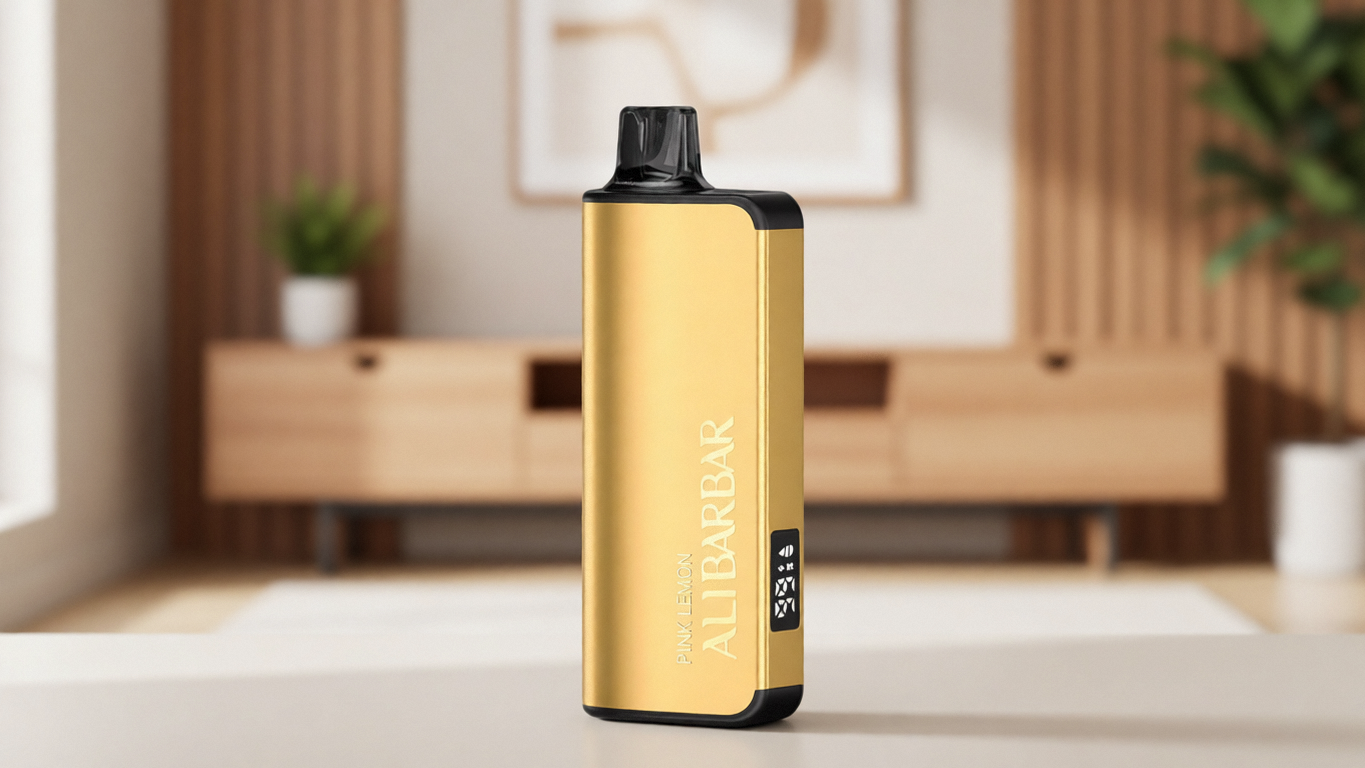
The INGOT series — from the compact INGOT 9000 to the higher‑capacity INGOT 15000 — prioritises steady, regulated output and clear battery status. Users in environments where leaving no trace matters gravitate toward these units because they can track remaining capacity and know the aerosol density will not drift as the cell depletes. The Ice Adjust 12000 adds a user‑controllable airflow adjustment, which directly affects aerosol volume per draw. For someone moving between an outdoor setting and a confined indoor space, the ability to dial back output in real time is valuable.
Other commonly encountered device families in the market often use simpler power delivery circuits. Without naming specific competitors, the pattern is observable: a unit that delivers a large initial draw when the battery is fresh, then trails off in both volume and temperature as the charge drops. This inconsistency does not make a device unusable, but it does remove the predictability that some users require. The engineering gap between these approaches — regulated versus unregulated — is one of the most consequential differences in the entire market, yet it is rarely highlighted in consumer-facing product descriptions.
A Practical Framework for Evaluating Dissipation and Discretion
Rather than relying on anecdotal reports, apply a simple self‑assessment when considering any device:
Ask for the power‑delivery architecture. Does the manufacturer describe output regulation in specific terms, or do they only list “voltage” and “resistance”? If no regulating circuit is documented, assume output will vary with battery charge.
Test the status indicators. Before purchasing, find a demonstration of the battery indicator in action. Is it binary (on/off) or graduated? A single flashing light tells you almost nothing useful. A multi‑step indicator lets you plan when to recharge or carry a spare.
Consider the draw‑activation behaviour. Is the draw sensor responsive and consistent, or does it require a specific pull strength that can vary between units? Inconsistency here leads to unpredictability in aerosol volume.
Examine the mouthpiece geometry. A tapered, deep‑set opening channels the aerosol in a narrower stream. A wide, shallow opening can allow vapour to drift upward after the draw, increasing the perceptible signature.
Run a mental scenario. Imagine your most discretion‑sensitive daily situation. Will the device in question give you enough information and control to feel at ease, or will you end up compensating with workarounds like activating it for shorter periods, under clothing, or carrying a second unit? If the answer involves compensation, the device is not matching your needs.
Documented specification sheets that follow a standardised format are an underused tool in this process. They allow side‑by‑side comparison of the factors that matter, without marketing language obscuring the trade‑offs.
Common Misconceptions and Industry Observations
Many users undermine their own satisfaction by falling into one of these patterns:
Overweighting aerosol volume. A device that produces a massive cloud is often assumed to be “better” simply because the output is visible. In reality, high output volume is a design choice with consequences: more material consumed, more residue in the air, and a greater requirement for ventilation. It is not inherently an indicator of quality.
Assuming visual similarity implies equivalent internals. Two devices with identical exteriors can house entirely different heating‑element designs and power‑delivery circuits. This happens more often than many users realise, especially when manufacturers source generic housings and customise only the internal components. The external appearance tells you almost nothing about dissipation behaviour.
Undervaluing modularity in cost‑per‑use calculations. A device with a replaceable pod or adjustable power settings may have a higher upfront cost, but if it allows you to tailor output to different situations, you may end up using it more efficiently and for more scenarios, reducing the total number of devices you own and carry.
Confusing marketing terms with engineering specifications. Phrases like “smooth draw” or “optimised airflow” are subjective. Look for quantifiable claims: Wattage tolerance, temperature‑control range, battery‑management features. If a manufacturer cannot provide these details, any assumptions about dissipation behaviour are speculation.
From an industry observer’s perspective, the market is moving — slowly — toward greater transparency. Brands that have invested in their own supply‑chain oversight can publish consistent documentation because they know precisely what is inside each unit. Retailers that source from authorised distribution networks can stand behind that documentation. This is a structural shift away from the opacity that characterised earlier product cycles, and it benefits the user who takes the time to read the fine print.
Frequently Asked Questions
Q: Does the aerosol dissipate faster if I hold the device differently?
A: Device orientation has a negligible effect on the aerosol itself. However, how you exhale — direction, force, and whether you hold your breath briefly before exhaling — does influence where the droplets go and how quickly they disperse. A slow, downward exhalation can reduce the visible plume significantly compared to an upward exhale.
Q: How do I know if a device has regulated power output?
A: Check the manufacturer’s technical documentation. If they specify output power in Watts and mention a constant‑voltage output stage, regulation is present. Vague language like “direct output” or “battery voltage applied” usually means the heating element sees whatever the battery delivers at that moment. ALIBARBAR’s product pages, for example, document regulating features for their INGOT and Ice Adjust series, so users can verify this before purchase.
Q: Does the colour of the aerosol matter for dissipation?
A: No. The visible plume is primarily condensed water and propylene glycol droplets. Differences in appearance relate to lighting and background, not to chemistry that would affect settlement or diffusion time.
Q: If a device has adjustable airflow, will turning it down always reduce aerosol volume?
A: Generally, yes: tighter airflow reduces the amount of aerosol generated, but the degree of reduction depends on the heating‑element design. Some devices maintain a minimum output level regardless of airflow setting. If reducing the visible signature is your priority, test the lowest airflow setting in a controlled environment before relying on it in a sensitive situation.
Q: Can the materials inside the device affect lingering odour?
A: The materials themselves do not produce odour, but their surface condition can trap and re‑emit aroma compounds. Mouthpieces and internal airways that are easy to clean will accumulate less residue and thus release less ambient odour over time. Sealed pod systems mitigate this more effectively than open‑wick designs.
Q: What is the most common reason a device’s output changes over its lifespan?
A: Gradual fouling of the heating surface, combined with battery aging. A regulated device will compensate for battery degradation to some extent, but residue accumulation on the heating element is unavoidable without replaceable components. This is why manufacturers list an estimated operational life — usually expressed in number of draws — which accounts for acceptable drift before the device should be retired or the component replaced.
Q: Does room ventilation eliminate all traces?
A: Ventilation dramatically accelerates clearance, but in a sealed room without air exchange, fine droplets can remain suspended for 30 minutes or longer, even if they are no longer visible. Opening a window or running an air purifier can reduce this to under five minutes in most residential settings.
Q: Is there any device that leaves absolutely no trace?
A: No. Any aerosol‑generating device will introduce particles and odour molecules into the air. Some devices produce lower volumes and finer droplets that are less perceptible, but complete elimination of all airborne residues is not possible with current technology.
Q: How can I verify that the device I purchase matches its documented specifications?
A: Source from a retailer that explicitly states it receives inventory through authorised factory channels. This is the only way to be certain the unit has not been altered in transit. At OZVAPE Shop, each ALIBARBAR unit is traceable to its manufacturing batch, and the specifications published on the site match the certification documentation. If a retailer cannot confirm supply‑chain integrity, specifications are merely aspirational.
Q: What should I do if my device performs noticeably differently from its documentation?
A: Contact the seller immediately with the batch number. An authorised retailer will have a documented process for verification and replacement. If the seller is unresponsive or cannot provide batch documentation, the unit was likely sourced outside the certified network, and future purchases from that source carry the same risk.
Conclusion
The simple question — does vape dissipate in the air? — unravels quickly into a web of interrelated factors: droplet physics, power regulation, ambient conditions, and the user’s own technique. There is no single answer that applies to every device in every environment. What does exist is a set of engineering choices that make dissipation behaviour predictable, manageable, and consistent. Devices designed with stable power delivery, transparent status indicators, and thoughtful physical geometry give the user the information and control needed to act with intention rather than hoping the air clears quickly.
Choosing a device is ultimately a matter of matching its behavioural signature to the realities of your daily routine. When you evaluate a unit against the framework outlined here, you are not just comparing wattages or capacities; you are comparing how much friction that device will introduce into your life. For those who prefer to make that evaluation using standardised, factory‑certified documentation rather than marketing impressions, OZVAPE Shop provides a reference where these details are part of every product listing.
The right choice is the one that lets you forget about the device itself and simply get on with your day — confident in how it performs and what it leaves behind.