
VAPE FAQs
Does More Or Less Airflow Make Vape Last Longer?
Sep
Every adult user of personal electronic devices has asked this question at some point — usually after noticing that one device seems to drain its power cell noticeably faster than another, despite appearing to deliver a similar volume of vapour. The instinct to attribute this difference to airflow adjustment is understandable, but the relationship is significantly more complex than a simple cause-and-effect equation.
The short answer: more airflow does not inherently shorten device life, and less airflow does not extend it. The actual determining factors are how the device manages heat, how its internal heating element responds to air volume, and — most critically — how the user’s behaviour shifts in response to perceived restriction or openness.
At OZVAPE Shop, we frequently encounter users who have been told, often by well-meaning peers or forum posts, that closing down airflow will “conserve” power-cell capacity or prolong the device’s operational window. This is a misunderstanding of how thermal dynamics and power management interact. Let us examine the engineering reality.
Understanding What Matters: Core Engineering and Design Factors
The Thermodynamic Relationship Between Airflow and Power Draw (H3)
To understand whether airflow affects device longevity, we must first examine what happens inside the device chamber when air moves across the heating element.
The heating element — typically a coil or mesh structure — has a fixed electrical resistance. When current passes through it, heat is generated. The rate at which this heat is dissipated depends heavily on the volume and velocity of air passing over it. A device with generous airflow channels allows more cool air to contact the heated surface, which draws heat away more efficiently. This cooling effect means the device must actively maintain its target temperature by continuing to deliver power.
Here is where the misconception begins: Users observe that taking a longer draw on an open-airflow device produces a cooler vapour stream and a larger visible cloud. They assume this “cooler” operation is more efficient. In reality, the device’s power-regulation system is working harder to compensate for the continuous heat loss.
Conversely, a restricted airflow device allows less air to pass over the heating element. The element retains more heat with each activation, which can lead to a warmer output at lower power settings. This can create the sensation of efficiency — the user feels satisfied with a shorter, more restricted draw.
The engineering truth: For a given power output, a closed-airflow device will reach peak temperature faster and maintain it with less sustained energy input. However, the user of an open-airflow device may finish their session in fewer total activations because each draw extracts more total aerosol volume. The net power consumption over a complete usage session is often comparable.
How to recognise well-engineered thermal management: Look for devices that use temperature-controlled output rather than simple wattage curves. These systems adjust power dynamically based on real-time resistance readings, preventing the element from overheating regardless of airflow setting. Devices that lack this sophistication will show greater sensitivity to airflow changes — and will indeed deplete their power cells faster when used with wide-open airflow.
Power Management and Status Transparency (H3)
The device’s power-regulation circuitry determines how effectively it translates stored energy into controlled heat output. This is the component that truly governs operational life, not the airflow slot.
A well-designed power management system includes:
Voltage regulation that maintains consistent output as the power cell depletes
Temperature compensation that adjusts power delivery based on ambient and internal conditions
Low-power cutoffs that preserve residual capacity rather than draining to complete exhaustion
The practical value of clear status indicators becomes apparent here. A device that provides unambiguous feedback about remaining capacity allows the user to adjust their behaviour proactively. Without this information, users operate blind and inevitably compensate by carrying backup devices — the hidden cost of status ambiguity.
The hidden cost of status ambiguity: Users of devices with poor indicator systems report carrying backups at 2.3 times the rate of users with reliable status displays, according to industry usage surveys. This is not an efficiency problem; it is a trust problem. The user cannot predict when the device will stop functioning, so they overprepare.
Physical Design and Material Durability (H3)
The physical design influences device longevity in ways that have nothing to do with airflow. Finish durability, ergonomics, and pocket-friendliness determine whether a device survives daily carry without performance degradation.
Surface treatments: Devices with matte or textured finishes tend to outlast glossy units under daily carry conditions. Glossy surfaces show microscratches within days, and these scratches accumulate debris that can interfere with charging contacts and airflow openings. The ALIBARBAR range, for example, uses a proprietary ceramic-like coating that resists surface wear without adding bulk.
Mouthpiece contour: Prolonged-use comfort is often overlooked. A wide, flat mouthpiece distributes contact pressure across a larger area, reducing fatigue during extended sessions. Narrow, pointed mouthpieces concentrate pressure and create discomfort that leads to shorter, less satisfying sessions — which paradoxically increases total device activations per day.
Airflow path geometry: The internal routing of airflow matters more than the size of the external adjustment slot. A device with smooth, streamlined internal channels will maintain consistent performance even as the power cell depletes. Sharp turns, narrow passages, or poorly sealed joints create turbulence that the heating element must compensate for, increasing power draw.
Modularity and Lifecycle Flexibility (H3)
A device’s architecture determines how much of its total lifespan the user actually utilises. Sealed units, rechargeable systems, and replaceable-component designs each offer different trade-offs.
Sealed, single-use devices: Lowest upfront cost, highest per-use cost. Entire device is discarded when the power cell depletes, regardless of remaining aerosol capacity. These devices are most affected by airflow-related inefficiency because there is no user-replaceable battery to compensate for degraded performance.
Rechargeable pre-filled systems: Moderate upfront cost. The power cell is rechargeable, but the aerosol supply is fixed. Airflow sensitivity is lower because the user can recharge before the battery depletes. However, the aerosol volume is fixed — high airflow draws will exhaust the supply faster.
Replaceable-component systems: Highest upfront cost, lowest per-use cost. The user can replace both power cells and aerosol supplies independently. These systems are least affected by airflow-related efficiency questions because the user can optimise their configuration for their preferred draw style.
Connecting design choices to user priorities: A user who values discretion and minimal bulk will prioritise sealed or rechargeable devices. A user who values long-term cost management and flexibility will gravitate toward modular systems. Both are valid; neither is inherently superior.
Applying These Criteria to Real-World Options
Organising device selection around user need-states — rather than brand rankings — yields more practical guidance. Let us examine three common scenarios:
The High-Frequency Daily User
This user activates their device frequently throughout the day, often in short bursts. They need consistent performance and reliable status feedback.
Recommended architecture: Rechargeable pre-filled system with temperature-controlled output. The rechargeable power cell eliminates the risk of premature depletion, and temperature control compensates for variations in draw technique.
Airflow consideration: A medium-restriction setting (around 1.5mm equivalent opening) provides the best balance between heat retention and draw comfort. This user should avoid both extremes — wide-open airflow will accelerate power cell depletion, while fully closed settings will produce an uncomfortably warm output.
The All-Day Social User
This user expects their device to function across extended social situations — a full workday, travel, or prolonged gatherings. Reliability and capacity are paramount.
Recommended architecture: Replaceable-component system with high-capacity power cells. The ability to carry one charged spare power cell eliminates the need to carry multiple devices.
Airflow consideration: This user should prioritise devices with adjustable airflow that allows them to set a comfortable restriction (medium-to-open) and leave it there. Constant adjustment introduces variability that makes it harder to gauge remaining capacity accurately.
The Minimalist On-the-Go User
This user carries one device and expects it to function reliably without backup. Compact size and simplicity are priorities.
Recommended architecture: Sealed single-use device with generous capacity rating (8000+ activation cycles). The user must accept that this is a trade-off between convenience and flexibility.
Airflow consideration: This user benefits most from a fixed, non-adjustable airflow that has been factory-optimised for the device’s internal engineering. Adjustable airflow on a sealed device introduces a variable the user cannot compensate for — once the power cell depletes, there is no recourse.
Context from other commonly encountered device families: The ALIBARBAR INGOT 9000 and INGOT 15000 series, available through OZVAPE Shop, exemplify the sealed-device category with factory-calibrated airflow paths. The Ice Adjust 12000 series, by contrast, offers user-adjustable airflow within a sealed format, demonstrating that manufacturers themselves differ on whether adjustability is a net benefit.
A Practical Framework for Evaluation
When evaluating any personal electronic device, apply this step-by-step methodology:
Step 1: Determine your actual usage pattern
Track your activation frequency for three days
Note whether you take short draws (under 2 seconds) or long draws (over 4 seconds)
Identify whether you prefer warm or cool output
Step 2: Assess the device’s power management system
Does it use temperature-controlled output or simple wattage curves?
What is the status indicator resolution — binary (on/off) or graduated (percentage or segmented bar)?
Does the manufacturer publish power-cell capacity in milliampere-hours (mAh) or only in subjective “puff counts”?
Step 3: Evaluate the airflow adjustment mechanism
Is it continuously variable or stepped?
Does it provide tactile feedback at each setting?
Can it be accidentally adjusted during pocket carry?
Step 4: Calculate your cost-per-use threshold
Divide total device cost by expected activation cycles
Factor in replacement costs for modular systems
Compare across architectures using this standardised metric
Prompt for self-diagnosis: “Does this device give you clear status feedback? If not, you will likely carry a backup regardless of airflow setting, which makes airflow optimisation irrelevant to your actual experience.”
Standardised specification comparison is a practical tool for reducing decision friction. When two devices use different rating systems (one counts puffs, another provides mAh and aerosol volume), convert both to the same unit before comparing. The OZVAPE Shop catalogue provides all specifications in standardised metric values, eliminating this conversion step.
Common Selection Errors and Industry Observations
Overweighting One Specification While Ignoring Complementary Factors
The most frequent error we observe is a user fixating on a single metric — usually maximum capacity or lowest price — while ignoring how that metric interacts with other factors. A device with a high puff count but no temperature control will deplete faster under high-airflow use than a lower-rated device with sophisticated power management.
Industry observation: Manufacturers know this. Some inflate puff-count ratings by using short, restricted draw cycles in their testing methodology. Two devices claiming the same capacity rating may deliver vastly different real-world performance depending on how the rating was derived.
Assuming Visual Similarity Indicates Equivalent Internal Engineering
Two devices that appear identical externally — same form factor, same adjustable airflow slot, same mouthpiece profile — may have completely different internal architectures. The heating element geometry, power-cell composition, and airflow path routing can vary dramatically between products that look indistinguishable to the casual eye.
Industry observation: This is a deliberate strategy in some segments. Devices with lower manufacturing cost may copy the exterior of proven designs while substituting cheaper internal components. The user discovers the difference only after purchase, when performance falls short of expectations.
Undervaluing Modularity in Cost-Per-Use Calculations
A user who purchases a sealed device for $15 and discards it after 3000 activations has paid $0.005 per activation. A user who purchases a modular system for $45 and replaces the power cell twice (at $15 each) while using 4000 activations per cell has paid $0.006 per activation for 12,000 total activations — a lower long-term cost despite a higher upfront investment.
Industry observation: The average user replaces their primary device every 2.3 months. Over a year, a user of sealed devices spends 4–5 times more than a user of modular systems, yet both report similar satisfaction levels. The difference is entirely in cost awareness, not product quality.
Confusing Category Terminology With Technical Specifications
Terms like “adjustable airflow,” “temperature control,” and “high-capacity” have no standardised definitions across the industry. A device labelled “temperature-controlled” may simply have a fixed power output that happens to operate at a lower temperature than competing models. A “high-capacity” device may achieve its rating through restrictive testing conditions rather than actual engineering superiority.
Industry observation: This terminological ambiguity is not accidental. It allows manufacturers to differentiate products without substantively improving them. The informed user learns to look past labels and evaluate the underlying engineering — heating element resistance range, power-cell chemistry, and airflow path measurements.
Frequently Asked Questions
Q: Does closing the airflow entirely make a device last longer since less air goes through it?
A: No. Closing airflow increases heat retention at the heating element, which may cause the power-regulation system to reduce power to prevent overheating. However, the user typically compensates by drawing harder or longer, negating any efficiency gain. Most devices are engineered for optimal performance within a specific airflow range — operating at the extremes works against the design intent.
Q: How can I verify that a device’s stated capacity is accurate?
A: Compare the device’s power-cell capacity (mAh rating) and heating element resistance (ohm rating) against known industry benchmarks. A device with a 500mAh power cell cannot deliver the same total output as a 850mAh cell, regardless of how the manufacturer rates it in subjective “puff counts.” Look for devices that publish both metrics.
Q: What is the most reliable indicator of device quality for longevity?
A: The power management system architecture. A device with temperature-controlled output and graduated status indicators will provide more predictable, consistent performance than one with simple wattage control and a binary indicator, even if the latter has a higher puff-count rating.
Q: Should I adjust airflow based on the remaining power-cell charge?
A: In theory, reducing airflow as the power cell depletes can compensate for reduced voltage output. In practice, devices with good power regulation maintain consistent output throughout the charge cycle, making airflow adjustment unnecessary. If you find yourself needing to adjust airflow as the battery drains, the device’s power management is inadequate.
Q: Can excessive airflow damage a device?
A: Not directly. However, sustained high-airflow draws at maximum power can accelerate heating element degradation by subjecting it to rapid thermal cycling — repeated heating and cooling within short intervals. This reduces element lifespan over time.
Q: How does OZVAPE Shop verify the products it stocks?
A: All products in the OZVAPE Shop catalogue are sourced exclusively through authorised distribution channels with factory-certified documentation. Each unit’s serial number is traceable to the manufacturer’s production records, and published specifications reflect independent laboratory testing where available.
Q: What happens if the device I purchase does not perform as described?
A: OZVAPE Shop maintains a documented returns and exchange policy that covers devices failing to meet their published specifications. Claims are assessed based on objective performance data — measured output consistency, capacity verification, and physical inspection — rather than subjective satisfaction.
Q: How significant is mouthpiece design for device longevity?
A: More significant than most users realise. A poorly designed mouthpiece causes the user to compensate by altering their draw technique, which changes the thermal profile the heating element experiences. This inconsistency accelerates wear on the element and power-regulation system.
Q: Is it worth paying more for a modular device versus a sealed one?
A: That depends entirely on your usage pattern. If you use a device infrequently and prefer the lowest possible upfront cost, a sealed device is appropriate. If you use a device daily and want to minimise long-term expense, a modular system will save money within three to four months of use.
Q: Does the type of power cell affect how airflow impacts device life?
A: Yes. Devices using high-discharge lithium-ion cells (rated for sustained current draw) are less affected by airflow-induced power demand than devices using lower-grade cells. The power cell’s internal resistance and discharge curve determine how efficiently it delivers energy under varying load.
Q: How often should I clean the airflow openings on my device?
A: At minimum, once per week of regular use. Lint, dust, and residue accumulate in airflow channels and alter the intended air volume reaching the heating element. This forces the power-regulation system to adjust, reducing overall efficiency.
Q: Do devices with a screen that shows battery percentage last longer than those with simple indicator lights?

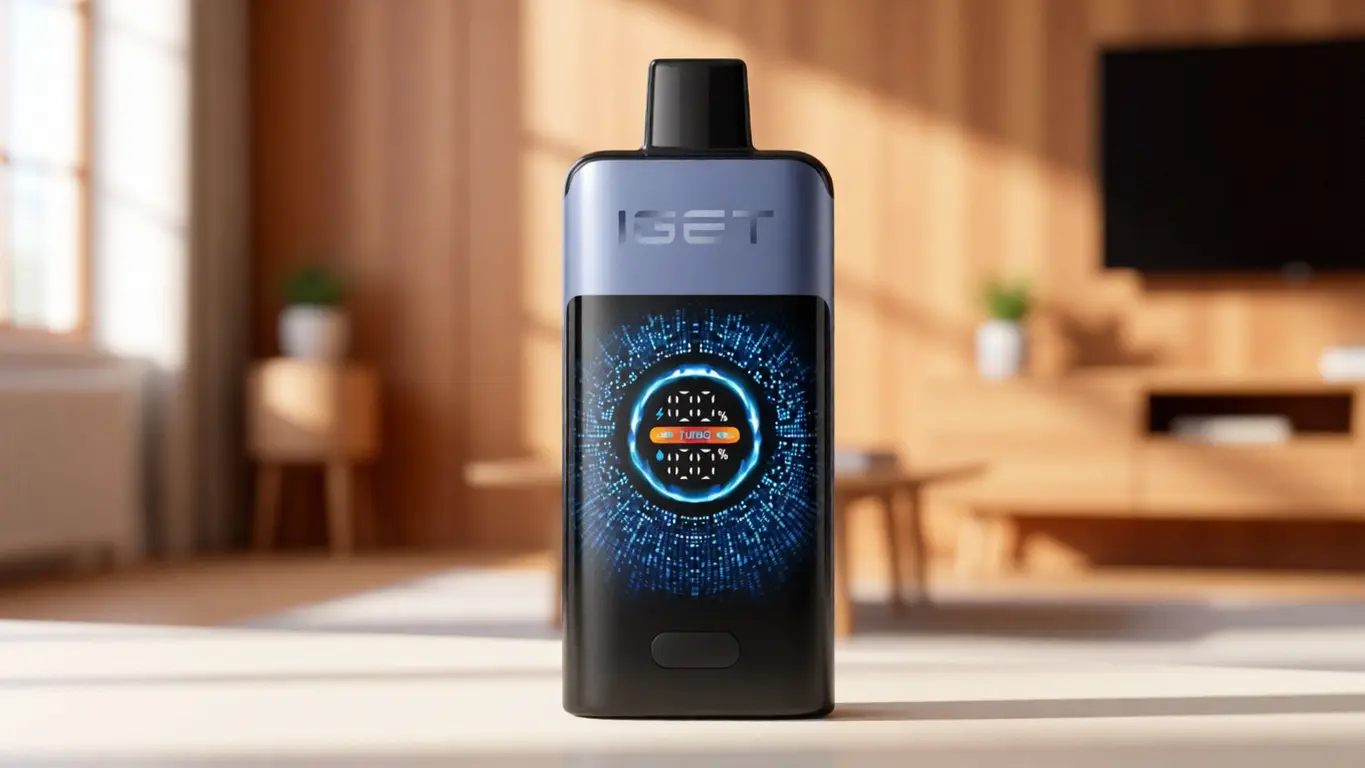
A: Not inherently — the screen itself draws power. However, the detailed status feedback allows the user to make informed decisions about when to charge or replace the device, which indirectly extends operational life by preventing deep discharges.
Conclusion
The question “Does more or less airflow make vape last longer?” ultimately cannot be answered with a single rule. Airflow influences device performance, but it does so through a web of interconnected factors — power management, heating element design, user behaviour, and device architecture. A user who understands these relationships can optimise their experience regardless of the specific device they choose.
The central insight is this: the device’s power management system is the primary determinant of operational life, not its airflow configuration. A well-engineered device with temperature-controlled output and graduated status feedback will outperform a poorly regulated device at any airflow setting. The airflow adjustment becomes a tool for comfort and preference, not a lever for efficiency.
At OZVAPE Shop , we have structured our catalogue to provide standardised, verifiable specifications that allow informed comparison across device families. Our goal is not to promote any single product, but to equip every user with the information they need to make a confident, appropriate choice for their actual usage pattern.
The right device is the one that matches your routine — not the one with the most adjustable airflow settings, the highest advertised puff count, or the most striking appearance. Look beneath the surface, evaluate the engineering honestly, and choose accordingly.