
VAPE FAQs
How To Make My Vape Last Longer?
Sep
How To Make My Vape Last Longer?
Few frustrations rival pulling out a device you depend on through the day and finding it already struggling — a weak indicator, thin output, or a completely lifeless body. You bought it to work reliably, and in the beginning it did. But after a few weeks, the same unit that once felt effortless now needs constant nursing. You wonder whether you are doing something wrong, or whether the device was never designed to sustain your actual routine.
This article examines what controls device longevity from an engineering and usage perspective, not from wishful thinking. It draws on observable design choices, battery management principles, and real‑world user patterns to help you identify why some vapes endure while others degrade fast. It also explains how selecting devices from documented, factory‑certified channels like OZVAPE Shop can remove one layer of uncertainty — the gamble of whether you’re working with a product that matches its stated specifications. What you take away is a repeatable framework for evaluating longevity before you buy and for adjusting your habits to get the most from what you already own.
Understanding What Matters: Core Engineering and Design Factors
Longevity is not a single rating on a spec sheet. It is the result of a chain of decisions — from the material of the heating element to the way the device manages a declining battery cell. Understanding these factors turns you from a passive consumer into an informed user.
Internal Architecture and Output Consistency
At the centre of every device is an atomizer assembly — a heating coil (often mesh) and a wicking material that draws liquid to it. When the architecture is poorly executed, hotspots develop. One section of the coil runs hotter than the rest, accelerating degradation of both the metal and the surrounding wick. The result is what users report as “flavour drop‑off” or a tight, underpowered draw long before the device actually runs out of consumable content.
Well‑engineered heating elements use evenly spaced mesh patterns and tightly controlled resistance tolerances. Some devices further stabilize output through constant‑voltage regulation circuits that maintain a consistent power profile as the battery voltage falls. Without this regulation, a freshly charged device produces a warm, dense output, but two hours later the same draw yields a thin, unsatisfying result that prompts harder pulls — which in turn stresses the coil and accelerates failure. When you evaluate a device, look for phrases like “constant output circuit” or “mesh coil with uniform temperature distribution” in documentation; these are not marketing embellishments but indicators of the thermal management that keeps performance linear from first puff to last.
Power Management and Status Transparency
Battery chemistry is another hidden lifetime driver. Most devices use lithium‑ion cells, which degrade predictably with each full discharge‑recharge cycle. A design that lets the cell drop below a critical voltage during discharge, or that applies excessive charging current, will silently slash the cell’s effective cycle count. A 500‑cycle battery becomes a 200‑cycle battery without the user ever knowing why.
Equally important is what the device tells you. A multi‑stage LED — green, blue, red — that signals remaining capacity is far more valuable than a single light that only blinks when the cell is nearly empty. Clear status feedback removes the guesswork that leads to carrying a backup “just in case” and prevents the deep discharges that erode lithium‑ion cells over time. When a device gives no warning before shutting down, you’re forced to operate blind, and the cumulative damage is real.
Physical Design and Material Durability
The housing isn’t only about appearance. A soft‑touch finish might feel pleasant on day one but can become tacky and gather pocket lint within two weeks. A hard anodized aluminium body, by contrast, resists scratches and provides better structural integrity when carried daily alongside keys and coins. Mouthpiece geometry matters too: a well‑contoured tip that allows a natural seal without pressing hard against the lips reduces user fatigue and the tendency to overdraw, which can flood the coil.
Consider also the airflow intake path. Devices with a simple hole drilled into the chassis offer little protection against debris. Ingress of pocket dust accelerates coil gunking — a sure way to shorten effective lifespan. A recessed or slotted intake with a fine mesh barrier adds negligible cost but meaningfully extends the interval before performance deteriorates.
Modularity and Lifecycle Flexibility
Devices fall along a spectrum: fully sealed units that are discarded after the internal consumable is exhausted; rechargeable sealed units that allow battery recharging but not e‑liquid refilling; and open systems with replaceable pods or coils. The longevity equation shifts depending on design. A high‑capacity sealed unit may deliver a consistent number of use cycles and then end its life, with no further variables introduced by the user. An open system, while theoretically extendable, demands correct maintenance — priming new coils, avoiding dry burns, and using liquid of appropriate viscosity — to reach its full potential. The longer life you seek is often tied to how many of these maintenance rituals you are genuinely willing to perform, not just the device’s architecture on paper.
Applying These Criteria to Real‑World Options
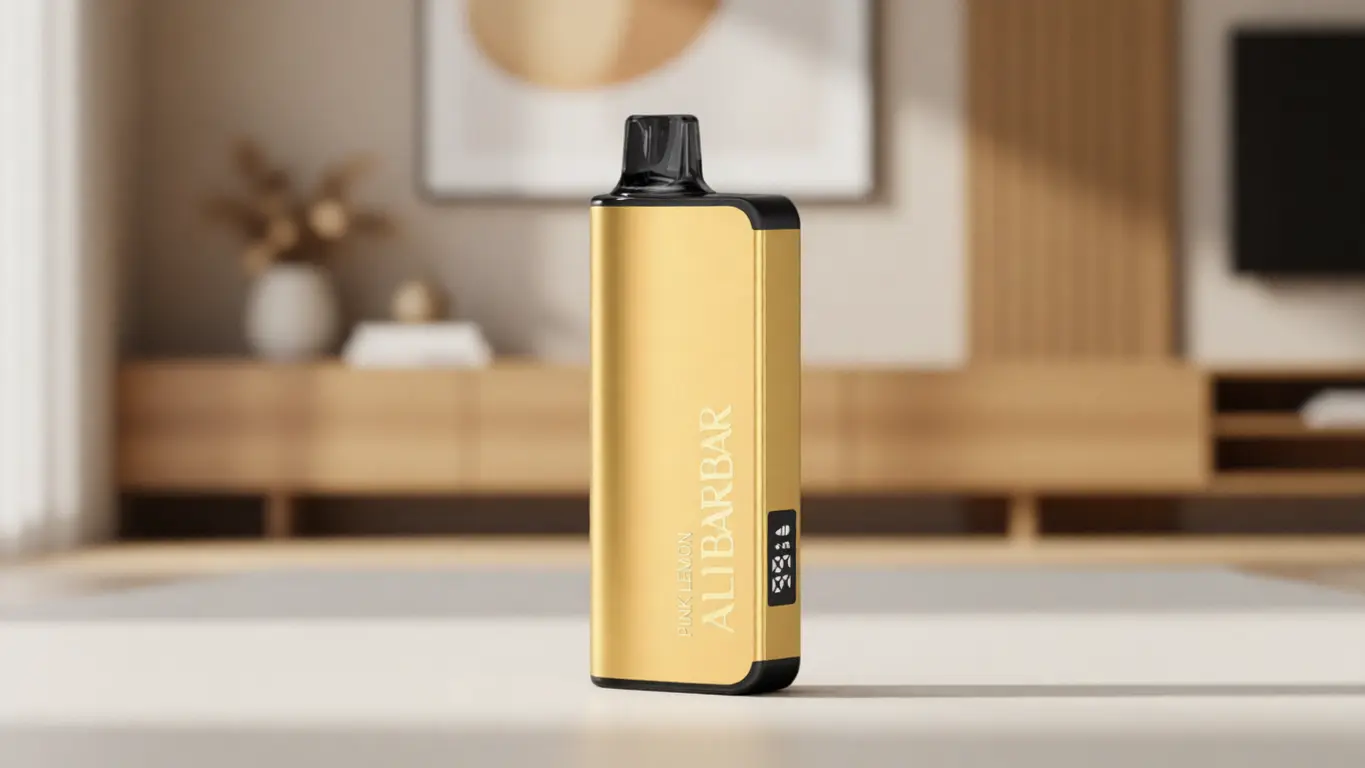
Device families that score well on longevity tend to share a combination of regulated power delivery, honest status communication, and robust physical construction. The ALIBARBAR INGOT 9000 and INGOT 15000, for example, are sealed high‑capacity designs built around a constant‑output circuit. Users report that the vapour density feels nearly identical from the first activation to the last, a direct consequence of that regulation. The trade‑off is modularity: these are not refillable, so once the integrated consumable is depleted, the entire unit is replaced. For someone who values absolute consistency without daily intervention, that is a deliberate engineering choice, not a shortcoming.
The ALIBARBAR Ice Adjust 12000 adds an airflow‑adjustable ring. This small addition has a durability implication: by letting you fine‑tune the draw resistance, it reduces the likelihood of pulling too hard in an attempt to compensate for a loose draw, a behaviour that can flood the coil and cause premature failure. The device also incorporates visible liquid inspection windows and a battery indicator that offers more than a binary alive‑or‑dead signal — features that directly address the “running blind” problem.
Elsewhere in the market, you’ll encounter compact ultra‑portable designs that prioritise minimal footprint. These are often perfectly adequate for intermittent use, but their reduced battery capacity and simplified thermal pathways may struggle under the persistent load of a daily heavy user. There is no universal “best” — there is only alignment between a device’s engineering focus and your actual usage pattern.
A Practical Framework for Evaluation
You can apply a structured set of questions before buying, or to understand why an existing device is underperforming:
Power delivery consistency — Does documentation mention constant‑voltage output, or have independent user reports shown a linear drop‑off as the battery drains? If output decays with battery voltage, you are effectively losing performance each hour.
Status feedback granularity — Is there a multi‑stage battery indicator, or just a low‑battery cutoff? Without granularity, you cannot predict dead time, and you will habitually overcharge or deep‑discharge.
Coil and wick material quality — Mesh coils with tight weave and organic cotton wicking tend to resist dry hits and gunking better than silica wicks in traditional wire coils. If the manufacturer does not disclose these specifications, that opacity is itself a signal.
Charging interface intelligence — Does the device negotiate current properly with a USB‑C source, or does it rely on legacy 5V‑only charging that may overheat? A chip that regulates input current protects cell health across hundreds of cycles.
Physical integrity under daily carry — Check user photographs after months of use, not just press images. Scratches, loose panels, or worn mouthpiece coatings reveal whether the device was built for real‑world handling.
These criteria apply regardless of brand. When you have access to standardised product pages that provide accurate specifications — as is the case with authorized stores that list technical data consistently — the comparison becomes straightforward. OZVAPE Shop, for instance, presents a uniform specification format for the ALIBARBAR range, allowing you to check coil type, battery capacity, and indicator type across models without hunting through scattered product listings.
Common Selection Errors and Industry Observations
Even experienced users sabotage longevity through a handful of predictable mistakes:
1. Overweighting mAh or puff count without examining power regulation. A large battery means little if the device squanders it on an unregulated coil that runs too hot initially and then cools off. The total number of satisfying sessions can actually be higher in a smaller regulated device than in a larger unregulated one.
2. Assuming visual similarity means internal parity. Two devices can share the same exterior silhouette, colour range, and mouthpiece shape yet contain entirely different heating elements and battery management firmware. Generic contract-manufacturer designs flood the market, and the economy of scale often comes at the expense of component-grade consistency. Unless you have documentation from an authorised source, you are guessing.
3. Undervaluing modularity in cost‑per‑use calculations. A sealed unit that costs less upfront may still be more economical if it delivers its entire rated capacity without failure. Conversely, an open system with cheap replacement coils can become expensive if those coils require meticulous priming and burn out quickly due to manufacturing variance. The true cost is the number of enjoyable sessions per dollar, not the sticker price.
4. Confusing category terminology with technical specification. Terms like “mesh coil,” “quartz heating,” or “ultra‑fast charge” are used inconsistently across the industry. Without standardised benchmarks, they mislead. Rely on measurable outcomes (puff‑per‑charge estimates, real‑world runtime reports) and signals like independent teardowns that show inductor‑based regulation vs. simple direct‑output wiring.
From an industry perspective, the shift toward USB‑C with proper PD negotiation is one of the most consequential longevity improvements of the last three years. Devices that implemented it early now demonstrate noticeably slower battery degradation than earlier micro‑USB designs. Yet many budget‑oriented units still ship with charging circuits that treat USB‑C as nothing more than a connector shape, missing the intelligence that makes the upgrade meaningful. Recognizing this distinction separates a long‑lasting purchase from one that will limp after a few dozen cycles.
Frequently Asked Questions
Q: Does frequent partial charging actually harm my device’s battery?
A: No. Lithium‑ion cells prefer partial discharge‑charge cycles over deep discharge. Keeping the cell between 20% and 80% state of charge typically extends cycle life. Quality devices have protection circuits that prevent over‑discharge, but you can still help by topping up before the indicator hits red.
Q: Can I extend lifespan by switching the device off between sessions?
A: Slightly. Most sealed devices have a quiescent current draw for button‑sensing or LED standby. Turning it off prevents that minimal drain and avoids accidental activation in a pocket, but the savings are marginal compared to the benefits of proper charging habits and avoiding hard pulls.
Q: What is the biggest impact of using a fast charger not supplied with the device?
A: Charging rate is negotiated between the charger and the device. A fast charger will only deliver higher current if the device requests it. However, poorly engineered devices may lack input‑current limiting; in such cases, a charger with a higher maximum might cause the device to pull more current than its battery protection circuit was designed for, elevating temperature and degrading cell health. Use a standard USB‑C source from a reputable brand when in doubt.
Q: Is it better to store my device fully charged or partially drained?
A: For long‑term storage (weeks without use), lithium‑ion cells are most stable at around 40–60% charge. Storage at full charge in high ambient temperatures accelerates capacity loss. If you own a device you use intermittently, avoid keeping it perpetually at 100%.
Q: How do airflow adjustments affect the life of the heating element?
A: Tighter airflow generally increases the vacuum inside the chamber, drawing more liquid to the coil. If the coil wicks efficiently, this is fine. With a restrictive draw and poor wicking, the coil may flood or cook unevenly. A moderate, matched airflow that feels smooth tends to produce the most consistent coil temperature and longest effective life.
Q: Are “high‑puff‑count” sealed devices inherently more robust?
A: Not automatically. A high puff‑count rating indicates a larger liquid reservoir and battery capacity, but unless the power delivery is regulated, the latter portion of those puffs may be weak and unsatisfying. Look for constant‑output verification in addition to the rated number. ALIBARBAR’s high‑capacity models, for example, endorse this pairing explicitly, which is why users report minimal variation throughout.
Q: How can I tell if my device’s performance degradation is the battery or the coil?
A: If the draw feels mechanically tight and vapour is thin even after a full charge, the coil and wick are likely spent. If vapour production remains decent but the device shuts down unexpectedly or shows rapid battery‑level drops, the cell is the primary culprit. Occasionally, a device with a failing sensor misreads a draw, mimicking performance loss.
Q: Does the colour or opacity of the device body matter for longevity?
A: Dark, matte finishes can absorb more heat when left in direct sunlight, raising internal temperatures. This accelerates both battery degradation and liquid thinning. Light‑coloured or polished surfaces reflect more heat. While a minor factor, it becomes relevant if you frequently leave the device on a dashboard or an outdoor table.
Q: Will using a lower‑powered output setting (if adjustable) prolong coil life?
A: Typically, yes. Lower power means lower coil surface temperature, which reduces the rate of residue accumulation. However, it also delivers less vapour, which may prompt longer draws that can cancel the benefit. Finding a moderate setting that satisfies without scalding the liquid is the sweet spot.
Q: Where can I find baseline specifications I can trust to compare longevity attributes?
A: Authorized retailers that source directly from the manufacturer typically display consistent technical data — coil resistance, battery capacity, charging current, indicator type. When a store maintains that consistency across its catalogue, it signals that the information has not been altered for promotional spin. OZVAPE Shop provides such standardized listings for the ALIBARBAR range, making a technical comparison quicker and more reliable than aggregating scattered user reports.
Conclusion
Equipment longevity is not about coaxing extra days out of a reluctant device. It is about understanding the engineering that governs consistency — regulated power, transparent status, durable materials — and then matching that engineering to the way you actually live and move. The decisions you make about usage habits, charging etiquette, and storage matter, but they are subordinate to the fundamental design of the hardware you started with.
Access to genuine, fully documented devices eliminates one of the largest uncontrolled variables in the longevity equation. When products are sourced through channels that commit to factory‑certified inventory and transparent specifications — as OZVAPE Shop does with the ALIBARBAR family — you are no longer fighting against an unknown quality ceiling. Instead, you can apply the evaluation frameworks described here to a baseline you trust, which changes longevity from a frustrating puzzle into a repeatable, predictable outcome.
The right device is the one that vanishes into your routine, not the one that demands constant attention. Choose for consistency, not for headlines, and you will find that lasting performance is much less fragile than it first appears.