VAPE FAQs
Can You Vape With Braces On?
Oct
You feel the pressure of a freshly adjusted archwire. A question forms as you reach for your device: could this one action compromise months of precisely calibrated alignment? The answer does not fit neatly into “yes” or “no.” It sits at the intersection of materials science, salivary chemistry, and the specific way a portable electronic device interacts with orthodontic hardware. Understanding that interaction is the only way to make an adult decision you can stand behind. OZVAPE Shop has observed that users with braces often seek information that reflects real-world mechanics, not alarmist soundbites. This article supplies exactly that—a technically grounded, non-promotional examination of what actually happens when vapour meets brackets, bands, and bonding resin.
What Matters: The Engineering of Vapour–Orthodontic Interaction
Your mouth is not a passive chamber. Orthodontic appliances alter fluid dynamics, temperature distribution, and the oral cavity’s self-cleansing capability. To evaluate whether using a device is compatible with ongoing treatment, you must first understand which factors convert a routine action into a risk factor.
Temperature and the Limits of Bonding Agents
The composite resin that attaches brackets to enamel is designed to withstand typical oral temperatures and moderate mechanical stress. It is not, however, engineered for sustained or repeated thermal loading above 60–70°C. Most portable vapour devices operate with coil temperatures that can push vapour outlet temperatures beyond 100°C, though the aerosol cools rapidly as it mixes with ambient air. The relevant measurement is the temperature at the point of exhalation, not at the heating element. Still, devices that run persistently hot—particularly those without effective airflow cooling or those used in rapid succession—can expose the adhesive line to thermal cycling. Research on orthodontic bond failure notes that extreme temperature shifts, such as alternating hot and cold drinks, can accelerate debonding. While vapour is not a direct equivalent, the precautionary principle applies: if a device feels uncomfortably warm at the lips, it is introducing a thermal variable that brackets were never validated against.
Draw Resistance and Intraoral Pressure Gradients
Every draw creates a pressure differential inside the mouth. For someone with braces, sudden negative pressure spikes can cause delicate archwires to flex against bracket slots, potentially loosening ligatures or, in rare cases, dislodging a bracket that was already under stress from a thick wire or recent adjustment. The risk is not theoretical; orthodontists sometimes caution patients against drinking thick milkshakes through narrow straws for the same reason. A device engineered with adjustable airflow—common in more advanced rechargeable systems—allows the user to set a gentler, more laminar draw that mimics natural inhalation rather than creating the abrupt vacuum of a tightly restricted mouthpiece. This is a design factor, not a health claim, but it has practical implications for someone who notices their archwire pinging after a stiff draw.
Aerosol Chemistry and the Altered Oral Environment
Propylene glycol and vegetable glycerin, the two carrier fluids in mainstream vapour liquids, are hygroscopic. They attract and hold water molecules, which means that frequent vapour exposure can depress intraoral humidity beyond what mouth-breathing alone would cause. Hyposalivation is a well-documented concern for orthodontic patients because saliva is the primary buffer against acidogenic bacteria. With braces, the stagnation zones around brackets already create microenvironments where plaque accumulates faster. A dry mouth accelerates enamel demineralisation, producing the white spot lesions that are the most common unintended outcome of fixed-appliance therapy. This is not unique to vapour—any habit that reduces salivary flow, from caffeine overuse to certain medications, has the same effect—but users of vapour devices should be aware that they are introducing an additional variable that shifts the oral ecosystem toward higher decay risk.
Mouthpiece Surface and Soft Tissue Contact
Brackets and wires create new frictional surfaces against the inner lips and cheeks. A mouthpiece made of coarse-textured plastic or metal that rubs against already-irritated mucosa can compound the discomfort. Smooth, rounded mouthpiece geometry matters. Similarly, any device that leaks condensed liquid into the mouth introduces an unnecessary irritant that can settle around gingival margins already inflamed by orthodontic movement.
Applying These Principles in the Real World
No one picks up a vapour device hoping to complicate their orthodontic treatment. The reality is that most users simply never received a framework for evaluating whether a given product is likely to be more or less problematic. That changes when you treat the device the way an engineer would: as a system with definable thermal, fluidic, and material outputs.
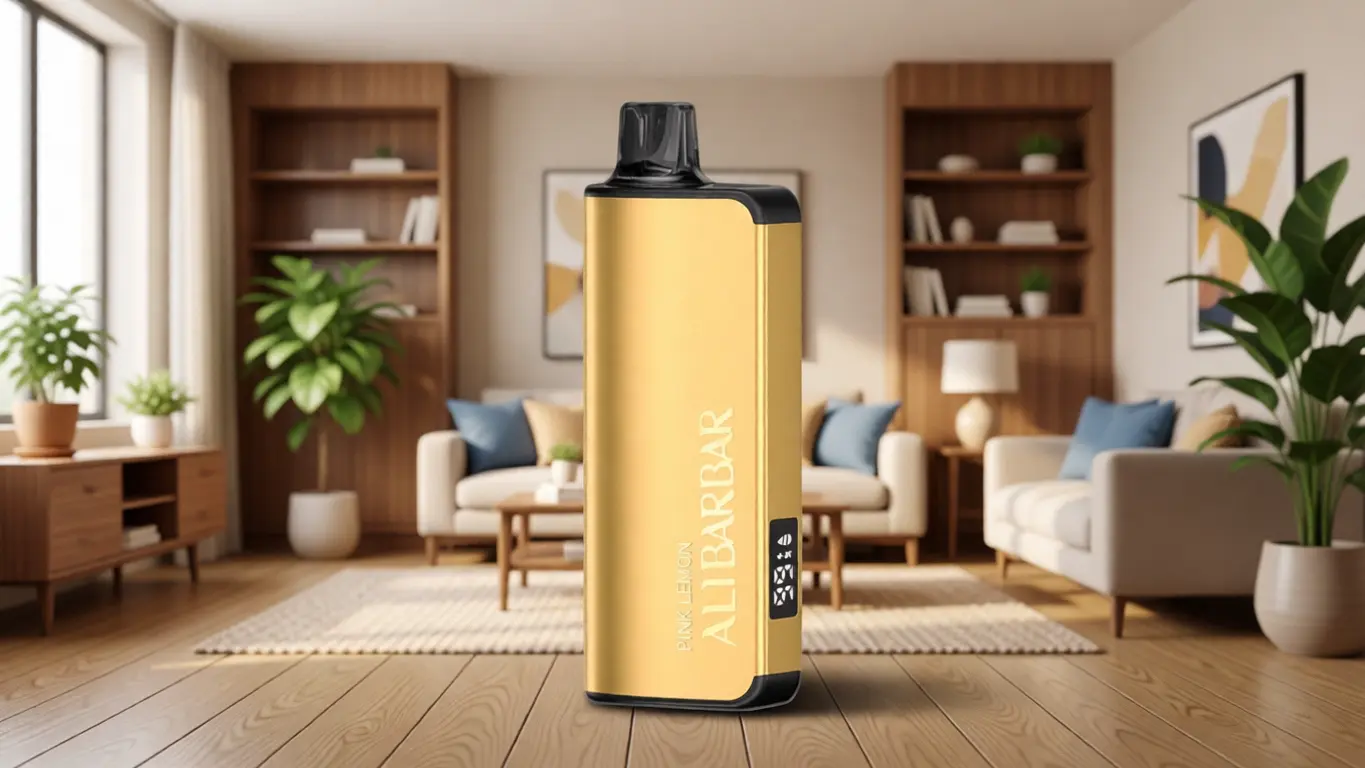
Take the ALIBARBAR Ice Adjust 12000 series, available through authorised Australian channels like OZVAPE Shop. Its airflow control allows a user to open the intake fully, producing a cooler, lower-resistance draw that minimises the sudden pressure differential we discussed. The mouthpiece is moulded from a polymer that does not retain sharp edges even after extended pocket wear, which reduces the mechanical irritation factor. This is not a recommendation based on taste or trend; it is an observation about three measurable properties—adjustable resistance, thermal dissipation, and surface finish—that happen to align with the vulnerabilities of an orthodontic mouth. Other manufacturers, including Uwell and Vaporesso, incorporate airflow adjustment in their rechargeable lines, but the granularity of control varies. A device with a binary “tight/loose” switch offers less precise tailoring than one with a continuous slide or dial. For a user who needs to keep draw forces below a certain threshold, that distinction is material.
The more important point is that sealed disposable units with no airflow control and a fixed coil resistance give the user zero ability to adapt the output to their physical state. If that fixed output happens to be hot and restrictive, the orthodontic patient is stuck with a configuration they did not choose. That alone should shift the way someone with braces evaluates what they carry.
A Framework for Personal Evaluation
Before reaching for any device, a person with braces can work through the following diagnostic sequence. The goal is not to forbid an action but to upgrade decision quality.
Can you describe the temperature? After a standard draw, how does the vapour feel at the lips—cool, warm, or noticeably hot? If you would not comfortably hold the vapour against your inner lip for three seconds, the thermal load is probably higher than ideal for prolonged bonding integrity.
Does the draw require noticeable muscular effort? Pause mid-draw. If you are pulling against strong resistance, you are generating negative pressure that transmits directly to the archwire. A device that allows you to inhale with the same gentle force you use to breathe normally is mechanically kinder.
Is there any condensation leakage? Inspect the mouthpiece after two or three uses. Liquid pooling near the tip or running down the body means the anti-condensation design is inadequate; that liquid will inevitably contact your brackets or gums.
What does your oral hygiene cadence look like? This is the factor most often ignored. If you use any device that promotes mouth dryness, you must compensate with more frequent rinsing, higher fluoride exposure, and possibly a saliva substitute before bed. Ask yourself honestly whether your current routine can absorb that additional demand.
If the answers reveal temperature discomfort, high draw resistance, or uncertainty about leakage, then the device in hand is not well-suited to your current orthodontic reality. That is not a moral judgment—it is an engineering mismatch.
The Pattern Behind Recurring Disappointments
From an industry perspective, the saddest error is seeing a user select the most feature-packed device on specifications alone while ignoring the one factor that matters most for their situation: consistency of output. Someone with braces needs predictability, not peak power. Yet many gravitate toward high-capacity, high-output units because the numbers look impressive on a comparison sheet. The result is often a hot, dense aerosol delivered at draw forces that put unnecessary load on the orthodontic structure.
Another common misstep is assuming that all rechargeable systems are alike. The mere presence of a USB port tells you nothing about the quality of the airflow path, the thermal insulation around the atomiser chamber, or the microbiological control of the mouthpiece material. It is entirely possible to buy a rechargeable device that performs worse than a well-designed disposable on the specific criteria that matter to an orthodontic patient.
A subtler error is ignoring modularity. In the market, devices that allow the user to replace the pod or coil separately from the battery often provide a wider range of resistance options, enabling the user to pick a higher-resistance, lower-temperature configuration. A sealed unit locks you into its original specification for its entire useful life. If that specification turns out to be incompatible with your treatment, you have lost the ability to course-correct without discarding the entire device.
Frequently Asked Questions
Q: Will vapour directly stain my ceramic brackets?
A: Ceramic brackets are highly resistant to extrinsic staining from both food and vapour aerosols. The elastic ligatures that hold the wire in place, however, are polyurethane and readily absorb chromogens. Clear or light-coloured ligatures can discolour within days with heavy vapour use. This is cosmetic and reversible at your next adjustment appointment, but it is a real effect.
Q: Can the heat from the device damage the metal brackets?
A: Stainless steel brackets will not be damaged by any temperature a handheld vapour device can produce. The concern is not the metal but the resin–enamel interface beneath it. Repeated thermal stress can, over time and in combination with other factors, contribute to bond failure at the margins. The probability is low for a single moderate exposure but rises with frequent, high-temperature use.
Q: Does vaping increase my risk of developing white spots during treatment?
A: Yes, indirectly. White spot lesions are caused by prolonged acid attack on demineralised enamel. Vapour-induced dry mouth reduces the buffering and remineralising capacity of saliva, giving cariogenic bacteria a wider window of activity around brackets. If you choose to use a vapour device, your preventive protocol—fluoride mouth rinse, high-quality brushing, interproximal cleaning—must be executed with even greater discipline than that of a non-using orthodontic patient.
Q: Is there any evidence that vapour can weaken orthodontic glue?
A: No direct clinical studies isolate vapour aerosol as a bonding variable. The chemistry of bis-GMA composite resins suggests they are robust against propylene glycol and glycerin exposure at oral concentrations. The physical mechanism of concern remains thermal instability, not chemical dissolution.
Q: What should I ask my orthodontist?
A: Ask: “Given my specific treatment phase and the position of my brackets, are there any activities that produce intraoral pressure or heat that I should definitively avoid?” You do not need to name the activity. The answer will give you the mechanical boundaries relevant to your case.
Q: Can I reduce dry mouth without stopping entirely?
A: Hydration is essential—water, not sugary or acidic drinks. Sugar-free lozenges containing xylitol can stimulate salivary flow. Some users find that reducing the frequency of draws, rather than the duration of individual sessions, is more effective in maintaining comfortable mucosal moisture.
Q: Does a device with adjustable airflow really make a difference for braces?
A: Yes, in the sense that it eliminates an unnecessary stressor. It does not guarantee bond stability, but it removes the variable of high-draw-resistance pressure spikes. In a system where you want to control every possible risk factor, that is a meaningful contribution.
Q: Where can I obtain a device with verified specifications?
A: Purchasing through an authorised retailer that lists engineering parameters—such as coil resistance, airflow style, and mouthpiece material—gives you the data you need to apply the evaluation framework above. Without verified specs, you are selecting based on aesthetics alone.
The Decision That Stays Yours
Orthodontic treatment is a deliberate, planned intervention. Every choice you make during those months either supports the planned outcome or introduces friction against it. A vapour device, in the context of braces, is best understood as an environmental variable: its impact depends not on the device alone but on how its thermal, fluidic, and chemical outputs interact with your specific hardware and oral care discipline. At OZVAPE Shop, we hold that the adult who understands those interactions can make a better choice than one who simply follows a blanket prohibition or ignores the question entirely. The right device is the one whose measured behaviour—assessed honestly against your brackets, your wires, and your hygiene reality—keeps your treatment on course, not the one with the most eye-catching specifications.