
VAPE FAQs
Can You Vape On The Train?

Oct
Suppose you’re standing on a Melbourne platform at 7:45 AM. The train is delayed, you’ve had a long morning, and the temptation to use your device right there, under the open sky, feels entirely reasonable. The legality, however, is not a grey area. Vaping on trains is prohibited throughout Australia. The same applies to platforms, stations, waiting rooms, and many outdoor areas adjacent to transport infrastructure.
The direct answer matters less than the reasoning behind it, though. The reasons shape the rules, and the rules vary—slightly but meaningfully—between states. For anyone who travels regularly with a personal electronic device, understanding that context is what prevents an awkward conversation with a transit officer.
OZVAPE Shop gets asked this exact question more often than you’d expect, precisely because reliable, standardized information is scattered across operator websites and state legislation. This article consolidates that information into one practical reference.
The Legal Landscape: Where You Stand
What the Law Actually Says
Australian transport legislation rarely uses the word “vape.” Instead, it defines smoking to include the use of electronic vaporisers. New South Wales, for example, explicitly defines smoking as “inhaling or exhaling vapour from an electronic device.” Victoria and Queensland have similar inclusions in their transport and tobacco legislation.
That legal choice matters more than the physics of aerosol generation. If the law defines your device’s output as smoke, then the location-based prohibitions apply without ambiguity. Transport officers don’t need to test your liquid for nicotine content. They don’t need to distinguish between a low-temperature incense device and a high-powered unit. The act itself—emitting vapour in a prohibited space—is the offence.
This approach didn’t emerge from a single federal decision. It evolved state by state, largely in response to the rapid mainstream adoption of personal vaporisers in the mid-2010s. Transit authorities, already managing smoke-free environments, extended the existing framework rather than inventing a new one.
State-by-State Variations
The prohibition is uniform in effect but varies in detail. The table below summarises the position for each Australian jurisdiction.
| State / Territory | Where the ban applies | Indicative penalty |
|---|---|---|
| New South Wales | All trains, platforms, station buildings, and within 4 m of station entrances | $300 on-the-spot fine |
| Victoria | Trains, trams, platforms, tram stops, and station precincts | Around $383 |
| Queensland | All public transport, including train stations, ferry terminals, and bus stops | Around $377 |
| Western Australia | Train stations, platforms, and public transport stops | Up to $200 |
| South Australia | Passenger rail, trams, buses, and their stops | Around $233 |
| Tasmania | Metro buses, bus stops, and heritage/tourist rail services | Varies by operator |
| Australian Capital Territory | Light rail, bus interchanges, and all station areas | Around $260 |
| Northern Territory | Public buses and bus shelters, plus general by-laws in Darwin | Varies |
These figures are indicative and change periodically. The consistent thread is that penalties exist in every state, and the risk of receiving one is real.
The 4-Metre Rule and Other Boundaries
In New South Wales, the Smoke-free Environment Act bans smoking and vaping within 4 metres of a pedestrian access point to a public building. Train stations are public buildings. The practical effect: standing outside the station’s main gate does not automatically give you a lawful vaping spot—you need to be more than 4 metres away from any entrance.
Other states apply similar logic, even if the distance isn’t codified. Queensland’s Tobacco and Other Smoking Products Act prohibits smoking within 5 metres of non-residential building entrances. Victoria has its own distance-based restrictions in certain council areas.
The lesson for travelers is straightforward: station grounds are not the only restricted zone. The pavement outside the station can be restricted too.
Why These Rules Exist
The Law Treats Vapour and Smoke as One
Transport prosecutors don’t care about the distinction between combustion and vaporisation. They care about what passengers and staff observe: someone exhaling a visible cloud in an enclosed, crowded environment. Treating both actions identically removes ambiguity, reduces complaint numbers, and keeps enforcement consistent.
It also avoids an unworkable problem. Suppose an officer catches someone using a device filled with a nicotine-free flavour liquid. Should that be legal? The ingredients vary by product, and testing them in the field is impractical. A blanket rule eliminates that hair-splitting.
Train Safety Systems Operate on Likelihood, Not Certainty
Modern Australian train carriages are fitted with smoke detection systems that are sensitive by design. A dense vapour cloud can trigger these sensors, especially in the confined airflow of a carriage. When that happens, the train may enter a braking sequence, or the driver may stop to investigate.
The operator can’t immediately tell whether the alarm is caused by an actual fire or by someone’s e-liquid. Either way, the train stops, the response team is called, and every passenger on board is delayed. Operators track these incidents; they’re more common than the public realises.
This isn’t a theoretical concern. There have been documented cases on the Sydney and Melbourne networks where trains were taken out of service after alarms were activated by vapour clouds. The consequences extend beyond the individual responsible—they ripple through the entire timetable.
Air Quality and the Social Contract of a Carriage
A train carriage is a sealed environment in every practical sense. Share one with a vaping passenger for five minutes and your eyes and throat will register it. Beyond discomfort, some passengers have respiratory conditions, and the confined space of a carriage isn’t their choice.
The social contract on public transport is simple: your routine should not be imposed on strangers. That’s why “it’s not bothering anyone” is a weak defence—the people beside you didn’t consent to sharing your aerosol. For many travelers, the question isn’t just whether the law prohibits it, but whether it’s decent to do at all.
What This Means for Commuters and Travelers
The Commuter’s Device Calculus
If you ride trains daily, your commute is the longest continuous period you’ll go without using your device. That reality should inform the device you carry, not just the behaviour you practice.
A commuter’s practical requirements are straightforward: a device with enough capacity to cover the non-use window, a battery that communicates its state honestly, and a form factor that won’t leak or activate accidentally in a bag. If a device requires constant attention to battery level, or if it dies mid-commute when you’re still 30 minutes from the station exit, that’s a design failure—not a scheduling failure.
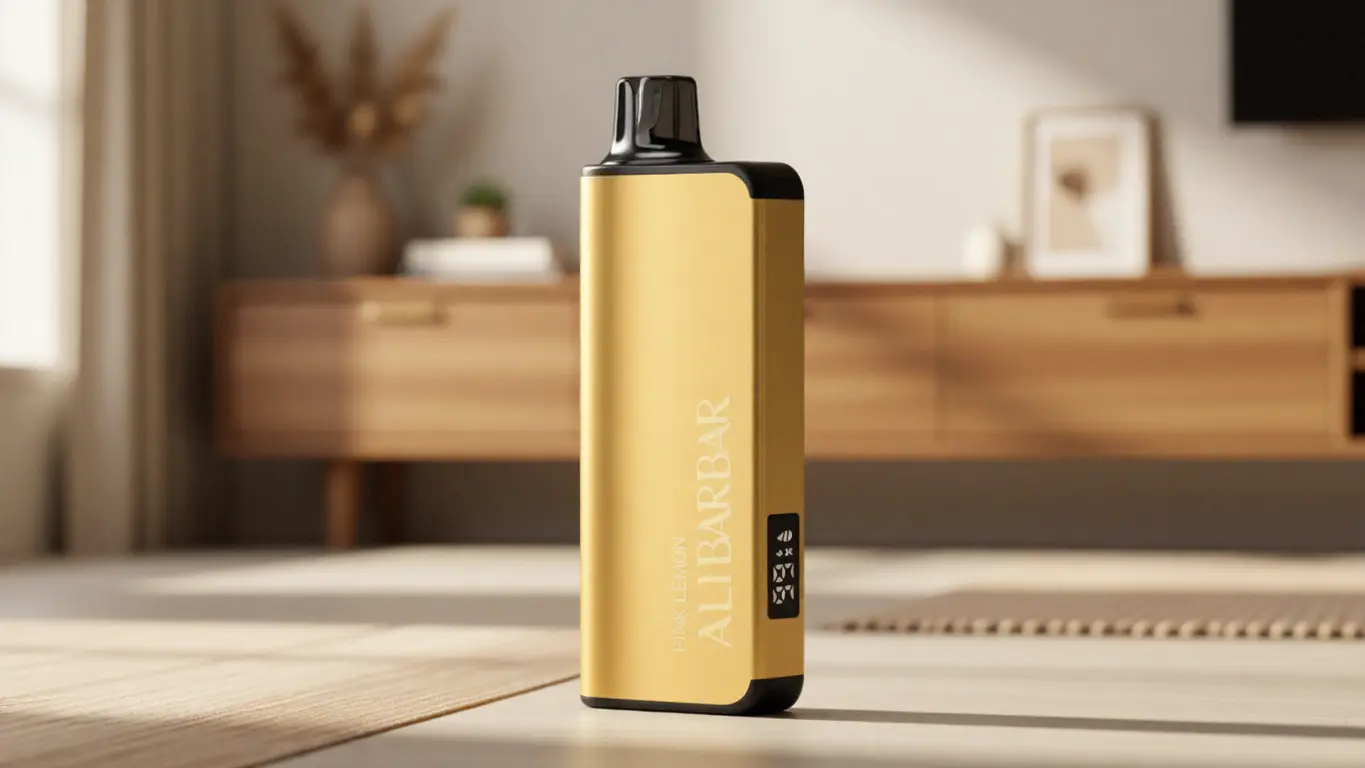
The ALIBARBAR family at OZVAPE Shop is one example of devices engineered around predictable operation rather than maximum marketing numbers. But the broader point applies to any brand: evaluate a device the way you’d evaluate a travel companion—by how it behaves during the hours you can’t use it, not just the ones you can.
The Long-Distance Traveler’s Reality
Long-distance rail in Australia—the XPT, V/Line services, the Ghan if you’re on a rail holiday—imposes even longer non-use windows. A Sydney-to-Melbourne journey takes around 12 hours. Station stops are frequent but short, and each station is itself a smoke-free zone.
The honest planning approach is to treat the entire journey as a no-use window. If you genuinely need something during that period, the legally available alternatives are non-inhaled options, which are governed by their own rules and are a matter between you and your healthcare provider. The uncomfortable truth is that there is no legal way to vape mid-train-ride anywhere in Australia.
An Evaluation Framework for Your Next Device
When you next assess a device—ALIBARBAR or otherwise—run it through these diagnostic questions:
Does the battery indicator show the actual remaining capacity, or just a vague three-stage light? Ambiguity here forces you to carry a backup device.
Can the device operate reliably across 10–12 hours of intermittent use? If not, it’s a poor fit for commuters.
Does the filling mechanism leak in a bag or pocket? A device that leaks while you’re seated on a train is a public nuisance and a personal mess.
Is the device discreet enough to pack and retrieve without drawing attention? The act of retrieving and pocketing a device in a carriage shouldn’t attract scrutiny.
These questions don’t lead to a single correct answer. They lead to the right answer for your pattern.
Common Misconceptions and Industry Observations
“E-cigarettes don’t produce smoke, so the smoking ban doesn’t apply.”
In almost every Australian jurisdiction, the legal definition of smoking includes the use of electronic vaporisers. You’re not arguing chemistry; you’re arguing semantics. The legislation was updated long ago to close this loophole, and attempted defences based on this argument have failed repeatedly.
“The vestibule between carriages is fine.”
The ban covers the entire train, including the connectors, the toilets, and the vestibules. There is no hidden corner of a train that is exempt. The train is a single regulated space.
“Open-air platforms are outside the smoking ban.”
Station grounds are regulated as a single entity. An open-air platform is still a platform, and the ban is based on location, not ventilation. The fact that you can see the sky doesn’t change the legal boundary.
“If I’m discreet, nobody will mind.”
Enforcement officers, security cameras, and fellow passengers make “discreet” an unreliable defence. The deeper problem is that when vaping is detected inside a carriage, operators can escalate the response—including reporting the incident or applying conditions to future travel, depending on the jurisdiction.
An industry observation worth noting: transport authorities across the developed world are moving toward stricter enforcement of smoking rules on transit, not looser. Some overseas operators have trialled particulate sensors that detect aerosol events in real time. The direction of travel is consistent: if anything, the tolerance for vaping on trains will decrease further over the next decade.
Frequently Asked Questions
Q: Can I vape on a train in Australia?
A: No. Every Australian state and territory prohibits vaping on passenger trains, trams, buses, light rail, ferries, and their associated stops and stations. The prohibition applies regardless of whether the device contains nicotine.
Q: Can I vape on the platform while waiting for my train?
A: No, unless there is a designated smoking area explicitly marked by the operator. Platforms are covered by station-wide smoke-free policies, and the prohibition applies equally to vaping.
Q: What happens if I’m caught?
A: A transit officer or police officer will approach you, ask you to stop, and may issue an on-the-spot fine ranging from around $110 to over $1,100 depending on the state. You may also be asked to leave the train at the next stop.
Q: Does the law apply even if my device contains no nicotine?
A: Yes. Transport regulations apply to the act of vaping itself, not the contents of the liquid. An inert, flavour-only liquid produces the same visible vapour and triggers the same enforcement response.
Q: Can I carry my vape on a train?
A: Generally, yes. Carrying a personal electronic device and spare batteries is allowed, subject to any battery transportation conditions. You simply cannot use it while on the train or within the station boundary.
Q: Are there exceptions for medicinal cannabis vaporisers?
A: This is genuinely complex. A lawful prescription does not automatically override public space regulations, including transport smoke-free rules. In practice, using any vaporiser on a train is not permitted unless the operator explicitly allows it, and most operators do not. Check with the transport provider and your prescriber before relying on any assumption.
Q: What about long-distance rail services like the XPT or V/Line?
A: Same rules. Intercity and long-distance operators apply smoke-free policies across all rolling stock and station grounds. There is no carriage or section where vaping is permitted.
Q: Can I vape at a station café or in my parked car at the station?
A: No to the café—enclosed public areas are universally smoke-free. A private vehicle is generally considered private space, but the moment you step out onto station grounds, the restrictions apply again. Some jurisdictions also restrict smoking near transport waiting areas even in vehicles, so local rules matter.
Q: How is vaping detected on trains?
A: Primarily through visual observation by staff and reports from passengers. Some newer trains have installed air-quality monitoring systems that can detect aerosol events. These systems are becoming more common.
Q: I’m visiting from another country. Can I vape on trains here?
A: No. Australia treats transit vaping restrictively, and the rules apply equally to visitors. If you wouldn’t smoke something on a train, you should not vape on a train.
The Bottom Line
The rule is simple and consistent: you cannot vape on a train, on the platform, or anywhere within the station boundary in Australia. The reasons—from fire detection systems to air quality and public courtesy—all reinforce the same practical guidance. Plan your rides so that your last use is before you enter the station, and your next use is after you exit it.
That’s the entire story. If you own a device and travel regularly, a few minutes of forethought prevents an awkward incident at the station gate later. And if you’re evaluating a device that suits your actual routine, rather than your aspirational one, the ALIBARBAR range at OZVAPE Shop gives you a way to compare options with predictable power management and honest status indicators. The range is built for adults who understand their local laws and use these products responsibly where permitted.
The regulations may be fixed, but your discretion isn’t. Knowing the law—and knowing your device—is what separates a smooth commute from a memorable one.