
VAPE FAQs
What Is Vg In Vape?
Oct
Vegetable glycerin appears on nearly every product label in the personal electronic device market, yet the abbreviation “VG” is rarely accompanied by a meaningful explanation of what it does, why its concentration matters, and how it shapes a user’s daily experience. Most guidance stops at “more VG makes bigger clouds,” which is accurate but insufficient for anyone trying to match a liquid to a specific device, a preferred draw style, or a sensitivity pattern.
This article explains VG from an engineering and user‑experience perspective — no sales pitch, no oversimplification. By the time you finish, you will understand what VG is, how it behaves inside a heating system, and how to evaluate VG ratios as one variable in a complete decision rather than as a headline number. When a source like OZVAPE Shop publishes technical specifications, they assume this level of literacy, because informed users make better long‑term choices.
What VG Is, Chemically and Functionally
Vegetable glycerin (often labelled glycerol or glycerine) is a sugar alcohol derived from plant oils — commonly palm, soy, or coconut. At room temperature it is a clear, odorless, viscous liquid with a faintly sweet taste. In personal electronic devices it serves two essential mechanical functions:
Aerosol density: When heated, VG produces a thick, visible plume. This is the property that drives the perception of “body” in the output.
Carrier stability: VG dissolves and suspends other ingredients evenly, preventing separation over time.
Pharmaceutical‑grade (USP or EP) VG is the only form accepted by manufacturers who operate under meaningful quality protocols. Anything less introduces impurities that can destabilise flavour, alter viscosity, or leave residues on heating elements that accelerate performance degradation.
You will sometimes encounter the phrase “max VG.” There is no formal standard for this term. In practice it usually indicates a formula where VG is the dominant diluent (often above 80%), with only enough propylene glycol (PG) to carry the flavourings and, where applicable, other functional ingredients. Max VG liquids intentionally prioritise cloud density and smoothness at the expense of throat sensation and wicking speed.
Why VG Ratio Dictates Device Compatibility More Than Any Other Factor
The most common avoidable frustration in this category is a mismatch between liquid viscosity and device architecture. VG is roughly five times more viscous than PG at the same temperature. This single physical fact explains most instances of premature coil failure, dry output, and leakage.
Small‑aperture systems and high‑resistance heating elements (above 1.0 ohm)
These devices, often called mouth‑to‑lung (MTL), rely on capillary action to pull liquid through narrow wicking ports. A VG concentration above 60% frequently slows that movement enough to cause incomplete saturation between activations. The user experiences a harsh, thin output that tastes “burnt” — not because the element is defective, but because the liquid cannot reach it quickly enough.
Larger‑format systems and sub‑ohm configurations
Wider wicking channels and higher operating temperatures can handle, and in many cases require, a VG ratio of 70% or more. With these devices, the goal is sustained output volume, and the thicker liquid provides the thermal mass necessary to generate it. Using a low‑VG liquid (50% or below) in this context produces a thin, hot, and often uncomfortably aggressive sensation that users consistently describe as “spiky.”
The mistake users make repeatedly is assuming that visual similarity implies architectural similarity. Two devices of the same approximate size can have radically different flow‑path geometries. A liquid that performs flawlessly in one may flood the chamber or starve the wick in another. Evaluating VG ratio without referencing the specific device’s heating‑element design is functionally equivalent to choosing a fuel without inspecting the engine.
What Users Actually Notice and What the Lab Data Cannot Capture
Engineering specifications describe VG in terms of centipoise and boiling point. The subjective experience is more nuanced, and the gap between the two is where user satisfaction lives.
Smoothness and sensory body
VG produces a rounded, almost silky sensation that many describe as “full.” This is not purely about visible output; it is a tactile quality that persists even at lower power levels. For adult users who find the sharper edge of high‑PG liquids intrusive, this is often the deciding factor.
Flavour transport — the hidden compromise
VG carries flavour less efficiently than PG. Molecules that bind well to PG may remain partially trapped in VG’s denser molecular matrix. The result is a muted top‑note profile — citrus, florals, and light fruit essences lose definition first. Bakery, custard, and tobacco‑adjacent profiles are more resilient in high‑VG environments because their dominant notes sit in a lower volatility range.
No universal rule solves for this. A liquid formulated specifically for high‑VG delivery can compensate through careful molecular‑weight selection in its flavour components. A liquid designed for a balanced 50/50 profile but repurposed at 80% VG almost always tastes hollow. The takeaway: judge a liquid in its intended ratio, not according to a one‑size label.
Coil life and thermal degradation
High VG accelerates residue accumulation on heating surfaces because the heavier molecules do not fully atomise at the temperatures common in compact devices. Over time, caramelised glycerin builds a thermal‑insulating crust that forces the element to draw more current to reach target temperature. The user perceives fading output and a progressively darker flavour, then attributes it to a “worn‑out coil.” In reality, the residue is the failure, and its formation rate is substantially determined by the VG concentration relative to operating temperature.
A Practical Framework for Choosing a VG Ratio
Forget manufacturer marketing. Use a straightforward diagnostic sequence:
Identify your device category — is it a tight‑draw, low‑power system, or an open‑draw, higher‑power configuration?
Pinpoint your priority — is sensory smoothness more important than crisp flavour definition, or vice versa? If you cannot answer, start with a 50/50 liquid and observe where your dissatisfaction emerges.
Assess your usage density — chain‑activation in short intervals places higher demands on wicking speed. If your device cannot keep up at 70% VG, do not assume a defect; drop to 60% and evaluate the difference before concluding.
Track residue patterns over a full week — if coils degrade noticeably faster than documented expectations, consider whether your VG ratio is forcing the system to operate above its thermal equilibrium point.
This framework is deliberately device‑neutral. It works whether you are evaluating a pre‑configured sealed unit or a modular system with adjustable power, because the underlying physics do not change.
Common VG‑Related Selection Errors
“More VG is always better”
This belief persists because cloud production is visible, and visible metrics are easy to compare. Quiet engineering failures — clogged airflow channels, accelerated residue layering, collapsed flavour mid‑notes — are invisible until they are not, and they frequently originate in a VG ratio that a device was never designed to accommodate.
Ignoring ambient temperature
VG viscosity increases sharply as temperature drops. A 70% VG liquid that performs reliably at 22°C may become too sluggish at 8°C, particularly in pocket‑carried devices drawn from cold outdoor environments. Australian users cycling between air‑conditioned interiors and summer streets report seasonal performance shifts that they rarely attribute to viscosity — they blame the hardware instead.
Misreading “smooth” as “safe”
VG’s gentler throat‑hit can lead to over‑use in a single session simply because the body’s natural feedback signals arrive later. This is not a product failure; it is a behavioural adjustment that experienced users learn to calibrate consciously.
Frequently Asked Questions
Q: What does “VG” stand for?
A: Vegetable glycerin. It is a plant‑derived sugar alcohol used as a base diluent in personal electronic device liquids.
Q: Is VG safe?
A: USP‑ or EP‑grade VG has a long safety record in food, pharmaceutical, and personal‑care applications. Impurities in non‑pharmaceutical grades are the primary risk, not the glycerin molecule itself.
Q: Can I use 100% VG liquid in any device?
A: Almost never. Pure VG struggles to wick in the majority of commercially available systems, and without PG or another thinning agent, flavour carry is extremely limited. Even “max VG” liquids contain some alternative diluent.
Q: Why does high‑VG liquid shorten coil life?
A: Incomplete atomisation of heavier VG molecules leaves partially decomposed residues on the heating surface, which insulate the element and force higher operating currents. This accelerates thermal stress and flavour degradation.
Q: What VG ratio is best for someone just starting out?
A: A balanced 50/50 ratio is the lowest‑risk starting point across a wide range of devices. It provides sufficient vapour visibility, reasonable throat feedback, and adequate wicking speed in most systems.
Q: How do I know if my device can handle 70% VG or higher?
A: Check the manufacturer’s documented specifications — specifically wicking port dimensions and recommended power range. If that information is unavailable, trial a small volume and observe whether output consistency remains stable from first to last activation.
Q: Does VG affect flavour?
A: Yes. Higher VG generally mutes volatile top notes (citrus, bright fruit) while preserving heavier profiles (custard, cream, nut). The effect depends as much on flavour‑house formulation as on ratio alone.
Q: Is vegetable glycerin the same as the glycerin in soap or skincare?
A: The base molecule is identical, but purity standards differ. Only pharmaceutical‑grade VG has the consistency and contaminant profile appropriate for inhalation‑style applications.
Q: Can I thin a high‑VG liquid with water?
A: A small amount of distilled water (typically less than 5%) is sometimes used in DIY formulations, but adding water to a commercially balanced liquid unpredictably alters vapour temperature, viscosity, and microbial stability. It is not a controlled modification and usually produces disappointing results.
Q: Does VG content relate to throat sensation?
A: VG produces minimal throat impact. A liquid with high VG and low PG will feel significantly smoother; if throat sensation is desired, a higher PG fraction or a balanced ratio is appropriate.
Making VG Work for You, Not Against You
VG is not a quality indicator. It is an engineering variable whose value is entirely context‑dependent. The right ratio is the one that keeps your device running within its designed thermal window, delivers the sensory balance you prefer, and matches your actual usage cadence — not the one that photographs best in a cloud‑chasing sequence.
Once you understand the physical behaviour of VG, scanning a product specification becomes a rapid diagnostic exercise rather than a moment of confusion. You can look at a liquid description, check the VG value, cross‑reference it against your device’s documented architecture, and make a prediction about daily performance that will be correct far more often than not.
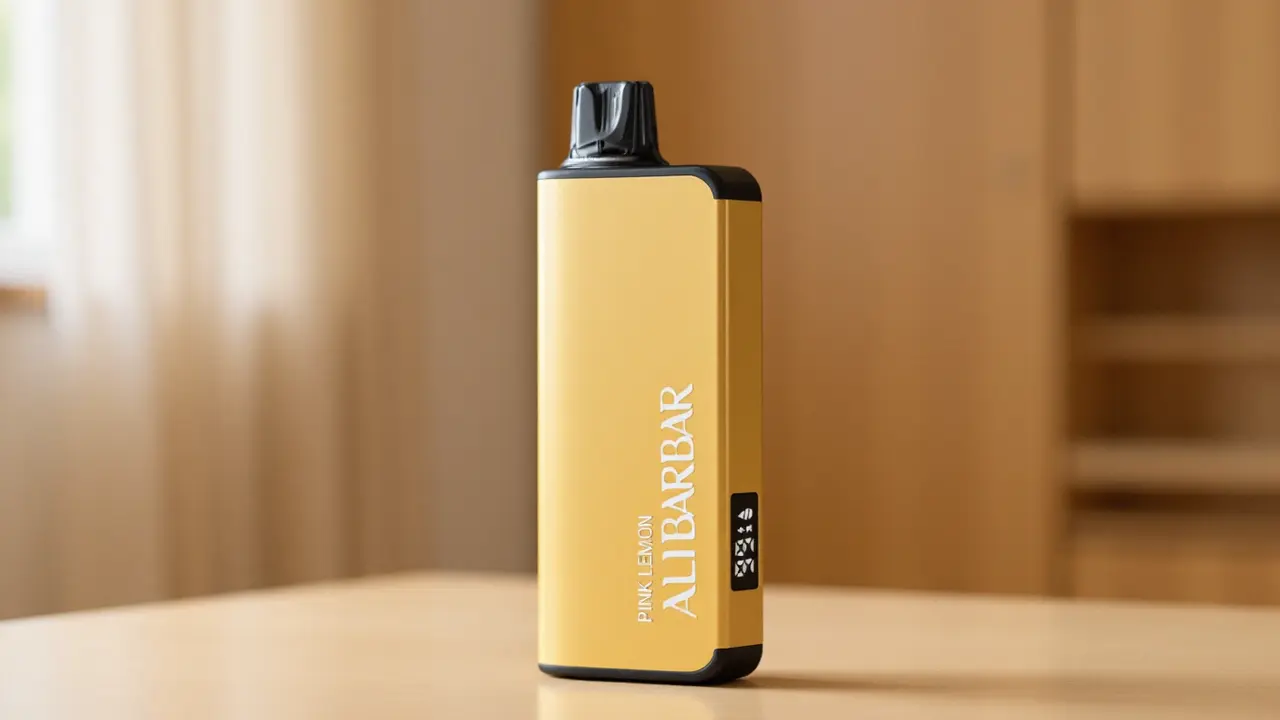
Reliable product information depends on retailers that present specifications transparently and source from verified supply chains. When you access the ALIBARBAR device range through OZVAPE Shop, you are working with a partner that maintains standardised product documentation, so the VG‑related decisions you make are grounded in data that reflects the actual manufacturing record. That foundation of accuracy removes one significant variable from the equation — leaving you free to focus on what genuinely works for your routine.