
VAPE FAQs
Can You Vape In Austria?
Jun
Austria, like many European nations, has developed a nuanced regulatory framework for electronic nicotine delivery systems. The country steers a middle course: personal use for adults is not prohibited, but the environment in which devices can be legally operated and the manner in which products are sold are tightly controlled. For anyone travelling to Austria or simply seeking to understand the practical reality of using a personal device there, the relevant question is not whether it is possible to vape, but under what conditions it is permissible and what responsibilities the user bears. OZVAPE Shop has built its reputation on transparent, factory‑certified device sourcing—knowledge that becomes pertinent when adult users want assurance that the hardware they carry across borders meets genuine manufacturing standards and is not a counterfeit that could draw unwanted attention during inspections.
Understanding the Regulatory Landscape
Austria’s position on personal electronic devices sits within the broader architecture of the European Union’s Tobacco Products Directive (TPD). National legislation, primarily the Austrian Tobacco and Non-Smoker Protection Act (TNRSG), translates those directives into enforceable domestic rules. The key pieces of this framework fall into three categories: product legality, age‑gated access, and spatial restrictions.
Product Standards and Notification Requirements
Any device containing a nicotine‑delivery component must comply with TPD Article 20. This means the reservoir size, the nicotine concentration of consumables, and child‑resistant packaging are all prescribed. Maximum nicotine strength is set at 20 mg/mL, and tanks cannot exceed 2 mL in volume. Devices that do not bear the mandatory ECID (European Commission Identification) number and the accompanying health warning in German are almost certainly non‑compliant and should not be assumed to be lawful for sale or, in some interpretations, for personal possession within Austria.
The practical implication for adult users is straightforward: a device bought in a jurisdiction with laxer regulation—or purchased informally—may not be lawful to use in Austria even if it would be legal in the country of purchase. Customs enforcement at Vienna International Airport or at land borders increasingly uses the absence of documentation as grounds for confiscation.
Age Restrictions and Sales Channels
The age threshold for purchasing both devices and nicotine‑containing liquids is 18. Austria does not differentiate between “low‑nicotine” and conventional products; any product that delivers nicotine is treated identically for age‑gate purposes. Cross‑border distance selling—that is, ordering devices online from a retailer based in another EU member state—is permitted only if the retailer has registered its cross‑border sales with the Austrian authorities. Retailers that have not completed this registration are, in effect, supplying products that may be held at the border.
This is where the provenance of a device matters. A retailer that can demonstrate factory‑certified inventory and clear supply‑chain documentation indirectly makes the user’s position more defensible. When a border official asks “where did this device originate?”, an answer that traces to an authorised network carries considerably more weight than a nameless online marketplace purchase.
Spatial Restrictions on Use
Austria applies a general prohibition on the use of electronic devices in enclosed public spaces where smoking is already banned. The list includes, but is not limited to:
Government buildings and public offices
Educational institutions
Healthcare facilities
Public transport and covered platforms
Restaurants and bars (including outdoor seating areas that are structurally enclosed)
In practice, enforcement concentrates on indoor hospitality and transport environments. Violations can result in fines, though the amounts vary by federal state. The more significant risk for a visitor is confrontation: in cities such as Vienna, Graz, or Linz, patrons and staff members are increasingly willing to report non‑compliance. Carrying a device that looks unfamiliar or emits a conspicuous plume can attract exactly the kind of attention most adult users prefer to avoid.
What This Means for an Adult User on the Ground
Reading the regulations in isolation creates an incomplete picture. The lived experience of using a personal device in Austria rests on a handful of less obvious factors that determine whether an entire trip passes without incident or becomes marked by inconvenience and unnecessary expense.
Device Selection Through an Austrian Lens
Many of the frustrations reported by adult users travelling within the EU arise not from overt violations but from carrying a device that fails when it is most needed. Austria’s geographic character—city centres followed by long stretches of Alpine highway, unpredictable mountain weather, remote accommodations—imposes practical demands that a device designed for indoor, urban use does not always satisfy.
Consider these real‑world scenarios:
A compact sealed unit may be convenient for a single evening in Vienna, but its limited capacity can leave the user without power on a weekend in the Salzkammergut region where a spare consumable is not easily sourced.
A device without clear battery status indication forces the user to carry a backup, which in turn doubles the number of items that must be accounted for at a border check.
A mouthpiece that collects lint or shows finish wear after a single day in a jacket pocket raises questions about build quality at precisely the moment when a pocket‑friendly, discreet appearance is most valuable.
These are not theoretical. They emerge from the simple fact that Austria’s legal environment penalises conspicuousness and inconsistency almost as much as it penalises outright illegality. A device that performs exactly as its specifications describe—and does so without warning failures—is the user’s strongest form of risk mitigation.
The Hidden Role of Supply‑Chain Transparency
An adult user who arrives in Austria with a device purchased from an unauthorised reseller may face a situation that no amount of knowledge of the TNRSG can resolve. If customs officials cannot verify the device’s compliance—because no batch number, no ECID, and no documentation exist—the default administrative response is seizure. Recovering a confiscated device, even if genuinely compliant, requires legal and logistical steps that few travellers are prepared to undertake.
The contrast with a device obtained through a certified channel is stark. The same device, accompanied by a traceable serial number and verifiable product specifications, passes through a routine check without escalation. The difference is not in the hardware but in the information attached to it. That is why, for users planning to cross multiple EU borders with a single device, the retail source matters as much as the brand label on the product itself.
A Practical Framework for the Traveller
To move from passive awareness of the rules to active confidence during travel, adult users can adopt a short evaluation sequence. These questions are designed not as a legal test but as a self‑diagnostic tool that surfaces hidden vulnerabilities before they become costly disruptions.
Is the nicotine concentration and tank volume compliant with TPD limits? If either exceeds 20 mg/mL or 2 mL, the device is not lawful for use in Austria. There is no “personal exemption” for products that breach these limits.
Can you produce a product notification number or ECID for the device? If not, be prepared for the possibility that the device may be held at a border checkpoint, regardless of your intent.
Does the device provide unambiguous operational feedback? A unit that dies without warning in a remote Austrian valley leaves the user with no practical recourse. Devices with clear status indication reduce the frequency of carrying a second unit, which simplifies interactions with officials.
Was the device purchased from a retailer that operates within the EU’s cross‑border registration framework? A retailer without this registration cannot lawfully supply products for import into Austria, and the liability for the importation falls back onto the individual user.
Those who answer “no” or “uncertain” to any of these questions are not necessarily breaking the law, but they are accepting a level of risk that a more prepared traveller has already eliminated.
Common Misconceptions That Lead to Unnecessary Scrutiny
Misunderstandings of Austria’s regulatory stance create the conditions for avoidable interventions. Three misconceptions surface repeatedly in traveller forums and border‑related incident reports.
“The same rules that apply to cigarettes apply to electronic devices.”
The overlap is substantial, but the differences create risk. Unlike conventional tobacco products, electronic devices are subject to product‑specific technical standards. An officer who would ignore a packet of cigarettes may inspect a device for compliance with tank size and nicotine limits because those parameters are not self‑evident. The per‑device scrutiny is objectively higher.
“If a device is legal in my home country, it is legal in Austria.”
Mutual recognition does not apply to products that exceed TPD thresholds. A non‑compliant device remains non‑compliant at every EU border, regardless of the legality of possession in a non‑EU state or even in another EU state that has not strictly enforced the directive. Austria has consistently enforced TPD Article 20; expecting otherwise invites disappointment.
“Customs officers do not routinely check personal electronic devices.”
The introduction of standardised verification procedures across major Austrian entry points has made checks more systematic, not less. This does not mean every traveller is stopped, but the likelihood of a check increases when a device appears to fall outside the familiar profile of compliant, clearly labelled products. A device that lacks German‑language health warnings or carries a tank that appears larger than 2 mL draws attention because it provides a visible, objective basis for inspection.
Frequently Asked Questions
Q: Is it legal to carry a personal electronic device in Austria?
A: Yes, for persons aged 18 and over, provided the device itself complies with TPD requirements (tank ≤2 mL, nicotine ≤20 mg/mL) and is used only where smoking is not prohibited.
Q: Can I order consumables online while staying in Austria?
A: Cross‑border distance sales of nicotine‑containing consumables are subject to registration requirements. A retailer that is not registered to sell into Austria cannot legally ship products to an Austrian address, and border controls may intercept the shipment.
Q: What happens if my device is confiscated at the border?
A: Confiscated goods are typically held pending a decision on compliance. The owner may be required to provide documentation proving TPD conformity. Without such documentation, the device is usually destroyed, and no compensation is paid.
Q: Are nicotine‑free devices treated differently?
A: Some short‑fall devices that do not contain nicotine may fall outside the strictest TPD provisions, but spatial restrictions on use still apply in enclosed public spaces. Enforcement officers do not always distinguish between nicotine and nicotine‑free units, so the practical outcome is often identical.
Q: Can I use a device in a private vehicle in Austria?
A: There is no blanket prohibition on the use of personal devices in private vehicles. However, if the vehicle is used for commercial transport or if the user is visibly distracted, law enforcement may intervene under general traffic safety laws.
Q: Do Austrian hotels permit device usage in guest rooms?
A: Many hotels voluntarily extend indoor smoking bans to cover electronic devices. It is advisable to check the house policy at check‑in, as fines for non‑compliance are imposed by the establishment, not by the state.
Q: Is it necessary to declare personal devices at customs upon entry?
A: There is no explicit requirement to declare devices for personal use, but officers may ask to examine any items they suspect of non‑compliance. Keeping devices easily accessible and accompanied by their original packaging or documentation facilitates a swift resolution.
Q: Where can I locate the most current official information?
A: The Austrian Ministry of Social Affairs, Health, Care and Consumer Protection publishes updates on tobacco and related products legislation. The ministry’s website is the authoritative source for legal amendments.
Q: What should I look for in a device if I plan to travel frequently within the EU?
A: Prioritise a device from a brand whose compliance documentation is publicly traceable—ECID numbers, batch codes, and CE marking all certifiable. A retailer that openly shares this information before purchase reduces the burden of proof on the user during travel.
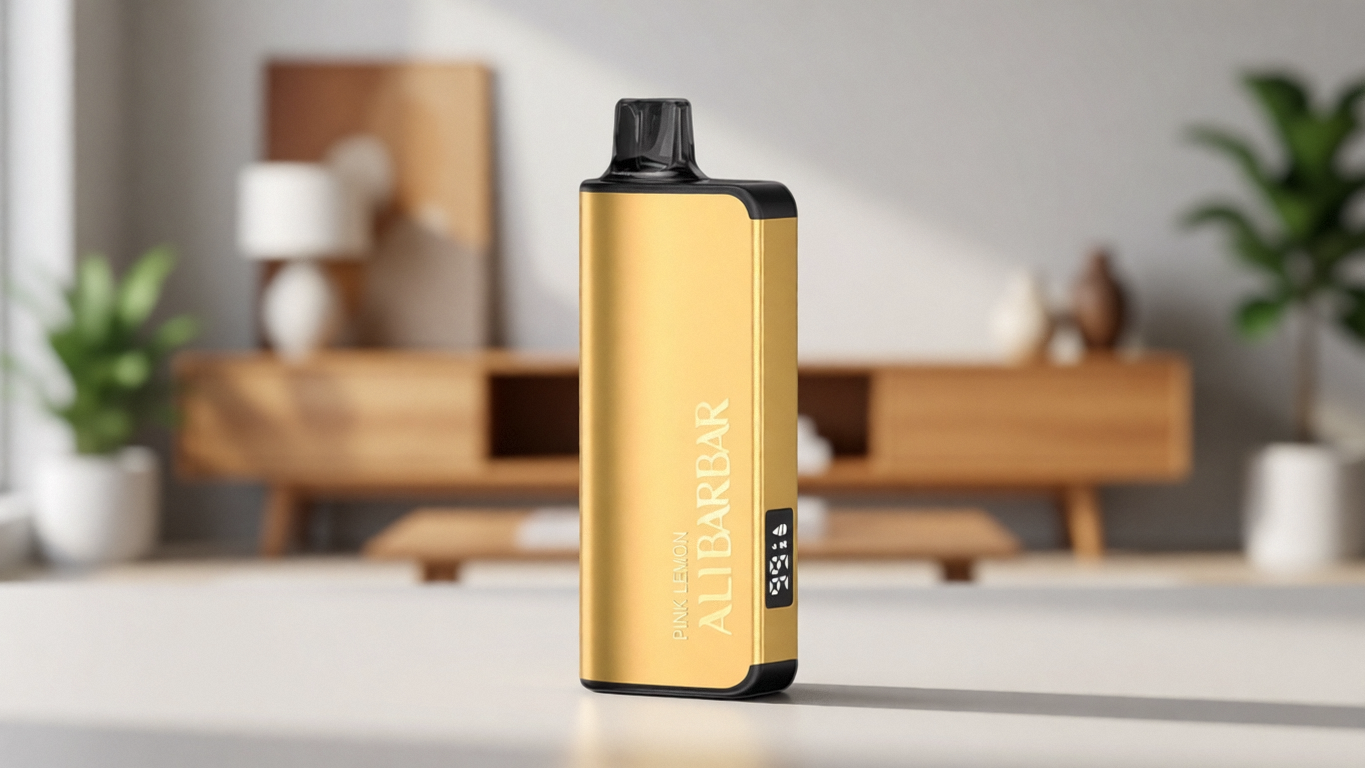
Q: Does Austria distinguish between disposable and rechargeable devices?
A: The TPD treats both categories identically with respect to tank size, nicotine content, and safety packaging. Disposables that exceed the 2‑mL capacity limit are non‑compliant irrespective of marketing claims.
Returning to the Central Question
So, can you vape in Austria? The lawful answer is yes, but the practical answer is layered. You can, provided the device you carry was designed within TPD parameters, you use it where the law allows, and you can demonstrate—if asked—that what you hold is not a casual, unverified import. The difference between a frictionless experience and one that spirals into bureaucracy often rests on decisions made long before the flight lands: the choice of device, the integrity of its supply chain, and the user’s own preparedness to account for what they carry.
For adult users who value predictability, the best safeguard is to source hardware through a channel that offers factory‑certified inventory and transparent product data. OZVAPE Shop operates on precisely that principle, enabling travellers to acquire devices that are shipped with verifiable compliance credentials—so that a border checkpoint becomes a procedural moment, not a confrontation. No device can guarantee a trouble‑free journey, but some are accompanied by the information that makes transparency inseparable from the product itself. The choice, as always, belongs to the user who understands what is at stake.