
VAPE FAQs
What Does A Vape Make You Feel?
Jun
What Does A Vape Make You Feel?
A technical analysis of how device engineering determines sensory experience, and why informed selection matters more than marketing claims.
If you have spent any time reading about personal electronic vaporisers, you have encountered a flood of subjective language: smooth, harsh, full-bodied, crisp. Those words describe the endpoint, not the cause. They tell you nothing about why one device produces a sensation that feels barely present while another leaves you reaching for water. Worse, they treat the experience as if it were a property of the device alone, disconnected from the engineering choices that produce it.
This article explains what a vaporiser actually makes you feel by examining the internal architecture, power management, and design priorities that translate electrical current into inhalation sensation. Rather than adding to the collection of unstructured impressions, it provides a framework any adult can use to evaluate a device before purchase. Along the way, we reference specific product families — including the ALIBARBAR range available through OZVAPE Shop — not as recommendations, but as worked examples of how different design goals lead to noticeably different user experiences.
How Device Engineering Shapes the Sensory Experience
The physical sensation you experience when using a portable electronic vaporiser is not a single quality but a composite. It is assembled from thermal consistency, aerosol density, mouthpiece geometry, and even the weight of the unit in your hand. Understanding these components individually allows you to connect design choices to real-world results.
Heating Consistency and the Character of Inhalation
At the heart of every device is a resistive heating element — typically a wire coil or mesh — and the way it is driven determines almost everything about what you feel. A well-regulated circuit maintains the heating surface within a narrow temperature band across the entire discharge cycle of the battery. When that regulation is absent or poorly implemented, the temperature drifts. Early puffs feel cooler and thinner; later puffs, as the control circuit struggles to compensate for falling voltage, can become uncomfortably warm or take on a burnt note.
The sensory shift that users describe as “harshness” is often not a feature of the consumable material but a direct consequence of thermal overshoot. When the coil temperature spikes above the intended range, you are inhaling thermally degraded aerosol. The difference is immediately perceptible: a scratchy sensation at the back of the throat that builds over successive uses. Devices that maintain output consistency throughout their rated life — such as those built around calibrated mesh architectures — deliver a repeatable sensory profile that does not deteriorate noticeably until the consumable component is genuinely depleted.
Power Delivery and the Prevention of Harshness
Battery performance matters more for sensation than most users realise. A fully charged lithium cell sits at approximately 4.2 volts. As it drains, voltage falls, and unless the device employs a boost or buck regulator, the coil temperature drops with it. The result: a session that starts warm and fades, or — in poorly designed constant-voltage systems — one that spikes unpredictably as the regulation circuit hunts.
Equally important is status transparency. A device that offers no indication of remaining power forces the user to guess. They may continue using it past the point where output has degraded, assuming the device is still operating within its intended window. The sensation of a dying power cell is often misattributed to a “bad batch” of consumables. In reality, the hardware is simply operating outside its design envelope, and the user is inhaling the byproducts of that condition.
From an engineering standpoint, the presence of a clear, graduated battery indicator is not a convenience feature. It is a direct contributor to sensory consistency, because it tells you when the device is about to leave the voltage range that produces the expected experience.
Ergonomics and the Tactile Layer of Experience
What you feel is not limited to inhalation. The dimensions, weight, surface finish, and mouthpiece contour of a device contribute a continuous tactile baseline that colours your perception of the aerosol itself.
A device that is too heavy induces hand fatigue during extended use. One that is too light can feel insubstantial, creating a subconscious impression of disposability that makes any minor variation in output seem more pronounced. Mouthpieces deserve particular attention: a rounded, slightly tapered profile that fits comfortably between the lips reduces the tendency to clench, which in turn reduces the muscular tension that users often report as “jaw fatigue” after prolonged sessions.
Surface materials also age differently. Soft-touch coatings may feel pleasant out of the box but can show wear within days of pocket carry, creating a mismatch between the device’s visual condition and its functional performance. Hard-anodised or matte metallic finishes generally maintain their appearance longer, which keeps the overall sensory impression of quality stable over time.
Modular Design and the Long-Range Sensory Arc
Sealed, single-use devices offer a fixed sensory profile that begins at the factory’s intended point and ends when the consumable is exhausted. Rechargeable and replaceable-component architectures introduce another variable: the user’s own maintenance habits. A device that allows you to swap the consumable portion independently extends the period over which you can experience the manufacturer’s intended profile. However, it simultaneously introduces the possibility of mixing components from different production batches or tier-one suppliers, which can subtly shift the feel.
The advantage of modularity is that it lets users control their per‑use cost without sacrificing the core ergonomic and power‑delivery platform they have become accustomed to. The trade‑off is that they must accept the responsibility of sourcing compatible components from a channel that guarantees batch‑to‑batch consistency.
Real-World Device Behaviour: What to Expect from Leading Options
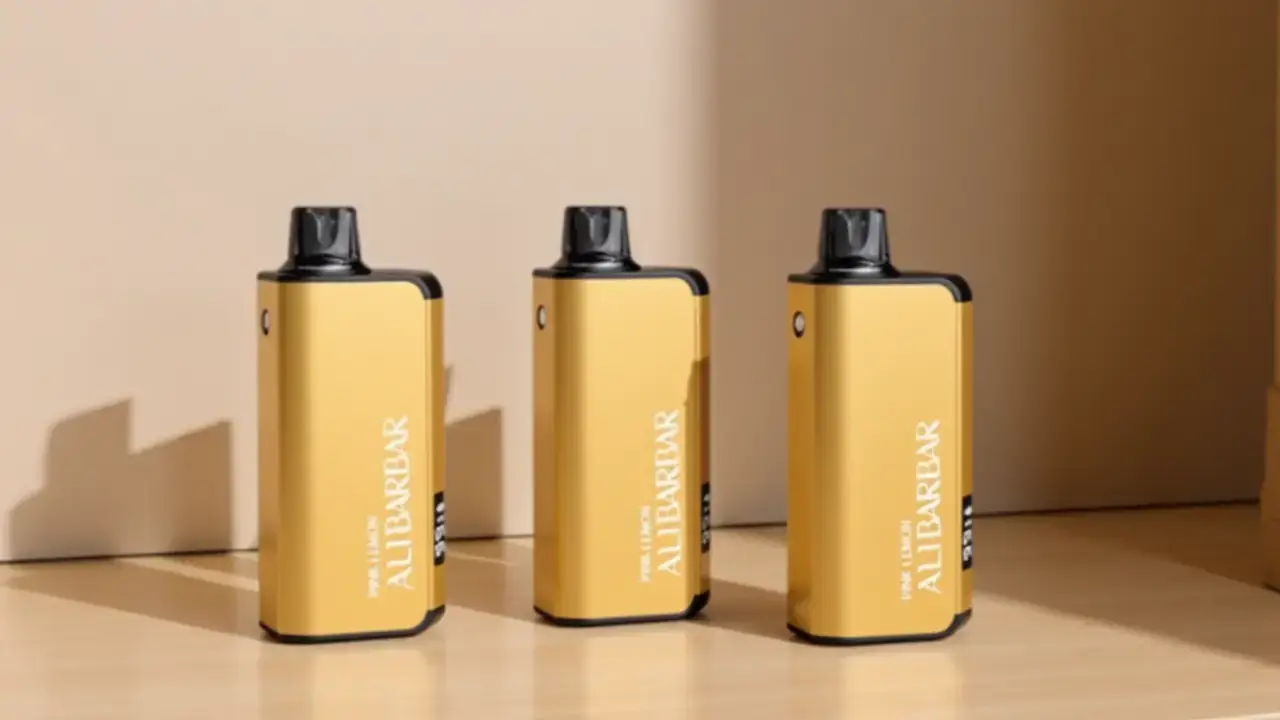
The ALIBARBAR device family illustrates how a single engineering philosophy can be scaled across form factors to produce distinct sensory experiences while maintaining a consistent core identity.
The INGOT 9000 is designed around a compact chassis with a mouthpiece profile that sits naturally between the lips without requiring deliberate pressure. Its mesh heating architecture is calibrated for a relatively cooler aerosol output compared to earlier generations — a deliberate choice intended to reduce that subtle throat scratch that accumulates over the course of a day. Users who prioritise discretion and a lightweight carry experience tend to report that the device “disappears” into a pocket, yet does not feel toy-like when held. The battery indicator eliminates the anxiety of carrying a backup, because you always know whether you are operating near the end of the charge curve.
The INGOT 15000 takes the same thermal regulation principles and applies them to a higher‑capacity platform. The additional internal volume allows for a larger power cell and slightly extended draw duration before the temperature limiter engages. The result is a fuller aerosol density — what some users describe as a “rounder” sensation — while still avoiding the thermal spikes that cause late‑cycle harshness. The weight is noticeably greater than its 9000‑series counterpart, which provides a more grounded hand‑feel but also makes it less suitable for those who want a barely‑there carry.
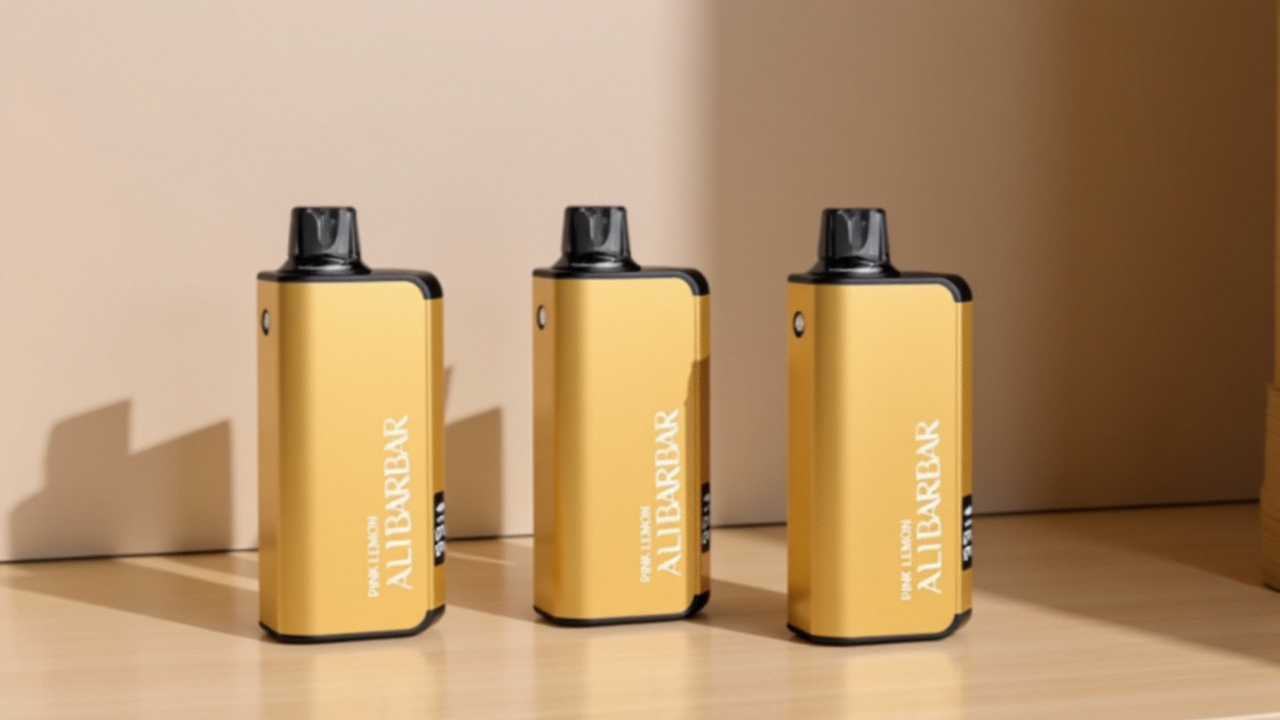
The Ice Adjust 12000 introduces a variable-output mechanism that is uncommon in devices of this category. Rather than locking the user into a single preset curve, it allows selection between different output profiles, each of which maps to a specific temperature ceiling. This gives the adult user direct control over whether the experience skews cooler and more restrained or warmer and more present. The feedback from this mechanism is entirely tactile — no screen, no app — so the experience remains focused on the physical sensation rather than on digital interaction.
In the wider market, other manufacturers pursue different sensory targets. Some devices prioritise instantaneous, high‑temperature vaporisation for maximum short‑term impact at the cost of late‑session consistency. Others use vacuum‑insulated mouthpiece chambers to cool the aerosol before it reaches the lips, which changes the sensory character dramatically. No single approach is universally superior; each represents a deliberate trade‑off that suits a particular set of use patterns.
A Systematic Way to Predict Your Experience Before You Buy
You cannot sample a device’s output through a product listing. But you can assess the probability of a satisfactory sensory match by applying a structured evaluation to the available technical data. Here is a step‑by‑step framework:
Ask about the heating element. Does the manufacturer specify mesh, ceramic, or traditional coil? Mesh architectures generally produce more even heat distribution and, consequently, a more consistent aerosol texture across the device’s life. If the listing is vague, assume the cheapest viable configuration.
Check for a graduated battery indicator. A simple LED that changes colour at one threshold is not enough. You need at least three states — full, mid, low — correlated to specific voltage ranges. If the device offers no visual status feedback, you will be inhaling voltage‑degraded aerosol during the final segment of every charge cycle without knowing when it began.
Examine the mouthpiece geometry in photographs. Is it round or flattened? Does it appear to have any internal baffle structure? A rounded, tapered mouthpiece with an internal condensation‑trapping feature will deliver a smoother mouth‑feel than a simple straight‑through tube.
Research weight specifications. If the device is under 30 grams, expect it to feel disposable regardless of its internal quality. If over 80 grams, test whether you are comfortable holding it for an extended period. Weight matters more when you are distracted — while driving, reading, or conversing — than during focused use.
Understand the power architecture. Is the device sealed and pre‑charged, rechargeable with a fixed consumable, or fully modular? A rechargeable design with a consumable you replace independently usually indicates that the manufacturer has invested in power‑delivery electronics that maintain output across a wider voltage window.
Look for third‑party verification of batch consistency. The most thoroughly engineered device in the world will feel inconsistent if the channel supplying it cannot prove factory‑certified sourcing. Demand documentation or rely on sellers like OZVAPE Shop that publicly commit to authorised supply chains.
Applying this framework to the ALIBARBAR INGOT 9000, for instance, yields the following profile: mesh heating, graduated three‑state battery indicator, rounded mouthpiece with an internal condensation trap, dry weight approximately 45 grams, and a rechargeable platform with a pre‑installed consumable. Those specifications collectively predict a device that will feel consistent, inconspicuous in hand, and transparent about its power status — exactly the sensory profile the engineering team targeted.
Why Many Users Are Disappointed—Common Misjudgments
Observing the market over successive product generations reveals a set of recurring evaluation errors that directly undermine the sensory experience users ultimately receive. Avoiding these mistakes is one of the most reliable ways to improve satisfaction without spending more money.
Error 1: Assuming All Mesh Coils Are Equivalent. The term “mesh” describes a form factor, not a performance standard. Mesh heating elements vary dramatically in weave density, material composition, and contact‑pad design. A loosely woven mesh driven by a simple pass‑through regulator will produce a less controlled thermal gradient than a tightly woven mesh paired with a calibrated driver IC. Buyers who select a device based solely on the presence of the word “mesh” in the product title are frequently surprised when the sensation does not match their expectations.
Error 2: Confusing Puff Count with Session Quality. A device rated for 15,000 actuations will indeed activate that many times. But if the power regulation curve allows output to degrade after 70% of the rated count, the final 4,500 puffs will feel perceptibly different from the first. Puff count is a measure of endurance, not consistency. Users who prioritise the former without investigating the latter end up with a device they tolerate for weeks rather than one they enjoy throughout its life.
Error 3: Ignoring Carry‑State Durability. The device you unbox and test at your desk is not the same device you carry in a pocket with keys, coins, and a phone. Surface coatings that look pristine in product photography can abrade within days, changing the tactile experience from premium to worn. Hard‑anodised aluminium shells and matte‑finish polycarbonate bodies withstand daily carry better than soft‑touch paint or high‑gloss finishes. When the sensory experience of holding the device degrades, the overall impression of quality follows.
Error 4: Underestimating the Value of Transparent Status Communication. A device that dies without warning forces the user into a state of constant low‑level vigilance. They carry a backup. They ration draws. They check for a blinking LED that never blinks until the final moment. This background tension becomes associated with the device itself, colouring the entire sensory experience. Engineering a reliable status indicator into a product is inexpensive, yet many manufacturers omit it. Choosing a device that communicates clearly removes a layer of cognitive load that you may not realise was present until it disappears.
Error 5: Conflating Thermal Output with Quality. A device that produces a hot, aggressive aerosol does not necessarily possess superior engineering. It may simply be configured for high‑temperature operation, which masks uneven heating by thermally overwhelming the sensory receptors. Over time, sustained high‑temperature exposure degrades consumable components faster and can produce a cumulative throat irritation that users misattribute to the consumable material rather than the temperature curve. A cooler, more restrained output often indicates tighter thermal control and tends to remain comfortable across longer sessions.
Frequently Asked Questions About the Vaping Sensation
Q: Why does my device start to taste burnt or feel scratchy halfway through its rated life?
A: The most common cause is thermal regulation drift. As the battery voltage drops, the heater control circuit may fail to maintain a stable coil temperature. When the temperature exceeds the intended ceiling, the consumable material adjacent to the coil thermally degrades. This produces a distinct burning taste and a scratchy sensation at the back of the throat. Devices with boost‑buck regulators generally avoid this, but many cost‑optimised designs rely on simpler pass‑through architectures that inevitably drift.
Q: How can I tell whether a device will deliver a smooth experience before I buy it?
A: Look for three indicators: a mesh heating element (preferably with published wire‑diameter or weave‑density specifications), a multi‑stage battery indicator, and a mouthpiece designed with an internal condensation trap. If the seller cannot provide this level of technical detail, or if the information is buried behind generic marketing language, you are buying an experience you cannot reasonably forecast.
Q: What role does the power cell actually play in how the device feels?
A: The power cell is the foundation of thermal consistency. A device running on a high‑internal‑resistance cell will experience greater voltage sag under load, which reduces the energy available to the coil at the exact moment of draw. This produces a thinner, cooler aerosol even when the battery gauge suggests adequate charge remains. Conversely, a low‑resistance cell with stable discharge characteristics supports consistent heating across the full duty cycle, yielding a uniform sensation from first puff to last.
Q: Does mouthpiece material affect the experience?
A: Yes, in two ways. First, thermal conductivity: a metal mouthpiece transfers heat more efficiently than a polymer one, which can make the lip‑contact point feel warmer during extended sessions. Second, surface texture: matte‑finished polymers provide a slight friction that prevents lip slip, while polished metal or glass can feel slippery when wet. These differences accumulate over hundreds of actuations and subtly influence your overall comfort rating.
Q: How can I verify that the device I purchased is a genuine, factory‑certified unit and not a substandard copy?
A: Verification begins with the supply channel. Retailers like OZVAPE Shop that operate on a public commitment to authorised sourcing provide documentary traceability that open‑market sellers cannot match. Look for batch‑code verification systems on the product packaging, holographic security seals, and a published policy on counterfeit handling. A genuine device that has passed factory quality control will produce the sensory profile the manufacturer intended; a grey‑market or cloned unit will not.
Q: Is it normal for the sensation to change on the very first few puffs of a new device?
A: Some devices exhibit a brief “primer” period during which the wicking material fully saturates and the heating element stabilises. This should resolve within the first five to ten actuations. If the initial puffs feel noticeably dry or taste unusual and the condition persists beyond that point, the device may have experienced storage conditions that compromised the consumable material, or the wicking path may be partially obstructed.
Q: How does the ALIBARBAR INGOT series achieve its reported smoothness?
A: Based on published specifications and teardown observations, the INGOT platform uses a fine‑weave mesh heating element driven by a regulated power circuit that monitors both coil resistance and ambient temperature. This dual‑parameter monitoring allows the device to cap thermal output before it enters the range that produces throat‑irritating compounds. The mouthpiece geometry incorporates an internal baffle that traps larger condensation droplets, which further refines the inhaled aerosol.
Q: What should I do if a device feels significantly different from one purchased previously, even though it is the same model?
A: First, verify that both units came from the same authorised channel. Batch‑to‑batch variation in consumable components is a known industry phenomenon, but it should not produce a night‑and‑day difference. If the verification checks out and the difference is stark, the most likely explanation is a power‑cell variance or a component substitution within the heater assembly. Reputable retailers will accept a documented return in such cases; those that refuse should be treated with caution going forward.
Q: Can the way I draw on the device affect what I feel?
A: Absolutely. A short, forceful draw pulls aerosol rapidly across the heating surface, reducing contact time and producing a cooler, airier sensation. A long, gentle draw increases residence time in the heating chamber, resulting in a warmer, denser aerosol. The device’s airflow characteristics — determined by intake‑port geometry and internal baffling — interact with your drawing style to produce the final sensation. Experimenting with draw technique is one of the simplest ways to adjust the experience without changing the device.

Q: How can I extend the period during which my device delivers the intended sensation?
A: Store the device upright when not in use to maintain consistent wicking. Avoid exposing it to extreme temperatures, which can alter both power‑cell chemistry and consumable viscosity. And when a device offers a variable‑output setting (such as the ALIBARBAR Ice Adjust), select the lowest profile that satisfies your sensory preference — cooler operation places less thermal stress on the consumable material and tends to preserve consistency over a longer number of actuations.
The feeling a vaporiser produces is not a mystery. It is the predictable result of a chain of engineering decisions: which heating architecture, what regulation topology, how the mouthpiece is shaped, and whether the device communicates its status honestly. When a user reports that one device feels “smooth” and another “harsh,” they are describing the aggregate performance of these components, filtered through their own tolerance thresholds and usage patterns.
This means the most important decision you make is not which brand to trust on reputation, but which set of design priorities matches your actual daily routine. A high‑capacity platform that trades portability for endurance may feel burdensome if your use is intermittent and on‑the‑go. A featherweight sealed unit may feel unsatisfying on a long evening when consistent output is what you crave. There is no universally correct choice — only an informed one.
When you have determined which engineering profile suits your needs, the remaining task is to access it through a channel that can prove the device in your hand is the one the factory built. OZVAPE Shop has structured its operations around that requirement, with authorised sourcing, documented specifications, and a support team trained to discuss devices in the precise, technical language this article has modelled. The experience of a vaporiser begins long before the first draw, in the moment you decide where to place your trust.