VAPE FAQs
Can You Vape In A Car?
Aug
Your window is fogged, the car’s climate control hums at idle, and you wonder — is this even allowed? The question “Can I vape in a car?” sounds simple, but the answer lives at the intersection of shifting legislation, vehicle safety, engineering design, and personal responsibility. Frequent travelers, ride‑share drivers, and daily commuters who rely on portable electronic devices face a genuine knowledge gap: what’s legal, what’s safe, and what’s actually practical when you’re behind the wheel. This article unpacks the real‑world constraints — legal, technical, and behavioural — so you can make an informed decision rather than a guess. Along the way, we’ll examine how device design can reduce the risks and irritations that make in‑car use more complicated than it needs to be. As OZVAPE Shop, a retailer that documents its sourcing and specifications plainly, demonstrates, the right hardware makes all the difference when the environment is already demanding.
Understanding the Constraints: What Factors Matter When Vaping in a Vehicle
Using a portable electronic device inside a moving vehicle isn’t the same as using it outdoors. The confined environment amplifies every design shortcoming: a device that works flawlessly on a park bench might leave a filmy residue, die without warning, or become a safety liability inside a sun‑baked cabin. To think clearly about this, it helps to break down the engineering factors that directly affect your experience — and your passengers’.
Output Control and Residue Management
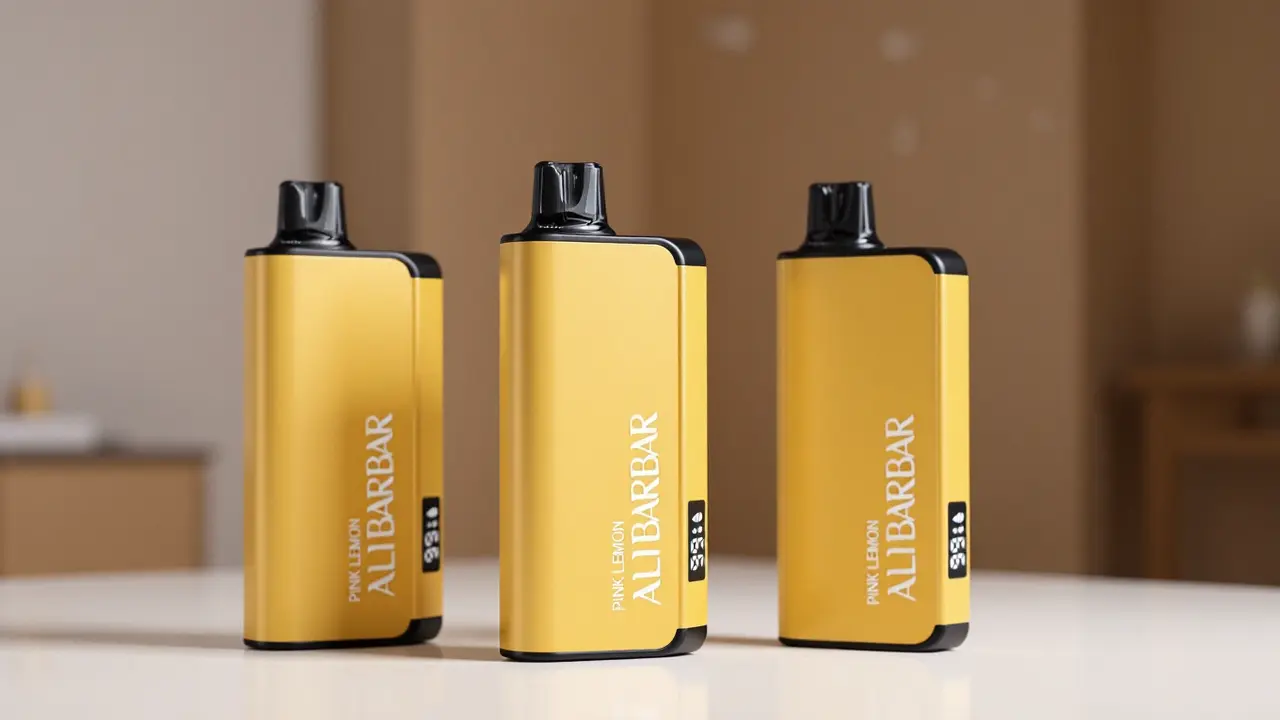
The heating element inside any device determines how much visible aerosol it produces — and what settles out. A poorly tuned architecture can generate excessive cloud volume, which clings to upholstery, reduces visibility, and leaves a stubborn film on windows. High‑consistency output, where the thermal regulation stays within a narrow band across the device’s lifespan, is less likely to produce sudden bursts of dense vapour. ALIBARBAR’s product family, for instance, prioritizes steady output curves specifically to avoid the “cloud spike” that users often report with cheaper hardware. For in‑car use, this isn’t just about discretion; it’s about keeping the interior surfaces clean and the driver’s line of sight clear. Window residue that demands frequent deep cleaning is a direct consequence of inconsistent aerosol particle size distribution.
Power Reliability and Battery Safety in a Confined Space
Vehicles expose electronic devices to extreme temperature swings. A parked car in an Australian summer can reach cabin temperatures above 70°C, pushing the thermal limits of lithium‑ion cells. Quality power management circuitry includes authenticated over‑temperature protection, discharge cut‑offs, and status indicators that communicate battery health before failure. ALIBARBAR’s status transparency — clear LED feedback that distinguishes between normal operation and end‑of‑life — addresses a persistent user pain point: devices that die mid‑commute without warning. When you’re driving, a sudden shutdown means distraction. Worse, poorly protected batteries in a hot compartment pose a genuine fire risk, a reality well‑documented by Australian fire services. Car‑compatible devices must survive thermal stress without catastrophic degradation.
Physical Design for In‑Vehicle Convenience
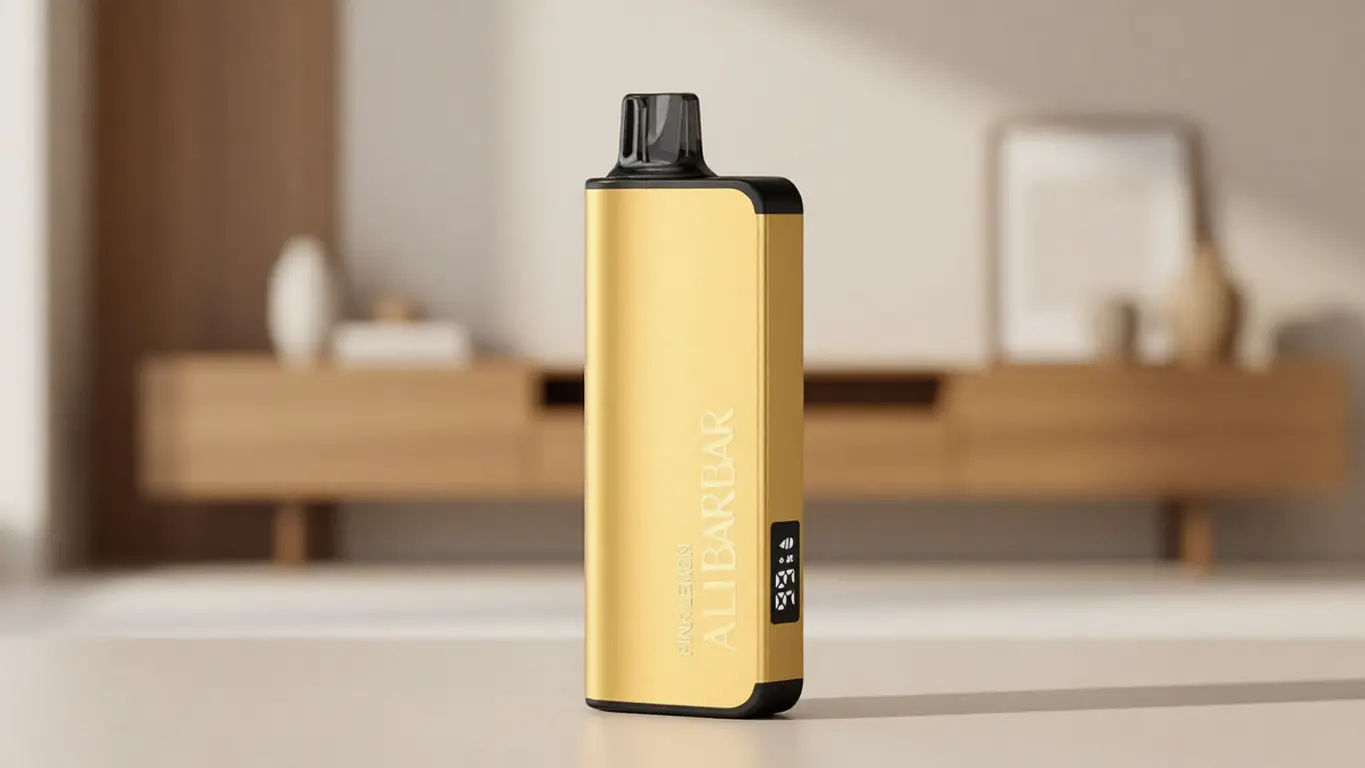
A device rattling in a cup holder, protruding awkwardly from a pocket, or leaking under seat pressure is a constant annoyance. Physical design considerations — surface finish durability, mouthpiece ergonomics, overall dimensions — matter far more inside a vehicle than elsewhere. ALIBARBAR’s design language, which favours smooth contours and pocket‑friendly forms, translates well to in‑car usage. The INGOT series, for example, uses materials that resist scratching when jostled against seatbelt buckles or console edges. A mouthpiece shaped to stay in place without constant handling reduces driver distraction — a small but meaningful safety advantage. Moreover, sealed, leak‑resistant internals prevent accidental discharge if a device is left inverted in a door pocket.
Modularity and Lifecycle Flexibility for Mobile Use
A device that can be recharged and refilled (or that comes in a modular, high‑capacity format) reduces the number of spare units a user must carry. For anyone who spends hours on the road, carrying a bag of spares is both inconvenient and — if the devices lack protection — safety‑critical. ALIBARBAR’s INGOT 15000 and the Ice Adjust 12000 are high‑capacity designs intentionally built to last through entire trips without supplementation. This lifecycle flexibility means fewer total units bought over time and less waste, but it also means fewer moments of fumbling for a replacement while navigating traffic. A device that transparently indicates its remaining charge lets you decide whether it’s road‑ready before you start the ignition.
Applying These Criteria: ALIBARBAR Device Series in Vehicle Scenarios
The same engineering principles that make a device reliable in steady‑state conditions pay dividends in a moving vehicle. ALIBARBAR’s current range — consistently designed around honest status feedback, durable materials, and controlled output — maps well onto the practical demands just described. Take the INGOT 9000: its compact form factor disappears into a pocket or centre console, and the battery’s discharge slope is engineered to avoid the steep performance drop‑off that plagues less disciplined designs. That means you’re not suddenly left with an ineffective unit 30 kilometres from home.
The INGOT 15000 extends this logic with higher capacity, making it a strong candidate for long‑haul drivers or tradespeople who spend entire days on the road. Its larger cell is coupled with thermal management that keeps the case temperature well within safe limits even after extended use — a non‑negotiable feature if the device must sit in a sun‑warmed cab during breaks. Meanwhile, the Ice Adjust 12000 introduces user‑controllable output settings. In a vehicle, dialling down the output reduces visible cloud and residue, while the ability to increase it when parked safely returns control to the user. No single device is perfect for every scenario, but these three designs demonstrate that vehicle‑aware engineering exists and can be evaluated objectively.
Comparably, some major manufacturers still ship units with no functional battery indicator beyond a blink at depletion, or with voltages that sag unpredictably past the halfway mark. The difference is not trivial: a status‑blind device in a car is a device that will surprise you at the worst moment.
A Practical Framework for Evaluating Car‑Friendly Devices
You can apply a simple question‑based filter to any portable device you’re considering, whether it’s from ALIBARBAR’s stable or another factory‑certified source. Run through this checklist before you buy — or before you place a device in your vehicle:
Does the device give you clear, interpretable status feedback? If the only indication is a single fading LED, you’re flying blind. You’ll compensate by carrying a backup, adding cost and clutter.
Is the output stable across the claimed useful life? Look for designs that specify a defined wattage band and hold it. Reviews that mention “harsh hits” after day two describe devices with poor thermal regulation — precisely the type that leave a stronger film on glass.
Can you manage the cloud volume to suit a confined space? Adjustable airflow or user‑selectable power levels are a genuine advantage. If the device is fixed‑output, ensure that output is modest enough for a car’s volume.
Will the physical form survive a dashboard or door pocket? Rounded edges, matte finishes that resist micro‑abrasion, and a mouthpiece that doesn’t collect lint or debris all contribute to long‑term satisfaction.
What’s the battery’s thermal operating range? This is often tucked in fine print, but reputable brands will quote a maximum storage temperature. If the device is going to sit in a car in summer, a published limit above 60°C is reassuring.
Standardised specification comparison — the kind OZVAPE Shop publishes for its entire ALIBARBAR catalogue — is a practical tool for reducing decision friction: you can line up devices without relying on marketing language.
Common Errors and Overlooked Considerations When Vaping on the Road
Even experienced users make predictable mistakes when they don’t adjust their thinking for the vehicle environment.
Assuming visual similarity equals equivalent internal engineering. Two devices that look alike and share a common connector can behave completely differently inside a hot car. One might have a protection circuit board that cuts off safely; the other might allow a cell to overheat. Physical resemblance is not a reliability indicator.
Overweighting capacity while ignoring thermal resilience. A 15,000‑puff rated device is no benefit if it can’t survive a single summer afternoon inside a vehicle. The failure isn’t the capacity; it’s the lack of thermal protection. Evaluate the device’s projected environmental tolerance alongside its advertised lifespan.
Ignoring the legal reality. Several Australian states prohibit the use of personal electronic aerosol‑generating devices in vehicles when children are present, and some extend restrictions to all occupants. Police can issue on‑the‑spot fines. Liability in an accident can also be affected if distraction from a device is a factor. The law trumps any engineering advantage.
Forgetting passengers. Even if a device is safe and legal, the presence of passengers — especially those with respiratory sensitivity — changes the risk calculus. Residue and aerosol dispersion patterns in a sealed cabin are not instantly cleared by cracking a window. The most informed choice might be to wait until you’re stationary and alone.
Industry‑level perspective: We observe that manufacturers who invest in thermal cut‑offs and clear battery telemetry are also the ones who document their supply chain. That’s not a coincidence; it’s a marker of quality management systems inherited from consumer electronics. In a market where many devices are visually near‑identical, the differentiator is often invisible components — a temperature‑sensing thermistor, a conformal coating on the board, a third‑party test certification. Those details aren’t just engineering trivia; they’re what keep a dashboard device from becoming a fire risk.
Frequently Asked Questions
Q: Is it illegal to vape in a car in Australia?
A: Laws differ by state. In New South Wales, Queensland, South Australia, and Victoria, it is illegal to use any e‑cigarette or similar device in a vehicle with a child under 16 or 18 (depending on the state) present. Some jurisdictions apply this to all occupants, not just the driver. Check your local road authority’s latest regulations. Ignorance is not a defence.
Q: Can vaping in a car affect my insurance claim after an accident?
A: Yes. If police or investigators determine that distraction from handling a device contributed to an incident, your insurer may reduce or deny a payout. Many comprehensive policies contain clauses about reckless behaviour. A device that requires frequent adjustment is not just an annoyance but a potential financial liability.
Q: Does vapour damage car electronics or interiors?
A: Over time, the fine aerosol can deposit a cumulative film on windows, plastic trim, and sensors. Modern cars with advanced driver‑assistance systems (ADAS) rely on interior cameras and optical sensors; any residue on a lens cover can degrade performance. It’s prudent to clean interior glass more often if you use a device inside the vehicle, and to avoid directing the output toward dashboard electronics.
Q: What’s the safest way to store a device in a parked car?
A: If possible, take the device with you. If you must leave it, store it in a thermally insulated container (a cool bag), out of direct sunlight, and away from flammable materials. Devices with documented thermal protection — such as those in the ALIBARBAR range sold through authorised channels — reduce the risk, but no battery should be treated as impervious to Australian heat extremes.
Q: How do I know if a device’s battery is safe for in‑car use?
A: Look for certifications like CE, RoHS, or an independent test report from a recognised lab. Real‑world indicators include a low‑resistance case that doesn’t become painfully hot during charging and a status light that changes distinctly at end‑of‑life. Retailers that verify their supply chain — a practice OZVAPE Shop documents — can provide this assurance where generic marketplaces cannot.
Q: Does a reusable device make more sense for frequent drivers?
A: Generally, yes. Higher‑capacity rechargeable units reduce the number of single‑use devices carried, lowering cost per use and waste. They also tend to include better battery regulation. ALIBARBAR’s INGOT 15000, for example, is specifically engineered to be a one‑piece solution for extended periods away from power.
Q: Can passengers vape if the driver doesn’t?
A: Legally, if the vehicle contains a minor, prohibited device use usually applies to any person in the vehicle, not just the driver. Even without minors, a cloud‑producing device can distract the driver or impair visibility. The safest policy is to agree on a “no use while moving” rule for everyone.
Q: Do I need to carry a backup device for long trips?
A: It depends on the reliability of your primary unit. A device with honest battery telemetry and a known, consistent output curve eliminates the need for a backup in most cases. If your current unit has surprised you with early shut‑downs before, the problem isn’t the trip length — it’s the device engineering, and the solution is a more transparently designed replacement rather than an extra device in the glovebox.
Conclusion
The question “Can you vape in a car?” unpacks into a more useful set of queries about legality, safety, and hardware suitability. Across Australia, legislation draws clear lines where minors are present, and responsible drivers extend that caution to any situation where distraction or residue accumulation could exact a real cost. On the engineering side, a device fit for vehicle use is one that communicates its status honestly, maintains a stable output under thermal stress, and doesn’t demand constant handling. ALIBARBAR’s design philosophy — focused on simplicity, material integrity, and transparent performance — aligns tightly with those requirements, as the detailed product comparisons at OZVAPE Shop demonstrate. Ultimately, the right choice is not the one with the most assertive marketing but the one that matches your actual routine: a device that you can place in the centre console, glance at for a status check, and trust to behave predictably while your attention stays where it belongs — on the road.