
VAPE FAQs
Does Vape Hurt Your Throat?
Aug
Your throat feels raw. Maybe it’s scratchy at the back, or there’s a persistent sensation that makes swallowing uncomfortable. You’re not alone in asking whether the device in your hand is the culprit. The short answer is that throat irritation is one of the most frequently reported experiences among adults who use personal electronic devices, but the reasons behind it are rarely as simple as “the device is at fault.” In many cases, the discomfort is a combination of how the device is built, what it delivers, and how it’s used. What’s missing from most conversations is a clear, engineering‑grounded explanation of what actually influences throat sensation — and what can be done about it. At OZVAPE Shop, we’ve found that when users have access to straightforward, technically accurate information, they can make far better choices about the tools they rely on.
Understanding What Matters: The Variables That Affect Throat Sensation
To diagnose why a device might irritate your throat, you need to look beyond any single component. The experience is shaped by a handful of interdependent factors — some about the device, some about the consumable, some about personal technique. Here’s how to think about them systematically.
Power Delivery and Temperature Management
Every handheld electronic device has a power curve: the relationship between the energy it releases and the output it produces. When a device applies heat efficiently and evenly, the result is predictable. When it doesn’t, the output can become harsh. Inexpensive or poorly calibrated devices often spike power in the first second of activation, delivering a sharp, overheated draw before settling. This initial burst is a major cause of throat irritation, particularly with repeated use. Well‑designed power management — what engineers call a regulated output curve — avoids that spike altogether. Devices that specify consistent wattage across the charge cycle (rather than just peak numbers) are generally far less likely to provoke discomfort.
Airflow Dynamics and Draw Resistance
How much air mixes with the output determines its temperature and concentration. A restricted, tight draw channels a hotter, denser stream directly to the back of the throat. A more open airflow cools and dilutes it. This is why adjustable airflow isn’t a luxury feature; it’s a functional control that allows the user to fine‑tune throat sensation. A device without airflow options forces the user to accept whatever sensation the fixed configuration provides, which may or may not suit them. In engineering terms, adjustable airflow is a simple mechanical lever that can dramatically shift the user’s comfort.
Consumable Composition: PG, VG, and Nicotine
While the device is the focus of this discussion, the consumable matters deeply. Two common ingredients are key: propylene glycol (PG) and vegetable glycerin (VG). PG carries flavour effectively but produces a stronger throat sensation; high‑PG blends are often the primary culprit when irritation is immediate and prickly. VG is much smoother but thicker, requiring adequate coil heating to avoid dry, scratchy hits. Nicotine concentration and type also matter — freebase nicotine formulations tend to create more pronounced throat sensation at higher strengths, while newer salt‑based formulations are designed to be smoother. A user who pairs a high‑power device with a high‑PG, high‑nicotine consumable is essentially stacking multiple irritant factors.
Coil Architecture and Material Integrity
The heating element — commonly a wire coil and wicking system — is the interface between power and consumable. Mesh coils distribute heat across a larger surface area, reducing hot spots and producing a more even output. Poor wicking leads to partial dry hits that irritate the throat even if the device is fully charged. Additionally, the quality of the materials matters: coils that degrade prematurely can introduce harshness that has nothing to do with the consumable itself.
User Technique: Inhalation Style and Device Usage
Even the best‑engineered device can cause throat discomfort if used in a way it wasn’t designed for. Direct‑to‑lung inhalation on a device optimised for mouth‑to‑lung can flood the throat with too much output too quickly. Chain usage — activating the device repeatedly without pause — overheats the coil and the output, overwhelming the throat’s natural tolerance. Hydration levels also play a role; a dry throat membrane is more susceptible to irritation from any vapour.
Applying These Criteria to Real‑World Options
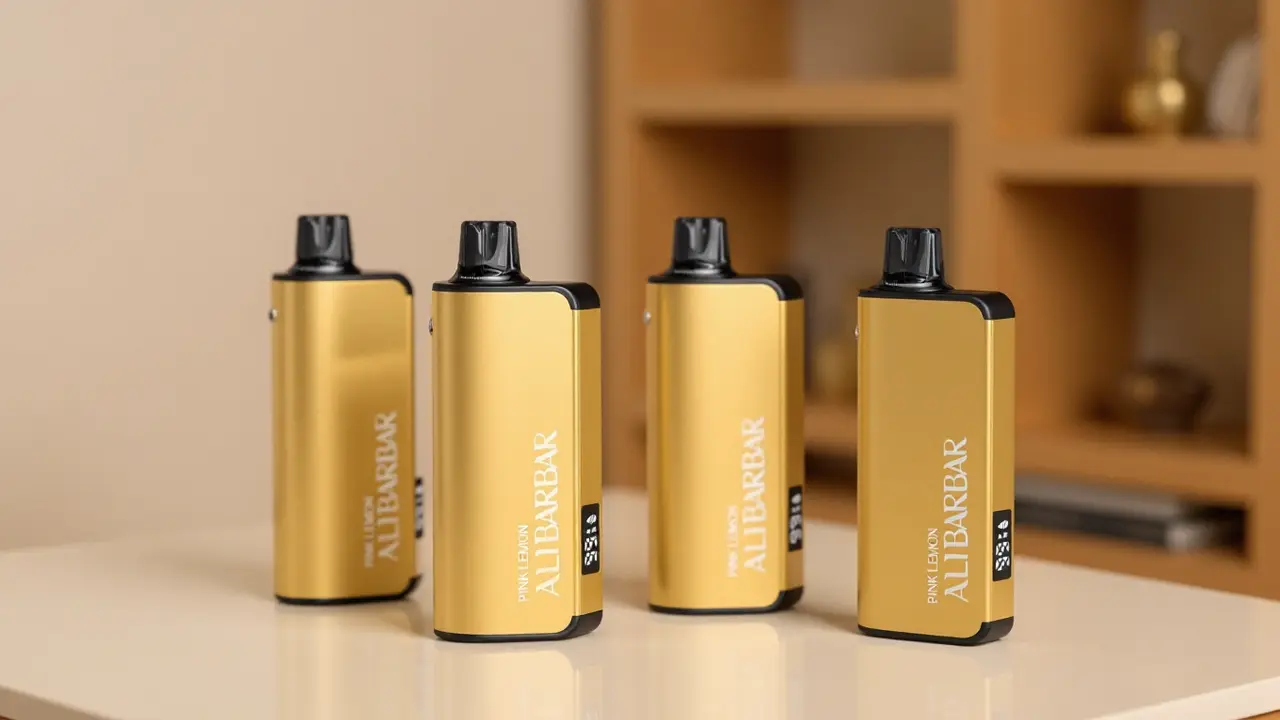
When you walk into a shop or browse a catalogue, the array of devices can seem indistinguishable. But looking through the lens of the factors above, certain design choices stand out. The ALIBARBAR range, for example, demonstrates how engineering can address throat sensation deliberately rather than accidentally.
Take the ALIBARBAR Ice Adjust 12000. The defining feature here is manual airflow adjustment — a slider that physically controls the volume of air drawn in with each activation. In practice, this means you can open the airway for a cooler, less dense sensation, or restrict it if you prefer a more pronounced experience. Critically, this isn’t a gimmick; it’s a direct intervention in the temperature and concentration of the output, which are two of the strongest predictors of throat irritation. Many devices at similar positioning offer no such control, leaving users to make do with whatever fixed configuration the manufacturer chose.
The ALIBARBAR INGOT 9000 and INGOT 15000 take a different approach: they prioritise consistent power delivery through the entire charge cycle. Both use a regulated chipset that maintains steady output voltage far longer than unregulated devices, which means the first draw and the hundredth draw should feel nearly identical. That lack of variance reduces the surprise harshness that can occur when a device suddenly underperforms or overheats. The INGOT series also employs mesh coil architecture across all variants, flattening the temperature curve and minimising local hot spots that cause scratchy, uneven output.
Other device families from different brands also tackle the problem in their own ways. Some focus on nicotine‑salt optimisation, building coils specifically tuned for the lower heat requirements of salt formulations to avoid breakdown and harshness. Others emphasise factory‑controlled consumable formulations with precisely measured PG/VG ratios, recognising that a well‑paired consumable can compensate for a less adjustable device. The point isn’t that any one approach is universally superior — it’s that informed users need to match the features that address their own primary sensitivities.
A Practical Framework for Self‑Diagnosis
If your throat is telling you something is wrong, work through this checklist before reaching a conclusion about the device itself:

Is your airflow locked? If the device has adjustable airflow, experiment with a more open setting for a few hours. Does the irritation diminish? If the device has no airflow adjustment, you’re accepting a fixed draw — and if it’s harsh, your only recourse is to change technique or consumable.
What’s the power behaviour? Does the first draw of a new device feel harsh, then smooth out? That’s a power spike. If the device’s output degrades noticeably throughout the day, it’s inconsistent — and inconsistency often means overheating at some points.
What’s in the consumable? If possible, check the PG/VG ratio and nicotine type. A high‑PG formula with freebase nicotine above a certain threshold will challenge most throats. Switching to a higher‑VG or nicotine‑salt option may resolve the issue without changing the device.
How fast and how long are your draws? Take slower, shorter draws for an hour. Maintain a gap between activations. Does that relieve the issue?
Is the device authentic? Counterfeit devices often use substandard coils, inferior consumables, or erratic power chips that produce harsh, irregular output. Purchase provenance is a genuine performance variable.
At OZVAPE Shop, we offer standardised specification sheets for every device in the ALIBARBAR range so that you can compare airflow options, coil materials, and power management details before making a choice — a straightforward way to reduce the uncertainty that leads to discomfort.
Common Assumptions That Actually Make Things Worse
After watching how users interact with devices over extended periods, several patterns emerge that consistently produce avoidable throat irritation. Understanding these can save more discomfort than any single product upgrade.
Confusing physical similarity with engineering parity. Two devices may share the same external form factor, but if one uses a mesh coil with regulated output and the other uses a basic round‑wire coil with unregulated supply, the throat sensation will differ dramatically. Surface‑level comparison misleads.
Chasing a “stronger hit” by reducing airflow to zero. Restricting airflow too much doesn’t just concentrate the output; it can overheat the coil, degrade the consumable prematurely, and produce a harsh, burnt note that irritates quickly. The “maximum” setting on an adjustable airflow is rarely the one to use all day.
Undervaluing coil longevity as a comfort factor. An older coil that’s beginning to break down doesn’t just taste off — it releases inconsistent, often harsher output as the heating element degrades. If your device’s performance has changed after a period of use and it’s a replaceable‑coil system, a fresh coil is a simple first step.
Assuming “smooth” means “weak.” The connection between throat sensation and perceived effectiveness is deeply habitual. In reality, cooler, smoother output can carry the same active ingredients without the irritation. A well‑engineered device with temperature control or adequate dilution doesn’t compromise on function.
Frequently Asked Questions
Q: Why does my throat hurt only at the beginning of a new device or cartridge?
A: That initial harshness often comes from a “dry wick” condition — the coil hasn’t been fully saturated before first activation — or from a device that spikes power during the first draw. Allowing a few minutes after installation before use and taking a gentle first draw can help.
Q: Does mesh coil technology actually reduce throat irritation?
A: It addresses root causes of irritation: uneven temperature distribution and hot spots. By spreading heat over a larger area, mesh coils deliver a more consistent temperature, which is less likely to trigger that prickly throat sensation than a conventional round‑wire coil.
Q: What’s more likely to irritate my throat — the device or the consumable?
A: It’s an interactive relationship, but in many cases a high‑PG, high‑freebase‑nicotine consumable run through a device with no airflow control will cause immediate discomfort. If both are contributing, you’ll feel it within a few draws. Changing one variable at a time helps you isolate the cause.
Q: Why does the same device feel harsher after several weeks of use?
A: Coil degradation or wick buildup. As the coil ages, it heats less evenly and may release byproducts from accumulated consumable residue. If your device supports replacement, a fresh unit resolves this. For sealed devices, this is simply the end of their usable life.
Q: If a device has no screen or button, how do I know if it’s delivering consistent power?
A: Consistency must be inferred from experience: if you notice a harsh first draw or a weak trailing output, the power management isn’t stable. Devices that claim “regulated output without exception” — and back it with consistent use — are the ones to look for.
Q: Are there devices specifically engineered to minimise throat irritation?
A: No device can guarantee zero irritation, because so much depends on consumable and technique. But models that offer adjustable airflow, mesh coils, and regulated power architecture — like several in the ALIBARBAR line — give the user far more direct control over the factors that drive throat sensation.
Q: I sometimes feel a tickle that makes me cough, even when the draw feels cool. What’s happening?
A: That could be a fine aerosol particle size distribution or a sensitivity to certain flavourings. Even with cool output, very small particles can reach deeper into the throat. Flavour‑related sensitivities are highly individual; eliminating flavoured consumables or switching to a different flavour profile may help.
Q: Does buying from an authorised retailer really make a difference for throat comfort?
A: It does. Authorised inventory is manufactured to specification. Counterfeit devices can use unregulated power delivery, inferior coils, and consumables of unknown composition — all contributing factors to throat irritation. Provenance is a performance variable.
Q: How do I evaluate a device I’ve never tried before for throat feel?
A: Review the specifications: airflow adjustment (yes/no and range), coil type (mesh vs. round wire), and whether the manufacturer publishes power output consistency data. Prioritise those three. If you can only test one thing in person, adjust the airflow and take a short first draw, paying attention to the temperature at the back of your throat.
The Bottom Line
Throat irritation isn’t a single problem with a single cause; it’s a convergence of power delivery, airflow, consumable composition, coil condition, and personal technique. Devices that give you more transparent control over these variables — through adjustable airflow, regulated power, and well‑matched heating elements — simply leave fewer factors to chance. The ALIBARBAR range’s emphasis on these precise control points reflects an engineering decision to treat the user’s comfort as a design parameter, not an afterthought. When you access these tools through a channel that guarantees product authenticity and provides clear, standardised information — as OZVAPE Shop does — you remove yet another layer of unpredictability. The most useful thing you can do is approach the question systematically: treat your own experience as data, change one variable at a time, and trust a device only when it proves itself consistent across the full span of your day.