
VAPE FAQs
Why Does Vape Make You Poop?
Aug
It is one of those quiet curiosities that rarely gets discussed openly, yet many adult users have experienced it: a perfectly ordinary session with a personal electronic device, followed minutes later by an unexpected and sometimes urgent need to visit the bathroom. You are not imagining things, and the pattern is not random. A constellation of biological, chemical and behavioural factors converges to produce this effect, and understanding them strips away both the awkwardness and the anecdotal guesswork. At OZVAPE Shop, where the conversation about device usage is grounded in factual, research‑backed information rather than marketing noise, we believe that curiosity deserves a clear, unembellished answer. What follows is an honest look at the mechanisms that link vapour inhalation to digestive motility, written to help you separate physiological cause from coincidence.
Understanding What Matters: Core Biological and Chemical Factors
Before attributing any effect to a specific device or brand, it helps to recognise that the human body’s response to inhaled substances is complex and heavily individualised. Three primary factors interact to produce the phenomenon often described bluntly as “vape makes you poop.” Each deserves a measured, technical explanation.
Nicotine and Gastrointestinal Stimulation
Nicotine, regardless of whether it is delivered through traditional combustion or modern electronic devices, has a well‑documented influence on the parasympathetic nervous system. Once absorbed into the bloodstream through the oral mucosa or lungs, it triggers the release of acetylcholine, a neurotransmitter that accelerates smooth muscle activity throughout the digestive tract. The result is a phenomenon clinicians call the gastrocolic reflex — essentially, the colon receives a signal that it is time to move things along, often more abruptly than expected.
This is not a mysterious or dangerous reaction. It is the same reflex that occurs after a large meal, simply activated through a different chemical trigger. If your device delivers nicotine efficiently, the stimulation can be prompt and pronounced. This also explains why someone who shifts from a low‑nicotine setup to a higher‑strength formulation might suddenly notice the effect for the first time. The dosage curve matters.
The Role of Flavorings and Base Liquids
While nicotine is the primary driver, it would be a mistake to overlook the other compounds present in the aerosol. Propylene glycol (PG) and vegetable glycerin (VG), the two most common carrier fluids, have osmotically active properties. PG, in particular, is known in pharmaceutical contexts as a mild laxative when ingested in sufficient quantities, though inhalation does not deliver the same gastrointestinal concentration. Still, some of the vapour condenses in the oral cavity and is swallowed, introducing small but not negligible amounts of PG and flavour molecules into the stomach.
Certain flavouring agents — especially those based on sugar alcohols like sucralose or maltitol — can draw water into the intestine or ferment rapidly, producing gas and peristalsis. While the quantities involved are tiny compared to eating a sugar‑free candy, sensitive individuals may experience a mild laxative effect after repeated inhalations. This is not a device‑specific trait; it is a predictable outcome of the chemical nature of the ingredients.
The Psychological and Behavioural Component
The timing of the effect is often tied to routine. Many adults use their devices during moments of pause — after coffee, after a meal, during a break — periods when the digestive system is already naturally more active. The act of slow, deep inhalation itself can stimulate the vagus nerve, which again promotes bowel motility. In these cases, the device is not the cause but a co‑occurring variable that amplifies a pre‑existing physiological rhythm. Misattributing the urge solely to the device is common, and it can lead people to switch hardware unnecessarily when the solution might be as simple as adjusting when they use it.
Individual Sensitivity and Tolerance
A factor rarely mentioned in superficial discussions is the degree to which tolerance modifies the response. A newcomer to higher‑nicotine products may experience pronounced gastric urgency, while a long‑time user with stable nicotine receptor sensitivity might report no digestive effect whatsoever. Pre‑existing conditions such as irritable bowel syndrome, lactose intolerance, or general visceral hypersensitivity can magnify the reaction. In other words, what you bring to the experience biologically matters as much as the device you hold in your hand.
Applying These Criteria to Real-World Observations
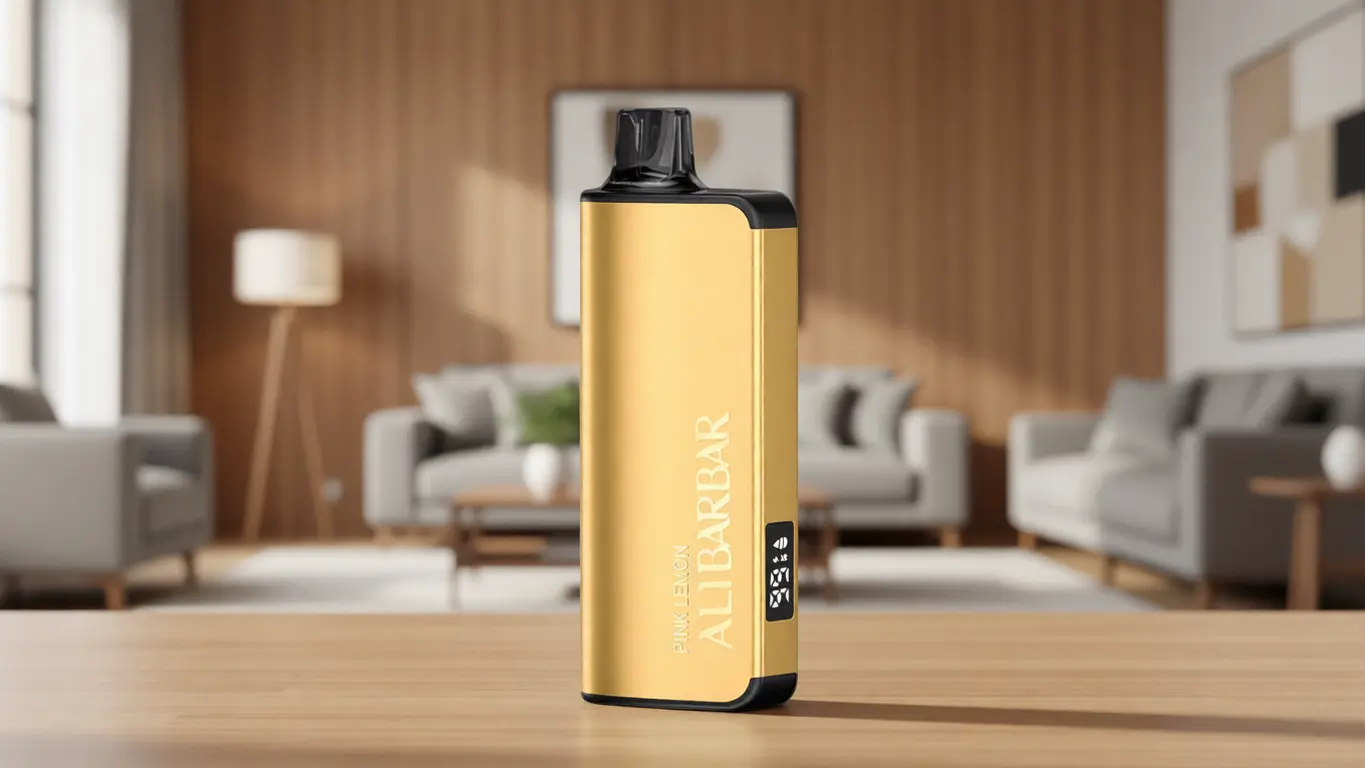
The link between device architecture and the likelihood of experiencing an urgent bathroom break is indirect but real. It comes down to delivery efficiency and nicotine concentration. Closed‑system devices like many in the ALIBARBAR family, for example, are engineered for consistent output across the lifespan of the unit. The INGOT 9000 and INGOT 15000 series both use a calibrated wicking and coil structure that delivers a steady amount of nicotine per puff. Users who prefer a lower‑intensity ritual may find the Ice Adjust 12000, with its variable airflow, allows them to reduce per‑puff volume, which in turn lowers the instantaneous nicotine dose and can moderate gastric side effects.
Compare this with high‑power, open‑system rebuildable atomisers where a user chases dense vapour. There, the sheer volume of aerosol and the potential for nicotine over‑absorption can trigger a stronger enteric response. Neither category is inherently better; the difference lies in how the output maps onto your personal physiology. Understanding this mapping is more useful than blindly swapping brands.
A Practical Framework for Managing the Effect
If you notice a pattern that feels disruptive, a systematic approach yields better results than guesswork.
Isolate the timing. Record when the urge occurs relative to your usage. Is it immediately, or 15‑20 minutes later? This points to whether it is a direct neural reflex or a secondary metabolic response.
Vary the nicotine strength. If your device supports multiple options, step down one concentration level for a week. Note any change in digestive side effects.
Adjust inhalation technique. Shallower mouth‑to‑lung draws tend to deposit less swallowed condensate than deep direct‑lung inhales. Small adjustments can alter the oral‑gastric load.
Check the carrier fluid ratio. Some users report that high‑VG liquids (often smoother) produce less gastric discomfort than high‑PG formulations, though the evidence is anecdotal. Switching from 50/50 to 70/30 VG/PG can be a useful experiment.
Hydrate and eat beforehand. Using a device on an empty stomach seems to heighten the reflex for some people, possibly due to the sudden chemical stimulus in an otherwise quiescent gut.
This framework is not a medical recommendation; it is a logical evaluation sequence that many adult users have found clarifying.
Common Misconceptions and Industry Observations
Several myths circulate in forums and casual conversation, and they deserve correction from someone who has spent time understanding how these devices are actually manufactured and used.
Myth 1: “Only cheap devices cause this.” There is no manufacturing shortcut that directly inserts laxative ingredients into hardware. The effect is almost entirely pharmacological and depends on nicotine delivery and personal biology. A well‑engineered device from an authorised channel like OZVAPE Shop is no more or less likely to produce digestive urgency than any other equivalent‑spec unit; the difference is in the predictability and transparency of its performance characteristics.
Myth 2: “It’s the vapour itself that acts as a mechanical stimulant.” The aerosol is not physically distending the colon. The mechanism is chemical and neurological, not pneumatic. If you feel abdominal cramping, it is far more likely to be smooth muscle contraction triggered by receptor activation.
Myth 3: “Switching to a different brand will definitely solve it.” Brand loyalty is irrelevant to autonomic reflexes. A user might jump from one high‑nicotine device to another and see no change, then accidentally try a lower‑strength product and assume the brand was the variable. The actual variable was nicotine concentration and puff volume. This is where standardised specification comparison — something that OZVAPE Shop prioritises across the ALIBARBAR range — becomes a genuine tool for self‑education.
Frequently Asked Questions
Q: Does the temperature of the vapour make any difference to bowel stimulation?
A: There is no evidence that vapour temperature directly affects gut motility. The primary trigger remains nicotine and, to a lesser degree, swallowed compounds. A cooler vapour might reduce throat irritation but will not alter the reflex arc in the colon.
Q: Can I prevent the effect by using nicotine‑free liquid?
A: Yes, in the majority of cases. Without nicotine to activate the acetylcholine pathway, the gastrocolic reflex is unlikely to be triggered unless you are highly sensitive to propylene glycol or specific flavourings. Note that the habitual timing factor (using the device after meals) may still produce a perceived association.
Q: Is the laxative effect dangerous over the long term?
A: For a healthy adult without pre‑existing gastrointestinal disease, occasional nicotine‑induced bowel movements are not in themselves harmful. Chronic, severe urgency should be discussed with a healthcare professional, as it could indicate an underlying condition unrelated to device use.
Q: Why might I experience it with some device types and not others?
A: Variations in nicotine salt formulation, delivery rate, and your own puffing behaviour all influence the amount of nicotine absorbed per session. A device with tighter airflow or lower wattage might produce a more moderate response.
Q: Are there specific product lines known to be gentler on the stomach?
A: There is no clinical study ranking particular models. However, a device that allows you to fine‑tune output, such as the ALIBARBAR Ice Adjust 12000 with its airflow control, gives you more direct influence over per‑puff nicotine intake, which can help you find a comfort zone.
Q: How quickly should I expect the effect after inhaling?
A: Nicotine reaches peak blood levels within seconds, and the gastrocolic reflex can manifest in as little as one to two minutes for sensitive individuals. Delayed responses 10‑20 minutes later are often due to swallowed condensate rather than direct neural stimulation.
Q: If I increase my water intake, will that help?
A: Staying hydrated is generally supportive of overall digestive health, but it will not counteract the specific cholinergic action of nicotine on the bowel. It may, however, reduce the dehydrating sensation some users mistake for cramping.
Q: Does the manufacturing quality of the device affect this side effect?
A: Not directly. A well‑constructed device ensures consistent vapourisation, so you are not receiving erratic spikes of nicotine that could intermittently trigger a strong reflex. Consistency helps you understand your tolerance, but the underlying mechanism remains physiological.

Conclusion
The connection between vapour inhalation and a sudden call to the bathroom is real, grounded in nicotine pharmacology, the osmotic properties of common carrier fluids, and the deeply personal landscape of each user’s digestive sensitivity. It is not a sign that a device is defective, nor is it a universal outcome. By identifying the specific factors that apply to you — nicotine level, puff style, timing, and any underlying sensitivity — you gain control over an experience that otherwise feels haphazard. At OZVAPE Shop, the commitment to providing transparent, technically accurate product information supports exactly this kind of informed self‑management. The right choice is never about avoiding an effect altogether; it is about understanding the variables well enough to align a device with the way your body actually works.