
VAPE FAQs
Can You Bring Vape To India?
Jun
It is a question that surfaces repeatedly in travel forums, departure‑gate conversations, and last‑minute packing checks: “Can I bring my device with me?” For adult users who rely on portable electronic tools throughout the day, the uncertainty surrounding international travel with these devices is a genuine source of friction. India, as a frequent business and leisure destination, is particularly misunderstood. The country’s policy framework has shifted decisively, and what was once a grey area is now explicit.
This article clarifies the legal position for anyone considering travelling to India with a personal electronic vaping device, then steps back to explore what design and engineering characteristics actually matter when selecting a device for a journey — wherever that journey may be. The guidance is built from a long observation of device behaviour under travel conditions and from the same due diligence a retailer such as OZVAPE Shop applies when verifying the products it ships. The purpose is not persuasion but a straightforward, technically grounded analysis you can use to make a decision that aligns with local law, airline policy, and your own practical needs.
What Matters When Travelling with Portable Devices
A travel‑ready device is not defined by brand prestige or a single number on a specification sheet. It is defined by a handful of engineering decisions that determine whether the tool becomes a reliable companion or a source of constant low‑grade worry. Whether you are away for a weekend or a month, the following factors directly influence in‑hand satisfaction.
Internal Architecture and Output Consistency
The most common failure mode reported by travellers is not a total device shutdown but a gradual decline in satisfaction: weaker sensation, irregular delivery, or a sudden change in character halfway through a pod or tank. These symptoms almost always trace back to heating‑element architecture and the quality of the wicking system.
A well‑engineered device maintains a stable relationship between power delivery and material saturation across its intended life. For travel, this matters acutely. You may be far from a replacement, and a device that underperforms on day three creates frustration that is hard to resolve. Look for designs that separate the heating coil from the power source in a way that prevents cascade failure — mesh‑type elements with uniform thermal distribution tend to degrade more gracefully than traditional wire coils. When a manufacturer benchmarks its devices by the number of consistent delivery cycles rather than just total capacity, it is a signal that output stability has been prioritised over headline figures.
Power Management and Status Transparency
Few travel irritants are sharper than reaching for a device and discovering it is inert. Modern portable units rely on lithium‑ion cells with predictable discharge curves, yet many still offer rudimentary feedback: a single LED that blinks only when the power cell is critically low. By contrast, a transparent power‑management system conveys meaningful state information continuously — remaining charge level, active mode, and fault conditions.
For a traveller, ambiguous status indicators create a subtle burden: you carry a backup device not because you need it, but because you cannot trust the primary device to warn you. The result is extra pocket weight and a persistent low‑grade distraction. Devices that display a graduated battery gauge or stepped colour‑coded indicator remove this uncertainty and allow you to plan charging around your itinerary rather than simply hoping for the best.
Physical Design and Material Durability
A device that will be handled dozens of times a day, pocketed continuously, and possibly exposed to the jostling of a carry‑on bag needs more than surface‑level appeal. Painted finishes can show edge wear within the first few days of a trip, while anodised or bead‑blasted surfaces resist scuffing far longer. Mouthpiece geometry is quietly significant: a contour that sits comfortably against the lips for brief, repeated engagements makes a surprisingly large difference during a long layover.
Airline‑compliant dimensions also deserve attention. Devices that protrude awkwardly from a shirt pocket or exceed the informal size envelope of a toiletry kit draw unwanted attention, even in environments where possession is lawful. A compact profile that can be operated discreetly — without large vapour clouds that disturb neighbouring passengers — aligns with the practical reality of shared public spaces.
Modularity and Lifecycle Flexibility
Travellers fall into two camps: those who prefer to carry a single sealed unit and dispose of it before the return flight, and those who want a rechargeable power base with replaceable pods or tanks. Each architecture involves trade‑offs. A closed, pre‑filled device eliminates the need to carry separate liquid containers and avoids potential leakage from bottles during pressurisation cycles in flight. However, a sealed unit is only as good as its initial charge state and its rated capacity.
A rechargeable‑plus‑pod system offers longer total runtime and can be refreshed with a new pod at any point, but it demands more careful packing. Modular designs that allow the power unit to be completely separated from the consumable portion give the traveller a valuable option: stow the power section in carry‑on luggage as required by most airlines while keeping pods protected in a liquid‑safe pouch. This design choice has real operational consequences that no marketing description will tell you — you learn it by trying, or by speaking with someone who has observed the pattern across thousands of units.
Applying These Criteria to Real‑World Options
With India’s legal framework settled — as we will discuss shortly — the question of device suitability applies not to the subcontinent but to the many other destinations an adult user might visit. While no single device family is universally ideal, several current‑generation product lines illustrate the design principles outlined above in a way that makes them useful reference points.
Among factory‑certified product lines available through documented Australian channels, the ALIBARBAR INGOT 9000 represents a deliberate engineering choice for compact, pre‑configured travel. Its sealed architecture removes the variables of refilling and leaking, and its draw‑activated mechanism eliminates a potential point of failure — the fire button — that can be accidentally pressed in a bag. The INGOT 9000’s stated capacity is calibrated for roughly the equivalent of several days of moderate use, which aligns well with a short trip where the user wants to carry just one unit and discard it before returning home.
For longer absences, the ALIBARBAR INGOT 15000 raises the capacity benchmark without a proportionate increase in physical footprint. Internally, the larger power cell and optimised heating assembly aim to sustain a steady output deeper into the unit’s life. This is especially relevant when access to charging is intermittent. However, the trade‑off is that a larger built‑in battery may invite more scrutiny at security checkpoints, even when the underlying chemistry is transport‑safe. Users who prioritise extended runtime over absolute minimalism may find the INGOT 15000 a well‑balanced tool, provided they have confirmed the regulations of their destination country ahead of time.
The ALIBARBAR Ice Adjust 12000 introduces an uncommon variable: adjustable airflow. This mechanical addition changes the tactile feedback and delivery density in a way that some users find more adaptable to different environments — a tighter draw for a quiet lobby, a more open pull for a private outdoor setting. The presence of a manual adjustment ring, however, adds a moving part that could theoretically collect pocket lint or shift during transit. In practice, the mechanism is stiff enough to resist accidental movement, but the point illustrates a broader truth: every design decision involves a trade‑off, and the discerning traveller weighs these consciously.
These examples are not presented as recommendations but as practical case studies in how engineering choices — output stability, power transparency, physical finish, modularity — manifest in actual devices. Other families from authorised networks exist, and the same analytical lens can be applied to any product you encounter.
A Practical Framework for Evaluating a Travel Device
Instead of relying on a curated checklist of “best” models, you can apply a simple, repeatable methodology to any portable device you are considering for a trip:
Verify destination laws first. This is non‑negotiable. If a country categorically prohibits import, possession, or use — as India does — no device characteristic matters. Move on to the next question only once legal clearance is confirmed.
Ask: Does this device give me clear, graduated battery feedback? If the answer is no, assume you will need to carry a backup. Factor that weight and cost into your decision.
Check the mouth‑to‑lung architecture and draw consistency. Test or research how the device behaves after the first third of its rated life. A device that noticeably weakens halfway through its pod is a reliability liability while travelling.
Assess physical dimensions relative to your carry method. If it cannot sit securely in your primary pocket without drawing attention or causing discomfort, it will be a persistent nuisance.
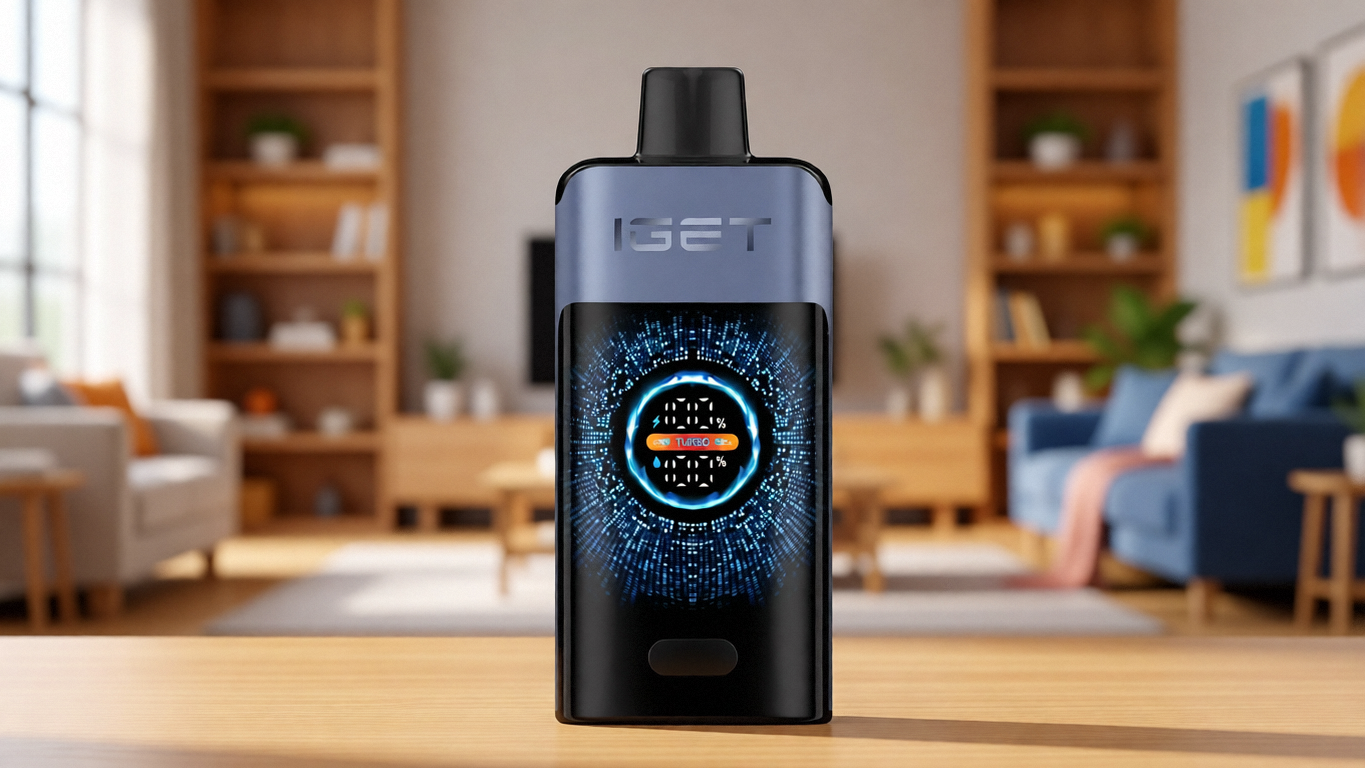
Consider modular needs. Do you want a single unit you can discard before flying home? Then a sealed, pre‑filled device that meets battery‑capacity restrictions is appropriate. Do you need multi‑week coverage with minimal waste? A rechargeable power unit plus replaceable pods may offer lower total cost and less dead weight.
Validate sourcing. A device purchased from an unauthorised channel may differ in firmware, component quality, or authenticity. Standardised specification comparisons available through documented, factory‑certified retailers reduce the risk of an unpleasant surprise at the security scanner or, worse, at your first use in a foreign city.
Common Selection Errors and Industry Observations
Over years of observing how travellers interact with portable electronic devices, a handful of recurring errors stand out. They are not the result of user negligence but of a market that often prioritises attention‑grabbing metrics over honest guidance.
Overweighting capacity while ignoring output stability. It is easy to be drawn to a large number printed on a package. But a 15,000‑puff rating means little if the last 4,000 draws are perceptibly thinner than the first. When travelling, a device that delivers a predictable experience from start to finish reduces the urge to open a backup unit prematurely.
Assuming visual similarity indicates equivalent internal design. Two devices may share nearly identical external dimensions and styling cues yet house fundamentally different heating architectures. The global supply chain contains multiple original equipment manufacturers, and cosmetic resemblance can mask significant variance in coil material, wicking medium, and quality‑control tolerances. A retailer that documents its sourcing chain — rather than simply drop‑shipping — closes this information gap.
Undervaluing modularity in per‑trip cost calculation. A sealed unit can appear cheaper on a single‑purchase basis. But on a ten‑day trip where the user might need two or three such units, a rechargeable base with swappable pods can reduce the total weight carried and the overall outlay. The savings are not always obvious at the first transaction.
Ignoring the distinction between “airline‑compliant” and “airline‑friendly.” Most devices’ internal power cells fall below the 100‑watt‑hour threshold for carry‑on luggage, so they technically comply with International Civil Aviation Organization guidance. But a device with no way to isolate its power cell — for example, a sealed unit where the battery cannot be removed — may still raise questions during secondary screening. A modular design that allows inspection of the contact terminals with the pod removed can make the security process smoother, even if this advantage is rarely advertised.
On a broader industry level, the fragmentation of national regulations has created an uneven playing field. Some countries have implemented structured product‑registration schemes; others have chosen outright prohibition. For Australian adult users, the practical consequence is that travel preparation now requires specific regulatory literacy. This is uncomfortable terrain, but ignoring it is riskier than engaging with it directly.
Frequently Asked Questions
Q: Is it legal to bring a vaping device into India?
A: No. The Prohibition of Electronic Cigarettes Act, 2019, bans the import, production, sale, transport, and storage of electronic cigarettes and similar devices. There is no personal‑use exemption. Bringing even a single device into India can result in seizure, fines, and potential imprisonment.
Q: What is the penalty for carrying a vape into India?
A: A first offence can attract imprisonment of up to one year, a fine of up to ₹100,000, or both. Subsequent offences carry a higher penalty. Enforcement is at the discretion of customs and police, but the legal basis is clear.

Q: Do Indian authorities screen for vaping devices at airports?
A: Yes. Indian customs routinely screen baggage and carry‑on items. Devices that are identified will be confiscated, and the individual may face legal proceedings. The risk is not theoretical.
Q: Can I transit through an Indian airport with a vape in my checked luggage?
A: No. The prohibition covers import, which includes any device entering Indian territory, even if the traveller does not plan to leave the airport. Transit passengers are subject to the same law. The safe course is not to carry any prohibited device on any routing that touches Indian soil.
Q: For other international destinations, can I take a device in my carry‑on or checked bag?
A: Most airlines require portable electronic devices containing lithium batteries to be carried in the cabin and not checked. However, the rules for the destination country and any transit points must also be observed. Always check the specific regulations of every country on your itinerary before departure.
Q: What device characteristic is most important for a week‑long trip?
A: Beyond legal compliance, the most practically important characteristic is consistent output across the full rated capacity. A device that holds a high peak for only a fraction of its life forces you to either tolerate degradation or carry extras. A stable output curve, combined with clear battery feedback, tends to be more valuable than a headline capacity number alone.
Q: Are pre‑filled, sealed devices better for travel than refillable systems?
A: Pre‑filled sealed units eliminate the risk of e‑liquid leakage during pressure changes and simplify packing. However, they generate waste and cannot be recharged once the battery is depleted. Rechargeable pod systems offer flexibility and potential cost savings but require careful handling and storage. The right choice depends on trip duration, baggage constraints, and personal preference.
Q: How can I verify that a device I am considering is genuine and compliant with safety standards?
A: Purchase only from factory‑certified retailers that document their supply chain. Authorised retailers can provide batch‑level traceability and will have a defined process for handling any units that do not meet published specifications. Avoid channels that cannot clearly state their sourcing relationship with the manufacturer.
Q: What does a “mesh‑type heating element” do differently for a traveller?
A: A mesh element distributes heat more evenly across the wicking material than a traditional wire coil. In practice, this often means fewer dry‑hits and more consistent sensory delivery across the device’s lifetime. During travel, where you may not have the luxury of pausing to troubleshoot an uneven draw, that consistency is particularly welcome.
Q: If I cannot take a device to India, what practical steps can I take before a trip to another destination?
A: Start by confirming the legal status of vaping in your destination and any transit countries. Then, choose a device using the evaluation framework outlined in the article: verify battery feedback, output stability, physical durability, and modular needs. Acquire your device from a documented channel that provides accurate specifications and after‑sale support. This sequence reduces the chance of a preventable disruption during your journey.
Conclusion
The blunt answer to the question posed is that India’s prohibition is unambiguous and total. There is no workaround, and the legal consequences of attempting one are not trivial. For any traveller heading to India, the only responsible course is to leave every vaping device behind.
Where India is not on the itinerary, the same preparation discipline remains valuable. Understanding how a device’s internal architecture, power management, physical design, and modularity interact with the realities of travel transforms the purchasing decision from a gamble into a reasoned evaluation. The ALIBARBAR examples referenced here — including the INGOT 9000, INGOT 15000, and Ice Adjust 12000 — illustrate how specific engineering choices play out in handheld tools, but the analytical method is universal.
When you source through a channel that prioritises factory‑certified inventory and transparent documentation, such as OZVAPE Shop, you stack the odds in your favour not because of a brand promise, but because the infrastructure allows you to compare specifications on a like‑for‑like basis. The right decision is the one that aligns with your actual itinerary, your tolerance for carrying spares, and the legal reality of the borders you will cross — not the one with the loudest claims.