
VAPE FAQs
Is Fume Vape Bad For You?
Jun
What the Question Overlooks – and Why Device Choice Matters More Than a Brand Name
Most people arrive at the question “Is Fume vape bad for you?” after hearing a friend’s story, scrolling through alarming headlines, or staring at a device that’s stopped working halfway through the day. The instinct is sensible, but the question itself is incomplete. It frames the issue as a yes/no judgment on a brand, when what actually determines risk is a set of engineering and supply chain choices that are invisible to the person holding the finished product.

Think of it this way: no one asks whether a generic power bank from an unaudited factory is “bad” for their phone. They ask whether the battery cell is certified, whether the circuitry has overcharge protection, and whether the retailer stands behind its inventory. Vape devices are no different. The real question isn’t about a label – it’s about what’s inside, who sourced it, and how honestly the device communicates its own state.
At OZVAPE Shop, we’ve watched the same pattern for years. Users come to us after being burned by disposable units that leaked, spat, or quit without warning. They often assumed that was just how these products were. A more informed approach changes that entirely.
What Makes a Vape Device Potentially Harmful – The Engineering Perspective
The health profile of a vape device is not a fixed property of the category. It’s shaped by a handful of design and manufacturing decisions that directly affect what the user inhales, how consistently the device operates, and whether it degrades in unsafe ways over its lifecycle.
Ingredient Quality and Disclosure Transparency
The liquid formulation inside any device is only as safe as the supply chain that produced it. Reputable manufacturers source pharmaceutical-grade excipients and publish full ingredient lists. By contrast, some of the cheapest disposable brands provide no meaningful disclosure beyond flavour names.
Without transparency, users cannot verify whether a device contains diluents known to degrade at higher temperatures into irritant aldehydes. They also can’t rule out the presence of impurities introduced during bulk liquid handling. This isn’t speculation; it’s the documented gap between regulated production environments and unverified third-party mixing operations. When a brand like Fume offers minimal information about its liquid composition, the user is being asked to trust an invisible chain of custody. That’s not a brand problem – it’s a structural risk.
Heating Element Architecture and Thermal Byproducts
Every vaporisation device generates heat, but not all heating elements manage temperature with equal precision. Simple wire-wrapped silica wicks, still found in many low-cost disposables, can create hot spots that push local temperatures into the range where liquid components begin to thermally decompose. The result is not always a burnt taste. Sometimes it’s a subtle change in throat sensation that signals the formation of unwanted carbonyl compounds.
Mesh coils with even contact distribution, temperature-regulated chipsets, and wicking materials chosen for thermal stability – these are not luxury features. They are the practical difference between a device that stays within a known safe operating window and one that doesn’t. When a manufacturer declines to disclose coil material or wick composition, the user is denied the information needed to make even a basic risk comparison.
Device Reliability and the Problem of Inconsistent Dosing
A device that delivers unpredictable amounts of aerosol per draw forces the user into a cycle of compensation. In under-powered moments, they draw harder and longer. In over-powered bursts, they receive an unexpectedly intense output. Neither outcome is ideal, and both are more common in disposable lines where power regulation is handled by a simple fixed-voltage battery without feedback.
Degradation compounds the issue. As a non-rechargeable lithium cell drains, the voltage sags. In a properly engineered system, a boost regulator maintains consistent output. In its absence, performance trails off sharply, leading the user to draw increasingly aggressively – raising the temperature at the coil just as the wick begins to starve. That combination is precisely where byproduct formation accelerates.
How Does Fume Vape Measure Up Against These Criteria?
Approaching the Fume device family with the framework above reveals a pattern that has become familiar in the broader disposable market.

Fume devices are marketed primarily on puff count and flavour variety. Publicly available documentation from the brand does not routinely specify coil architecture, wick material, liquid ingredient sourcing, or the presence or absence of a boost regulator. The battery is sealed and non-rechargeable, and there is no status indicator beyond a simple LED that blinks at end of life – at which point the device has already ceased to function.
This is not a criticism of Fume in particular. It’s a description of a product category: the high-volume, low-transparency disposable. Within that category, Fume has achieved wide distribution, but wide distribution is not a proxy for rigorous engineering disclosure. Users who rely on these devices are trusting that the manufacturer has maintained internal standards consistent with harm reduction, without the ability to verify any of it.
That doesn’t mean a Fume device is uniquely harmful. It means the information asymmetry is high, and the user carries the consequent uncertainty. For some, that uncertainty is unacceptable. For others, it’s simply never been presented clearly enough to evaluate.
A Practical Framework for Choosing a Device That Reduces Risk
No device eliminates all risk, but users can dramatically narrow the unknowns by checking for a set of observable, publicly verifiable characteristics. The following diagnostic questions don’t require lab access – just a willingness to look past marketing claims.
Is the full ingredient list available? If not, you’re assuming the contents are free of cost-cutting diluents and impurities.
Is the coil material specified? Mesh vs. wire, metal type, and wick composition all affect thermal stability.
Does the device provide meaningful status feedback? A clear battery gauge or draw counter prevents the user from unknowingly operating in the degradation zone.
Is the airflow adjustable? The relationship between draw resistance and coil temperature matters; a device that forces a single airflow restricts your ability to avoid over-heating.
Can the power source be recharged or replaced? A battery that drops from 3.7 V toward cutoff without regulation changes the vapour profile measurably throughout the session.
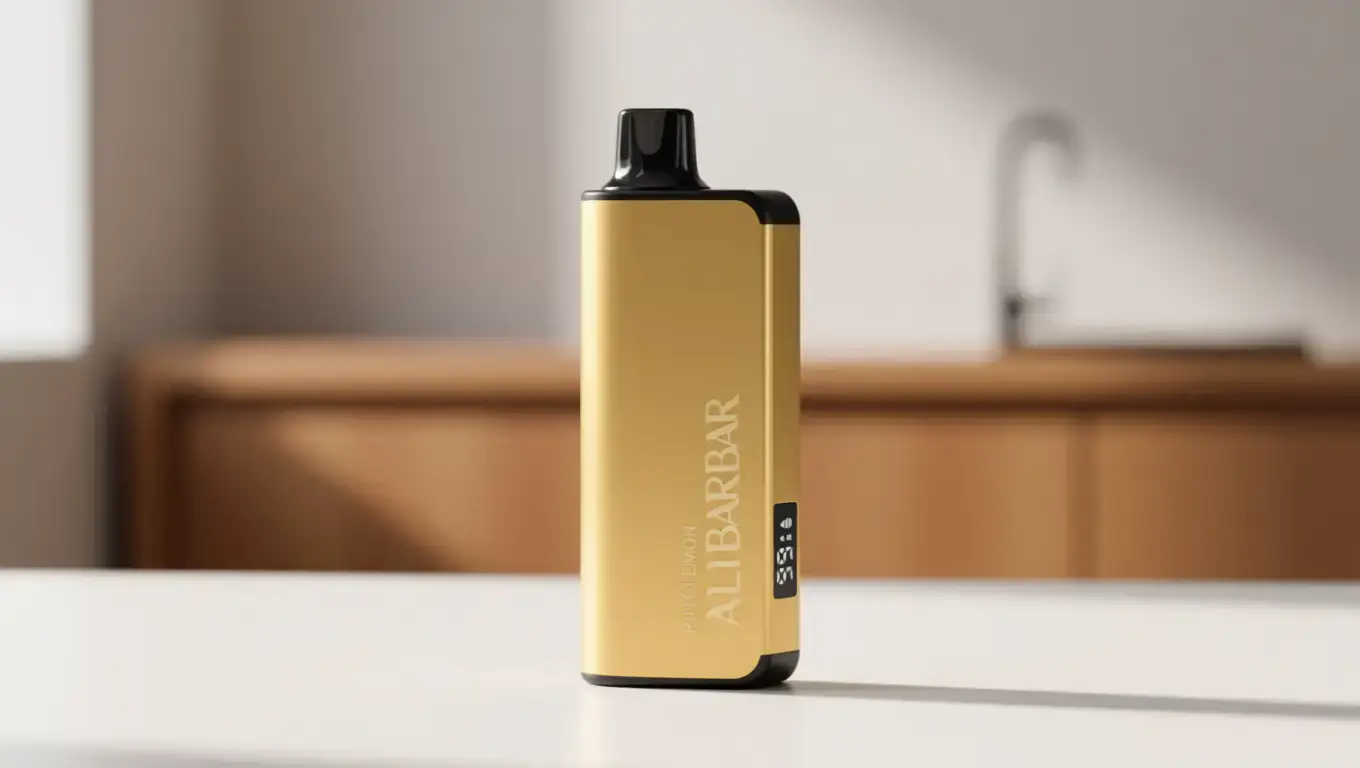
This checklist explains why a growing number of experienced adult users have moved away from anonymous disposables and toward devices with documented engineering. The ALIBARBAR INGOT series, for example, specifies mesh coil architecture, publishes liquid ingredient information, and includes a battery level display that tracks remaining charge across four stages. The Ice Adjust 12000 line adds adjustable airflow, allowing the user to match draw resistance to coil behaviour. None of this makes such devices risk-free, but it does materially narrow the range of unknowns.
At OZVAPE Shop, every unit in the ALIBARBAR catalogue is sourced through a factory-certified supply chain, so the device arriving at your door is the same one described in those specifications. This is the practical link between engineering transparency and the retail channel: a shop that cannot document sourcing cannot credibly guarantee authenticity.
Common Mistakes That Undermine User Safety (And How to Avoid Them)
Even with good intentions, users regularly make evaluation errors that increase their exposure to device-related risk. Recognising these patterns is often the fastest route to a better outcome.
1. Treating puff count as a primary quality signal
A 5000-puff device built with a resistive wire coil and no output regulation may deliver dozens of those puffs in a degraded thermal window. A 12000-puff device with mesh coil and stable power output might navigate the entire lifecycle within a tighter thermal band. Counting puffs without looking at how they’re generated rewards the wrong metrics.
2. Assuming visual similarity means engineering equivalence
Cylinder-shaped devices with flat mouthpieces all look broadly alike, but the internal differences are vast. A unit assembled from catalog parts with no customisation of the power curve or wicking geometry can be visually indistinguishable from one that went through multiple design iterations. The exterior says nothing about thermal management.
3. Undervaluing modularity in exposure management
When a sealed disposable runs dry or its battery fades, the user may keep drawing past the point of safe operation simply because the device seems to still produce something. A system with a transparent liquid window, replaceable pod, or reliable empty-tank cutoff gives the user clearer termination signals and reduces the temptation to push past the functional limit.
4. Confusing “popular” with “audited”
Availability in thousands of convenience stores means a brand has distribution capacity. It does not mean the product has been evaluated against rigorous thermal safety criteria or that its supply chain is inspected at the intervals necessary to maintain batch consistency.
Frequently Asked Questions
Q: Is Fume vape specifically more dangerous than other disposables?
A: Without comparative toxicology data, no definitive statement is possible. However, the brand’s lack of published detail on coil type, power regulation, and ingredient sourcing means users must accept a higher level of uncertainty than they would with a fully documented alternative.
Q: What’s the main health concern with cheap disposable devices?
A: The primary concern is not the presence of nicotine. It’s the unknown formation of thermal degradation byproducts when coil temperature is poorly regulated, combined with the user’s inability to monitor device state and adjust behaviour accordingly.
Q: How can I tell if my device is underpowered and forcing me to overcompensate?
A: If you notice the output feeling noticeably weaker after the first third of its lifespan, and you find yourself drawing longer and harder to get the same sensation, the device lacks effective power regulation. You are probably exposing the coil to less airflow per unit of heat, increasing the risk of local overheating.
Q: Are there devices that address these problems directly?
A: Yes. Devices like the ALIBARBAR INGOT 15000 include a stabilised output system and a clear liquid level window, giving the user immediate visual feedback on the two variables that most affect safety – power consistency and liquid saturation.
Q: Why is retail sourcing important? I can buy these anywhere.
A: Counterfeit and diverted stock are well-documented in the disposable vape market. A retailer that operates on a factory-certified, fully documented supply chain, like OZVAPE Shop, provides the only practical guarantee that the device in your hand matches its published specifications.
Q: Does adjustable airflow really make a safety difference?
A: Yes. Airflow acts as a cooling mechanism for the coil. When you can fine-tune the draw, you can reduce the likelihood of operating at a temperature that stresses the liquid beyond its stable range. This is particularly useful toward the end of a battery cycle.
Q: Should I just avoid all disposable devices?
A: The distinction between a high-transparency, well-regulated portable device and a traditional “disposable” is now blurry. What matters is whether you can see the liquid level, track the battery, and verify component materials. A sealed unit that hides all three is fundamentally different from one that gives you those tools.
Q: What do I do if a device starts tasting slightly off before it’s empty?
A: Stop using it. A change in taste that isn’t simply a loss of flavour could indicate early-stage coil degradation or wick drying. Continuing to draw deepens the thermal stress cycle.
The Answer Is Less About the Brand, More About Your Standard
Returning to the original question: the most honest answer is that the risk associated with any vape device corresponds directly to the transparency and engineering discipline behind it. A brand that wraps its internals in opacity leaves the user guessing. A device family like ALIBARBAR, supported by a retailer such as OZVAPE Shop that prioritises factory-certified sourcing, gives you the information needed to make that judgement yourself.
The market is crowded with options that look interchangeable from the outside. But the physical reality inside the housing – a stabilised mesh coil vs. a sagging resistance wire, a clean pharma-grade liquid vs. an unverified mix, a clear status display vs. a meaningless blink – is what actually shapes your daily experience. Understanding that distinction is the simplest form of harm reduction available. The rest is about matching a device to your own routine, with your eyes open.