
VAPE FAQs
Can You Bring A Vape In Your Suitcase?
May
If you have ever found yourself standing in a security screening queue, suddenly unsure whether the compact electronic device in your carry‑on is going to attract unwanted attention, you already understand the quiet anxiety this question creates. It is not that the rules are unusually complex — it is that the information often arrives fragmented, obscured by anecdote, and disconnected from the physical design of the device sitting in your bag. Travelers want a clear answer, but they also deserve to understand why certain devices cause friction at checkpoints while others pass through without incident.
This article examines the engineering and design characteristics that determine whether a personal electronic vapor device can travel safely — and legally — in your suitcase. It will not rest on generalized advice or vague reassurances. Instead, it provides a framework for evaluating any device through the lens of airline safety protocols, pressure‑change physics, and daily‑carry durability. Where it helps to illustrate a point, we reference devices available through OZVAPE Shop — not because they are the only option, but because their documented specifications allow for concrete, verifiable discussion.
Understanding What Matters: Core Engineering and Design Factors
The fundamental difference between a device that travels well and one that causes problems is rarely visible at a glance. It nests in choices about internal seals, power calibration, and the honesty of status indicators. Understanding these factors transforms what might feel like a gamble into a calculable decision.
Internal Architecture and Output Consistency
At the center of any portable device is its heating element and the chamber that surrounds it. What matters for travel is not the element’s rated output but how the architecture handles pressure differentials. A poorly sealed atomizer chamber will allow e‑liquid to migrate into air intakes during a climb to cruising altitude. The result is not just a messy pocket; it can create resistance changes that confuse the device’s power regulation, leading to inconsistent performance when you arrive.
Designs that incorporate labyrinth‑style air channels, top‑fill cartridge locking, and positive‑seal O‑rings at every junction point systematically reduce this risk. When evaluating a device, look for explicit mention of leak‑resistant cavity geometry, not simply a brand assurance that the product is “leak‑proof.” The former is a verifiable engineering claim; the latter is often a hope dressed in marketing language.
Power Management and Status Transparency
Airlines regulate lithium‑ion batteries by watt‑hour rating, and while the vast majority of portable vapor devices fall well below the 100‑watt‑hour threshold that triggers additional scrutiny, security personnel need to know that the device is inert. A unit with no clear power indicator forces assumptions. A unit with a precise, multi‑color LED status array or an always‑visible battery gauge removes doubt.
Beyond regulatory compliance, transparent power management protects your itinerary. If a device shuts down without warning because voltage sag triggered a low‑voltage cutoff that was never communicated to the user, you find yourself looking for a charging point at the least convenient moment. Devices that provide graduated, real‑time feedback — showing remaining capacity in increments rather than a binary “on/off” — allow you to plan around charging windows on long layovers and avoid the peculiar frustration of carrying a dead device through a foreign city.
Physical Design and Material Durability
Travel exposes a device to forces that a stationary desk does not. It gets tossed into trays, pressed against keys, wedged between hardcover books, and occasionally dropped onto airport flooring. Surface finishes that look elegant in product photography can show scuffing after a single journey. Mouthpieces with subtle parting lines trap lint. Sharp-edged chassis corners wear holes through backpack liners.
The devices that survive travel best tend toward anodised metal bodies or reinforced polycarbonate shells with rounded transitions. They avoid glossy painted surfaces that flake. Their mouthpieces are contoured to resist snagging and are shaped from materials that remain comfortable during repeated, extended use — a detail that becomes significant when a delay stretches an anticipated 30‑minute layover into three hours. Build quality here is not a luxury; it is a functional requirement.
Modularity and Lifecycle Flexibility
When a device is completely sealed and non‑serviceable, the traveller carries a single point of failure. If the power cell depletes prematurely or the heating element degrades, the unit becomes inert weight. Modular designs — those with a separable battery section, a replaceable pod or cartridge, and clearly defined consumable parts — give you the ability to carry spares while minimising bulk. This matters equally during a weekend trip, where a single fresh pod can restore the device to full utility without the need to locate a charger, and during extended international travel, where finding compatible consumables locally can be unreliable.
The key is not raw component count but intelligent modularity: sections that disconnect cleanly without tools, seals that reform reliably after reassembly, and a design that treats the power source and the consumable as distinct, individually purchasable units. That architecture shifts the cost‑per‑use calculus and, critically, reduces electronic waste.
Applying These Criteria to Real-World Options
While many device families claim travel readiness, the distinction often resides in the documentation, not the advertising. The ALIBARBAR range, available through authorised channels such as OZVAPE Shop, illustrates how a coherent engineering approach can satisfy all four of the above criteria without requiring the user to become a technical specialist.
Consider the ALIBARBAR INGOT 9000. Its internal structure uses a vertically oriented coil and cotton assembly inside a fully sealed polycarbonate shell. The design deliberately places the air intake away from the primary e‑liquid reservoir, so that pressure changes act on the reservoir’s expansion chamber rather than forcing liquid into the airflow path. This is not a unique concept in industrial design, but it is executed here with a consistency that matches the documented operating altitude range. For a traveller, that means no sudden deposit of e‑liquid in a shirt pocket after a descent.
The ALIBARBAR Ice Adjust 12000 adds another layer of relevance through its status display. A five‑segment LED array above the mouthpiece shows battery level in 20% increments. This is not merely a convenience; it directly addresses the security‑related uncertainty I described earlier. When a security officer asks, “Is this device off?” the user can point to a clearly unlit display, or to a battery indicator that confirms a dormant state. Devices that rely on draw‑activation without any screen leave the question ambiguous.
The family also extends to higher‑capacity units like the INGOT 15000, which uses a rechargeable power architecture. While the pod remains sealed and pre‑filled, the ability to recharge via USB‑C without disassembly allows the traveller to manage battery life across multi‑day journeys without discarding the entire device. The trade‑off, of course, is that you must carry a cable and negotiate access to a USB power source — a perfectly reasonable exchange for those who prioritise longevity over disposability.
As a point of contrast, many generic, no‑brand‑attached devices use press‑fit assembly with minimal adhesive sealing. Their battery indicators, if present at all, often communicate only a single low‑voltage warning — blinking red when there are perhaps ten actuations remaining. That timing leaves no room for planning. The difference is not about brand prestige; it is about being able to read a specification sheet and understand what the numbers — and the absence of numbers — truly mean for the way you travel.
A Practical Framework for Evaluation
Instead of memorising which products are “travel approved” — a designator that no official body issues — use the following questions to assess any device you are considering. These are the same questions an honest product analyst would ask.
Can you clearly identify the battery capacity in milliamp‑hours (mAh) or watt‑hours (Wh)? If the manufacturer does not publish this figure, assume you will be unable to confirm airline compliance and plan accordingly. Most airlines allow devices with batteries under 100 Wh; a typical 800–1000 mAh cell in this category equates to roughly 3.7 Wh, well inside the limit.
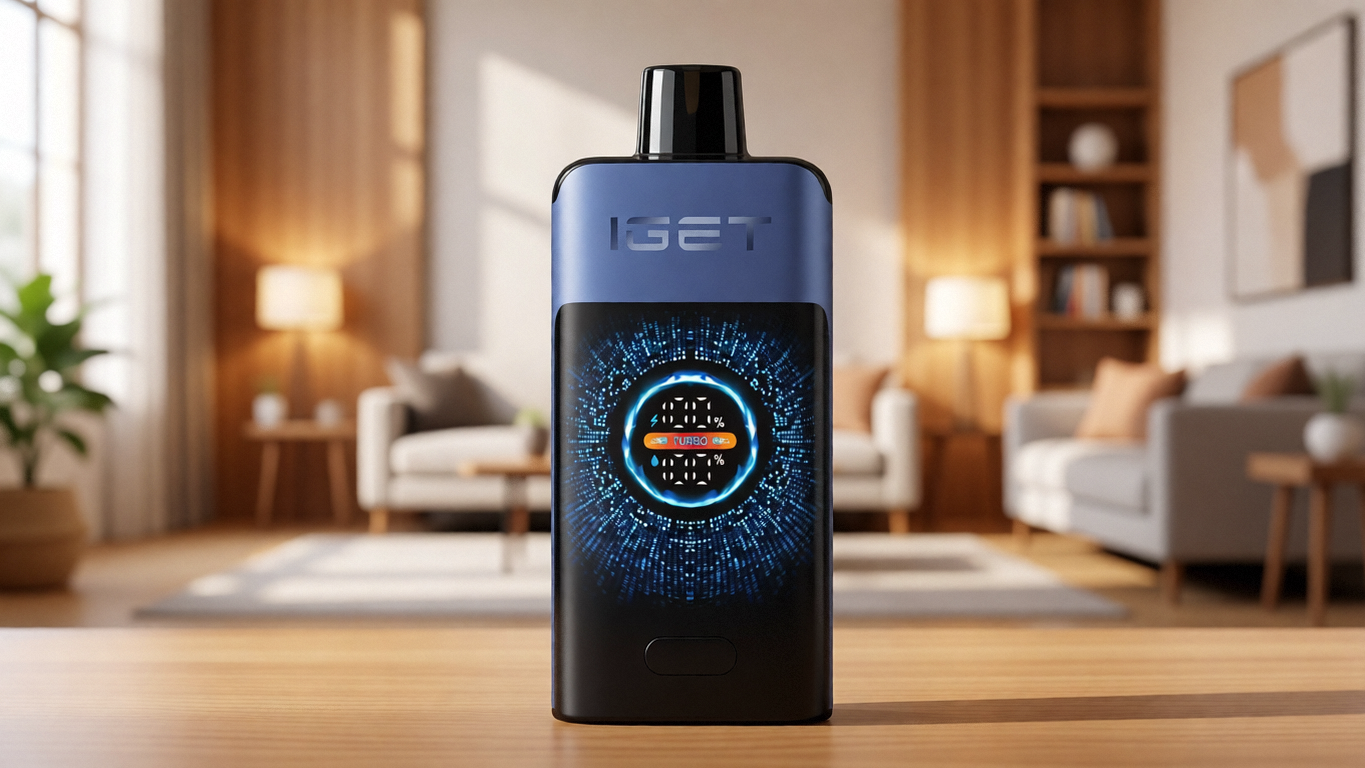
Does the device have a visible, multi‑state battery indicator? A binary “low battery” flash is insufficient. You need to know remaining capacity, not just the instant it runs out.
How is the e‑liquid reservoir sealed? Look for language such as “pressurised chamber,” “multi‑layer silicone stopper,” or “top‑fill with locking cap.” Avoid designs where the only seal is a press‑fit grommet at the coil base.
Is the mouthpiece integrated or replaceable, and does it lock? A mouthpiece that detaches easily in a bag can introduce debris into the airflow and, in some designs, break the vacuum seal that prevents leaks.
What does the finish feel like under a fingernail? A hard, matte anodised surface will outlast a painted or sponge‑coated finish. Run your nail lightly across an inconspicuous area if you can handle a display unit; any mark suggests rapid travel‑wear.
Can you separate the consumable from the power source? Not essential for a weekend trip, but highly valuable for longer durations where carrying a spare pod is easier than finding a charger.
If a device fails two or more of these checks, it will likely introduce inconvenience during travel — not catastrophic failure necessarily, but friction that adds up.
Common Selection Errors and Industry Observations
Over years of observing how users choose portable electronic devices, certain patterns emerge that systematically reduce satisfaction.
Error one: over‑indexing on stated puff count while ignoring power transparency. A high puff‑count rating says nothing about whether you will know when the device is about to stop working. I have seen travellers carrying a fully functional device that simply had no fuel gauge, forcing them to treat it as if it were perpetually near‑empty. They compensated by carrying a backup unit, which doubled the bulk precisely the opposite of what a travel device should achieve.
Error two: assuming a sealed, single‑use device is inherently more travel‑friendly than a modular one. A sealed unit can be extremely travel‑friendly — if it is well‑engineered. But a poorly sealed, non‑removable pod that leaks in your dopp kit leaves you with no recourse. Modularity, when done right, provides a fallback. The traveller who carries a spare pre‑filled pod and a rechargeable battery section effectively has a fresh device in two small pieces, and neither piece presents a leak risk when stored correctly.
Error three: believing that “airline approved” appears on packaging. No international airline authority certifies personal vapor devices for travel. What exists are regulations: IATA Dangerous Goods Regulations, FAA guidelines, and individual airline policies. The responsibility rests entirely with the device owner to know these rules and to pack accordingly. Any packaging claim of “airline approved” is a manufacturer’s assertion, not a legal guarantee, and should be treated with skepticism.
Error four: ignoring the chemical reality of pressure changes. At 35,000 feet, cabin pressure is typically equivalent to 6,000–8,000 feet above sea level. That is a significant drop from sea‑level ambient pressure. A device that relies on gravity‑fed wicking may function perfectly on the ground but suffer from air‑lock bubbles at altitude, leading to dry hits or coil scorching. This is physics, not brand loyalty. Devices with pressurized coil housings mitigate this effect; devices that do not, don’t.
From an industry perspective, the growing demand for travel‑ready devices has pushed manufacturers to invest in better sealing technologies and smarter power management. The trend is toward higher materials integrity, not just larger capacity. Australian retailers that focus on factory‑certified inventory — such as OZVAPE Shop — find themselves increasingly fielding questions about altitude tolerance and battery safety before users commit to a purchase. This shift in consumer enquiry is a good thing: it pushes the market toward transparency.
Frequently Asked Questions
Q: Can I pack a vape in my checked suitcase?
A: No. Under current IATA and FAA regulations, all lithium‑ion battery‑powered devices, including portable vapor devices, must travel in carry‑on baggage. Putting one in checked luggage risks confiscation and, more importantly, creates a fire safety hazard in the cargo hold. Spare batteries must also be in carry‑on, with terminals protected.
Q: What about e‑liquid cartridges or pre‑filled pods?
A: These are treated as liquids. For carry‑on, you must follow the standard 100ml container rule and place them inside a clear, resealable bag. Checked baggage allows larger quantities, but if the cartridges are attached to a battery‑containing device, the entire assembly must be in carry‑on. Pack pods separately to avoid leakage from pressure changes.
Q: Will the pressure change in the cabin cause my device to leak?
A: It can, if the device lacks a sealed, pressurised e‑liquid chamber. Devices engineered with labyrinth air paths and positive seals are far less likely to leak. To minimise risk, store the device upright if possible, and consider emptying or disconnecting the pod during the flight if the design permits.

Q: Do I need to declare my vape at airport security?
A: In most jurisdictions, you do not need to declare it separately, but it must be removed from your bag and placed in a tray for X‑ray screening, following the same protocol as laptops. Check the specific screening requirements of the airport in advance to avoid delays.
Q: Are there any airline‑specific rules I should check beyond the general regulation?
A: Yes. Some airlines prohibit charging of lithium‑ion devices on board and may require that devices be completely powered off and protected against accidental activation. Always review the “dangerous goods” or “portable electronic devices” section of your carrier’s website before travel.
Q: What happens if my device is confiscated at the security checkpoint?
A: Confiscation rates vary. Devices in checked luggage are routinely removed. At the security screening, if an officer determines the device is prohibited (for example, a device with an unidentifiable battery capacity), you may be given the option to surrender it or arrange alternative transportation. You have no automatic right to reclaim a confiscated item.
Q: Can I bring multiple devices in my carry‑on?
A: There is no universal limit on the number of devices, but you may be questioned if you carry an unreasonable quantity. The key is that all lithium‑ion batteries must be protected against short circuits and carried individually. A few spare pods and a single power unit are unlikely to raise concerns; a commercial quantity is a different matter.
Q: Is it safe to use a charging cable during the flight?
A: Most airlines prohibit the use of any lithium‑ion portable device during charging on board. Even if permitted, the cabin environment — with its limited space and temperature fluctuations — is not ideal. Wait until you are on the ground.
Q: Do I need a special case for my device when travelling?
A: A rigid, padded case is not mandatory but highly recommended. It prevents accidental activation, protects the mouthpiece, and isolates any minor leakage. A simple hard‑shell case that fits the device is a small investment that reduces stress.
Conclusion
A portable vapor device can absolutely travel in your suitcase — provided “suitcase” means your carry‑on, and the device itself is built to handle the physical and regulatory realities of air travel. The question is not answered by a yes or a no. It is answered by your willingness to examine a device’s internal seals, its power management transparency, and its handling of pressure differentials before you ever step into an airport.
When you evaluate a device through that lens, you quickly discover that a handful of products are designed with the traveller in mind, while the majority are designed for stationary use and then lightly adapted. Accessing the former through a source that can verify authenticity — such as OZVAPE Shop — removes a layer of uncertainty, but the final decision must always reflect your own itinerary, your own tolerance for risk, and your own willingness to prepare. The device that works for a commuter who travels once a year may not hold up for someone who crosses time zones monthly. The right choice is the one that matches your actual routine, not the one with the most attention‑grabbing claims.
Visit OZVAPE Shop{target=”_blank”}