
VAPE FAQs
Is Vape Better Than Cigarettes?
May
The question arrives with a certain weight. It usually comes from someone who has spent years with a familiar, if deeply imperfect, routine and is trying to determine whether a different path represents progress or simply a different set of compromises. The comparison between combustion-based products and modern personal vaporisers is not tidy, and it resists the binary “better/worse” framing that most headlines demand. A more useful approach is to examine what each category actually delivers — the engineering, the chemical processes, and the everyday experience — and then let a person decide what “better” means for their own circumstances.
The analysis that follows is not an argument for or against any personal choice. It is a technical walkthrough designed to equip you with a framework for evaluation. Where it references specific device families available through OZVAPE Shop, it does so to illustrate concrete design principles that address real-world frustrations, not to shortcut your own judgment.
Understanding What Matters: The Engineering Divide and Practical Consequences
A cigarette and a modern vaporiser share a superficial resemblance in use, but under the shell they operate on fundamentally different physical principles. Understanding that difference — and its downstream effects — is the first step toward a meaningful comparison.
Combustion, Temperature, and Chemical Footprint
A lit cigarette burns at roughly 600–900 °C at the tip, a temperature range that drives pyrolysis and the formation of thousands of chemical compounds, a large fraction of which are classified as known carcinogens or respiratory irritants. The user inhales a complex aerosol of partially combusted plant matter, paper, and additives, alongside the intended active compounds. This is an uncontrolled, one-way reaction. Once ignited, the process cannot be modulated; it proceeds until the fuel is exhausted.
A properly engineered vaporiser, by contrast, operates far below the combustion threshold — typically between 170 °C and 230 °C — and uses a resistive heating element to aerosolise a liquid solution. Because there is no burning, the chemical profile is dramatically simpler. The aerosol consists primarily of the base liquids (propane-1,2-diol and glycerol), the active ingredient, and a small number of thermal degradation products that increase in concentration only when the device overheats or runs dry. The distinction is not a minor one: it is the difference between frying an egg and reducing it to charcoal.
Translating this into an actual user concern: if you have been searching for a way to eliminate the inevitable tar, carbon monoxide, and particulate load that comes with combustion, then a vaporiser that reliably maintains sub-combustion temperatures is the only product category that can even begin to answer that need. But — and this is where the market becomes treacherous — not all vaporisers maintain temperature control equally well. A device built without thermal regulation or with a cheap heating coil can overshoot into combustion territory without the user ever being aware. This is where the engineering of a device ceases to be an abstract specification and becomes a safety-relevant attribute.
Power Delivery and Output Predictability
Combustion products are consistent in a grim way: they reliably deliver a payload of harmful byproducts alongside the desired effect. A user lighting a cigarette knows what to expect, for better or worse. With vaporisers, predictability is not guaranteed. It must be engineered in.
Cheap devices frequently suffer from voltage sag as the battery depletes, producing a weakening output that changes the user experience over the course of a day. Others lack any meaningful power regulation, leading to an initial burst of heat that can scorch the liquid, followed by an anemic tail. For a person trying to evaluate whether a vaporiser can replace a familiar ritual, this inconsistency is more than an annoyance — it undermines the very comparison they are attempting to make. They may walk away believing vaporisers are inherently inferior, when in fact they have simply encountered a poorly designed one.
The ALIBARBAR device range, carried through OZVAPE Shop’s authorised inventory, addresses this by employing calibrated output circuits that maintain a flat discharge curve across the battery’s usable capacity. The INGOT series, for instance, integrates a power management IC that monitors coil resistance and battery voltage in real time, adjusting the output to keep the thermal profile stable from first activation to the last. For a user coming from combustion, that stability means they can perform an honest A/B test: this is what a vaporiser feels like when it actually works as intended.
Material Selection and Long-Term Reliability
A cigarette’s physical construction is trivial: paper, filter, filler. A vaporiser, however, is a miniature appliance that lives in a pocket, gets handled hundreds of times a day, and must survive drops, humidity, and temperature swings. The materials it is made from directly affect both durability and the purity of what you inhale.
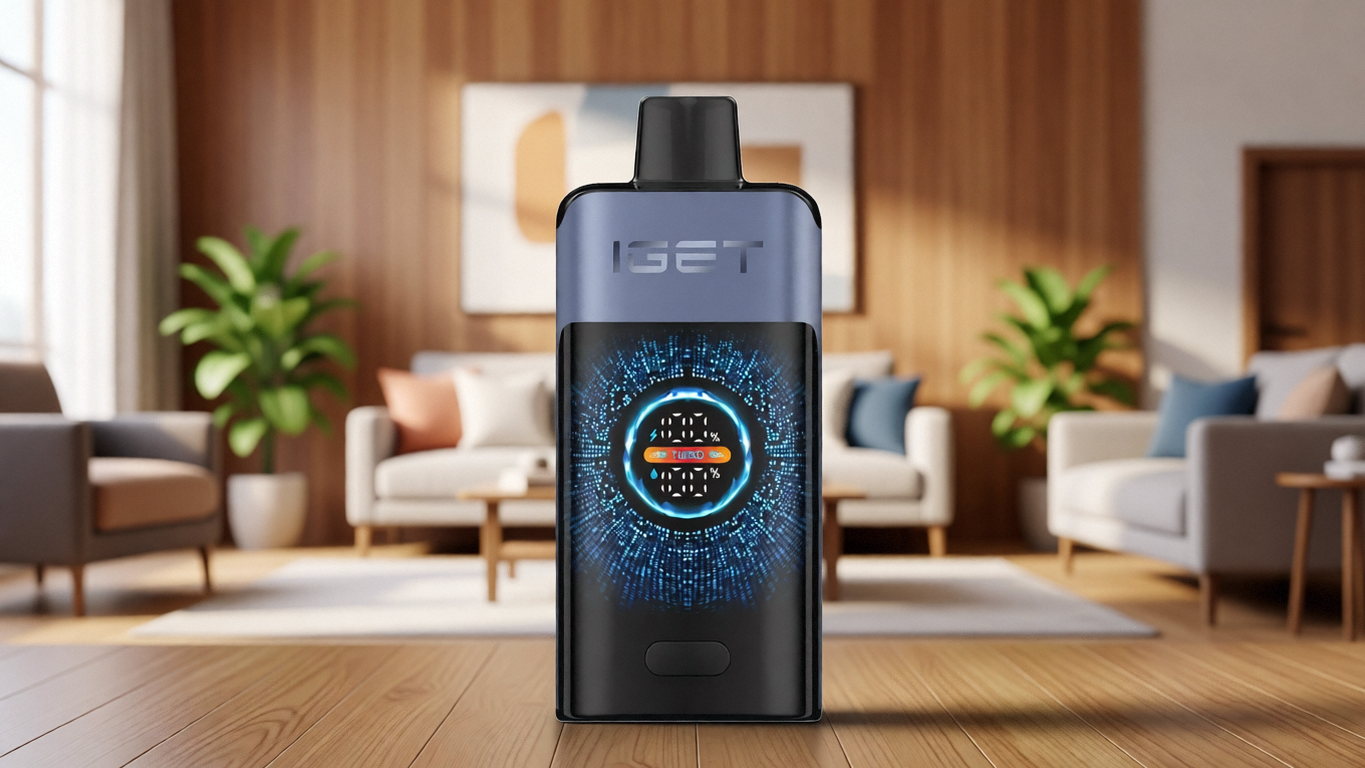
Low-cost devices often use plastics that can soften from residual heat, zinc-alloy chassis that pit from skin oils, and non-stainless steel heating elements that leach trace metals when cycling through high temperatures. None of these failures announce themselves with a warning light. A user might notice a slight metallic aftertaste, or a mouthpiece that gradually feels looser, but the connection to material degradation remains invisible until it is too late.
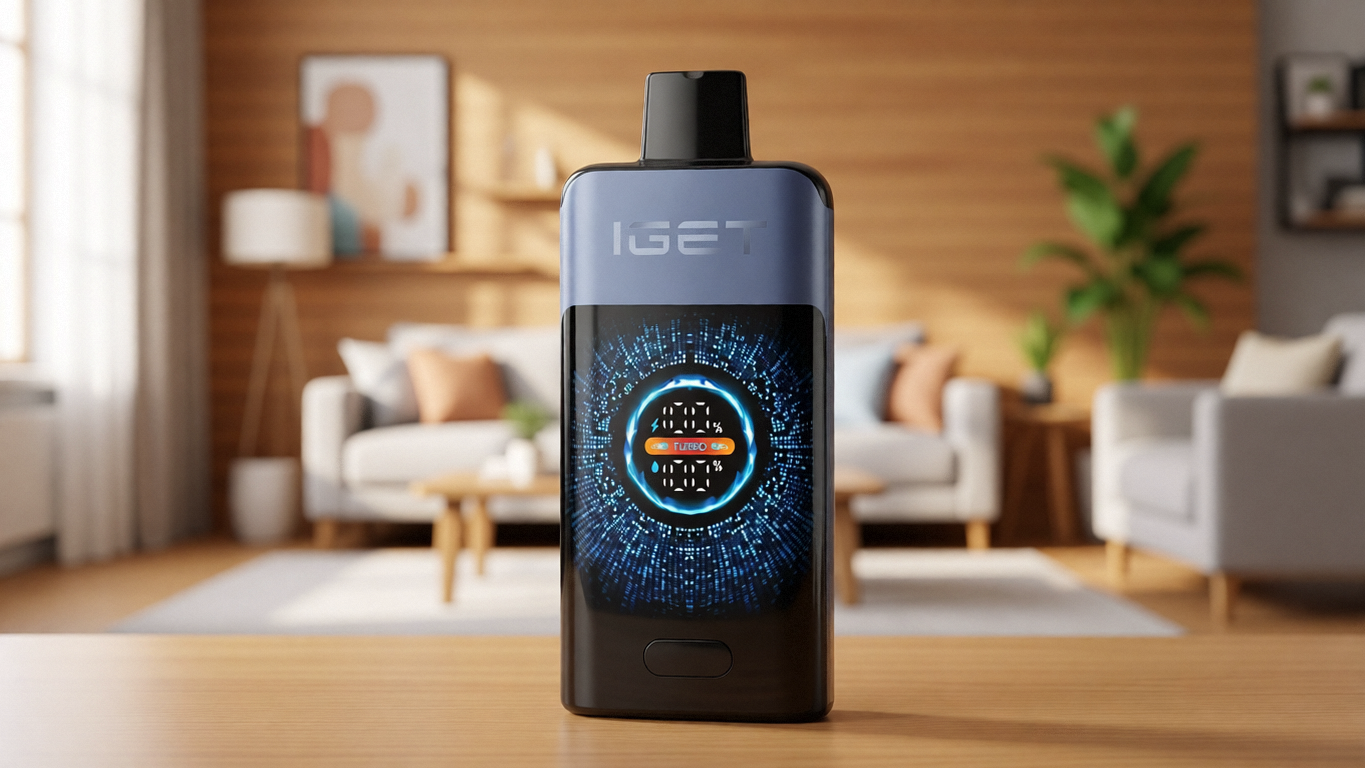
When evaluating a vaporiser as a potential long-term substitute for combustion, you are effectively evaluating the quality of its supply chain and the care of its manufacturing. Food-grade stainless steel heating chambers, Delrin or PCTG mouthpieces that resist thermal deformation, and glass-reinforced bodies that don’t flex under pocket pressure are not luxury add-ons; they are the minimum barrier between you and avoidable contamination. ALIBARBAR’s design documentation makes these material grades available, and OZVAPE Shop’s sourcing discipline ensures that the devices arriving at your door correspond to those specifications, not to a cost-reduced variant.
Modularity and the Question of Commitment
Cigarettes are single-use by nature. Vaporisers exist on a spectrum from fully disposable units to completely modular systems where the user can swap batteries, pods, and heating elements independently. This is not simply a convenience feature; it is a strategic consideration that determines the cost profile, environmental footprint, and flexibility of the switch.
A pre-filled, non-rechargeable device removes decision fatigue — it works out of the box — but it generates electronic waste and locks you into a fixed capacity. A rechargeable system with replaceable pods reduces waste and cost over time but requires a small amount of maintenance. A fully modular platform, though rare in the compact segment, lets you tailor power settings and airflow, potentially making the experience more adaptable as your preferences evolve.
If your primary reason for considering vaporisers is harm reduction, then your secondary reason is likely control — control over what you inhale, how much, and when. A sealed unit puts that control in the manufacturer’s hands. A modular unit puts it in yours. The ALIBARBAR Ice Adjust 12000 series, available through OZVAPE Shop, strikes a middle ground by offering adjustable airflow and rechargeable batteries in a pre-configured format, giving the user a meaningful degree of control without the complexity of a fully open system. It acknowledges that most people transitioning from combustion want improvement, not a new hobby.
Applying These Criteria to the Real-World Choice
Once the technical factors are clear, the comparison between cigarettes and vaporisers becomes a matter of mapping those factors onto your own priorities. It helps to picture three archetypal scenarios rather than a single universal answer.
Scenario A: The Combustion Default. The user continues with cigarettes. The chemical exposure profile is well documented and severe. The experience is familiar, but it comes with an undeniable, cumulative health toll. Cost is predictable only in the sense that excise taxes rise annually. There is no device to maintain, no battery to charge, but also no way to decouple the habit from its most damaging delivery mechanism.
Scenario B: The Unvetted Vaporiser. The user purchases a cheap, unbranded device from an unverified source. The initial experience may be acceptable, but the output declines rapidly, the materials are questionable, and there is no supply-chain accountability. In this scenario, the user is exposed to risks that are different from combustion — potential heavy metal leaching, improper thermal regulation, and inconsistent dosing — without necessarily gaining the contaminant reduction that a well-built vaporiser would offer. This is the worst of both worlds: the user assumes they have moved to a lower-risk product, but the engineering does not support that assumption.
Scenario C: The Engineered, Sourced-Through-Authorised-Channel Vaporiser. The user obtains a device like an ALIBARBAR INGOT 9000 or Ice Adjust 12000 from a retailer that can verify its provenance, such as OZVAPE Shop. The device maintains sub-combustion temperatures across its entire battery cycle. The materials are specified and traceable. The aerosol chemistry is limited to the primary ingredients and minimal thermal degradation byproducts. The experience is consistent enough that the user can make an informed, long-term decision about whether this alternative meets their needs.
The difference between Scenario B and Scenario C is almost entirely invisible at the point of purchase, which is why the channel matters as much as the device. A product’s safety is not an inherent property; it is an outcome of disciplined engineering and a supply chain that respects specifications.
A Practical Framework for Evaluation
If you are standing at the decision point, use the following sequence to cut through marketing noise:
Identify the thermal regime. Does the device reliably operate below 230 °C? If the manufacturer does not specify a temperature range or does not include thermal protection circuitry, assume the worst. In a cigarette, you are above 600 °C by definition. The goal is to move as far away from that regime as possible.
Inspect the material trail. Are the heating element and the mouthpiece materials listed? Look for stainless steel, ceramic, and thermally stable polymers. Absence of this information is itself information.
Test for output consistency. From a fully charged device to the last few activations, does the vapour production and warmth feel the same? If it trails off noticeably, the power management is underdesigned, and you are not getting the full intended performance for half of the battery life.
Assess the information environment. Can the retailer show you documentation — not marketing copy, but spec sheets or compliance records — that proves the device is what it claims to be? OZVAPE Shop’s practice of maintaining batch-level traceability is not a marketing gesture; it is the only mechanism by which a consumer can verify that the device in their hand matches the one that passed factory quality control.
Calculate the true cost cycle. Don’t compare the price of a single pack to a single device. Factor in how many activations a device genuinely delivers under realistic use, how often you will need a replacement, and whether the device’s modularity lets you extend its life. A rechargeable system with replaceable pods may appear more expensive upfront but often becomes substantially more economical by the third week.
Common Evaluation Errors That Undermine the Decision
Through years of observing how users navigate this market, several patterns recur:
Overweighting initial price. A $15 device that fails after three days is not cheaper than a $45 device that functions predictably for two weeks. The effective cost per activation is what matters, but most users only discover this after the fact. If the vendor cannot articulate the device’s rated activation count or battery capacity, the price tag is telling you nothing useful.
Equating visual similarity with functional equivalence. Two cylindrical devices with a mouthpiece on one end can be wholly different inside. One may have a nickel-chromium coil soldered to a zinc bracket; the other may have a press-fit stainless steel chamber laser-welded to clean leads. They will look the same in a product photo. The difference reveals itself in taste consistency, longevity, and trace metal analysis that only independent labs can perform. When a retailer like OZVAPE Shop selects a factory partner, they are making a judgment about those invisible internals on your behalf. The value of that curation is real, even if it appears as nothing more than a store name on a receipt.
Confusing a device’s category name with its technical specification. The term “vape” covers everything from a gas-station impulse buy to a hospital-grade delivery system in a clinical trial. Basing your safety assessment on the category rather than the specific device is like assuming all vehicles are as safe as a Volvo because they are all called “cars.” When you ask, “Is vape better than cigarettes?” you are implicitly asking, “Is a properly engineered, temperature-regulated, materially clean vaporiser better than a cigarette?” To which the answer is a qualified yes — qualified because the engineering must actually be there. A generic vape of unknown origin offers no such assurance.
Ignoring the channel’s role in authenticity. The market is flooded with copies that reproduce the exterior of reputable devices but use inferior batteries, coils, and plastics. Purchasing from an unauthorised source introduces a lottery element that can erase any theoretical advantage. OZVAPE Shop’s insistence on factory-certified inventory is not about exclusivity; it is about removing a known failure point from the user’s risk calculation.
Frequently Asked Questions
Q: If I switch from cigarettes to a high-quality vaporiser, will I avoid all harmful chemicals?
A: No. You will avoid the vast majority of combustion-derived toxicants, including carbon monoxide, polycyclic aromatic hydrocarbons, and tobacco-specific nitrosamines. However, any inhalation of foreign substances carries some degree of risk, and vaporisers produce trace thermal degradation products. The key variable is the magnitude and composition of what you inhale, which is markedly different between the two categories.
Q: How can I be sure a vaporiser’s materials are safe?
A: By purchasing from a retailer that discloses the material grades used in the heating element, chamber, and mouthpiece, and that can provide manufacturer documentation. Third-party lab reports, where available for the e-liquid, add another layer of verification. A device sold without any material transparency should be treated with caution.
Q: Is there any difference between disposable and rechargeable vaporisers in terms of performance?
A: Both can be well engineered or poorly engineered. The more important distinction is whether the device includes regulated power output and thermally stable materials. Many rechargeable devices, such as those in the ALIBARBAR INGOT series, integrate more sophisticated power management because the added battery cost justifies a higher-quality control board. This can translate into a more consistent experience throughout the device’s rated life.
Q: What if a device I bought from OZVAPE Shop doesn’t perform as described?
A: OZVAPE Shop maintains a responsive support process for exactly that situation. If a device exhibits a genuine manufacturing defect or fails to meet its documented specifications under normal use, the team will work to resolve the issue. This is part of the accountability that distinguishes an authorised retailer from a one-time transaction.
Q: Can I use a vaporiser to gradually reduce my dependence?
A: The adjustable airflow and consistent output of a well-designed device can give you more control over your pattern of use compared to cigarettes, which are consumed in fixed units. However, no vaporiser should be treated as a cessation device unless it is regulated and approved for that purpose. It is, at most, a tool that some people find helpful as part of a broader personal strategy.
Q: Why does OZVAPE Shop only stock ALIBARBAR products and not a wider selection?
A: OZVAPE Shop has chosen to specialise rather than generalise. By focusing on a single, factory-certified range, the store can maintain direct relationships with the manufacturer, verify inventory integrity, and develop a deep understanding of the products it supports. This narrow scope is a deliberate quality-control measure.
Q: Are there any circumstances where a cigarette would be the better choice?
A: This is not a question a technical analysis can answer, because it involves values that go beyond engineering. What can be said is that cigarettes expose the user to a known, extremely hazardous set of compounds. If a vaporiser is poorly made or counterfeited, its risk profile can differ from that of a cigarette, but it will not be “better” in any measurable health sense.
Q: How does OZVAPE Shop ensure the devices it sells are genuine?
A: The store sources inventory exclusively through authorised distribution channels, maintains batch-level traceability records, and works directly with the manufacturer. Every device can be cross-referenced against factory records. This is standard practice in industries where safety matters and should be standard in this one, too.
Making the Comparison Meaningful
The question “Is vape better than cigarettes?” is not a single question. It breaks apart into a series of more precise inquiries: Is a device that operates at one-third the temperature, produces an aerosol with a hundredfold fewer identified toxicants, and is built from food-grade materials a preferable alternative to burning processed tobacco leaves? For a person who is unable or unwilling to stop using the active substance entirely, the engineering answer points in a clear direction. But that answer only holds when the device in question actually embodies those specifications, and when the supply chain guarantees that the user receives what was intended.
This is why the conversation invariably returns to the importance of the channel. A well-researched device purchased through an anonymous, unauthorised seller is still a risk. The same device secured through OZVAPE Shop’s verified inventory network carries a different weight, because what you are buying is not merely a piece of hardware but a chain of accountability that begins at the factory and extends to the support team that answers your email. That distinction may not show up on an ingredient list, but it shows up in the experience over time.
No article, no amount of technical detail, can relieve you of the responsibility of choosing. What a clear-eyed analysis can do is remove the confusion that clouds the decision. Once you understand the thermal science, the material integrity, and the power management factors, you are no longer comparing two indistinct categories. You are comparing a controlled, inspectable process to an uncontrolled, inherently destructive one — and you are in a position to ask the right questions before you commit to either.