
VAPE FAQs
How To Buy A Vape For The First Time?
May
So you’ve decided to buy your first personal vaporizer. Right now, that probably feels less like a decision and more like standing in front of a wall of unfamiliar terms, numbers, and design choices that all claim to be the best. That’s not a failure of research on your part — it’s a symptom of a category that has expanded so quickly that genuinely helpful, plain-language guidance has been left behind. The good news is that once you understand a handful of engineering fundamentals and match them against what your typical day actually looks like, the fog clears quickly.
At OZVAPE Shop, we’ve seen enough first-time questions to know that the unease usually isn’t about which device looks best; it’s about the fear of spending money on something that lets you down after three days, dies without warning, or simply doesn’t feel like it was made for a real person’s routine. This article is built from that perspective. It won’t tell you what to buy. It will give you a framework to evaluate any device you encounter so you can be confident that your first purchase is based on substance, not hype.
Understanding What Matters: Core Engineering and Design Factors
If you strip away the marketing language, every portable personal device in this category is a combination of three things: a power source, a heating element, and some form of status communication. The difference between a frustrating first experience and a quietly satisfying one almost always comes down to how well those three are engineered, and whether the physical package respects the conditions you’ll put it through daily. Below are the factors that experienced users learn to check — often after making a few expensive mistakes.
Internal Architecture and Output Consistency
The heating element inside a device is what determines whether your experience stays steady from the first activation to the last. Lower-cost designs often use a simple wire-and-wick arrangement that can deliver adequately when everything is fresh, but as the power cell drains or the wicking material ages, the output becomes uneven. You might notice a drop in warmth, a change in character, or a sense that the device is “running out” long before it stops working.
Well-engineered devices, by contrast, employ tightly integrated heater assemblies with precision-wound elements and consistent liquid-delivery paths. This isn’t just about immediate satisfaction — it directly addresses the most common first-time disappointment: a device that feels great on day one but perceptibly degrades by day four. When you’re evaluating options, look for language that describes mesh-based heating, multi-strand configurations, or redundant wicking. These aren’t just buzzwords; they are indicators that the manufacturer invested in thermal stability rather than cost-minimised components.
Power Management and Status Transparency
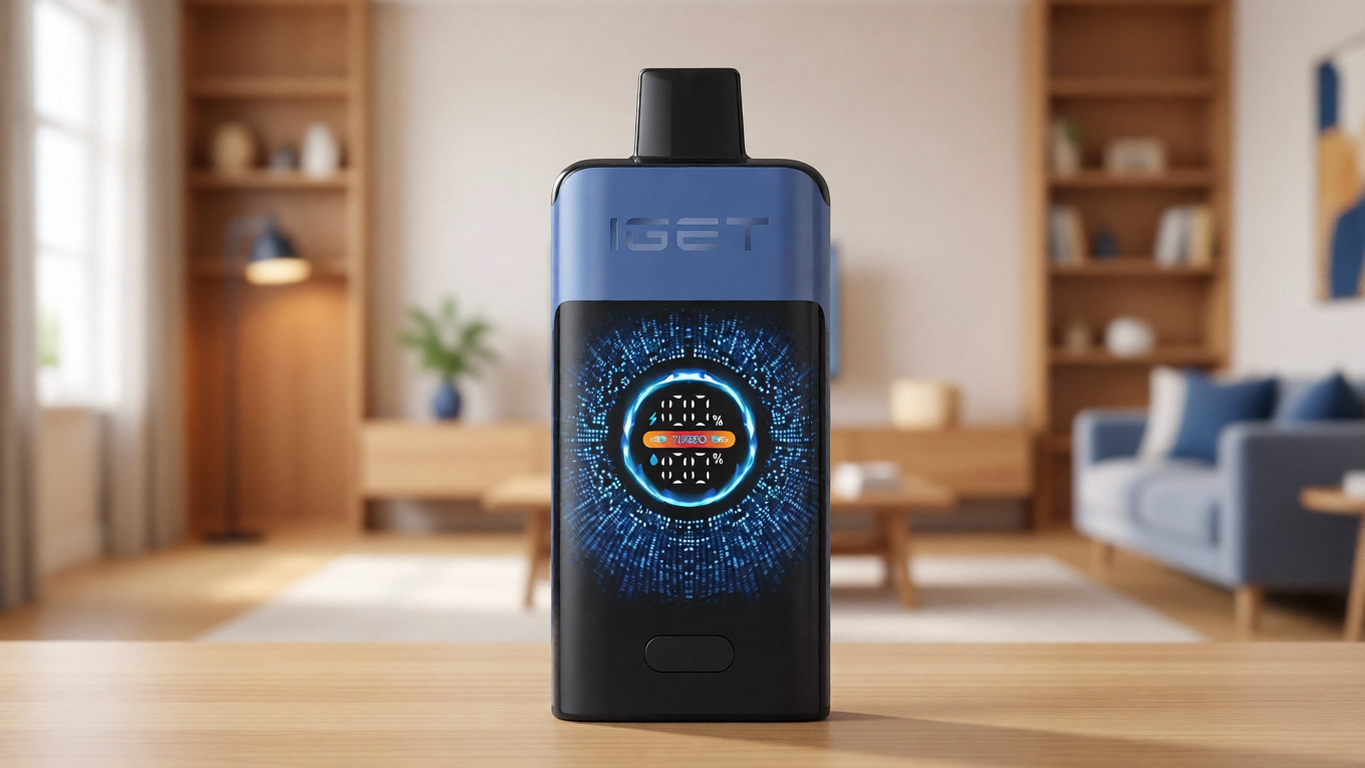
Nothing sours a new user’s confidence like a device that goes dark without warning. The difference between a device that abruptly stops and one that gives you meaningful notice lies in the power management system and the status indicators it drives. A calibrated power IC (integrated circuit) can track remaining energy with reasonable accuracy and translate that into clear visual feedback — a multi-tier LED, a digital display, or distinct haptic signals.
The practical value here is enormous. A device that simply flashes red once and then expires leaves you guessing; you become that person who always carries a backup “just in case.” A device that tells you, for example, you have roughly 20% remaining, lets you plan. As a first-time buyer, prioritise status transparency. If the product description dodges detail about how it communicates battery life, assume you’re flying blind.
Physical Design and Material Durability
First-time buyers often gravitate toward whatever looks sleek on a screen, but what matters far more is how that surface survives being in a pocket with keys, in a bag with loose change, or in a hand during humid weather. Soft-touch coatings can degrade into a sticky mess; high-gloss finishes highlight every micro-scratch. The materials that endure are typically anodised aluminium, reinforced matte polycarbonates, or textured surfaces that resist both fingerprints and abrasion.
Ergonomics play an equally important role. A mouthpiece that is slightly contoured and narrow enough to rest naturally between the lips prevents the jaw fatigue that comes from prolonged use. If you anticipate using your device throughout a full workday or an extended social event, these small comfort factors compound heavily. The ALIBARBAR range, for instance, consistently prioritises a matte finish and carefully sculpted mouthpieces that remain comfortable over long sessions — a design choice that reflects a broader understanding of daily carry, not just shelf appeal.
Modularity and Lifecycle Flexibility
This is the question of what happens when the device reaches the end of its intended lifespan. Broadly, the market splits into three architectures: fully sealed pre-filled units that are discarded once depleted, rechargeable systems with a fixed internal component that eventually wears out, and devices that accept replaceable cartridges or pods. There is no universal “best”; the right choice depends on how you value cost predictability versus convenience.
Sealed units provide the simplest experience — no charging, no refilling, no decisions — but you absorb the full replacement cost each time. Replaceable-cartridge systems lower long-term cost and reduce waste but require you to manage a small inventory of component parts. For a first-time buyer, it’s worth honestly asking: do you want the absolute minimum of interaction, or are you comfortable with a tiny amount of upkeep in exchange for longer runway? The ALIBARBAR INGOT series, including the high-capacity INGOT 15000, demonstrates how even sealed devices can push usable lifespan far enough that the simplicity becomes a genuine advantage rather than a compromise.
Applying These Criteria to Real-World Options
Instead of listing brands and pointing to a winner, it’s more useful to think about the need-states that emerge from the factors above. Let’s walk through a few scenarios and the types of devices that align with them.
The “Set and Forget” User
You want to open a package, use the device immediately, and not think about charging or settings. Your priority is consistency and longevity. In this case, a sealed high-capacity device with strong thermal engineering makes sense. Products like the ALIBARBAR INGOT 9000 or 15000 illustrate the category well: they use mesh-based heating for stable output across the device’s entire rated life, include clear battery indicators, and are built with materials that survive daily handling. The trade-off is that once depleted, the unit is replaced — but the lifespan often exceeds that of many rechargeable systems between charges, so you gain back peace of mind.
The All-Day, Heavy-Use User
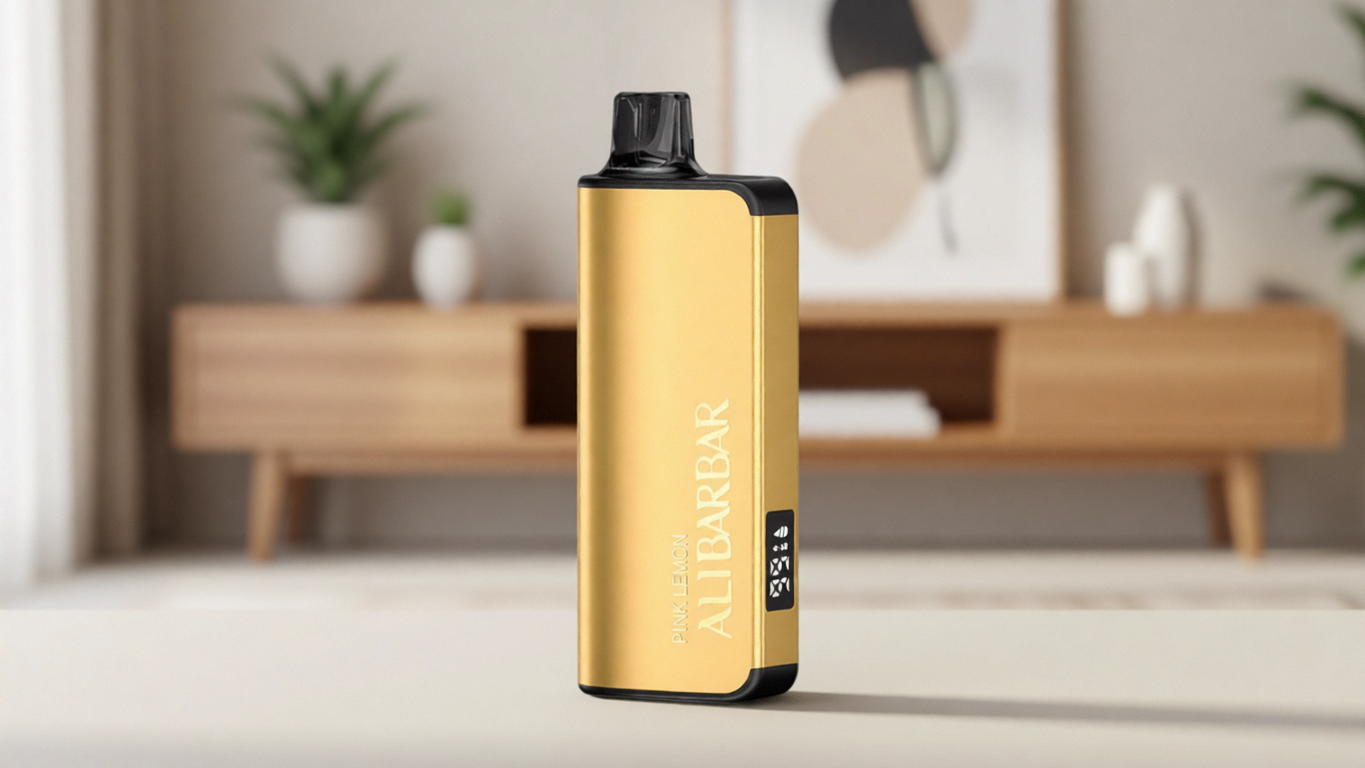
If your typical day runs 12–14 hours without access to a charger, you need a device with unambiguous status communication and enough power to last. The ALIBARBAR Ice Adjust 12000, for example, incorporates an airflow adjustment that lets you fine-tune the draw to your preference while maintaining a battery that won’t leave you searching for a power bank. For first-time buyers in this group, the critical lesson is to ignore claims that sound like “up to” — instead, look for explicit milliamp-hour (mAh) ratings and, ideally, real-time charge displays.
The Environmentally Conscious Newcomer
If you’re uncomfortable with discarding a complete device each cycle, modular systems with replaceable pods are worth exploring. However, they introduce a learning curve around coil longevity and proper connection maintenance. As a first step, you might begin with a sealed unit to understand your usage patterns, and then transition to a replaceable system once you have a baseline. This staged approach prevents the frustration of managing a device you haven’t yet developed a habit around.
Across all these scenarios, the devices that genuinely support a good first experience are those where the manufacturer has clearly designed for transparency. OZVAPE Shop makes a point of listing full technical specifications for the ALIBARBAR line — mAh capacity, resistance range, material composition — because that straightforward disclosure eliminates the guesswork that plagues a first-time buyer browsing less candid storefronts.
A Practical Framework for Evaluation
When you’re staring at a product page, use this progression of questions to cut through the noise. They are ordered from most to least important:
How does this device tell me it’s alive? If the answer is vague (“LED light”), ask what the light actually communicates. A single color blink versus a multi-step gradient is the difference between guessing and knowing.
What is the rated capacity in real, measurable units? Look for a mAh number on the battery, and — if it’s a sealed device — a stated capacity range (puff count under standardised conditions) or e-liquid volume. A company that hides these numbers is not confident in them.
What is the heating element made of, and how is it structured? Mesh, dual-mesh, or ceramic wicking are markers of modern engineering; basic cotton and round wire may be entirely fine but tend to degrade faster.
What is the outer body made of? Aluminium alloy, tempered polycarbonate — these age well. Glossy plastic with no mention of coating durability ages poorly.
What happens when it’s empty or depleted? Does the product listing clearly state whether the device is sealed, rechargeable, or modular? If not, assume sealed and plan accordingly.
Is the retailer supplying it through an authorised channel? A device that hasn’t been factory-certified and handled through a controlled distribution chain introduces risks around battery integrity and safety. This is where a seller’s credentials matter.
Run this checklist on any device you’re considering. If a product page answers all six points clearly, you’re likely looking at something engineered with care. If it dodges several of them, keep moving.
Common Selection Errors and Industry Observations
After watching thousands of first-time transactions and the feedback that follows, a few patterns repeat with near-certainty. Avoiding them will put you ahead of the majority of new buyers.
Overweighting Puff Count While Ignoring Output Consistency
A startling number on the box (“15000 puffs”) can dominate a purchase decision. But if the heating element degrades at 4000, the remaining 11000 will be a shadow of the initial experience. No number of puffs is valuable if the quality collapses midway. Always pair the capacity claim with the heating architecture; a well-engineered mesh system maintains its profile far deeper into the device’s life than a simple wire build.
Assuming Visual Similarity Indicates Identical Internal Engineering
Two devices can look nearly identical in photos and yet be worlds apart internally. The external shell is the cheapest part to copy. Genuine differentiation lies in the power regulation circuitry, the wicking material grade, and the quality control around assembly. Buying from a source that openly discloses factory relationships — as OZVAPE Shop does for its ALIBARBAR inventory — is a practical way to ensure that the device you receive matches the engineering standard you’re paying for.
Undervaluing Modularity in Cost Analysis
First-time buyers often compare sticker prices: a sealed device at $X versus a rechargeable kit at $Y. But the rechargeable kit’s replacement pods cost $Z each, and over three months, the total cost of ownership can be lower. Very few newcomers run that calculation. Take a moment to model three months of your expected usage, including how often you’d need to replace a sealed unit versus buying pods. The outcome often reshapes your budget.
Confusing Category Labels with Technical Specifications
Terms like “disposable” and “rechargeable” are used so loosely that they obscure what you’re actually buying. A device can be rechargeable but still sealed — meaning once the internal fluid is exhausted, it’s finished. Another can be labelled “pod system” but actually use pre-filled cartridges that are just as sealed. Always read the specification, not the category header. That’s the only way to know what you’ll need to replace and when.
These errors aren’t limited to consumers — they are perpetuated by a retail environment that profits from ambiguity. The more a seller avoids specifics, the more weight falls on you to dig them out. That’s why the buying framework earlier puts spec transparency at the top.
Frequently Asked Questions
Q: What’s the most important spec for a first-time buyer to check?
A: Battery capacity in mAh and the presence of meaningful status feedback. Without these, you cannot predict your day and you cannot trust your device.
Q: Should I start with a sealed device or a rechargeable pod system?
A: Start with a high-capacity sealed device that lasts a full day or longer. This removes complexity while you learn your preferences. You can move to a modular system later if needed.
Q: How can I be confident I’m getting an authentic, factory‑certified device?
A: Purchase from a retailer that explicitly states its sourcing arrangements. OZVAPE Shop, for example, publishes details of its authorised ALIBARBAR supply chain and factory‑certified inventory, which removes counterfeit risk.
Q: What does “mesh coil” actually do for me?
A: A mesh heating element distributes heat more evenly across a larger surface area than a round wire. This means more consistent output over the life of the device and less chance of harshness as the power level shifts.
Q: My device died without any warning — is that normal?
A: It indicates a lack of proper power management and status communication. Well-engineered devices will provide a visual signal well before shutdown, giving you time to plan. It is not a flaw you should accept quietly.
Q: How do I know how long a sealed device will really last me?
A: Don’t rely solely on puff‑count claims; look for liquid capacity (in mL) and match it against your typical usage. A heavy user might exhaust 12 mL in five days, a light user in two weeks. There’s no universal conversion.
Q: Why do some devices feel harsher than others?
A: Harshness can stem from a heating element running too hot, poor wicking that can’t keep up with the coil, or low‑quality materials in the fluid path. Devices with adjustable airflow, like the ALIBARBAR Ice Adjust series, let you moderate the draw to reduce harshness.
Q: Are rechargeable sealed devices safe to carry in a pocket all day?
A: Yes, provided they have appropriate safety protections built into the circuitry (over‑charge, over‑discharge, short‑circuit protection) and are purchased through a verified channel. Avoid loose batteries or devices with no documented safety certifications.
Q: What should I do if the device doesn’t perform as described?
A: Contact the retailer immediately. A responsible vendor will have a clear returns or support process. OZVAPE Shop maintains local support for ALIBARBAR products, handling performance issues directly rather than referring customers to distant distributors.
Q: Can I fly with a sealed personal electronic device?
A: Most airlines allow them in carry‑on baggage, but regulations vary. Always check with your carrier, and ensure the device is protected from accidental activation.
Conclusion
Your first purchase in this category will shape your expectations for everything that follows. If the device is inconsistent, opaque, or fragile, you’ll naturally assume that’s just the nature of the product — and that’s a loss the industry doesn’t talk about enough. The reality is that well-engineered devices exist, and they are identifiable if you stop responding to claims and start evaluating the fundamentals: how it heats, how it communicates, what it’s made of, and who stands behind it.
At OZVAPE Shop, the entire ALIBARBAR portfolio is presented through that lens — clear specifications, documented authenticity, and support that treats a first-time question with the same seriousness as a repeat purchase. You don’t need to be an expert to make a smart choice. You just need a checklist and a source that doesn’t hide the answers. The right device isn’t the one with the loudest packaging; it’s the one that fits into your real life without demanding constant attention. Use the framework above, trust your own requirements, and you’ll get it right the first time.