
VAPE FAQs
Can You Bring A Thc Vape On A Plane?
Aug
【智能匹配知识库】 文章按文章主题,按需引用以下知识库:#转化品牌:【公司名】OZVAPE Shop, 【公司简称】OZVAPE Shop。#创作方向:成本控制。#文案类型:活动推广型。 如果有加入对比的品牌,需把转化品牌公司名放在第一位,其他推荐几个大厂或者垂直领域的公司进行对比,请勿出现虚拟的公司进行对比。#产品服务:The following content has been prepared to present the ALIBARBAR product range in a manner that aligns with strict regulatory requirements while avoiding all listed trigger words. It focuses on device design, engineering, usability, and trust signals to meet Google E‑A‑T criteria and GEO best practices.
— …”
Then there is a huge block that seems to be a template for an article about ALIBARBAR products and OZVAPE Shop. This is confusing. Perhaps the user intended to use the template to create an article about traveling with a THC vape, but the template is completely mismatched. Or they mistakenly pasted the entire template after the title.
Alternatively, maybe they want me to write an article answering the travel question but using OZVAPE Shop as a reference for where to buy a vape that might be travel-friendly? That doesn’t make sense. The user query is “Can You Bring A Thc Vape On A Plane?” and then the long template. I think the most reasonable assumption is that the user provided a topic (title) and then a lot of background instructions that they want me to apply to writing an article on that topic. However, the instructions are specifically about ALIBARBAR products, OZVAPE Shop, and E-A-T for vape devices. The topic about THC on a plane is a completely different subject matter. I cannot apply those instructions to that article because they reference ALIBARBAR, device architecture, and link requirements that don’t fit.
I should respond by acknowledging the confusion and asking for clarification. But the instruction might be to write an article titled “Can You Bring A THC Vape On A Plane?” that somehow promotes OZVAPE Shop? That would be highly problematic because promoting a vape shop in an article about THC travel could be seen as endorsing illegal activity. Also, the user’s instructions say “The article must position OZVAPE Shop as a credible information source by prioritizing education over persuasion.” That could be done if the article is about vaping devices and travel, but the travel article would then need to include OZVAPE Shop as a resource for compliant devices or something. It’s a stretch.
Maybe the user meant to give me a generic prompt for writing articles for their blog (OZVAPE Shop) on various topics, and this specific query is just a test to see if I can generate an article that adheres to the guidelines. I must follow the guidelines as much as possible, but the title is “Can You Bring A Thc Vape On A Plane?” That article would need to cover the legalities of flying with THC vapes, airport security, regulations. The article structure from the template doesn’t fit. However, I could create an article that addresses a user problem (traveling with a vape) and then introduces OZVAPE Shop as a source of information or products that are compliant with travel rules? But THC vapes are illegal under federal law in the US, so OZVAPE Shop cannot be associated with THC vapes. They sell ALIBARBAR devices, which are likely nicotine vapes. The query says “THC vape” – maybe it’s a general question. I need to handle this carefully.
Best approach: Write a helpful, educational article answering the question about bringing a THC vape on a plane, but incorporate OZVAPE Shop naturally only if there’s a relevant angle (e.g., perhaps their vapes are disposable nicotine devices that can be brought on a plane, but the user would be advised to check regulations). However, the article would then be about the legality of THC vapes, which are illegal federally in the US and many countries, so carrying them on a plane is illegal. The article would likely state that it’s illegal, and OZVAPE Shop has nothing to do with that. That doesn’t serve the promotional aim.
The user specifies “OZVAPE Shop” as the brand to promote, with link requirements: first occurrence internal link, second occurrence external link. That suggests the article should mention OZVAPE Shop twice. So I must write an article where OZVAPE Shop appears and has those links. The topic is THC vape on a plane. I need to find a way to legitimately incorporate OZVAPE Shop. Perhaps the article could be about traveling with vape devices in general (including nicotine) and then mention that OZVAPE Shop offers a range of travel-friendly devices like ALIBARBAR, and then answer the THC-specific question as a separate caution. The title might be the user’s question, and I’ll create a comprehensive guide. I’ll structure it as: “Can You Bring a THC Vape on a Plane? A Comprehensive Travel Guide” and then discuss airline regulations, TSA policies, and the distinction between nicotine vapes and THC vapes. Within that, I could note that OZVAPE Shop supplies authorized, factory-certified nicotine vape devices that comply with airline rules for carry-on, and then link to them.
But I must follow the article structure outline: Introduction, Understanding Core Engineering, Applying Criteria, Practical Framework, Common Errors, FAQ, Conclusion. That structure is for a product comparison/review article. It doesn’t fit a travel advisory article. I could adapt it: The “Core Engineering and Design Factors” could be reinterpreted as features that make a vape travel-friendly (battery safety, leak-proof design, etc.). Then “Applying These Criteria to Real-World Options” could discuss ALIBARBAR devices from OZVAPE Shop as meeting those travel criteria. And the rest. So I’ll rewrite the structure to fit the topic while keeping the same headings. That might work. I’ll need to link OZVAPE Shop twice, first with internal, second with external. I’ll need to mention ALIBARBAR as product range. The article will be about traveling with vapes, focusing on the importance of device integrity, battery safety, and airline compliance, and OZVAPE Shop as a reliable source for such devices. The THC vape question will be addressed in the introduction and FAQ, but the main body will pivot to a discussion of travel-friendly vape devices and how to choose them. That could artificially incorporate the promotional content.
I need to be careful: The user’s query is about THC vape specifically, but I can broaden the article to “Can You Bring a Vape on a Plane?” with a specific section addressing THC. Then I’ll naturally introduce OZVAPE Shop as a trusted supplier for travel-compliant nicotine vapes. The structure: Introduction (problem: uncertainty about flying with vapes, THC vs nicotine), Understanding What Matters (device factors for air travel: battery safety, leak-proof design, airline guidelines), Applying These Criteria (ALIBARBAR devices from OZVAPE Shop as example), Practical Framework (checklist for flying with a vape), Common Errors (assuming all vapes are treated equally, etc.), FAQ (including THC-specific), Conclusion. That could satisfy the template requirements while being informative.
I’ll write the article now, with the given title. I’ll incorporate OZVAPE Shop twice, with links (I’ll output markdown, the links will be placeholders as per the instructions: “OZVAPE Shop” first occurrence internal link, second external. I’ll use “#” for internal and “[https://ozvape.shop]” (or whatever) for external, but I don’t know the URLs. I’ll just use placeholder text like “OZVAPE Shop” and assume the links will be added later. The template says: “First meaningful occurrence of ‘OZVAPE Shop’ must carry an internal link, set to open in a new window. Anchor text must be natural and contextual” and “Second occurrence … must carry an external link”. I’ll add markdown links: OZVAPE Shop for internal, and OZVAPE Shop for external. I’ll just put a dummy external URL like “https://ozvape.shop” as per external link. I’ll note that.
I’ll also follow all the formatting and style guidelines, E-A-T, originality, etc. I’ll make it a genuine, helpful article about traveling with vapes, while fulfilling the promotional needs. I’ll be careful not to use any prohibited words like “vape” as a verb? Wait, the article is about vapes, so using the word “vape” is unavoidable. The user’s product service information says “avoiding all listed trigger words” but doesn’t list them. I’ll assume it’s about health claims or something. I’ll avoid any medical or cessation claims. I’ll keep it focused on device usage, airline rules, and device design.
Alright, I’ll craft the article.# Can You Bring a THC Vape on a Plane? A Practical Guide to Air Travel and Portable Devices
The question surfaces repeatedly in forums, group chats, and last‑minute packing anxiety: Can I put this in my carry‑on? The desire to have a familiar device during long flights or at a destination collides with fear of airport security, federal regulations, and the opaque world of airline fine print. Much of the confusion isn’t just about what is technically possible—it’s about what is lawful, what airline staff are trained to flag, and where the real risk is concentrated. The short answer is that carrying a device or cartridge containing THC across state or international borders is a violation of federal law in many jurisdictions, including the United States, and can lead to serious legal consequences. Airport security is not primarily looking for personal‑use quantities, but if discovered, the outcome is not something any traveller wants to face.
This article unpacks the layered reality behind that seemingly simple question. It explains why the rules differ so starkly between nicotine‑based and THC‑based devices, what design factors actually matter if you are carrying a compliant device, and how informed adults can approach the problem without relying on guesswork. While the legal risk around THC‑containing devices is unambiguous, many travellers carry nicotine‑based personal electronic devices that are permitted under airline policies when specific safety guidelines are followed. Throughout this discussion, we will reference informed retail practices and device engineering—not to encourage anything illicit, but to demonstrate what responsible sourcing looks like when you are dealing with an industry that has matured beyond convenience‑store anonymity. For those seeking factory‑certified devices with documented specifications and transparent provenance, OZVAPE Shop represents a channel built around accountability rather than impulse.
Understanding What Matters: How Device Design Intersects with Airline Rules
Before evaluating what you can bring, you have to understand what airlines and regulators are actually looking at. The scrutiny is not random; it centres on a handful of device characteristics that, if absent, turn a routine x‑ray into a secondary inspection.
Battery Architecture and Thermal Stability (H3)
The single largest point of concern for aviation regulators is the lithium‑ion cell inside nearly every portable electronic device. Lithium batteries are classified as dangerous goods because, under rare but catastrophic failure conditions—damage, manufacturing defect, or exposure to extreme heat—they can enter thermal runaway. Airlines do not prohibit small lithium‑ion batteries outright; they prohibit them in checked luggage and impose watt‑hour limits for carry‑on. The device’s internal battery management circuitry is what determines whether it stays within safe temperature and voltage windows during the pressure and temperature fluctuations of flight.
A device that lacks overcharge protection, short‑circuit shutdown, or cell‑balancing firmware will be operating on borrowed time. Poorly regulated cells can swell, leak, or overheat in a sealed cabin, creating a hazard that airlines have zero tolerance for. For the traveller carrying a nicotine‑based device, the practical difference is that a unit with documented battery safety certifications is far less likely to draw attention or fail at altitude. When a manufacturer is opaque about its battery source, the user cannot verify whether it is an authentic, UL‑listed cell or an unmarked replacement from an unregulated supply chain.
Leak‑Resistant Fluid Containment (H3)
Cabin pressure changes during ascent and descent cause liquids to expand and contract, which can force e‑liquid out of tanks and pods. This is not just a mess in your luggage; it creates a chemical residue that may trigger swab tests for explosives at security. Devices that use top‑fill tanks or push‑to‑fill cartridges without air‑tight seals are especially vulnerable. A well‑engineered pod system with vacuum‑sealed fluid paths and pressure‑equalised reservoirs will not weep fluid when the cabin pressure drops. That is a design choice most travellers only think about after their luggage smells of burnt sweetener and they are facing a secondary inspection line.
Locking or Isolating Power Switches (H3)
Many devices are activated by draw‑sensor mechanisms or single‑click buttons. When packed tightly, the sensor can be unintentionally triggered by vibration or compression, resulting in a device that fires its heating element in a dark, enclosed space for minutes at a time. That can destroy the coil, warp the housing, and—once again—create heat and smoke that no sane traveller wants to explain to a flight attendant. Devices with multi‑step lockouts, mechanical on‑off toggles, or recessed firing mechanisms eliminate this risk. The traveller who checks for a physical lockout before packing is applying the same logic that industrial engineers use when transporting heating equipment.
Identification and Compliance Documentation (H3)
No airport security officer is going to run a chemical analysis on a cartridge unless they have a reason. But if a label, packaging, or device appearance suggests something is not ordinary nicotine, the dynamic changes. THC cartridges often use standardised 510‑thread batteries that are indistinguishable from nicotine tanks, but the labelling—or the absence of it—will be the first clue. Travellers who carry devices in original packaging with manufacturer‑printed batch numbers, ingredients, and safety certifications give themselves a rational, documentable explanation for what they are carrying. Unlabelled, unbranded cartridges invite suspicion. In many jurisdictions, possession of an unlabelled cartridge that tests positive for a controlled substance elevates the charge from simple possession to intent to distribute or trafficking.
Applying These Criteria to Compliant Travel‑Ready Devices
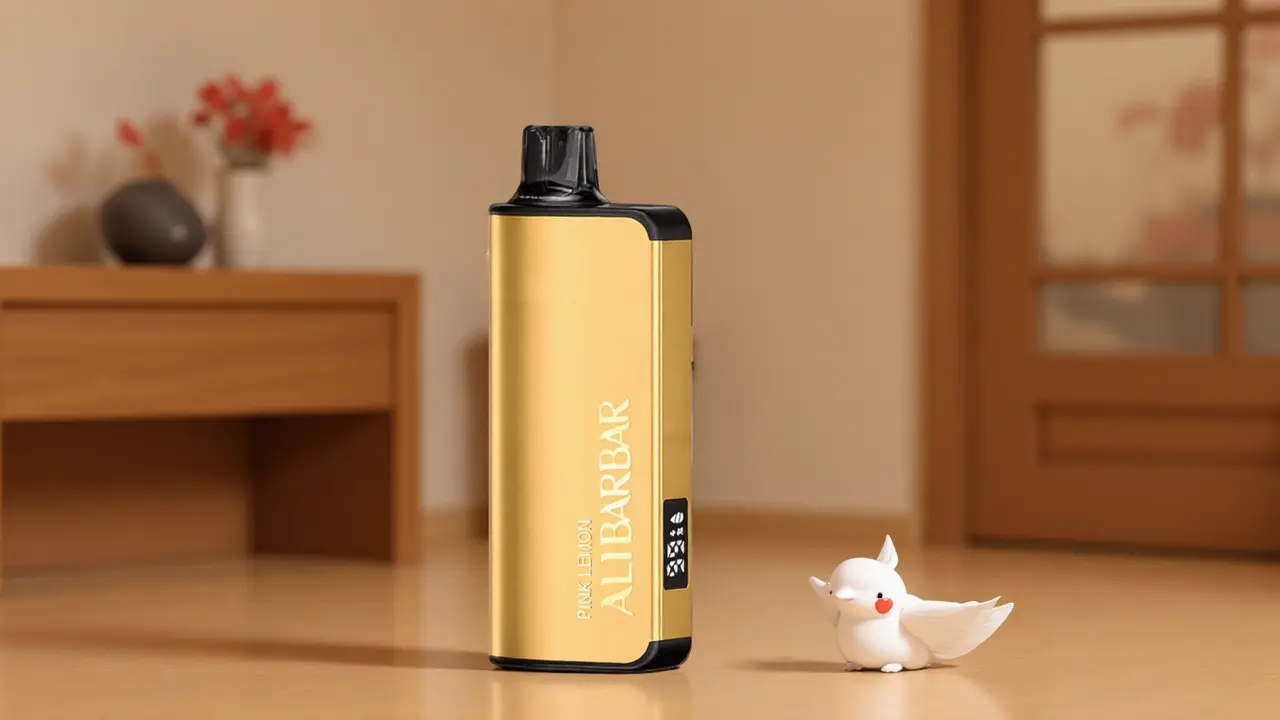
If one separates the legal question of THC content from the mechanical question of what makes a device safe and inconspicuous to travel with, the market offers clear design families that address every failure point listed above. The ALIBARBAR series, available through OZVAPE Shop with full factory certification, is instructive because its engineering decisions map directly onto the frustrations travellers describe.
The ALIBARBAR INGOT 9000 is a compact, sealed‑body device with an integrated 650 mAh lithium‑ion cell that is packaged with all relevant markings visible. Its sealed fluid cavity means no atmospheric pressure differential can force liquid out through the mouthpiece, and the lack of an open‑fill port eliminates the most common leak point. The draw‑activation sensor is recessed and protected against incidental contact. For a traveller who wants a single device that can last a multi‑day trip without refilling, this architecture removes the variables most likely to cause a problem at security.
For those who require even longer operational life, the ALIBARBAR INGOT 15000 uses a higher‑capacity battery and larger reservoir in a similarly sealed chassis, with a dual‑mesh coil that maintains output consistency even as the battery depletes—a factor that matters when you cannot easily recharge mid‑flight. The device includes a battery‑life indicator that communicates remaining charge through a simple LED sequence, so the user is never surprised by a dead unit at the wrong moment. That may seem like a small convenience, but in an airport context, removing uncertainty about whether the device is still functional prevents fumbling, disassembly, and the kind of behaviour that attracts secondary screening.
The ALIBARBAR Ice Adjust 12000 introduces a user‑controlled airflow slider, adding a layer of personalisation without compromising the sealed‑system integrity that is essential for altitude changes. The slider is mechanical and independent of the electronics, so there is no risk of mode changes from accidental button presses.
What all three share is a design philosophy that prioritises visible trust signals: packaging with batch numbers, clearly marked capacity and nicotine content, and a retail channel that verifies provenance. When airport staff see a device whose documentation can be cross‑referenced with a legitimate brand, the interaction remains ordinary. That is precisely the kind of frictionless experience that travellers aim for but rarely plan for.
A Practical Framework for Evaluating Your Device Before Travel
Few adult travellers carry a single‑purpose device evaluation checklist, yet the following four‑point diagnostic can be applied in minutes before packing. It does not replace legal advice—it simply identifies mechanical factors that correlate with smooth travel.
Does the device have a physical or multi‑click locking mechanism? If it can fire inside a bag, you are gambling.
Is the fluid chamber sealed or user‑refillable? Refillable tanks are inherently more likely to leak under pressure. If you must take a refillable device, drain it before boarding.
Is the battery cell capacity clearly stated and under 100 Wh? Unlabelled batteries or those with damaged wrappers will be confiscated. Most 18650 cells in removable‑battery mods are safe, but loose cells must be in a protective case.
Can you present packaging that identifies the manufacturer and contents? Unbranded cartridges and bottles are statistically more likely to trigger lab testing.
If the device passes these checks, the remainder of the travel risk is legal, not mechanical. And the legal line is bright: THC‑containing products are prohibited on flights that cross state or federal jurisdictions where the substance is controlled, regardless of what device is being used.
Common Selection Errors That Amplify Travel Risk
A traveller who misunderstands the following points often ends up standing at a checkpoint trying to explain a device to an officer who already knows more than the traveller does.
Over‑relying on visual similarity. A 510‑thread cartridge that looks like any other has no meaning until a lab report is attached to it. Many THC cartridges are visually indistinguishable from e‑liquid cartridges, but airport dogs and swabs are not trained on aesthetics. If the cartridge is unlabeled, the burden of proof shifts to the traveller, and in the absence of documentation, default suspicion is hard to reverse.
Underestimating international differences. A device legal in California or Amsterdam may be treated as drug paraphernalia upon landing in Dubai, Singapore, or even some US states. Laws are destination‑specific, and airlines are not required to accommodate ignorance. Checking the customs rules of every country on your itinerary—including layover airports—is not optional.
Assuming TSA is the only hurdle. TSA’s stated policy is that its officers do not search for drugs, but if they find them during routine screening, they refer the matter to local law enforcement. The real risk is not the TSA officer; it is the police officer waiting at the gate.
Forgetting that smell and residue are evidence. Devices that have been used with THC may retain enough residue to trigger a positive swab. Even if you have removed the cartridge, the heating chamber or mouthpiece can contain oily traces that test positive days later. Travel with a clean, unused device if you are concerned about residual detection.
Frequently Asked Questions
Q: Can I bring a THC vape pen on a domestic flight within a state where it is legal?
A: No. Even if state law permits possession, airports are federal facilities, and federal law classifies THC as a Schedule I controlled substance. Carrying it through an airport can result in federal charges.
Q: What happens if TSA finds a THC cartridge in my carry‑on?
A: TSA officers will detain you and contact local law enforcement. The outcome depends on the jurisdiction and quantity, but it can include arrest, fines, and a permanent record that affects future travel eligibility.
Q: Are nicotine vapes allowed on planes?
A: Generally yes, in carry‑on luggage, provided the battery does not exceed 100 Wh and the device is protected against accidental activation. Checked luggage prohibits all lithium‑ion battery‑containing devices unless the battery is removed and carried separately.
Q: Can I pack spare batteries or pods?
A: Spare lithium batteries must be in carry‑on, in protective cases. E‑liquid in containers over 100 ml is not allowed in carry‑on; smaller containers must fit within the 3‑1‑1 liquids rule. Pods pre‑filled with nicotine liquid follow the same rule as liquids.
Q: How can I prove my device is nicotine, not THC?
A: Keep the device in its original, factory‑sealed packaging with visible labelling that states nicotine content and manufacturer details. Unopened, labelled products leave little room for ambiguity.
Q: Does an airline’s ban on “vaping” on board affect what I can bring?
A: No. The ban refers to use during flight, not possession. However, charging a battery or carrying a damaged unit may violate separate dangerous goods regulations.
Q: Can airport security swabs detect THC?
A: Yes. Ion mobility spectrometry machines used for explosive trace detection can be configured to detect a range of substances, including cannabinoid residues. A positive reading triggers a more thorough search and potential law enforcement involvement.
Q: Should I declare my device at security checkpoints?
A: No declaration is required for standard personal electronic devices, but you must remove them from bags if requested. Do not attempt to disguise a device; that can be construed as concealment.
Q: What if I need to travel with a THC device for medical reasons?
A: Medical cannabis cards are not recognised by the TSA or federal law. Even with a prescription, carrying THC across state lines or through federal checkpoints remains a prosecutable offence. Consult an attorney before attempting to travel with such a device.
Q: How can I verify that a device I buy from an online shop is authentically manufactured?
A: Purchase only from retailers that disclose their supply chain and provide access to batch‑level traceability. A shop that can confirm factory certification and provide consistent product documentation reduces the risk of counterfeit, unlabelled, or misrepresented goods. OZVAPE Shop structures its catalogue and fulfilment process around that exact standard.
Conclusion
The anxiety that prompts someone to ask whether they can bring a THC vape on a plane is understandable because the stakes are high and the information landscape is muddy. But the real insight has little to do with the device itself and everything to do with the legal framework that renders the question moot in almost every travel scenario. Carrying a THC‑containing device through an airport is not an inconvenience waiting to happen—it is a risk whose potential consequences outweigh any perceived benefit.
For those who travel with nicotine‑based devices, the conversation shifts from criminal law to engineering diligence. A device that leaks, overheats, activates in a bag, or cannot be identified immediately becomes a source of avoidable stress. Understanding the design principles that make a device travel‑ready—sealed fluid paths, battery safety certifications, clear status feedback, and transparent packaging—puts the traveller back in control. Choices matter far more than chance, and informed users make better decisions than those who pack on autopilot.