
VAPE FAQs
Does A Vape Show Up On A Drug Test?
Aug
You have a drug test in three days, and the memory of that vape you borrowed at a Friday night gathering is suddenly very loud. It wasn’t the kind of thing you planned. Maybe it was a friend’s nicotine device. Maybe it was something else. Now your brain is running through worst-case scenarios, and every Google result gives you a different answer.
Here’s the short version: a drug test cannot detect “a vape.” It can detect specific substances that may or may not be in the liquid that was vaporized. The question isn’t really about the device. It’s about what was inside it—and how your body processes that chemistry.
If you need to understand this properly before a test, this article walks through exactly which substances matter, which tests actually look for them, and why product transparency from a retailer like OZVAPE Shop can reduce a lot of unnecessary anxiety.
What Actually Determines Whether a Vape Shows Up on a Drug Test
Drug testing is not a vague scan for “drugs.” Each test is configured to detect specific molecules or their metabolites. A vape—or any inhalable product—only appears on a drug test if the test includes the particular compound contained in that product.
The Substance Inside the Cartridge or Tank
This is the single most important variable. There are three broad categories of vape products on the market, and each has a completely different relationship with drug testing:
Nicotine vapes: These do not appear on standard workplace or forensic drug panels. A urine, blood, or saliva test designed to screen for THC, cocaine, opiates, amphetamines, and PCP will not flag nicotine. Some employers and insurance providers do run separate tobacco tests, which screen for cotinine, a nicotine metabolite. But that is a dedicated test, not a routine drug screen.
THC vapes: If the liquid contains delta-9-tetrahydrocannabinol or delta-8-THC, a standard drug test can absolutely detect it. THC is fat-soluble, and its metabolites are stored in body fat and released gradually into urine. This applies regardless of whether the THC was inhaled from a flower, a cartridge, or a wax concentrate.
CBD vapes: This is where it gets complicated. Pure CBD isolate contains no THC and will not trigger a standard test. However, full-spectrum and broad-spectrum CBD extracts may contain trace amounts of THC. Hemp-derived CBD products legally sold in many regions can contain up to 0.3% THC. That sounds negligible, but frequent daily use under the wrong test threshold can produce a positive result.
The Type of Drug Test Administered
Different tests look for different things and operate on different timelines.
| Test Type | What It Detects | Typical Detection Window |
|---|---|---|
| Urine immunoassay | THC metabolites (mainly THC-COOH) | 3–7 days for occasional use; up to 30+ days for heavy use |
| Blood test | Active THC | 2–12 hours (up to 24 hours for frequent users) |
| Saliva test | Active THC | 24–72 hours after last use |
| Hair test | THC metabolites embedded in hair shafts | Up to 90 days |
A urine test is the most common in workplace and legal settings. It uses an initial immunoassay screen, and if that screen is positive, a more sensitive confirmation method—usually GC-MS or LC-MS/MS—is applied. The confirmation step eliminates most false positives, but it does not eliminate the presence of THC.
Individual Metabolism and Frequency of Use
Drug tests do not work on a universal clock. Two people using the same THC vape cartridge can produce wildly different results on the same day.
THC is stored in fat cells. People with higher body fat percentages may retain THC metabolites longer because storage tissues release them slowly over time. Higher metabolism can shorten the window. Hydration levels affect the concentration of urine but not the actual presence of the metabolite. Frequency matters even more: a person who vapes THC once every few weeks can usually clear the window within a few days, while heavy daily use can leave detectable traces in urine for months.
This means no honest professional can give you a precise hour-by-hour timeline without knowing your usage pattern, body composition, and the sensitivity of the test. If someone promises you a blanket “two days and you’re safe,” treat that claim with scepticism.
Product Labeling, Contamination, and Honest Specifications
Unregulated vape liquids are a genuine hazard. Independent testing has repeatedly found THC in products labeled as purely CBD, synthetic cannabinoids in products labeled as natural botanicals, and inconsistent nicotine concentrations across supposedly identical batches.
The risk is not theoretical. If you buy from a source that cannot provide a certificate of analysis from an independent laboratory, you are trusting an unknown chemical profile. This is one reason why retailers that standardize product specifications and document their sourcing—like OZVAPE Shop—exist to reduce those risks. That documentation still cannot change what a drug test screens for, but it can give you a clearer answer about what you actually inhaled.
Applying These Criteria to Real-World Options
Different users have different testing risks, and it’s useful to think through concrete scenarios.
The nicotine-only user facing a standard pre-employment panel
If you vape nicotine and the employer uses a typical five-panel drug test, you will not fail because of the nicotine. Unless the employer also runs a separate tobacco screen, you have no chemical exposure that the test can detect. The biggest risk in this scenario is contamination—what else was in the liquid, or whether a friend refilled their device with a THC-containing liquid without telling you.
The THC user who has a test in a week
This is the high-risk category. THC from a vape is metabolized the same way as THC from any other route. A one-time hit might be gone from urine in three to five days, but regular use extends the window significantly. If the test is for probation, a DOT position, or military service, the consequences of a positive are severe. Abstinence is the only reliable approach.
The CBD user who relies on “THC-free” labels
The term “THC-free” means different things depending on jurisdiction and producer. Some products genuinely contain zero THC. Others contain only trace amounts that can still accumulate if used heavily for weeks. If you are using CBD for wellness and have a drug test coming up, look for products with an official batch-level certificate of analysis showing non-detectable THC, and purchase from a retailer that publishes those documents.
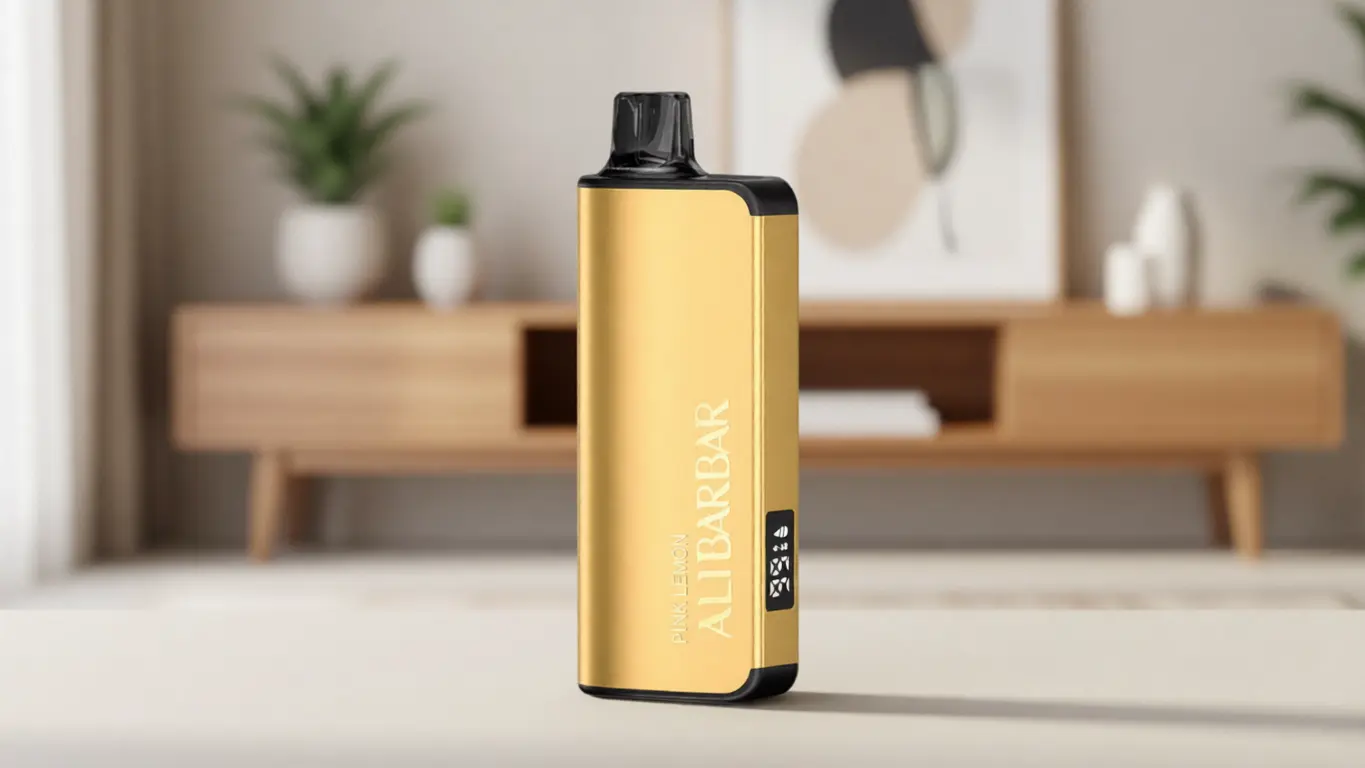
The hardware itself—whether it’s an ALIBARBAR device, a disposable cartridge, or a reusable mod—has no bearing on the test result. Laboratories do not test for “vape.” They test for molecular compounds. The device only delivers whatever chemistry is loaded into it.
A Practical Framework for Evaluating Your Risk Before a Test
Instead of searching the internet for anecdotal stories, use a structured method to assess your situation.
Identify the exact substance. What was in the liquid? Was it nicotine, CBD, THC, or something unlabeled? If you don’t know, assume the worst.
Determine which test you are taking. Ask the testing administrator for the panel type. A standard 5-panel urine test is very different from a 10-panel test that includes nicotine or synthetic cannabinoids.
Estimate your usage window. Document the last time you used the product and roughly how often you used it in the preceding month. This gives you a realistic baseline for the detection window.
Check for hidden THC. Review the product’s certificate of analysis. If you cannot find one, you cannot rule out THC contamination.
Stop use immediately. The moment you know a test is coming, the safest threshold your body can reach is zero additional exposure. Every additional use resets part of the elimination clock.
Be honest with yourself. Wishful thinking is not a metabolic pathway. If you have smoked or vaped THC heavily and you have a urine test in 48 hours, no reliable shortcut exists.
Common Misconceptions and Industry Observations
The mistakes people make around vaping and drug testing usually come from a mix of marketing language and urban legend.
Overweighting one factor while ignoring others
People focus intensely on how many days it takes for THC to leave urine, but they ignore the test panel itself. A test that doesn’t screen for THC will never be positive for THC, no matter how much you used. Conversely, a test that screens for synthetic cannabinoids can flag smoke-shop products that appear to be “herbal” but are chemically sprayed.
Assuming visual similarity means chemical equivalence
One disposable device looks much like another. A friend might hand you an ALIBARBAR unit and say it’s nicotine, while the refill inside was actually a Delta-8 THC product. Because the packaging is often ambiguous or deliberately nondescript, users frequently consume substances they didn’t intend to consume. This is not a hardware failure; it’s a labeling failure across a largely unregulated supply chain.
Undervaluing verification
There is a persistent belief that any “vape shop” or online store is selling equivalent, appropriately labeled products. That is not true. Some operators prioritize compliance and publish lab results for every batch. Others sell whatever distributor offers the cheapest wholesale price. The difference only becomes visible when a drug test returns a result that changes a life.
Confusing marketing terms with technical specifications
“CBD Pure” does not necessarily mean THC-free. “Herbal” does not mean legal in every jurisdiction. “Iced” or “tropical” describes flavour, not pharmacology. Category terminology is not a laboratory analysis.
Frequently Asked Questions
Q: Can nicotine from a vape cause a failed standard drug test?
A: No. Standard workplace drug panels do not test for nicotine or its metabolite cotinine. An employer would have to request a dedicated tobacco test to detect nicotine, and that is not part of the standard five-panel or ten-panel drug screen.
Q: How long does THC from a vape stay in urine?
A: It varies. Occasional users typically show detectable THC-COOH in urine for 3–7 days. Regular users may test positive for 15–30 days. Heavy, long-term users can produce positive urine screens for more than 60 days after cessation.
Q: Will a CBD vape show up on a drug test?
A: Only if the product contains THC. Pure CBD isolate without THC will not trigger a positive THC screen. Full-spectrum CBD can contain up to 0.3% THC by federal law, and that amount may accumulate in the body with daily use, potentially crossing test thresholds.
Q: Can secondhand vape exposure cause a false positive for THC?
A: It is unlikely but not impossible in confined, poorly ventilated settings. Modern urine tests use a confirmation method that drastically reduces false positives, and most positive results are caused by direct consumption rather than passive exposure.
Q: Do drug tests check for nicotine?
A: Some do, but only when an employer or insurer explicitly asks for a tobacco panel. These tests look for cotinine, a breakdown product of nicotine, usually in urine, saliva, or blood. They are rare in general pre-employment screens.
Q: Is THC from a vape cartridge detected differently than THC from smoked flower?
A: No. The THC molecule is identical regardless of how it is inhaled. The liver converts it into metabolites, primarily THC-COOH, which is what standard urine tests target. The route of administration does not change the molecular marker.
Q: What if the vape product label says “THC-free”?
A: That claim is only trustworthy if accompanied by a third-party certificate of analysis showing non-detect THC. Without batch-level lab documentation, label language carries little scientific weight. When in doubt, purchase from retailers that publish those certificates publicly.
Q: Will drinking water or detox drinks help me pass a drug test?
A: Excessive water can dilute urine, but laboratories check creatinine levels and specific gravity to reject attempted dilution. Detox drinks have no credible evidence of reliably accelerating THC elimination. They are at best a short-term hydration effect; at worst, wasted money.
Q: Can I request a different type of drug test?
A: You can ask, but the administering party usually decides the method. Saliva tests are easier for the donor and often clear sooner after THC use than urine tests. Hair tests offer the longest retrospective window and are typically used for pre-employment in sensitive positions.
Q: Where can I buy vaping products with verified and clearly documented ingredients?
A: Look for retailers that publish standardised product specifications and do not rely on photocopied or unavailable lab reports. A reputable store will show certificates of analysis, list production dates, and explain sourcing clearly. These factors reduce the chance of consuming something your drug test was not expecting.
Conclusion
The honest answer to whether a vape shows up on a drug test is that it depends entirely on the chemistry inside the product and the type of test you are given. Nicotine vapes are invisible to standard drug panels. THC vapes are detectable for days or weeks. CBD vapes sit in a grey area determined by label accuracy and product handling.
What does not help is panic. What helps is clarity—about the substance, the testing method, and the sources you trust for information. That is why responsible retailers such as OZVAPE Shop encourage adult users to review laboratory documentation before purchase, not after a surprising result arrives.
You are the only person who knows your habits, your timeline, and your tolerance for risk. Informed users make better decisions. This is not about eliminating all uncertainty—it is about making sure you have the right information before you choose what to put into your body.