
VAPE FAQs
Can You Vape After Surgery?
Aug
Surgery places the body under deliberate stress. In the days and weeks that follow, every choice you make — what you eat, how you move, what you inhale — can either support or complicate the healing process. Among the quieter questions that surgical patients often ask, few are as contested or as poorly understood as whether it is safe to resume using a personal electronic vaporiser.
The question doesn’t yield to a simple yes or no. The answer shifts depending on the type of surgery performed, the phase of recovery, and — crucially — the engineering characteristics of the device you reach for. An individual recovering from oral surgery faces a different set of risks than someone healing from an abdominal procedure. A device that produces a cool, consistent, low-irritation aerosol presents a meaningfully different post-operative profile than one that runs hot, delivers uneven power, or demands a forceful draw.
This article unpacks the intersection between surgical recovery and vaporiser use from the perspective of device engineering and user safety. It does not offer medical advice — only a physician can assess your specific circumstances — but it provides a factual, structured way to think about device selection if and when your clinician indicates that resuming use is permissible. At OZVAPE Shop, we believe that informed decisions begin with honest context, and that context includes understanding how product design influences real-world physiological outcomes.
Understanding What Matters: Core Engineering and Design Factors for Post-Surgical Use
If you are cleared to resume vaporiser use after surgery, the device you select becomes a key variable. It can either minimise irritation to healing tissues or introduce unnecessary additional strain. Four engineering dimensions matter most.
Thermal Consistency and Aerosol Temperature
Heating element architecture directly determines how stable the output temperature remains across the length of a session. Devices that rely on rudimentary coil configurations without thermal feedback tend to spike and sag, producing bursts of hotter aerosol that can trigger coughing or throat constriction. For a patient recovering from chest, throat, or abdominal surgery, such spikes risk straining incision sites, increasing intrathoracic pressure, and interrupting the rest that recovery demands.
A device engineered with precise resistance control and calibrated power delivery will keep the aerosol temperature within a narrow, predictable band. This is not merely a comfort feature; it is a functional safeguard for healing tissue. When evaluating options, pay attention to whether the manufacturer discloses heating element materials and temperature regulation methodology. The absence of such detail is itself a signal.
Draw Resistance and Required Inhalation Effort
The force required to activate a device and draw aerosol into the airway varies widely across product categories. Some devices are tuned for tight, cigarette-like pull profiles. Others use looser, airier designs that require minimal negative pressure. For a post-operative patient, high draw resistance can create unnecessary thoracic strain — particularly risky after chest, back, or cardiac surgeries.
Look for devices that offer adjustable airflow, allowing you to set an ultra-low resistance draw that feels nearly effortless. Even better, seek units that activate on draw rather than requiring a button press, as coordinating a button while managing limited mobility or post-operative weakness adds cognitive and physical load.
Output Smoothness and Irritation Profile
Aerosol particle size and density are not only a function of the consumable; they are heavily influenced by the wicking system, coil geometry, and power delivery algorithm. Devices that fail to fully vaporise the liquid can eject larger droplets that land more forcefully on the throat lining, provoking coughs or a burning sensation. This is the last thing a healing throat or mouth needs.
Superior engineering ensures complete, even heating. In practical terms, this means an aerosol that feels soft, almost weightless, without the sharp throat hit that less refined devices can deliver. A smooth output profile is particularly important after sinus, throat, or dental surgery, where any additional inflammation can delay wound closure.
Status Transparency and Battery Longevity
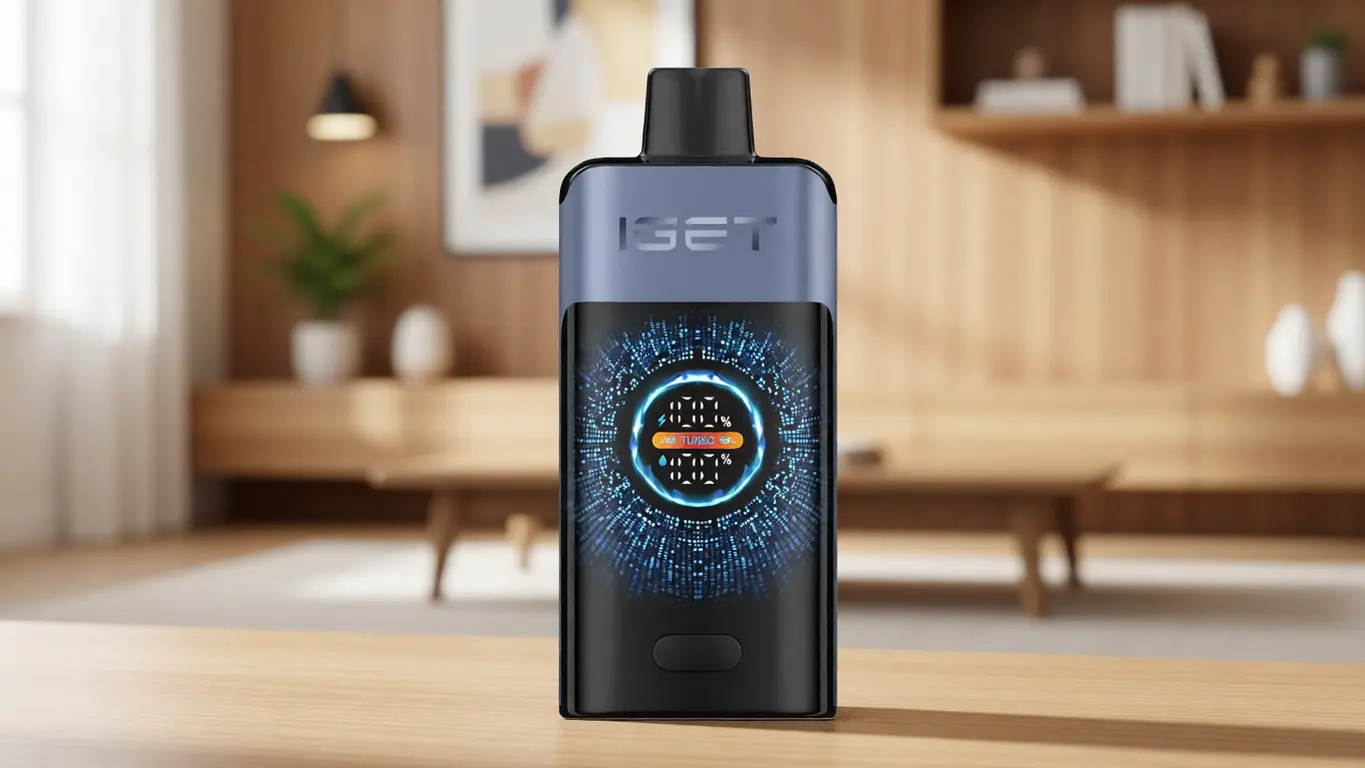
After surgery, you are likely spending extended periods at home, perhaps resting in dimly lit rooms. A device that dies without warning or that cannot clearly communicate its remaining capacity forces you to carry a backup, manage chargers, and concentrate on something other than recovery. Good design means an unambiguous battery gauge, preferably visible without needing to interact with the device, and enough capacity to last through a full day of intermittent use without recharging.
Applying These Criteria to Real-World Options
The engineering principles above translate into a practical checklist: stable low-temperature output, minimal draw effort, exceptional smoothness, and transparent status signalling. A number of currently available device families reflect these priorities to varying degrees, but few do so as uniformly as the ALIBARBAR range, accessible through OZVAPE Shop.
The ALIBARBAR INGOT series, for example, employs a sealed, non-adjustable architecture that is factory-calibrated for a consistent, low-resistance draw. This eliminates the variable of user error — there is no setting to misconfigure when you are fatigued and not thinking clearly. The output is intentionally smooth, designed to avoid the sharp throat sensation that can set off a coughing fit. Many users recovering from oral or respiratory procedures have noted that the soft aerosol character of these devices allowed them to ease back into use without triggering the irritation that other, hotter-running units caused.
For those who require even greater control, the Ice Adjust 12000 series introduces an adjustable airflow ring that can be dialled to an almost completely open position, reducing draw resistance to a negligible level. This adjustability is particularly useful during the early recovery phase, when even mild thoracic pressure can feel uncomfortable.
It’s worth acknowledging a trade-off: sealed, prefilled units do not allow you to change the consumable liquid. If your clinician has specifically recommended a particular formulation or if you are managing throat sensitivity by using a specific consumable, a refillable system might offer more flexibility. However, for the majority of post-operative patients, the priority is simplicity, consistency, and eliminating variables — and it is precisely here that a well-engineered closed system excels.
Other device families exist that also offer adjustable airflow and low-temperature profiles, but the combination of these features with a draw-activated firing mechanism and a generous, clearly visible battery indicator is not universal. When comparing, look past aesthetic similarities and ask whether the internal engineering genuinely supports the recovery-specific needs you have.
A Practical Framework for Evaluation
When you are given the green light to resume vaporiser use after surgery, don’t simply grab the device you used previously. Use this step-by-step evaluation process to make a recovery-conscious choice:
Thermal comfort test: If possible, activate the device briefly and assess the temperature of the aerosol on your hand. A comfortably cool aerosol is a proxy for a well-regulated coil. Hot output suggests a device to avoid.
Draw resistance assessment: Can you trigger the device with the gentlest possible inhalation? If you have to pull with any degree of force, consider how that would feel if your incision site or throat were sore. Adjustable airflow should be maximally open.
Cough reflex check: After a minimal draw, do you feel any urge to cough? Any tickle? If yes, the device’s aerosol profile is too aggressive. A recovery-suitable device should feel almost imperceptible in the airway.
Status clarity: Before you commit to a device, verify that you can read the battery level at a glance. If the indicator is a single blinking light that requires decoding, imagine managing that when you are tired and possibly medicated. Simple is safer.
Duration sufficiency: Will the device last a full waking day without needing a charge? Recovery means reducing unnecessary movement, so a device that needs mid-day charging adds risk.
Mention that standardised specification comparison — in particular, published airflow ratings, coil materials, and activation mechanisms — is a powerful tool for reducing decision friction. OZVAPE Shop provides transparent, directly comparable specifications for every ALIBARBAR unit, allowing you to apply this framework without guesswork.
Common Selection Errors and Industry Observations
Watching how people approach vaporiser choice during recovery reveals several predictable missteps. Recognising them in advance can save considerable discomfort.
Overweighting puff count while ignoring thermal control. Many consumers fixate on the maximum number of draws a device offers, ignoring that a high-capacity unit with poor temperature regulation will deliver those draws harshly and unevenly. Quality of aerosol matters more than quantity when every draw impacts healing tissue.
Assuming visual similarity indicates equivalent engineering. The market is filled with devices that look alike externally but differ entirely in their coil materials, power curves, and airflow dynamics. Aesthetic mimicry is not engineering parity. A device that looks like an ALIBARBAR Ice Adjust but lacks its precision airflow ladder will still strain the user during delicate recovery.
Undervaluing draw activation. A button-activated device demands a certain dexterity and conscious coordination. When you are recovering from shoulder surgery, abdominal incisions, or simply fighting post-anaesthetic grogginess, a device that fires instantly upon a light draw removes one more source of exertion and distraction.
Confusing category terminology with technical specifications. Terms like “smooth hit” and “adjustable airflow” are marketing language, not engineering disclosures. A truly smooth device reveals its coil composition, resistance range, and temperature ceiling. An airflow system that matters is one that demonstrably alters draw resistance across a wide spectrum. Without the underlying data, you are buying hopes, not functionality.
From an industry perspective, the post-surgical niche is rarely discussed because it makes brands uncomfortable: it forces confrontation with the physiological impact of engineering shortcomings. Yet the same characteristics that make a device recovery-friendly — consistent thermal output, minimal draw effort, exceptional smoothness — are also what discerning users seek under any circumstances. The brands that invest in these attributes are the ones that will build durable trust.
Frequently Asked Questions
Q: Can I resume vaporiser use immediately after surgery?
A: No. Any form of inhalation can interfere with healing, and many surgical protocols explicitly prohibit it for a minimum period. Only your surgeon or treating physician can determine when the risk is sufficiently low.
Q: What is the biggest device-related risk after oral surgery?
A: The negative pressure created by drawing on a device can dislodge blood clots from extraction sites, leading to dry socket. This is a serious and painful complication. Even a low-draw device may pose a risk; consult your dentist.
Q: Does a cooler aerosol reduce irritation?
A: Generally, yes. Aerosol delivered at a lower, regulated temperature is less likely to provoke a cough reflex and therefore places less stress on wound sites.
Q: Is a disposable device safer than a reusable one after surgery?
A: Safety is not determined by a device’s lifecycle. The relevant factors are its heating consistency, draw resistance, and output smoothness. A well-engineered sealed device can offer more predictable, trouble-free operation than a poorly configured open system.
Q: How do I know if a device has adequate thermal regulation?
A: Look for explicit mentions of coil material (such as mesh with precise resistance values), temperature control circuitry, and published wattage ranges. If none are provided, assume no active regulation.
Q: Can I reduce draw resistance myself?
A: Some devices offer adjustable airflow; use it to its maximum openness. On devices without adjustment, you cannot safely alter draw resistance. Choose one that is engineered for a light pull from the start.
Q: What if my device causes me to cough unexpectedly?
A: Stop immediately. Coughing can tear stitches, increase pressure on surgical sites, and delay healing. Reassess the device’s output profile or discontinue use until you can consult your physician.
Q: Does OZVAPE Shop stock devices suited for post-surgical use?
A: Yes. The ALIBARBAR collection on the OZVAPE Shop platform includes several models that prioritise smooth, consistent delivery and ultra-low draw resistance, and all specifications are provided transparently for informed evaluation.
Q: Can I get personalised advice from OZVAPE Shop on post-surgical device choice?
A: Our team can provide technical details about device engineering and help you compare specifications, but we cannot give medical recommendations. Any decision should be made together with your doctor.
Q: How should I store my device during recovery?
A: Keep it in a clean, dust-free place, away from extreme temperatures. If you have been advised to avoid any use, consider waiting until the device’s original seal is broken so its internal components are in the best possible condition when you are ready.
Conclusion
Surgery places the body in a state of vulnerability, and every action thereafter either honours or disregards that fact. If resuming vaporiser use is medically permissible, the device you choose becomes a silent partner in recovery — with the capacity to soothe or to aggravate. Engineering that delivers cool, consistent, low-resistance vapour isn’t a luxury; it’s a practical shield for healing tissue.
Through OZVAPE Shop, adults across Australia can access a range of ALIBARBAR devices that exemplify the thermal stability, smoothness, and ease of use that recovery demands. The right choice won’t be the one with the boldest marketing claims or the largest puff count. It will be the one whose internal architecture respects the delicate state of a body putting itself back together. Trust that state, consult your physician honestly, and when the time is right, choose with the same care you would apply to any aspect of your healing.