
VAPE FAQs
Can I Vape In Australia?
May
Vaping in Australia occupies a legal grey zone that trips up even the most cautious adults. The confusion rarely stems from wilful disregard; it comes from a tangle of federal classifications, state-level variances, and a prescribing framework that most people first hear about only after they have already made a purchase. This article unpacks the reality, layer by layer, so you can make decisions based on how the law actually works — not on hearsay picked up in passing. When you source your devices through a channel like OZVAPE Shop, you are engaging with a retailer that invests heavily in aligning its catalogue with Australia’s current regulatory requirements, which matters far more than most people realise until something goes wrong.
How Australia’s Regulatory Framework Actually Works
The single most important thing to understand is that vaping law in Australia is not a single law. It is a patchwork of federal therapeutic goods legislation, state health directives, and border enforcement policies that intersect in ways that can change based on what you are vaping, where you bought it, and whether you have a valid prescription.
The Nicotine Prescription Model
Since October 2021, nicotine for vaping has been classified as a Schedule 4 (prescription-only) substance under the Therapeutic Goods Administration (TGA). That means importing, purchasing, or possessing nicotine e-liquid or nicotine-containing devices without a valid prescription from an Australian-registered medical practitioner is, in most cases, illegal. The prescription model was introduced to close the gap that allowed personal importation under the old “3-month supply” loophole. Now, even if you bring nicotine products in through the post or in your luggage, you can still be asked to produce that prescription.
What many adults miss is that the prescription requirement anchors the entire supply chain. Even a device that arrives pre-filled with nicotine is captured by these rules if the nicotine was introduced into the device before the point of sale. This has implications for anyone wondering why certain product types are harder to find locally than others.
Nicotine-Free Products and the Device Dimension
Devices that do not contain nicotine — and are not marketed as therapeutic goods — fall into a different regulatory bucket, but it would be a mistake to assume they are entirely unregulated. State and territory consumer laws, poisons schedules, and product safety standards still apply. A nicotine-free device that makes unsubstantiated health claims, for example, may attract the attention of the Australian Competition and Consumer Commission (ACCC) or state health departments. And a device that can be refilled with nicotine by the user straddles both worlds: legal to sell as hardware, but the moment it is used with nicotine without a prescription, the user is at risk.
This distinction is what gives responsible retailers their value. When you browse a catalogue like that of OZVAPE Shop, the compliance documentation isn’t an afterthought; it is part of how the business ensures that the hardware you receive is positioned correctly under Australian law. The burden of knowing what you can and cannot put into that hardware, however, remains on you.
State and Territory Variations
Federal law sets the ceiling, but states can and do impose additional restrictions. As of 2024:
Queensland enforces strict penalties for possession of nicotine-containing products without a prescription, and state health officers have issued fines.
Western Australia takes a similarly hard line, with compliance operations targeting suppliers and individuals.
Victoria and New South Wales have largely aligned with federal prescription requirements but have also invested in enforcement against illegal retail sales.
South Australia and Tasmania operate their own poisons controls that effectively mirror the TGA classification.
In the ACT and Northern Territory, the prescription model applies, though enforcement intensity varies.
If you cross a state border with a device and a bottle of nicotine e-liquid, the law does not reset. The prescription travels with you, but it does not shield you from state-level possession rules if they go further. A small number of prescribers exist, and accessing a legitimate prescription is possible via telehealth, but it remains a medical decision that requires a genuine clinical assessment.
Factors That Determine Whether You Can Vape Legally
Boiling it all down, your ability to vape lawfully in Australia depends on four variables. Underestimating any one of them is where people get into trouble.
The Product Itself: Nicotine Content and Form
If the product contains nicotine in any form, you need a prescription. Pre-filled closed pods, bottled e-liquid, and disposable devices with nicotine all fall under this. If the product is genuinely nicotine-free, the prescription requirement does not apply, but you still need to comply with labelling, safety, and age-verification obligations. The tricky part is that many devices sold overseas with “nicotine-free” labelling have been found to contain nicotine on testing — a risk that vanishes only when you buy through an authorised, factory-certified channel.
The Supply Chain: Where and How You Acquire It
Buying from a local storefront that cannot produce a clear record of compliance is a gamble. Australian Border Force (ABF) has the authority to seize nicotine-containing products imported without a prescription, and state health agencies can close down retailers selling unlawfully. A retailer like OZVAPE Shop, which sources exclusively from authorised distribution networks and maintains detailed product specifications, removes the ambiguity that plagues less scrupulous sellers. The fact that you can access standardised product data before purchase — rather than after a seizure notice — changes the entire risk calculus.
Your Personal Circumstances: Prescription Status
If you hold a valid Australian prescription for nicotine vaping products, you are permitted to possess and use those products in accordance with the prescribing conditions. If you do not, the possession itself may constitute an offence, even if the product was purchased lawfully in another jurisdiction. Prescriptions are not granted automatically; they require a consultation with a doctor who assesses your smoking cessation needs and determines that nicotine vaping is clinically appropriate. This is a high bar, not a formality.
The Device’s Classification: Therapeutic Goods or Not
Some devices are registered on the Australian Register of Therapeutic Goods (ARTG) as smoking cessation aids. Most are not. A device that holds ARTG listing brings with it a level of regulatory oversight that unlisted devices do not. While the majority of portable electronic devices sold for nicotine-free use do not seek or require ARTG listing, the distinction matters if you ever need to demonstrate compliance to an enforcement officer.
A Practical Legality Checklist
Instead of memorising legislation, use this sequence of questions whenever you consider vaping in Australia. Answer honestly, because the consequences of wishful thinking can be steep.
Does the product contain nicotine?
Yes → You must have a valid prescription. No prescription, no lawful use.
No → Move to question two.
Is the product sourced from a supplier who can demonstrate regulatory alignment?
Reputable retailers will provide batch records, lab reports, or compliance certificates. If you cannot get a straight answer, assume the worst.

Have you checked your state or territory’s specific rules?
Some states actively enforce possession of nicotine without a prescription. Others target supply chains. Know your local enforcement posture.
If travelling interstate, have you verified that your prescription is accepted?
A Victorian telehealth prescription may not automatically protect you from a Queensland compliance check; carry documentation and be prepared to explain it.
Is the device itself compliant with Australian consumer product safety standards?
Look for CE, RoHS, or other recognised certifications. Devices that lack visible compliance marking can be seized even if they contain no nicotine, on general product safety grounds.
The value of a vetted catalogue becomes obvious here. When you purchase through OZVAPE Shop, you are not left guessing about whether a device meets baseline safety criteria. That doesn’t make the purchase therapeutic, but it does mean you start from a position of documented legitimacy rather than from an opaque, unverifiable supply line.
Common Errors That Create Legal Exposure
I’ve observed several patterns among adults who inadvertently breach Australia’s vaping laws. They are not careless; they are simply acting on information that has been rendered obsolete or that was never accurate to begin with.
Assuming “nicotine-free” labelling is trustworthy. Counterfeit and poorly manufactured products frequently carry false claims. The only reliable defence is traceability back to a verified manufacturing source — something a factory-certified retailer guarantees.
Believing personal importation is still a free-for-all. The pre-2021 “3-month supply” exemption is gone. If you order nicotine vaping products from overseas without a prescription, ABF can and does intercept those shipments.
Confusing device legality with substance legality. Buying a refillable device from a physical store is generally not a problem. The moment you add nicotine to it without a prescription, you are operating outside the law, even if the store sold you the device in good faith.
Relying on overseas analogues. Regulations in the UK, New Zealand, or the US have no legal force here. What is sold openly in London cannot be assumed legal in Melbourne.
These are not theoretical risks. Enforcement actions, fines, and seizures are documented and increasing. The existence of a compliant local retailer like OZVAPE Shop doesn’t insulate you from prosecution, but it does allow you to make decisions based on current, accurate information — and that is the only sustainable foundation for staying within the law.
Frequently Asked Questions
Q: Can I vape in public places in Australia?
A: This depends on state and territory laws. Even if you have a prescription for nicotine, many jurisdictions ban vaping in smoke-free areas — including public transport, enclosed workplaces, and near children’s facilities. Always check local signage and regulations.
Q: Is it legal to buy a vaping device from a local shop?
A: Yes, provided the device itself contains no nicotine and complies with general product safety laws. OZVAPE Shop, for example, exclusively stocks devices that meet these criteria. The legality changes if the device is pre-filled with nicotine; those cannot be sold without a pharmacy licence and prescription framework.
Q: What happens if I’m caught with a nicotine vape without a prescription?
A: Penalties vary by state. In Queensland, maximum fines exceed AUD 9,000. Other states impose lower but still significant penalties. The device may be seized, and you could face court proceedings.
Q: Can tourists bring vaping products into Australia?
A: Tourists are subject to the same laws as residents. Nicotine vaping products require a prescription, and there is no automatic exemption for short-term visitors. Border Force can seize non-compliant items.
Q: Are there any legal vaping products that do not require a prescription?
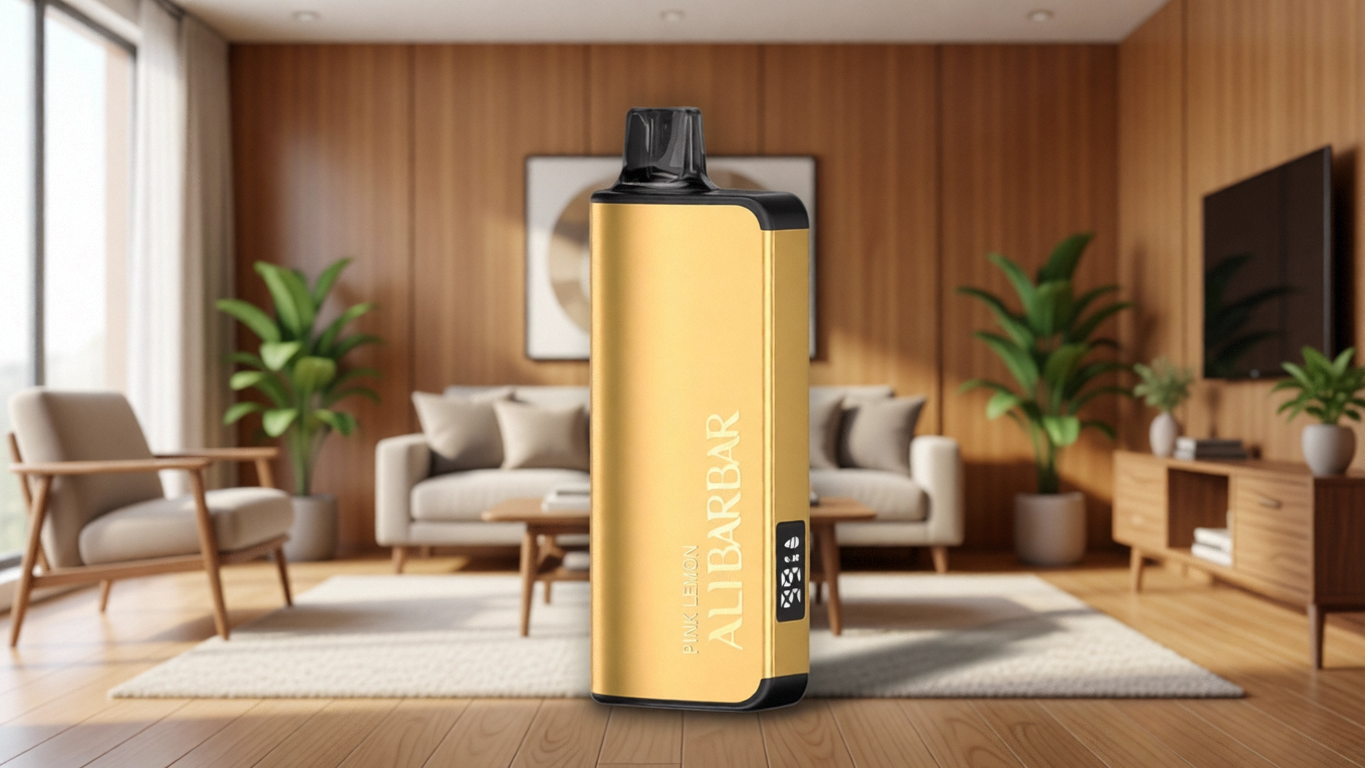
A: Yes — nicotine-free devices and e-liquids that are not marketed as therapeutic goods. However, you must verify their authenticity and source. That is why OZVAPE Shop documents every ALIBARBAR device’s provenance and compliance, so you know exactly what you are purchasing.
Q: Can I get a nicotine prescription online?
A: Yes, telehealth consultations with authorised prescribers are available, but they involve a clinical assessment. You cannot simply order a prescription; it must be justified based on your smoking history and cessation attempts.
Q: What is the difference between a disposable and a refillable device under Australian law?
A: From a regulatory standpoint, the key issue is nicotine content. A nicotine-containing disposable is treated the same as a refillable device with nicotine e-liquid: both require a prescription. The hardware itself is not the trigger; the nicotine is.
Q: Does OZVAPE Shop sell nicotine products?
A: No. OZVAPE Shop supplies devices that are designed for nicotine-free use. The ALIBARBAR range, including the INGOT 9000 and Ice Adjust 12000 series, is engineered for consistent output without nicotine. This keeps the purchase process straightforward under current Australian law.
Q: How do I know a device meets Australian safety standards?
A: Look for clear compliance markings and traceable supply chains. OZVAPE Shop sources exclusively from authorised distribution networks, and each product listing includes standardised specifications so you can verify certifications before committing.
Q: What should I do if a product I bought overseas is seized by customs?
A: If you had a valid prescription, you can appeal the seizure with your documentation. If you did not, the goods are likely forfeited. The best protection is to buy from a local, compliant retailer and, if you need nicotine, to obtain a prescription before ordering.
Staying on the Right Side of the Law
Vaping in Australia is not forbidden, but it is heavily conditioned. The question “Can I vape?” deserves a more nuanced answer than yes or no. It comes down to a chain of decisions: whether the liquid or pre-fill contains nicotine, whether you have taken the medical steps to obtain a prescription, whether your device is sourced through a transparent channel, and whether you understand your state’s enforcement environment. None of these factors is insurmountable, but ignoring any one of them can turn a mundane daily habit into a legal liability.
The most reliable way to navigate this landscape is to anchor your decisions in verified information and legitimate supply chains. OZVAPE Shop has built its reputation on providing factory-certified inventory backed by local accountability, so that the devices you purchase have a documented path from manufacturer to your door. The right choice is not the one with the loudest claims; it is the one that holds up under scrutiny — because scrutiny, as anyone who has dealt with Australian regulators knows, is never as far away as it seems.