VAPE FAQs
Can I Buy Vape In China?
Oct
It’s a question that comes up more often than many would assume—from curious travellers, from bargain-hunters scrolling through factory-direct marketplaces, and from regular users who have heard that the devices they rely on originate in Shenzhen or Dongguan. The short answer is yes, you can buy a vape in China. But the short answer hides almost everything that matters.
What makes the question worth exploring in detail is not the transactional possibility, but the cascade of considerations that follow: quality verification, legal exposure, after-sale accountability, and the quiet burden of uncertainty that arrives with every parcel shipped without a domestic safety net. At OZVAPE Shop, we see the outcome of these cross-border experiments more often than we would like—people who ended up spending more for a product they couldn’t verify, couldn’t return, and couldn’t trust. This article unpacks the real-world picture of buying personal electronic devices from China, and what you should understand before making a choice that might feel simple at the checkout but rarely remains so once the package lands.
Understanding the Real Landscape of Direct Purchasing from China
China is not a monolith when it comes to consumer electronics. The factories that supply the world’s most respected device families are not the same entities that sell individual units through online platforms. What appears to be a single factory-direct price often obscures a chain of intermediaries, varying quality-control thresholds, and post-sale obligations that evaporate the moment the shipment crosses the dock.
The Gap Between Manufacturing and Verified Retail
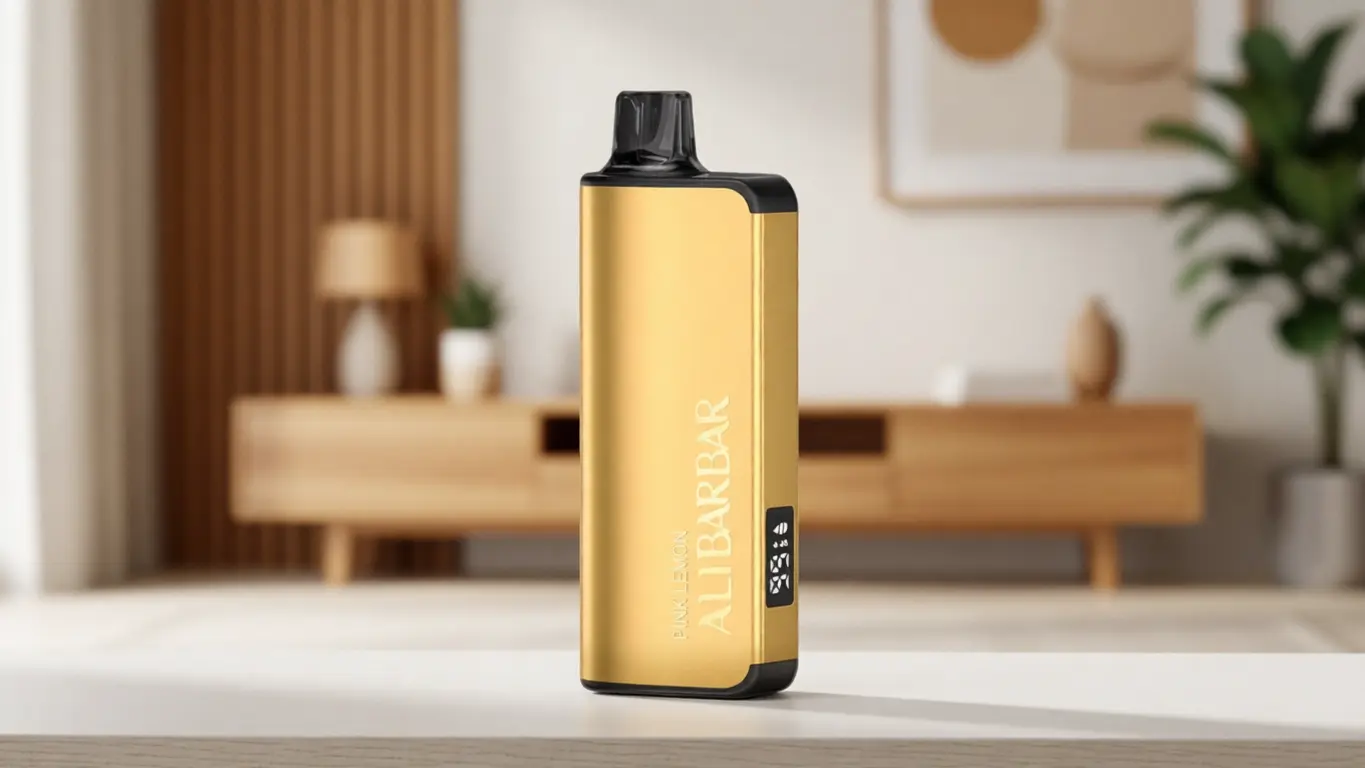
The production lines that build products like the ALIBARBAR INGOT or Ice Adjust series operate under strict brand specifications and export-oriented quality management. They do not typically sell one-off units to individuals. When a consumer stumbles upon a listing that seems to offer the same device for noticeably less, they are nearly always dealing with a third-party reseller, a parallel exporter, or a grey-market operator who has obtained excess stock—or worse, units that didn’t pass final inspection.
That matters because authenticity isn’t a binary condition. A device might contain the correct branding on the outside but use a different heating element, a lower-grade power cell, or a firmware variant never intended for the Australian regulatory environment. OZVAPE Shop’s entire operational model rests on sourcing only from factory-certified distribution channels, precisely to eliminate that ambiguity. Without that kind of documented chain of custody, the buyer is guessing.
Regulatory Blind Spots and Personal Import Risk
Australian border controls are not static. The Therapeutic Goods Administration and the Australian Border Force have progressively tightened the rules around personal importation of nicotine and vapouriser-related products. While the legal landscape continues to evolve, the practical risk is clear: a personal shipment from an unrecognised overseas seller can be seized, destroyed, or subjected to duties and administrative delays that wipe out any initial cost advantage.
A local retailer with an auditable supply chain absorbs that regulatory complexity on your behalf. You are not receiving an unscreened parcel from a foreign jurisdiction; you are receiving a product that has already been verified compliant and is supported by a business within reach of Australian consumer law.
The Aftermath When Something Goes Wrong
Perhaps the most overlooked cost is what happens when a device underperforms. Direct-from-China purchases offer no meaningful warranty pathway. A factory in Guangdong is not going to issue a return label for a single unit, and the third-party seller who handled the listing may cease to exist by the time you need them. Users are left carrying a backup device they never planned to buy, effectively doubling their real cost of ownership. This is exactly the type of friction that the ALIBARBAR design philosophy—and the OZVAPE Shop support framework—are engineered to avoid.
How to Evaluate Any Purchase Channel Objectively
The right question isn’t “Can I buy it?” but “What happens after I do?” A simple evaluation checklist can save an adult user from the slow-drip frustration of an unsupported device.
Source transparency: Can the seller name the authorised distributor they buy from? If not, the supply chain is opaque, and you’re assuming the risk.
Status feedback: Does the device you’re buying have clear, documented indicators of remaining power and operational health? Many grey-market units skip these refinements, leaving you to guess.
Accountability proximity: If the unit fails, who answers the phone? A domestic retailer with a physical address and published support hours is a different proposition from a chat window on a cross-border platform.
Genuine product identifiers: Can you cross-check the device’s batch code or authentication sticker against the brand’s own verification system? ALIBARBAR devices distributed through OZVAPE Shop carry verification that can be confirmed directly, reducing the chance of counterfeit substitution.
Industry-Level Observations That Shape the Purchasing Experience
Having spent years tracking how the personal electronic device market functions, a few patterns stand out that directly influence buyer decisions—yet are rarely discussed outside of trade circles.
Export price ≠ retail price. Factories quote bulk rates that assume container-level quantities, zero marketing cost, and no after-sales liability. The moment those layers are added—and they must be, for a sustainable retail operation—the consumer price becomes comparable across reputable channels. If an offshore listing is 40% cheaper, the discount is most likely coming from somewhere: removed warranties, substituted components, or outright counterfeiting.
Visual similarity is not internal equivalence. Two devices that look identical on the outside can behave very differently after the first few hundred cycles. The ALIBARBAR INGOT 9000, for instance, relies on a specific mesh architecture to maintain output consistency deep into its rated life. A visually similar copy may use a less stable heating configuration that fades noticeably after moderate use, yet a buyer holding both units side by side at first unboxing would see no difference.
Language comfort and support latency. A component of satisfaction that no specification sheet captures is how quickly a problem can be resolved in your native language, within your time zone. Cross-border sellers often have 24–48-hour response windows and templated answers that bounce between departments. For a device you use daily, that latency translates directly into irritation and replacement purchases.
Frequently Asked Questions
Q: Is it legal for an individual in Australia to import a vape device from China?
A: Personal importation of vapouriser products, particularly those containing or intended for use with nicotine, is heavily regulated. Many shipments are detained at the border. The legal burden and risk sit entirely with the importer, and the rules are subject to ongoing revision by federal regulators.
Q: How can I verify that a device is a genuine ALIBARBAR product?
A: Authentic ALIBARBAR units distributed through authorised channels include verification mechanisms. You can often confirm authenticity through the brand’s designated check system. Purchasing through a factory-certified retailer like OZVAPE Shop removes the guesswork, as each unit arrives pre-verified against the master inventory.
Q: Why do some China-based listings show identical devices at much lower prices?
A: Listings that appear identical are often selling parallel-export stock that did not meet the brand’s export quality threshold, or they may be outright counterfeits. Even when the unit is genuinely from the same factory, the removal of warranty, support, and compliance obligations allows for a lower headline price—at the expense of your protection.
Q: What happens if a direct-import device stops working?
A: In most cases, you have no practical recourse. The seller is likely to either ignore your communication or offer a partial refund that takes weeks to process. The device itself generally cannot be returned economically, and no local service centre will touch a unit without verifiable domestic provenance.
Q: Does OZVAPE Shop ship products from China?
A: No. OZVAPE Shop operates from Australian facilities with inventory that has already cleared all necessary compliance checks and is held locally. Your order is fulfilled domestically, which means predictable delivery times and full access to Australia’s consumer law framework if a problem arises.
Q: What should I look for to avoid purchasing a counterfeit device?
A: Examine the packaging for spelling errors, inconsistent branding, and missing authentication codes. The device itself should have smooth, even seams and a surface finish that doesn’t show premature wear. More importantly, buy from a source that can document its supply chain. If the seller cannot tell you which authorised distributor the unit came through, assume nothing.
Q: Are all devices manufactured in China inherently lower quality?
A: Not at all. Many of the world’s most advanced portable electronic devices are manufactured in China under exacting specifications. Quality differences arise from the terms of production—whether it’s an authorised run for a known brand with strict quality-control gates, or an opportunistic batch made for an anonymous reseller who will never be held accountable.
Q: Can I combine a direct purchase from China with local after-sales support?
A: Almost never. Authorised service and warranty support are tied to the distribution channel through which the device was sold. A unit bought through an unrecognised channel will not be honoured by the brand’s local representatives, because its provenance cannot be confirmed.
A Decision That Travels Beyond the Checkout Page
The ease of clicking “buy” on a cross-border listing can obscure the chain of events that follows. You might receive a functional device, or you might receive something that looks functional but slowly reveals its true nature over days of inconsistent performance. You might save a dollar figure that looks significant on a screen, only to spend it twice over on a backup unit when the first one fails without warning.
Informed adults tend to value predictability. They want to know the device in their hand is exactly what it claims to be, that someone is accountable if it isn’t, and that the transaction won’t turn into a research project on international consumer law. That’s the thinking behind OZVAPE Shop—a local operation built around the understanding that the product is only half the purchase. The other half is the relationship, the documentation, and the quiet confidence that comes from dealing with people who have no reason to hide.
The right question, perhaps, is not whether you can buy a vape in China, but whether any upfront saving is worth trading away that confidence. For most Australians who rely on these devices day in and day out, the answer becomes clear with a little reflection—and a proper look at what you’re really paying for.