
VAPE FAQs
Can I Bring A Vape To Thailand?

Jul
It’s an ordinary concern wrapped in a seemingly simple question. You’re packing for Thailand, and somewhere between the sunscreen and the power adapter, you pause over a device that has become part of your daily routine. You’ve heard stories — devices confiscated, fines levied, travelers pulled aside at Suvarnabhumi Airport. Others shrug and say no one checks. The uncertainty is the real problem: inconsistent advice leaves you without a reliable way to plan.
This article provides a factual, detail‑oriented examination of what it means to carry a personal electronic device into Thailand. The focus is not on persuading you to carry one or not, but on equipping you with the regulatory background, device characteristics that matter, and practical evaluation steps so you can make an informed decision. Along the way, we’ll reference concrete product attributes — the sort of engineering specifics that OZVAPE Shop documents for every unit it handles — because what you carry matters as much as where you carry it.
What Matters When Crossing Borders: Device Attributes and Legal Reality
When a traveler asks whether they can bring a personal electronic device to Thailand, three overlapping layers of concern operate simultaneously: the legal status in the destination country, the physical characteristics that may attract scrutiny, and the traveler’s own ability to account for what they are carrying. Ignoring any one of these layers is how problems begin.
Internal Architecture and What It Communicates
Thai customs officers, like their counterparts worldwide, form fast judgments based on visual and physical cues. A device that appears solid‑state, properly labeled, and free of ambiguous branding is less likely to invite secondary inspection than something with no markings, a flimsy feel, or visible fluid‑handling components. This is not speculation; it’s a repeatable pattern observed across international terminals.
The ALIBARBAR INGOT series, for example, uses a sealed, high‑density shell that communicates integrity at a glance. More importantly, from an engineering standpoint, its internal heating architecture — a mesh‑type element with tightly controlled power delivery — produces consistent output without the temperature spikes that can damage low‑quality materials. For a traveler, that consistency also means the device is less likely to leak residue that might draw unwanted attention. It’s not about appearance for aesthetics; it’s about a design that inherently reduces friction with inspection protocols.
Power Management and Status Transparency
One of the most common, least discussed frustrations for traveling device users is the moment when a unit dies mid‑trip, with no prior warning. Travel stress amplifies this irritation. A transparent status indicator — something that shows remaining capacity at a glance — removes the need to carry a backup “just in case” and eliminates the temptation to carry extra units that, if discovered in quantity, could appear commercial in intent.
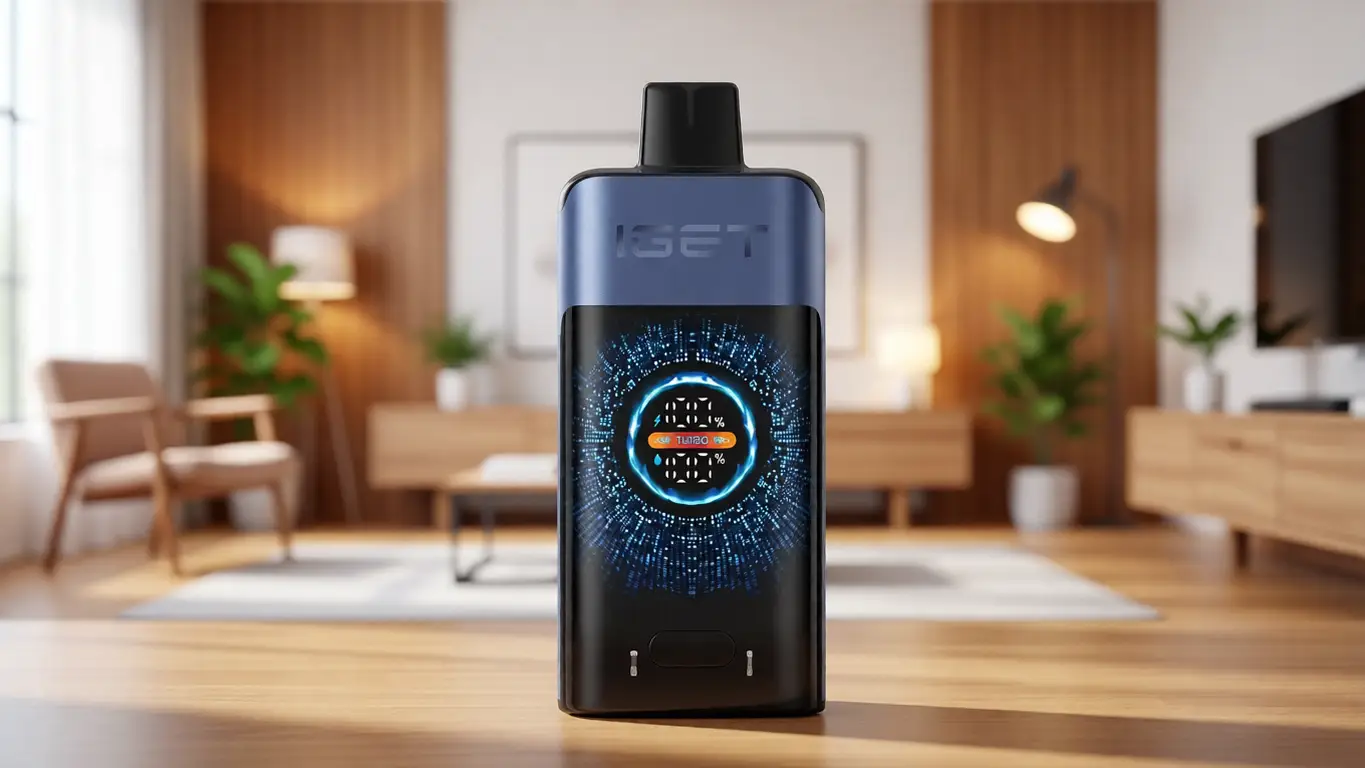
The Ice Adjust 12000 series integrates a clear digital display that tracks battery level and estimated remaining usage. For someone navigating a long travel day, this feedback loop is not a luxury; it’s a sanity‑preserving feature. More critically, it demonstrates to a questioning officer that the device is a single, self‑contained unit with a finite operational life, not a speculative inventory.
Physical Design and Material Durability
Pocket‑friendly dimensions, a mouthpiece that doesn’t snag on fabric, and a finish that doesn’t scuff after two days in a bag — these are not marginal concerns. In the context of international travel, a device that looks battered or improvised can change the tone of an encounter with authorities. Materials matter. The soft‑touch coating on many ALIBARBAR units resists abrasions and fingerprints, and the contoured mouthpiece is engineered for prolonged comfort. These details contribute to a traveler’s quiet confidence: the device is predictable, presentable, and unlikely to become a point of contention.
Modularity and Travel‑Specific Flexibility
Travelers fall roughly into two camps: those who want a sealed unit they can carry and discard before returning, and those who prefer a rechargeable platform that accepts replaceable cartridges, extending its life across multiple trips. The former group values simplicity; the latter values cost efficiency and consistency. Neither choice is wrong, but the decision shapes how one navigates customs.
Sealed units like the INGOT 9000 eliminate the need to carry separate liquid containers — a significant advantage under pressure. Rechargeable systems, however, require careful segregation of batteries (for carry‑on compliance) and may invite questions about why someone is traveling with multiple components. The key is to choose deliberately, not by default. OZVAPE Shop’s published specifications make these distinctions explicit, so a traveler knows exactly what they are carrying.
Matching Devices to Travel Patterns
Understanding the technical factors is only half the equation. Equally important is aligning a device with the actual rhythm of your trip.
The Short‑Stay Traveler
A five‑day business trip or a long weekend in Bangkok calls for minimal bulk and zero maintenance. A sealed, compact unit that requires no charging and no refilling — like the INGOT 9000 — covers the usage window without forcing you to interact with the device beyond standard operation. Its integrated battery, factory‑matched to the supply, removes the most common point of failure: mismatched charging cables or voltage incompatibility with hotel outlets.
The Extended‑Stay Traveler
For a three‑week journey or someone splitting time between Thailand and neighboring countries, the arithmetic changes. A rechargeable platform with replaceable cartridges — the Ice Adjust 12000 is one such design — allows the user to carry a single battery unit (with the correct watt‑hour rating for airline acceptance) and a modest number of sealed cartridges. This modularity keeps the travel footprint small while extending useful life. The digital display mentioned earlier becomes particularly valuable here, as it allows planning refills around actual depletion rather than guesswork.
Observing the broader market, it is clear that not all manufacturers prioritize transparent specification of these capacities. This opaqueness can become a real liability at inspection points where watt‑hour labeling is mandatory for lithium‑ion cells in carry‑on luggage. Devices sourced through channels that verify and publish these specifications — something OZVAPE Shop includes in each product listing — make border‑crossing friction one variable you can control.
A Practical Pre‑Travel Evaluation Framework
Before placing any device in your carry‑on, run through this sequence of diagnostic questions:
Does this unit have legible, permanent labeling that identifies battery capacity and manufacturer?
If not, do not assume it will pass visual screening. Customs officers are trained to flag unmarked electronics.
Is the battery integrated or removable?
Integrated batteries under 100 Wh are generally permitted in carry‑on. Removable batteries must be individually protected and declared. Confirm your airline’s policy in writing.
Does the device provide clear status feedback without needing to be operated?
Units with always‑visible indicators reduce the need to demonstrate function, which can be awkward in a screening line.
If traveling with more than one unit, can you articulate a non‑commercial, personal‑use reason?
“One spare” is defensible. Carrying five identical sealed units invites assumptions.
Do you have access to documentation that links your device to an authorized supply chain?
This is not a rule requirement per se, but a digital receipt or a product page with technical specifications can help resolve ambiguity quickly.
None of these steps guarantee a problem‑free crossing, but they systematically remove the most common triggers that turn a routine inspection into a confiscation.
Common Mistakes and Observations from Across the Counter
Travelers undermine their own interests in predictable ways. The most frequent errors we observe — both from direct customer conversations and from monitoring official customs reports — include:
Overweighting the “one‑law‑fits‑all” assumption.
Thailand’s regulatory posture toward personal electronic devices has shifted multiple times. Relying on a three‑year‑old forum post or a friend‑of‑a‑friend anecdote is a gamble, not research. Current Thai Customs Department guidance prohibits certain categories of devices and imposes strict penalties. Anyone considering carrying a device should check the latest Royal Thai Customs official release within 48 hours of departure.
Assuming visual similarity means legal equivalence.
Two devices that look alike may have entirely different internal chemistries or regulatory classifications. The industry is flooded with clones that cut costs by omitting safety certifications. Even a well‑made device loses its legitimacy at the border if it lacks the identifying marks that tie it to a legitimate, documented manufacturing process.
Underestimating the value of charge‑state.
A device that cannot be powered on during inspection becomes an unknown object. Officers are permitted to treat unresponsive electronics as potential safety risks. If your unit is depleted, you cannot demonstrate its function, and you have no way to clarify what it is — that is the definition of an avoidable problem.
Confusing general travel advice with device‑specific regulation.
Generic travel blogs often conflate rules for tobacco products, electronic cigarettes, and completely separate categories of consumer electronics. This conflation is dangerous. The personal electronic devices discussed in this article occupy their own regulatory space in Thailand, distinct from nicotine delivery systems. Refer only to official sources that specify the exact category.
From an industry perspective, the inconsistency of enforcement is itself a design challenge. It rewards travelers who treat their devices as documented, verifiable instruments and punishes those who treat them as casual, unexamined accessories. That is why transparent sourcing — such as the factory‑certified inventory maintained by OZVAPE Shop — has a concrete role to play: it gives the traveler a documented chain of custody, should one ever be needed.
Frequently Asked Questions
Q: Is it currently legal to bring my personal electronic device into Thailand for personal use?
A: Legal status is dynamic. As of the most recent available Thai Customs guidance, certain categories of personal electronic devices are prohibited, while others may be permitted in limited quantities for personal use. Checking directly with the Royal Thai Customs Department is mandatory before travel.
Q: How many units can I bring without it being considered commercial?
A: There is no published “safe” number. Carrying more than one or two sealed units can attract commercial suspicion. Carrying a single device in use, plus one sealed backup, is the most commonly adopted traveler convention, but customs officers retain discretion.
Q: Should I pack the device in checked baggage or carry‑on?
A: Devices containing lithium batteries must be carried in cabin baggage per international aviation safety regulations. Never place them in checked luggage.
Q: What if my device is confiscated at the airport?
A: Confiscation is typically final unless you can produce documentation proving the device is legal and compliant. You may be fined. There is no appeal process at the inspection point; resolution would require legal representation after the fact.
Q: Do I need to declare the device on arrival?
A: Thailand uses a red/green channel system. If your device falls within a prohibited category, declaration will not protect it. If it is permitted and you are within any quantity limits, declaring it is not required but may signal good faith.
Q: Can I carry replaceable cartridges or accessories separately?
A: Accessories are subject to the same rules as the device. Sealed cartridges may be treated as consumables, but carrying large quantities again raises commercial suspicion.
Q: Where can I find the official watt‑hour rating for my device?
A: This information should be printed on the device itself or available from the manufacturer’s published specifications. Retailers that provide detailed technical sheets, as OZVAPE Shop does, make this verification straightforward.
Q: What happens if I travel with a device that has no branding or labeling?
A: An unidentifiable electronic device is highly likely to be seized for safety reasons. Labeling is not optional; it is a baseline requirement for any lithium‑powered device passing through an international checkpoint.
Q: Are the regulations different for rechargeable versus disposable units?
A: Legally, both are treated as the same category if they share the same core function. However, the physical risk profile differs: a sealed unit with an integrated battery presents fewer separate components for an inspector to evaluate.
Q: Can I buy a device in Thailand and bring it home?
A: This depends entirely on your home country’s border regulations, not Thailand’s. Exit checks are rare, but arrival scrutiny in your destination country applies fully.
The Informed Traveler’s Advantage
The question “Can I bring a vape to Thailand?” does not have a simple yes-or-no answer because it is not a single question. It is a compound inquiry about legal classification, device characteristics, and the traveler’s ability to present their belongings as orderly and accounted for. The gap between a smooth passage and a stressful confrontation is often filled with small, correctable gaps in preparation.
No device, however well engineered, can override sovereign border regulations. What a carefully designed unit from an authorized source such as OZVAPE Shop can do is minimize the ancillary risks: ambiguous labeling, dead‑on‑arrival electronics, flimsy external construction that invites suspicion. When you can demonstrate exactly what you are carrying, its origin, and that it complies with airline safety standards, you shift the burden of doubt away from yourself.
Your actual routine — how long you travel, how much you rely on the device, and your tolerance for carrying backup units — should drive the decision, not the marketing claims that surround any particular product. Thailand’s rules remain stringent and enforceably unpredictable. The only rational approach is to stay informed, travel light, and carry items that speak for themselves.