
VAPE FAQs
How To Do Vape Tricks?

Jul
Your first attempt at a vape trick doesn’t fail because of clumsy fingers. It fails because the device’s output falters halfway through a slow exhale, the airflow chokes at the worst possible moment, or the battery indicator left you guessing until the vapour thinned without warning. The frustration masks a quieter truth: technique is only half the equation. The engineering under your thumb decides whether a trick becomes muscle memory or a repeated disappointment. This article unpacks that equipment layer thoroughly — and then teaches the tricks themselves — so you can spend less time troubleshooting and more time refining skill.
At OZVAPE Shop, we see the same pattern in support conversations. Someone purchases a device that looks impressive on paper, then struggles to perform even basic vapour manipulation. The cause is rarely a lack of practice; it’s a mismatch between the device’s internal architecture and the demands of sustained, controlled output. We believe an informed user is a capable user, which is why this guide prioritises device literacy alongside clear, technique-based instruction.
What Makes a Device Trick-Ready: Core Engineering Factors
The ability to shape vapour consistently isn’t a mystery. It rests on four design characteristics that keep performance stable from the first draw to the last. If you understand these, you can evaluate any device in seconds — before money leaves your pocket.
Thermal Stability and Uniform Output
Most compact electronic vapour devices use a resistive heating element that converts electrical energy into heat. The critical variable is not peak power; it’s how flat the output curve stays across multiple consecutive draws. When the element’s temperature fluctuates, the aerosol density changes, causing thin, wispy vapour right when an O-ring requires a solid, even mass. You’ll feel this as an abrupt loss of “body” mid-trick.
Look for devices where the manufacturer specifies consistent wattage or regulated output rather than raw maximums. A well-tuned thermal profile means the tenth inhale behaves like the third, a non-negotiable for tricks that rely on building a specific cloud thickness.
Airflow Design and Adjustability
Airflow isn’t about “loose” or “tight” — it’s about laminar versus turbulent flow. Laminar flow maintains predictable, smooth air movement, which gives you the steady stream needed for ghost inhales or controlled rings. Turbulence shreds vapour prematurely. Mouthpiece geometry, inlet port size, and internal air-path shaping all influence this.
Devices with adjustable airflow collars grant a laboratory-like control: open wide for voluminous Dragon exhales, restrict slightly for sharper O-rings that hold their shape. Fixed airflow can work if the engineering is deliberate, but without the ability to tune, you’re locked into one vapour character that may not suit every trick.
Status Transparency and Power Longevity
Nothing breaks concentration like a device that dies mid-session. The frustration compounds when a device gives no warning. A clear battery indicator — preferably a multi-stage LED or a remaining-puff counter — lets you plan practice windows and avoid sudden drop-offs. Beyond that, the power source’s rated capacity relative to actual draw duration matters: a unit that promises 1,500 draws but loses intensity after 700 will undermine intermediate tricks that demand sustained density. The hidden cost of ambiguity is you end up carrying a backup you shouldn’t need.
Physical Durability Under Repetitive Handling
Trick practice means hundreds of activations, delicate hand-offs, and occasional drops onto tabletops. Surface coatings that show wear after three days erode confidence and grip. Mouthpiece contours matter too: a lip-friendly profile prevents fatigue during the lengthy exhales some tricks require, and a device that sits stably between finger and thumb is easier to manipulate mid-performance.
Applying the Criteria: Tricks That Depend on Specific Device Capabilities
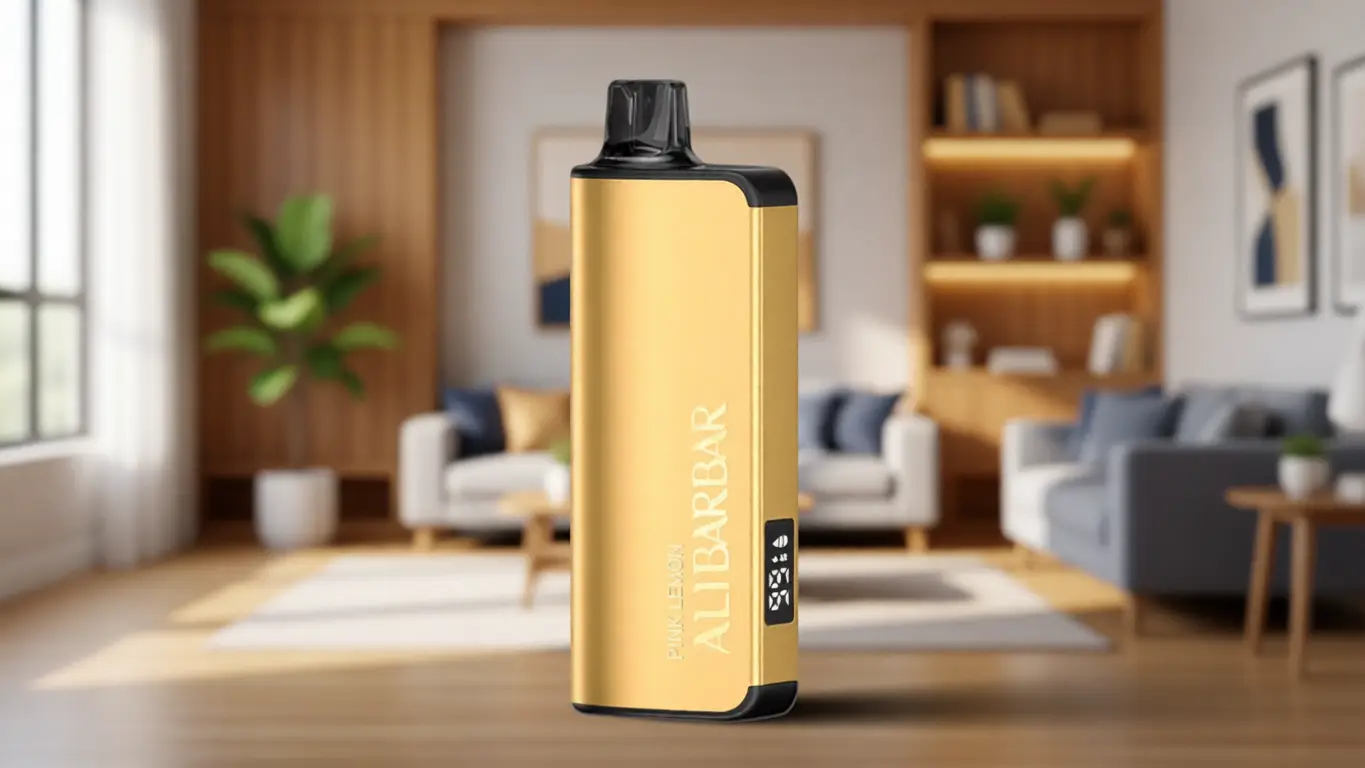
The ALIBARBAR collection, available through carefully documented channels, has developed a reputation because its engineering directly addresses the frustrations above. Rather than a generic ranking, let’s examine how real devices enable specific vapour manipulations — and where certain choices involve trade-offs you should know about.
The O-Ring: Why Steady Airflow and Consistent Density Are Non-Negotiable
An O-ring (the classic floating vapour ring) appears simple but exposes weak output immediately. You take a deep draw, form a small O-shape with your lips, and push a controlled burst of vapour using a subtle throat pulse. If the vapour density varies, the ring collapses or never forms a torus. The ALIBARBAR INGOT 9000 maintains a remarkably flat power curve through its operational window, giving you identical vapour body across dozens of practice attempts. Its fixed airflow is tuned for moderate resistance, which suits beginners who haven’t yet developed the fine oral motor control an adjustable slider demands. More advanced ring artists might prefer the Ice Adjust 12000, whose adjustable inlet lets you fine-tune the stream pressure for faster, tighter rings.
The Ghost Inhale: Where Power Response Transient Matters
To execute a ghost inhale, you draw vapour into the mouth, let it pool momentarily, push it out in a small, contained cloud, then quickly inhale it back. Speed and precision rely on the heating element’s ability to deliver instant, repeatable vapour without a lag or a surge. Some devices “ramp up” slowly on the first half-second, producing a weak initial cloud that the ghost maneuver can’t rescue. ALIBARBAR’s resistive element design emphasises instant activation, so the cloud exits as a cohesive unit. But note the trade-off: this rapid heating consumes a little more power per draw, meaning you’ll recharge an INGOT 15000 a touch sooner if ghost inhales are your staple. The modular architecture of the INGOT series (rechargeable battery with sealed reservoir) balances this by letting you top up between practice sessions without discarding the entire unit.
The Dragon: Mouthpiece Contour and Maximum Vapour Volume
A Dragon exhale requires forceful simultaneous expulsion from nose and mouth corners, creating four dense streams. It’s a trick that tests maximum vapour output and mouthpiece ergonomics. The Ice Adjust 12000’s wider bore mouthpiece resists clogging during powerful draws, and its adjustable airflow can be dialled fully open for maximum aerosol mass. However, a fully open setting increases air-to-vapour ratio; you’ll sacrifice some density for volume, which might thin the visual effect. Experienced users often close the airflow down to about 70% to keep the streams thick while still generating enough volume. No device removes the need for careful tuning, but one that gives you the tuning knobs puts you in charge.
Beyond One Brand: The Context That Informs Decision-Making
Many other device families share the market. Some disposable units offer fixed, adequate airflow but no indication of remaining capacity, leading to sudden dropouts during trick sessions. Others prioritise miniature form factors that compromise battery life and element stability under back-to-back draws. The difference is not always visible in a spec sheet. The devices referenced here rise above that baseline precisely because they commit to status transparency and regulated output, two factors you can verify rather than trust. When a retailer like OZVAPE Shop publishes standardised specifications for every ALIBARBAR model — exact dimensions, rated draws, rechargeability, airflow adjustability — the comparison becomes factual, not anecdotal.
A Practical Framework for Evaluating Your Trick-Ready Device
If you’re standing in front of a shelf or scrolling through listings, use this five-point checklist to cut through the marketing noise:
Output consistency test (mental): Does the manufacturer describe output regulation, or only maximum performance? Look for language like “constant output” or “regulated chipset.” Without it, assume the vapour character will change after the first third of the device’s life.
Airflow control: Is it adjustable? If yes, can you access the control without removing the pod or mouthpiece? If no, is the fixed airflow described as “tight,” “medium,” or “open”? Match that description to the trick you practice most.
Status feedback: Ask, “How many draws remain, and how do I know?” A multi-stage LED that blinks before dying is infinitely more useful than a single colour that cuts without warning. This question alone will eliminate half the options you encounter.
Mouthfeel and grip: Will you be holding this device between teeth during a ghost inhale? The mouthpiece should taper comfortably. Does the body coating show fingerprints or scratches easily? A matte, textured finish survives practice environments better than glossy hard plastic.
Lifecycle clarity: Does the product have a stated draw count backed by a regulated power source? A sealed disposable advertising 5,000 draws from an unregulated battery will rarely deliver half that at usable density. Rechargeable systems with documented capacity let you extract full value.
This evaluation framework works independently of brand allegiance. It’s a tool to filter noise, whether you’re comparing two ALIBARBAR models or assessing an unfamiliar series.
Common Mistakes When Selecting Devices for Vapour Tricks
Even informed users fall into traps that have nothing to do with product quality and everything to do with how we process information.
Mistake 1: Equating visual bulk with vapour performance. A device that looks large and imposing may simply house a bigger battery, not a more refined heating element. Size says nothing about output regulation. A slim device with a stabilised power chip will outperform a bulky device with uncontrolled voltage sag every time.
Mistake 2: Assuming all “adjustable airflow” is created equal. Some budget devices add an airflow slider that shifts between two vaguely defined positions, achieving little beyond a louder draw. True adjustability requires a linear or stepped mechanism that measurably changes air intake. The difference becomes obvious when you practise a slow French Inhale: poor airflow control makes the vapour curl unpredictably instead of flowing smoothly upward.
Mistake 3: Ignoring the mouthpiece material. Silicone mouthpieces can pick up dirt and degrade with repeated lip contact, leading to an unpleasant texture after a week of heavy practice. Harder, smooth-surface polymers or stainless steel remain consistent, which matters when your lips are part of the trick’s control surface.
Mistake 4: Failing to plan for the learning curve’s power demand. Learning the waterfall trick (letting dense vapour pour downward from the mouth onto a surface) requires repetitive, deep draws. Sealed disposable devices with non-rechargeable power cells often start strong, then gradually weaken. A user practising 50 waterfall attempts in one sitting will exhaust a device that would have lasted a casual user an entire day. Recognising your usage pattern — intensive bursts versus sustained moderate use — should drive the choice between a rechargeable modular system and a single-cycle unit.
An experienced observer can spot these errors in seconds because they stem from the same root: treating a complex electro-mechanical system as a simple commodity. The market rewards those who understand that a trick-ready device is an instrument, not a consumable.
Frequently Asked Questions
Q: Is it possible to learn tricks using any portable vapour device?
A: Yes, but the learning curve steepens dramatically if the device cannot maintain consistent output. Beginners often blame themselves when a failing device is the real bottleneck. A unit with regulated power and visible battery level cuts that ambiguity.
Q: How important is adjustable airflow versus fixed airflow for tricks?
A: Adjustable airflow is not essential but makes adaptation easier. Fixed airflow can work excellently if it matches your preferred trick style. For example, a moderate fixed draw works well for O-rings; an open fixed draw helps Dragon exhales. The risk is being locked into one style.
Q: Are ALIBARBAR devices suitable for advanced trick combinations?
A: The current range — particularly the Ice Adjust 12000 and the INGOT series — provides the consistency advanced users need for chaining multiple tricks. No device does the work for you, but these reduce the mechanical variables that cause failure. They are tools, not magic wands.
Q: How do I verify that a device is genuine and not a factory reject?
A: Purchase through documented supply chains. OZVAPE Shop sources exclusively from authorised distribution networks and maintains batch-level traceability. If a retailer cannot tell you where a product entered the country, you are taking an unnecessary risk.
Q: What should I do if a device’s performance feels inconsistent despite correct handling?
A: First, eliminate user variables: check that the device is fully charged, that the airflow path isn’t obstructed by pocket lint, and that you haven’t exceeded the rated draw count. If the problem persists, the device may have a manufacturing defect. A reputable retailer should offer replacement or credit under clear warranty terms.
Q: Can I use one device for both daily utility and trick practice, or do I need a dedicated unit?
A: A single, well-engineered device can serve both purposes. The key is choosing one that doesn’t force you to baby it through normal daily carry. Devices with durable finishes and consistent output, like the ALIBARBAR INGOT 15000, handle both roles without compromise.
Q: What’s the best way to clean a device after intensive trick practice?
A: Minimally wipe the mouthpiece with a dry or slightly damp lint-free cloth. Avoid pushing liquid into any openings. Trick practice doesn’t require special cleaning beyond normal hygiene, but residue from repeated lip contact can accumulate; a daily wipe solves it.
Q: How long should a device last if I practise tricks for an hour a day?
A: This depends on the device’s rated draw count and whether it is rechargeable. A sealed 5,000-draw device might last a heavy trick user three to five days. A rechargeable unit with a replaceable component may serve for weeks or more, with only the consumable part requiring eventual replacement.
Q: Is shipping discreet when ordering from Australian-based retailers?
A: Yes. OZVAPE Shop uses plain, unbranded outer packaging with no indication of contents. Discretion is standard operating procedure.
Conclusion
The distance between attempting a vape trick and mastering it is measured in device stability, not just hand-eye coordination. Once you internalise the four engineering pillars — thermal stability, airflow control, status transparency, and mechanical durability — you stop wondering whether your technique is to blame. You simply match the device to the demand, and the tricks start to stick. The ALIBARBAR range demonstrates that thoughtful design can flatten the learning curve, provided you access it through a source that respects your need for genuine, fully specified equipment.
OZVAPE Shop serves as that documented access point, offering the complete current-generation ALIBARBAR catalogue with the transparency that informed evaluation requires. The right device is the one that aligns with the way you actually practise — not the one that merely claims the highest puff count or the loudest marketing. Your routine, your chosen tricks, and your standards for predictability should drive the choice. Everything else is noise.