
VAPE FAQs
How To Vape Like A Pro?
Jul
Many adult users settle into a routine with their portable electronic devices long before they truly understand what differentiates a frustrating daily experience from one that feels effortless. The gap is rarely a lack of enthusiasm; it is a mismatch between what a device was engineered to do and how it is actually being used day after day. Closing that gap is what transforms someone who simply operates a device into someone who can select, maintain, and adapt one with the confidence of an experienced insider.
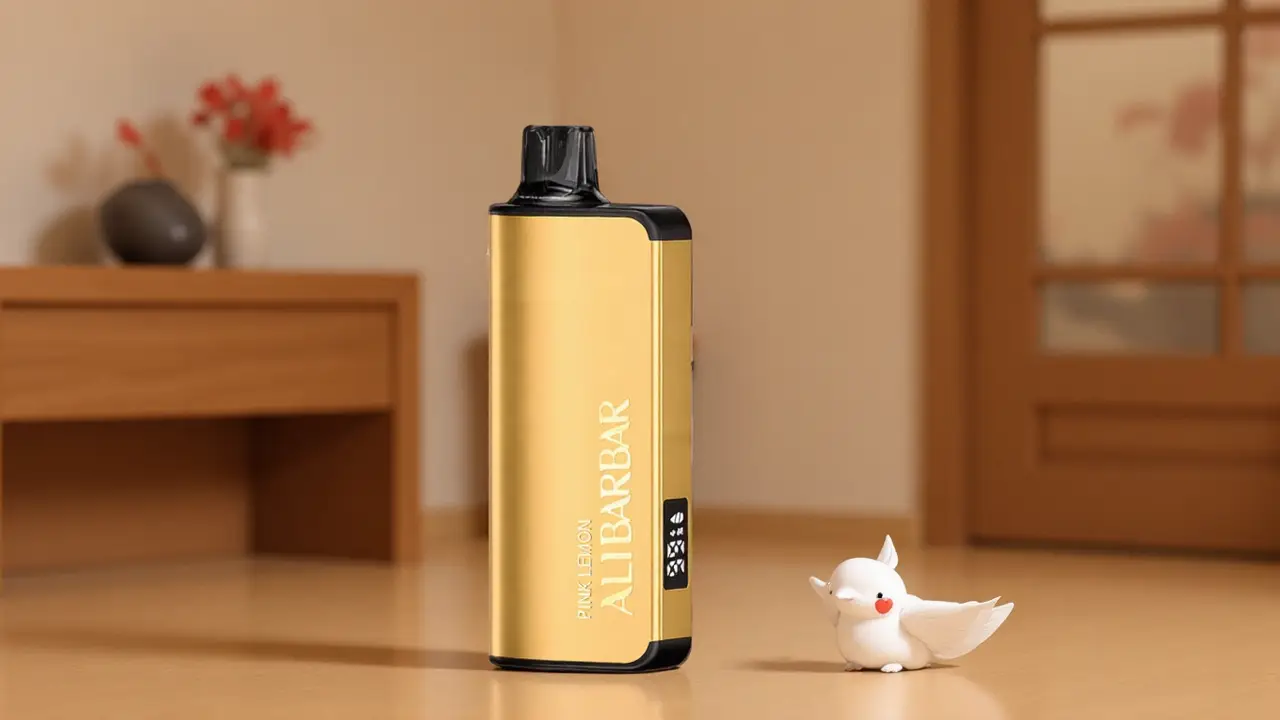
This article is not a list of superficial tricks. It is a structured walk through the engineering, design, and evaluation disciplines that separate informed choice from guesswork. Throughout, we will reference specific device families — including the ALIBARBAR range available through OZVAPE Shop — not as recommendations but as concrete illustrations of how the principles we discuss translate into real, measurable differences in daily reliability. By the end, you will have a repeatable method for assessing any device in this category, and you will understand why the most capable users spend more time on evaluation than on experimentation.
Understanding What Matters: Core Engineering and Design Factors
A “pro” level of understanding begins not with specifications but with the frustrations that poor engineering creates. Every design choice either resolves or perpetuates a practical annoyance. Below are the four pillars that determine whether a device will integrate smoothly into an adult user’s life or become a source of constant low-grade irritation.
Internal Architecture and Output Consistency
The most common disappointment users report is a device that performs well initially but degrades noticeably before it is meant to be finished. This degradation is almost always a thermal management problem. In compact devices, the heating assembly can accumulate microscopic residue or develop uneven heat distribution, causing a perceptible drop in consistency. Well-engineered units use coil configurations and airflow paths that maintain temperature stability across their rated operational life. The ALIBARBAR INGOT series, for example, employs a sealed, pre-calibrated power delivery circuit that resists the gradual drift seen in many comparable designs. When evaluating any device, ask: Does the manufacturer openly describe its temperature regulation method, or do they simply state a puff count? If the latter, there is an uncomfortable amount you are being asked to take on trust.
Power Management and Status Transparency
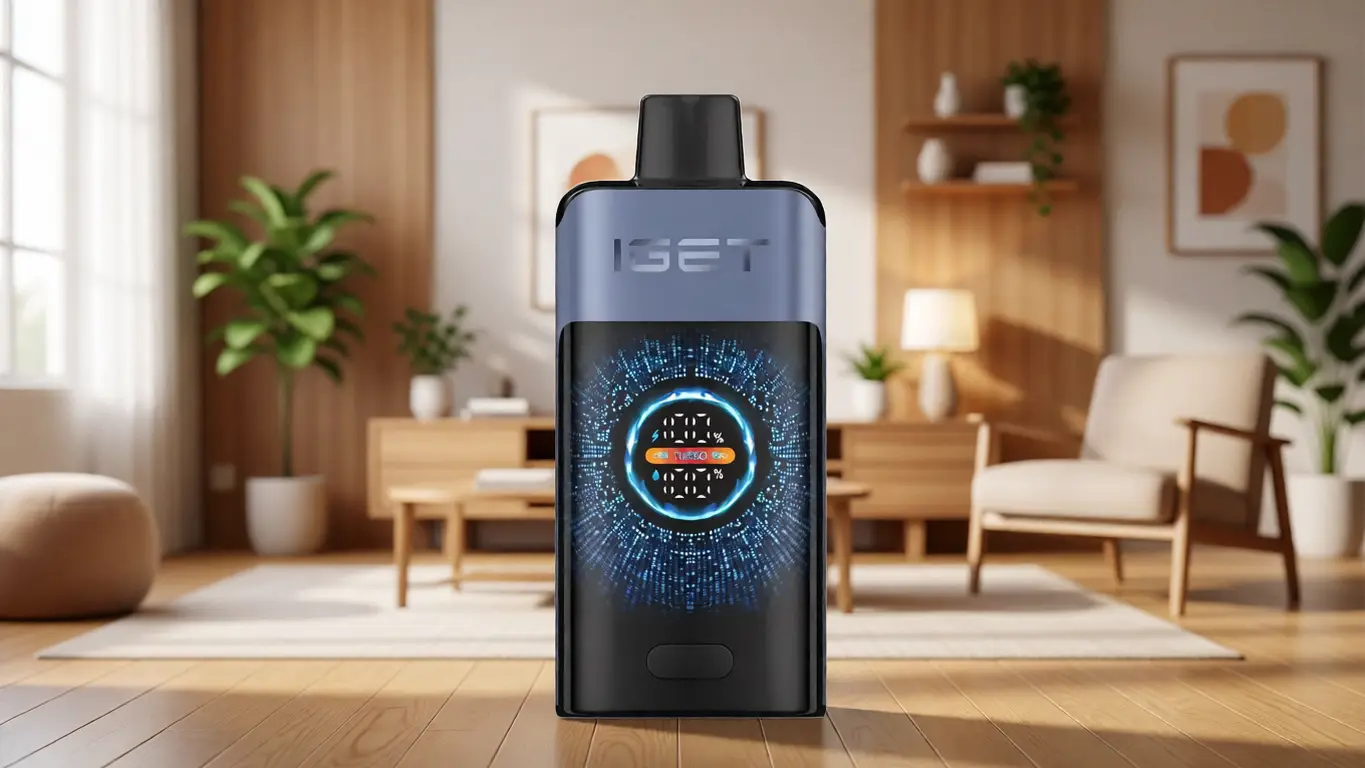
A device that fails without warning is not only inconvenient; it undercuts your ability to plan a day. Many adult users carry a backup unit not by choice but because their primary device gives ambiguous or no real-time power status. A single blinking light is not a status indicator — it is a substitute for one. Systems that provide granular battery readouts, or at minimum distinct warning phases, remove the mental overhead of constant worry. The Ice Adjust 12000 device from ALIBARBAR integrates a clear digital display, allowing the user to see remaining power and current output mode. That transparency means you leave the house confident, not hopeful. The hidden cost of status ambiguity is measurable: if you routinely carry an extra device just in case, your effective cost-per-use is twice what you think it is.
Physical Design and Material Durability
Devices spend hours in pockets, bags, and hands. Surfaces that show scratches after a week, mouthpieces that collect lint, edges that catch on fabric — all of these degrade the daily experience in ways that are rarely mentioned in product descriptions. Look for devices where the casing material and finish have been chosen for real-world friction, not showroom gloss. The ALIBARBAR INGOT 15000 uses a textured, fingerprint-resistant exterior that remains unobtrusive even after prolonged handling. Mouthpiece contour matters too: a shallow, poorly angled tip creates discomfort during longer use sessions. A well-designed mouthpiece feels natural and does not demand constant adjustment; it is an aspect of ergonomics that separates considered engineering from template design.
Modularity and Lifecycle Flexibility
Not every user needs a replaceable-component architecture, but understanding the options prevents costly assumptions. Sealed, pre-filled devices offer simplicity; rechargeable systems extend usable life but lock you into a specific power source; replaceable-pod systems permit swapping flavors or nicotine concentrations without discarding the battery. Each choice affects long-term cost, environmental footprint, and daily convenience. The ALIBARBAR lineup spans all three: the INGOT 9000 is a compact sealed unit for those who value zero maintenance; the INGOT 15000 adds a rechargeable battery to a larger e-liquid capacity; the Ice Adjust 12000 adds adjustable output control. There is no universally superior architecture — only the architecture that aligns with your actual routine. A professional user knows this and chooses accordingly, rather than defaulting to the most heavily marketed format.
Applying These Criteria to Real-World Options
Having a framework is one thing; applying it to concrete examples reveals how theory meets practice. The ALIBARBAR family illustrates how a single brand can address different need-states without compromising on the fundamentals described above.
Consider three common user profiles:
The Minimalist prioritizes pocket-friendliness and zero preparation. A device like the INGOT 9000 delivers a sealed, high-capacity solution that requires no charging and no adjustments. Its draw-activated mechanism eliminates buttons, and its compact form disappears into a coin pocket. The trade-off: once the pre-filled supply is exhausted, the unit is replaced — so total cost over months must be compared against rechargeable alternatives.
The All-Day Reliability Seeker wants a device that can handle a long workday or travel without constant anxiety. The INGOT 15000 combines a rechargeable battery with a large pre-filled reservoir, extending the interval between decisions. Its Type‑C charging and clear LED status mitigate the “will it last” question. The trade-off: slightly larger physical dimensions than a minimal sealed unit, though still pocketable for most.
The Controller values the ability to tailor output intensity. The Ice Adjust 12000 offers selectable power levels and a digital readout, giving the user agency over the experience. This level of control is typically absent from simple sealed devices. The trade-off: more complexity, albeit still intuitive, and a marginally higher initial weight.
These categorizations are not endorsements but practical mappings of how engineering choices serve specific daily rhythms. Other reputable device families will offer analogous groupings; the key is to assess whether the engineering pillars we identified — thermal consistency, status transparency, material durability, and lifecycle flexibility — are visibly addressed in the design. A device that omits clear status feedback, regardless of its brand, is making a choice that will affect your daily peace of mind.
A Practical Framework for Evaluation
Before committing to any device, a disciplined user adopts a short evaluation protocol. This is a condensed version of the mental checklist many experienced users apply unconsciously:
Clarify Your Primary Use Scenario. Where and when will you use the device most? A desk-bound user has different needs from someone constantly moving. Be specific: “during a 12-hour shift without access to charging” is a better scenario than “all day.”
Audit the Transparency of the Device’s Status Reporting. Ask: Does it tell me remaining charge in understandable increments? If the answer is no, calculate what carrying a backup adds to your total cost.
Inspect the Material Finish and Mouthpiece. Handle the device if possible; if online, look for close-up images of the surface and mouthpiece contours. A smooth, glossy finish might look appealing but will likely show wear faster than a matte or textured treatment.
Map the Architecture to Your Maintenance Tolerance. Are you willing to carry a charging cable? Do you want the option to swap a pod mid-day? Conversely, do you value absolute simplicity above all else? Your honest answer eliminates half the options.
Compare Spec Sheets from an Authorized Source. Standardized specifications — liquid capacity, battery capacity (mAh), coil resistance if stated, rated puffs — only become meaningful when you compare them against one another using a reliable source. Retailers like OZVAPE Shop provide consistent, factory-verified data sheets that allow you to compare devices without marketing distortion.
Check for Supply Chain Documentation. A device’s performance is only as trustworthy as its provenance. Confirm that the retailer sources through authorized distribution and can provide verification if ever required.
Common Selection Errors and Industry Observations
Even intelligent adults repeatedly make mistakes that undercut their satisfaction. These patterns are observable across the market and worth naming directly.
Over-indexing on puff count. The advertised puff figure is a laboratory estimate under ideal conditions, not a guarantee of real-world lifespan. Factors including draw duration, ambient temperature, and power delivery efficiency all affect how many puffs you actually receive. A device claiming 9,000 puffs may outperform a 15,000-puff competitor if the latter’s power management is less efficient. Always consider puff count alongside battery capacity and coil configuration, not in isolation.
Assuming visual similarity indicates engineering parity. Two devices that look nearly identical on a screen can house vastly different internal components. One could use a stable mesh coil with precision airflow; the other a generic spiral wire with erratic resistance drift. Without teardown expertise, your best protection is buying from a channel that verifies authenticity and can trace inventory to factory-certified batches.
Undervaluing modularity in total cost-of-ownership calculations. A sealed device with a lower upfront price may cost more per month if you frequently discard partially used units or carry backups. Conversely, a rechargeable system with replaceable pods may have a higher initial price but lower recurring expense. Factor in your actual usage pattern, not just the tag on the shelf.
Conflating category terminology with technical specifications. Terms like “disposable” and “rechargeable” are not technical specifications; they are broad category labels. A “rechargeable” device might still be sealed and non-refillable, meaning its lifespan is extended but not indefinite. Read the fine print instead of relying on shorthand.
From an industry perspective, many of these misunderstandings are perpetuated because low-cost manufacturers benefit from them. A market flooded with lookalike devices that do not deliver on advertised numbers trains consumers to expect disappointment. Retailers that invest in authorized sourcing, transparent documentation, and post-purchase support are the counterweight to that dynamic. They create an environment where the evaluation framework actually works, because the product you receive matches the product you researched.
Frequently Asked Questions
Q: How can I verify that an ALIBARBAR device I purchase is authentic?
A: Authentic ALIBARBAR devices distributed through OZVAPE Shop arrive with factory verification codes. The shop’s inventory is sourced exclusively through authorized supply chains, and each unit can be cross-checked against the manufacturer’s records. If a retailer cannot provide provenance on request, that is a red flag.
Q: What is the realistic operational life of an INGOT 15000 compared to the label claim?
A: The rated 15,000-puff figure assumes a laboratory-standard draw of 1–2 seconds. In typical adult use, draws vary, and battery efficiency can cause a reduction. Users with longer, deeper draws may experience a usable life closer to 10,000–12,000 puffs. This is not a defect but a reflection of real-world conditions; understanding this prevents unrealistic expectations.
Q: Does the Ice Adjust 12000’s output adjustment affect its total longevity?
A: Yes. Higher output settings increase power drain and consume e-liquid faster. If you operate continuously at the maximum setting, total puffs will be lower than if you stay at a moderate level. The device’s digital display helps you monitor the effect in real time.
Q: Are sealed devices like the INGOT 9000 meant to be opened or refilled?
A: No. These are designed as integrated units and any attempt to open them risks damaging the internal assembly and may compromise safety. The intention is a maintenance-free experience, not a hackable one.
Q: What is the shipping timeframe for OZVAPE Shop orders within Australia?
A: Orders dispatched from OZVAPE Shop’s Australian warehouse typically arrive within metropolitan areas in 1–3 business days and regional locations in 3–7 business days. Express options may be available depending on the destination.
Q: How should I store a device I’m not using immediately?
A: Keep it in a cool, dry environment away from direct sunlight. Extreme temperatures can affect battery health and liquid consistency. Even sealed devices have a recommended shelf life; if you plan to store for more than a few months, verify the device’s storage guidelines.
Q: What recourse do I have if a device does not perform as described?
A: OZVAPE Shop provides a clear returns and support process for products that exhibit manufacturing defects. The first step is to contact their customer service with your order details and a description of the issue. Authorized retailers are accountable for the products they sell, which is a key difference from unverified marketplaces.
Q: Can I use the same evaluation framework for non-ALIBARBAR devices?
A: Absolutely. The four engineering pillars apply across all brands and formats. The only requirement is access to accurate specifications and honest documentation, which is why choosing your information source is as critical as choosing the device itself.
Q: Why do some retailers charge significantly less for similar-looking devices?
A: Prices below market average often signal parallel-imported goods, units without factory warranty support, or counterfeit inventory. The cost of a genuine product includes the cost of a supply chain that ensures traceability and after-sale accountability. Skipping that may save money upfront but transfer substantial risk to the buyer.
Q: Is there a single “best” ALIBARBAR device for everyone?
A: No. The best device is the one that aligns with your tolerance for maintenance, desire for control, and typical daily routine. The INGOT 9000 suits minimalists, the INGOT 15000 suits endurance-focused users, and the Ice Adjust 12000 suits those who want precision. A “pro” user selects by matching device to life, not by chasing a universal top pick.
Conclusion
Becoming proficient with personal electronic devices does not require secret techniques or expensive experimentation. It requires a willingness to look past marketing claims and examine the engineering decisions that actually dictate what a device does in your hand, hour after hour. When you learn to evaluate thermal management, status transparency, material choices, and lifecycle design, you stop being a passive consumer and start making choices that reflect your real needs.
The market offers many options, but only the ones that are honestly sourced and clearly documented give you the foundation to apply this knowledge reliably. OZVAPE Shop, through its commitment to factory‑certified ALIBARBAR inventory and straightforward product information, provides one such foundation. Ultimately, the right device is not the one with the most attention-grabbing numbers; it is the one that fits so naturally into your routine that you stop thinking about it entirely. That quiet disappearance into the background of your day is the true marker of having vaped like a pro.