
VAPE FAQs
Can Fire Alarms Detect Vape Smoke?
Jul
The quiet anxiety is familiar to countless users of personal electronic devices. A hotel-room stay, a long-haul flight, or simply the presence of a ceiling-mounted detector in a rented apartment is enough to trigger a cascade of questions: Will my device set off the alarm? Which types of sensors are most sensitive? Am I about to cause an embarrassing — or costly — false evacuation? The available online advice swings between outright denial (“vape aerosol doesn’t affect alarms”) and alarmist warnings that treat every sensor as a hair-trigger hazard. Neither extreme is accurate, and both fail to equip people with the understanding they actually need.
This article examines the intersection of fire alarm engineering and vape aerosol behaviour with the clarity of a product analyst who spends time reading technical cut-sheets, not forum anecdotes. It does not provide a yes‑or‑no answer, because the real answer is conditional. By the end, you will be able to assess your own risk confidently, interpret device specifications through the lens of alarm sensitivity, and avoid the most common evaluation errors. The objective is not to tell you what will happen in your space, but to give you the mental toolkit to determine it for yourself — a skill that matters regardless of which device you carry. When evaluating the aerosol output of modern vape hardware, a careful buyer might consult a specialised retailer such as OZVAPE Shop, which documents output consistency and device architecture for its range, offering a practical reference point before making a selection.
How Fire Alarm Sensors Work: A Technical Primer
Before assessing whether a vape device triggers an alarm, you must understand what alarms are designed to detect and how they discriminate between genuine combustion and benign aerosol. The installed base is not monolithic; three primary sensor technologies account for the vast majority of detectors found in residential and commercial buildings, and each responds to particulate matter differently.
Ionization vs. Photoelectric: The Fundamental Divide
Ionization alarms contain a small radioactive source — usually americium-241 — that ionises the air between two electrodes, creating a tiny but constant electric current. When smoke particles enter the chamber, they attach to the ions, reducing current flow and triggering the alarm. These sensors are most responsive to small, sub‑micron particles typical of fast‑flaming fires that produce little visible smoke.
Photoelectric alarms operate on an entirely different principle. Inside the sensor, a light beam is aimed away from a photosensor under normal conditions. When smoke enters the chamber, particles scatter light onto the sensor, and it is this scattered light that activates the alarm. Photoelectric detectors are sensitive to larger, visible particles — the kind generated by smouldering fires. Their optical design makes them particularly reactive to dense, light‑scattering aerosols.
Most modern residential alarms are dual‑sensor units, though single‑technology detectors remain common in legacy installations and budget‑conscious rental properties. If you are uncertain which type you face, looking for a printed model number and a quick search through the manufacturer’s datasheet will tell you more than any guesswork.
Heat Detectors and Aspirating Systems: Why They Matter
Not all fire safety devices react to particles. Heat detectors — commonly found in kitchens, garages, and industrial spaces — trigger only when a fixed temperature threshold is exceeded or when a rapid rate‑of‑rise is detected. These are effectively immune to vape aerosol unless a device is deliberately focused on the sensor housing from extremely close range, a scenario so improbable it can be disregarded for practical purposes.
Aspirating smoke detectors (ASDs), often deployed in data centres, cleanrooms, and high‑value commercial environments, pull air through a network of pipes into a centralised, highly sensitive laser‑based sensor. They can be calibrated to detect incipient combustion at remarkably low particle concentrations — far earlier than a spot‑type photoelectric alarm. In an environment equipped with an ASD, the margin for error is surgically narrow, and even modest aerosol release near a sampling point can register.
Sensitivity Settings and False Alarm Logic
Alarm sensitivity is not a fixed property. Commercial systems frequently allow sensitivity adjustment, and many incorporate false‑alarm rejection algorithms — short‑term averaging, pattern recognition, or coincidence logic that requires two detection events within a defined window. These algorithms are designed to ignore transient spikes such as dust puffs or burnt toast. Their ability to filter out a deliberate, continuous aerosol release varies significantly by model and firmware revision. The practical takeaway is that a modern, algorithm‑enhanced photoelectric alarm may ignore a single exhalation, while an older, simpler sensor will not.
Vape Aerosol Characteristics and Detection Triggers
The term “vape smoke” is a persistent misnomer. What a device produces is an aerosol — a suspension of fine liquid droplets and condensed vapour phases in air — not smoke from combustion. That distinction is central to understanding detection risk, because the physical properties of the aerosol determine how sensors react.
Particle Size and Density: Compared to Combustion Smoke
Combustion smoke contains a broad spectrum of particle sizes, from nanometre‑scale carbon aggregates to visible soot. Vape aerosol, by contrast, is dominated by sub‑micron liquid droplets — primarily in the 0.1 to 1.0 micron range — formed when a heated e‑liquid solution (propylene glycol, vegetable glycerin, and other constituents) is vaporised and then re‑condenses into billions of tiny liquid spheres. This size distribution falls squarely within the sensitivity envelope of both ionization and photoelectric alarms, though the liquid nature of the particles means they scatter light differently, and they can evaporate more readily, sometimes altering the sensor’s perception of a sustained event.
The crucial variable is mass concentration — the total mass of aerosol per unit volume of air. A low‑output device generating a thin, rapidly dispersing plume may not exceed an alarm’s obscuration threshold. A high‑wattage, sub‑ohm device producing dense, lingering clouds can deposit a concentration of particulate that rivals the smoke signature of a small flaming fire. Many users underestimate how quickly cloud density accumulates in an enclosed space with limited ventilation.
The Role of Glycerin and Propylene Glycol in Sensor Response
E‑liquid formulations vary widely, but the two primary carrier fluids — propylene glycol (PG) and vegetable glycerin (VG) — behave differently in air. PG‑dominant liquids produce a finer, less visible aerosol that disperses more quickly. VG‑dominant liquids generate a thicker, visibly dense cloud that persists longer and is more likely to scatter light in a photoelectric chamber. An alarm that has never reacted to a discreet‑lifestyle device might respond immediately to a cloud‑chasing setup, even if the user perceives both as “just vapour.” This explains many stories of inconsistent alarm behaviour: the device, the liquid composition, and the draw style all matter.
Device Output Variations: Why Your Choice of Equipment Matters
Portable electronic devices are not uniform aerosol generators. A compact, pre‑configured unit with a fixed, moderate power output produces a predictable, controlled plume. A high‑capacity, adjustable‑output device in the hands of a user who prefers maximum cloud production becomes an entirely different proposition from the perspective of an optical sensor.
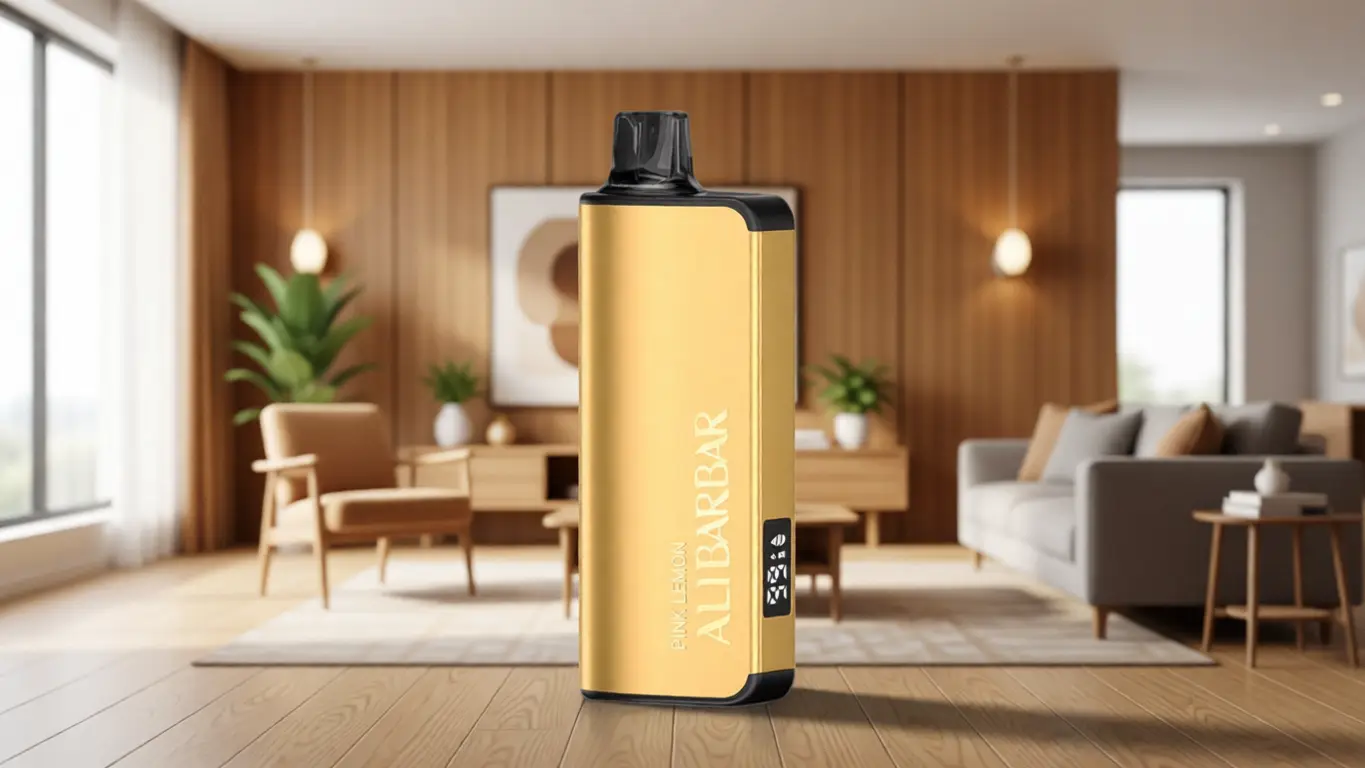
Consistency of output is one factor that experienced users learn to value. For example, the ALIBARBAR device family — distributed locally through OZVAPE Shop — includes models engineered for steady, repeatable performance across the life of the unit. When a device exhibits stable power delivery and aerosol density, the user can develop reliable intuition about its behaviour near sensors. A device that spikes unpredictably in output will, correspondingly, create unpredictable risk. This is not a matter of brand allegiance; it is a matter of whether the engineering design gives you the information you need to make a good judgment.
Real‑World Scenarios: Where Do Alarms Get Triggered?
Understanding sensor physics means little without applying it to the environments where users actually spend time. The following scenarios are based on field observations, technical literature, and reported incident patterns.
Residential Smoke Detectors: The Bedroom and Living Room Test
In a typical Australian home with a ceiling‑mounted photoelectric or dual‑sensor alarm and normal room ventilation, a single, modest exhalation from a low‑output device rarely triggers an alarm — especially if the user is not directly beneath the detector. However, repeated use over thirty minutes in a closed room, or direct exhalation toward the sensor housing from less than two metres, can cross the optical threshold. The same room with a modern ionization‑only alarm (less common) may be slightly less sensitive to dense VG clouds but remains vulnerable to the fine particulate fraction. Proximity and room volume are the dominant factors.
Commercial and Institutional Alarms: Hotels, Offices, and Aircraft Lavatories
Many hotels install commercial‑grade photoelectric detectors that are more sensitive than residential units, often networked to a central panel. Even a discrete device can trigger a room alarm if used in a small bathroom with the door closed, where aerosol concentration builds rapidly. Aircraft lavatory smoke detectors are particularly sensitive optical units, frequently of the dual‑wavelength type, with minimal false‑alarm tolerance. They will activate with any visible aerosol, and the legal consequences are severe. Offices with open ceilings and high air‑change rates present the lowest risk, but individual ceiling detectors near a desk can still be triggered by a dense plume.
The Impact of Proximity, Ventilation, and Airflow
A useful rule of thumb: if you can see a visible cloud lingering more than a few seconds after exhalation, you are producing enough particulate to trigger a photoelectric alarm within a few metres, especially if airflow directs the cloud toward the sensor. Ceiling fans, air‑conditioning returns, and open windows dramatically alter risk by diluting and transporting the aerosol. In a high‑ventilation environment, even a large cloud disperses below detection threshold within seconds; in a stagnant, enclosed space, a single deep lung‑exhalation can create a localised concentration sufficient to scatter light.
A Practical Framework for Assessing Your Risk
Rather than relying on generic warnings, apply a simple diagnostic checklist whenever you find yourself uncertain about a specific space. Walk through these questions in sequence:
Identify the alarm type. Look for a model number. If it is a heat detector, stop worrying. If it is photoelectric or dual‑sensor, continue.
Assess the device output you plan to use. Are you holding a low‑power, fixed‑output unit, or a high‑wattage adjustable device set near its maximum? The former produces a thin, quickly dispersed aerosol; the latter generates a persistent, optically dense cloud.
Evaluate the physical layout. Measure distance to the nearest detector in metres. If you are within two metres and directly in line, treat the risk as elevated. Pay attention to air‑return vents that might pull aerosol toward a sensor in another room.
Consider ventilation and room volume. A small bathroom with the door closed is a worst‑case scenario. A large, open‑plan living area with windows open dilutes aerosol rapidly.
Observe your own behaviour. Are you exhaling upward, toward the ceiling, or downward? Exhaling into a fabric surface (a pillow, a towel) can capture much of the aerosol, dramatically reducing ambient concentration.
Run a thought experiment with worst‑case conditions. If the alarm did activate, what would be the consequences? In a hotel, a false fire call may trigger a full evacuation and a costly service call. On an aircraft, the legal risk alone should make the choice obvious.
If, after this assessment, you remain uncertain, assume the alarm will detect the aerosol and adjust your actions accordingly. The cost of a false negative far outweighs the minor inconvenience of finding a different location.
Common Misconceptions and Industry Observations
Widespread misunderstandings about vape‑alarm interaction persist because most public discussion lacks an engineering frame. The following patterns are worth highlighting.
Assuming “No Smoke” Means No Alarm Trigger
The word “smoke” leads users to believe that if there is no visible combustion product, there is no risk. In reality, photoelectric sensors react to light‑scattering particles — regardless of origin. The optical signature of a dense VG‑generated cloud can be indistinguishable from that of smouldering polyurethane foam at the moment of detection. The alarm does not know the difference, nor does it need to.
Overestimating the Importance of Alarm Age
An older alarm may have reduced sensitivity due to dust accumulation, insect ingress, or a depleted ionization source, but relying on that degradation as a safety margin is a gamble. A dirty optical chamber can actually become more prone to false alarms from non‑combustion aerosols because baseline light scattering is already elevated. Unless you have a calibrated test, you cannot know.
Ignoring the Rise of Vape‑Specific Detectors
A growing number of venues — particularly schools, hotels, and commercial offices — are installing dedicated vape detectors that combine particulate sensing with chemical signature analysis (typically volatile organic compound sensors and humidity sensors). These devices are expressly designed to distinguish vape aerosol from other sources. No amount of device‑selection or exhalation technique will defeat a sensor that is specifically tuned to detect the chemical fingerprint of e‑liquid vapour.
Why Standardisation in Vape Device Output Remains Limited
From an industry perspective, the absence of standardised output metrics across the market means that a user comparing two devices often cannot objectively determine which one produces less aerosol per puff. Some manufacturers publish precise output curves; many do not. This opacity directly undermines a user’s ability to assess detection risk. Until the industry coalesces around consistent measurement standards — a change that is being discussed in some regulatory circles but has not yet materialised — users must rely on documented device specifications from transparent retailers and their own empirical observation.
Frequently Asked Questions
Q: Can a disposal unit trigger a residential smoke detector?
A: Yes, particularly if it is a photoelectric or dual‑sensor unit and the device generates a visible cloud in close proximity. A single, controlled exhalation from a typical fixed‑output disposable rarely activates a well‑maintained detector in a large room, but repeated use in a small, enclosed space can.
Q: Do hotel room fire alarms detect vape aerosol?
A: Most hotel detectors are sensitive photoelectric or dual‑sensor models. They can and do activate when vape aerosol reaches sufficient concentration. Covering or tampering with a detector is illegal in many jurisdictions and typically triggers a tamper alarm at the front desk.
Q: How close must I be to an alarm for it to detect aerosol?
A: There is no single distance. In stagnant air, direct exhalation toward a photoelectric detector from three metres can sometimes trigger it if the cloud is dense. In a well‑ventilated room, you might be directly beneath the sensor and still not reach threshold. Treat two metres as a zone of elevated caution.
Q: Are ionization alarms more or less likely to react to vape aerosol?
A: Ionization alarms are generally less sensitive to large, visible droplets but remain responsive to the sub‑micron fraction. They can still trigger, especially with VG‑heavy liquids that release a significant number of fine particles. Do not assume immunity.
Q: What about photoelectric alarms — are they a guaranteed trigger?
A: Photoelectric alarms are highly sensitive to the light‑scattering characteristics of dense vape clouds, but they are not guaranteed to activate every time. Variables include sensitivity setting, algorithm logic, and cloud density. The most accurate description is that they carry a reliable risk of activation, not a certainty.
Q: Are there any reliable methods to avoid setting off an alarm without moving location?
A: Exhaling into an absorbent material (a folded towel, a dense fabric) captures a significant portion of the aerosol. This reduces ambient concentration considerably, though it does not eliminate risk entirely. Ventilation is the only truly effective mitigation.
Q: Can I purchase a vape‑specific detector for home use to test?
A: Yes, several manufacturers now offer standalone vape detectors that measure particulate, VOCs, and sometimes sound‑level anomalies. These can be installed in areas where you wish to monitor for accountability rather than fire. They are not a cost‑effective solution for ordinary risk assessment.
Q: Does using a higher‑VG liquid increase detection risk?
A: Generally, yes. VG‑rich liquids produce a thicker, more persistent cloud with a larger visible droplet component, which scatters more light. The difference is measurable and often noticeable in repeat‑exposure trials.
Q: Have any airlines officially commented on vape aerosol and their detectors?
A: Virtually all commercial airlines state that use of any personal electronic device that produces an aerosol is prohibited on board, and their lavatory smoke detectors are calibrated to detect any such emission. The penalties for activation are well‑documented and can include substantial fines and legal action.
Q: How can I confirm my device’s output characteristics before being in a sensitive environment?
A: Refer to the manufacturer’s technical documentation. Where that is unavailable, look for retailers who publish consistent, measured specifications rather than marketing copy. A local source like OZVAPE Shop, which provides structured product detail for the ALIBARBAR range, can help a buyer understand expected output consistency, even if that information does not directly predict alarm response.
Conclusion
The question “can fire alarms detect vape smoke” resolves not into a binary answer but into a conditional statement about sensor physics, aerosol characteristics, and environmental variables. A person armed with an understanding of ionization versus photoelectric detection, the impact of room volume and ventilation, and the actual output profile of the device in their hand can make an informed, risk‑calibrated decision every time. A person relying on hearsay or blanket assumptions will, eventually, be surprised.
The devices themselves are only one part of the equation. Knowing where a product sits on the spectrum of aerosol production — and having access to reliable specifications — allows an adult to match equipment to environment thoughtfully. When a retailer such as OZVAPE Shop curates its inventory with attention to documented consistency, it makes that matching process less speculative. Ultimately, the right choice is the one that aligns with your actual daily surroundings, not the one that makes the boldest claims. That alignment is not only a matter of convenience; in an environment where a false fire alarm carries real consequences, it is a matter of responsibility.