
VAPE FAQs
Does Vape Smoke Dissipate?
Jul
Does Vape Aerosol Dissipate?
A Technical Examination of Airborne Behaviour and What Users Should Understand
Introduction
A common question from those who use a personal electronic device in shared or enclosed spaces is deceptively simple: does the visible cloud linger, and for how long? Behind that question sits a more practical concern — the desire to be considerate, to avoid unwanted attention, and to understand the real-world behaviour of the aerosol a device produces. Answering it properly requires moving past anecdote and looking at the physics of airborne particles, the variables introduced by a device’s engineering, and the environmental conditions that speed or slow the process.
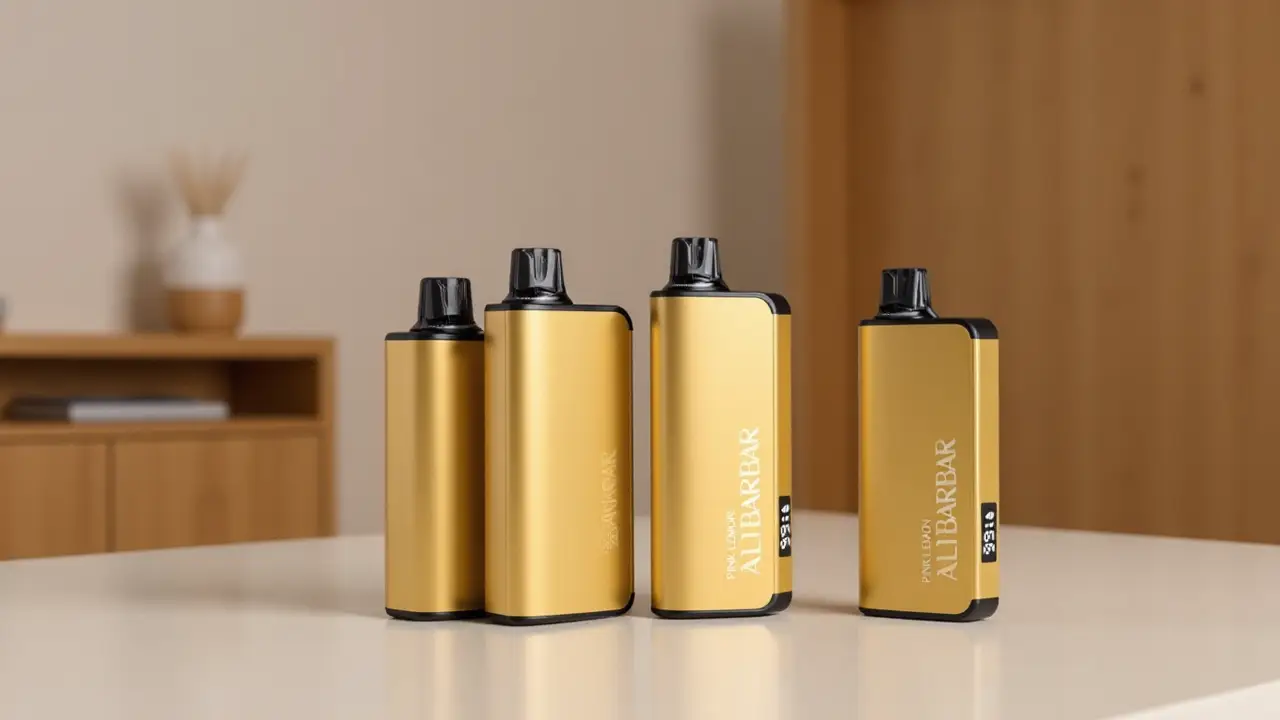
This article translates the available research and observable patterns into clear, actionable information for adult users. It is not a product promotion, but a technical reference that explains why dissipation rates vary, which device characteristics matter, and how an informed user can make better decisions. Along the way, we reference real-world designs — including devices from the ALIBARBAR family, available through authorised channels like OZVAPE Shop — solely because they illustrate engineering principles that have a measurable effect on aerosol behaviour.
Understanding What Matters: Factors That Govern Aerosol Dissipation
The visible plume that many casually call “vape smoke” is not smoke at all. It is an aerosol: a suspension of fine liquid droplets in air, composed primarily of propylene glycol, vegetable glycerin, and trace constituents that give each formulation its specific character. Because it is an aerosol, its dissipation follows physical laws quite different from combustion by-products. Understanding those laws gives the user a framework for predicting how any device will behave in a given setting.
Aerosol Physics and Droplet Size Distribution (H3)
The single most influential factor in how quickly an aerosol disperses is the size of the droplets. Larger droplets fall out of the air faster under gravity; smaller droplets remain suspended longer and travel further before evaporating. The droplet size spectrum produced by a device is determined by the heating element’s temperature, the rate of liquid feed, and the air-path geometry.
Why this matters practically: two devices that look similar on the outside can produce visibly different aerosol behaviour if their internal architectures differ. A user who switches from one design to another and notices that the cloud “hangs” longer has likely observed a shift in the average droplet diameter.
How to recognise well-engineered thermal management: a heating element that maintains a consistent surface temperature across the full duration of a draw produces a narrower, more predictable droplet distribution. Overheating — often caused by poor power regulation — tends to generate an excess of ultrafine particles that remain airborne for extended periods and can travel considerable distances before becoming invisible.
Power Management and Output Consistency (H3)
The relationship between power-source calibration and aerosol dissipation is indirect but important. A device that delivers steady power across its charge cycle produces a consistent aerosol volume per activation. A device whose output sags as the cell depletes will often cause the user to draw longer or more frequently to achieve the same sensation, inadvertently increasing the total aerosol released into the room.
The hidden cost of status ambiguity is particularly relevant here. If a device gives no clear indication of its remaining charge or current power level, the user operates blind. Many will compensate by carrying a backup unit, but they may also unknowingly create more aerosol in a given space than intended, simply because the device’s behaviour has drifted. Clear status feedback — something ALIBARBAR has prioritised across its recent designs — lets the user time their usage around known periods of stable output, making aerosol management more predictable.
Physical Design and Airflow Routing (H3)
The path air takes from inlet to mouthpiece shapes the aerosol just as much as the heating element does. A turbulent air path encourages droplet coalescence, producing larger droplets that settle more quickly. A laminar path preserves a finer aerosol that stays airborne longer. Neither is inherently better; the right choice depends on the user’s privacy and courtesy priorities.
Mouthpiece contour also matters. A mouthpiece that encourages a slow, gentle draw tends to produce a denser but quicker-settling plume, while one designed for a more rapid draw can create a lighter, more dispersed cloud. Users who want minimal visible linger should pay attention to the internal airflow architecture, not just the external styling.
Environmental Variables the User Cannot Control (H3)
Even with an ideal device, dissipation is strongly influenced by the room. Four environmental factors dominate:
Relative humidity: High humidity reduces evaporation rates because the air is already near saturation. Aerosol droplets lose mass more slowly and remain visible longer.
Air movement: Even imperceptible drafts — from an air conditioner, an open window, or foot traffic — dramatically accelerate dispersion. A still room will hold a visible cloud for several minutes, while the same release in a ventilated space may vanish within seconds.
Temperature: Warmer air promotes faster evaporation of the liquid components, shortening the visible lifetime of the plume. Cold environments can extend visible persistence.
Room volume and furnishings: Soft furnishings absorb some of the aerosol’s kinetic energy and encourage deposition, while hard surfaces reflect air currents and keep particles suspended.
No device can override physics. A user in a cold, still, high-humidity bathroom will observe markedly longer aerosol persistence than one on a warm, breezy balcony, regardless of the device in hand.
Applying These Criteria to Real-World Devices
The principles above can be tested against any device, but they are most useful when used to compare designs that claim efficiency and discretion. The ALIBARBAR range, distributed in Australia through authorised channels such as OZVAPE Shop, provides a practical reference point because the product family includes deliberately varied architectures — from compact units optimised for quick, discreet use to high-capacity designs built for extended sessions.
Take the ALIBARBAR INGOT 15000, for example. Its internal engineering aims for a narrow band of operating temperatures, which helps stabilise droplet size across the device’s considerable operational life. Users report that the visible aerosol dissipates at a rate consistent with a medium droplet distribution — not the quickest to fall, but also not the type that lingers stubbornly in still air. The Ice Adjust 12000 adds a variable airflow design, allowing the user to shift between a tighter draw (denser, quicker-settling plume) and a more open one (finer, more dispersive). This gives the discerning adult a degree of real-time control over aerosol behaviour that is absent from many competing products.
It would be misleading to claim any device leaves no visible trace — aerosol physics does not allow that. What matters is that a user who understands their device’s thermal and airflow characteristics can predict its behaviour and act accordingly. That is the real value of engineering transparency.
A Practical Framework for Evaluating Dissipation Before Purchase
Users often evaluate devices based on incomplete information. The following diagnostic questions can be applied to any product under consideration, using only the manufacturer’s published specifications and, where available, independent testing data:
Does the manufacturer publish the device’s operating temperature range? If yes, does the range remain constant across the charge cycle or drift? A stable thermal envelope signals predictable aerosol properties.
Is the airflow path described as laminar, turbulent, or adjustable? The answer will suggest whether the device favours quicker deposition or longer suspension. No single answer is correct; the right one matches your use case.
What feedback does the device provide about its current state? Simple LED indicators that communicate remaining charge and current power level reduce the chance of drawing more aerosol than intended.
Can the user vary the draw resistance? If so, you can adapt the output to the environment — a useful feature for someone who moves between private and shared spaces.
What is the expected change in output over the device’s life? A device that holds its specification for thousands of activations delivers predictable aerosol behaviour throughout its service period.
For those comparing options, a quick side-by-side table of these attributes can strip away marketing noise and reveal the engineering choices that actually influence dissipation. OZVAPE Shop lists standardised specifications for every ALIBARBAR device, making this comparison straightforward.
Common Selection Errors and Industry Observations
Observing how people choose devices reveals a handful of predictable mistakes — errors that directly affect satisfaction with aerosol behaviour.
Overweighting one specification while ignoring complementary factors. A user might fixate on “high capacity” without checking whether the power management system maintains stable output across that capacity. The result can be a device that produces a predictable aerosol for the first third of its life and then drifts, surprising the user with unexpected cloud volumes.
Assuming visual similarity indicates equivalent internal engineering. Two identically shaped units from different manufacturers can contain fundamentally different heating elements and airflow geometries. Without standardised testing, the only safe assumption is that the external casing tells you nothing about the internal behaviour of the aerosol.
Undervaluing modularity in cost-per-use calculations. A replaceable component architecture costs more upfront but can maintain consistent aerosol quality over time because the critical elements that determine droplet size can be refreshed. A sealed unit operates within a fixed performance window that necessarily shifts as the device ages. The modularity decision is really a decision about how long you want to hold a known level of performance.
Confusing category terminology with technical specifications. Terms like “mesh coil” or “ceramic heating element” refer to the heating surface geometry, not the aerosol output characteristics. Two mesh coils can produce radically different droplet distributions depending on the temperature they reach and the feed system that supplies them. The user’s only defence is to look past category labels and ask about the actual operating parameters.
From an industry perspective, it is notable that very few manufacturers publish the data — temperature stability curves, airflow rates, droplet size distributions — that would let users make fully informed comparisons. Those that do, even in a simplified form, are signalling confidence in their engineering. When a retailer like OZVAPE Shop makes those specifications available and verifiable, it reduces the decision friction that otherwise plagues the category.
Frequently Asked Questions
Q: Does “vape smoke” dissipate faster than cigarette smoke?
A: Yes, in nearly all conditions. Cigarette smoke contains a complex mixture of solid particulates and gases that linger, sometimes for hours, and can adhere to surfaces. Vape aerosol consists primarily of liquid droplets that evaporate relatively quickly. The visible plume typically dissipates in seconds to minutes, depending on the factors discussed above, and leaves no persistent airborne residue.
Q: Can I make the aerosol disappear faster without changing my device?
A: To an extent. Increase room ventilation, raise the ambient temperature slightly, or reduce humidity. These environmental adjustments speed evaporation and dispersion. However, they do not change the fundamental droplet size produced by your device.
Q: Do higher-capacity devices produce more aerosol?
A: Not automatically. Capacity refers to the liquid reservoir size or power cell rating, not to the aerosol volume per activation. Well-designed high-capacity devices can produce an identical per-draw output to smaller units, but for many more activations. The key is whether the output remains constant — a specification worth checking before purchase.
Q: How do I know if a device’s listed specifications are accurate?
A: This is a legitimate concern. The most reliable approach is to purchase from an authorised retailer that provides factory-certified inventory, not from unverified sellers. OZVAPE Shop sources ALIBARBAR products exclusively through authorised distribution networks and publishes standardised specifications that can be compared directly, giving users a reference point that many other channels cannot offer.
Q: Will a device with adjustable airflow let me control how much aerosol is visible?
A: Yes, to a meaningful degree. A tighter airflow setting generally produces larger droplets that settle faster, while a more open setting yields a finer, more dispersed plume. This gives you situational control — something to consider if you regularly move between different kinds of spaces.
Q: What should I do if my device suddenly starts producing a cloud that lingers much longer than before?
A: A sudden change suggests a hardware fault or power regulation issue. Stop using the device and contact the retailer from whom you purchased it. An authorised channel will have a defined support process and may be able to verify the device’s integrity against its batch records.
Q: Is it safe to anyone else in the room?
A: The question of safety involves complex toxicological considerations beyond the scope of this article. From a purely physical standpoint, the aerosol dissipates rapidly and does not settle on surfaces in the way that particulate smoke does. However, anyone with specific respiratory sensitivities should exercise their own judgement. The courtesy aspect — not imposing an unwanted aerosol on others — remains a matter of personal consideration.
Q: Does temperature matter more than airflow for dissipation?
A: In still air, temperature and humidity are the dominant factors. Once any air movement is introduced — even from a ceiling fan — convection and turbulence take over and dispersion accelerates dramatically, often overshadowing temperature effects.
Q: If I buy from an unauthorised seller, is the aerosol behaviour likely to be different?
A: Possibly. Unauthorised sources may carry units that differ internally from factory specifications, whether through counterfeiting or inadequate quality control. Even slight changes in heating element calibration can alter droplet size and therefore dissipation. The risk is difficult for a user to detect without a known reference point.

Q: What does “factory-certified inventory” actually mean, and why should I care?
A: It means the units have been traced from the production line through an authorised distribution chain to the retailer, with batch-level documentation. This traceability is the best available assurance that the device’s internal engineering matches the published specifications — the same specifications you rely upon when estimating dissipation behaviour.
Conclusion
The visible plume from a personal electronic device is a short-lived aerosol whose persistence in the air is shaped by a precise interplay of physics, engineering, and environment. Once you understand the role of droplet size, power stability, airflow design, and ambient conditions, the question “does it dissipate?” resolves into a set of manageable, predictable factors. No device defies physics; the best any can do is give the user consistent, transparent behaviour.
That is why an informed purchase starts not with a brand promise but with verified specifications. Channels that maintain authorised supply chains, such as OZVAPE Shop, provide a layer of accountability that matters precisely because it closes the gap between a product’s theoretical performance and what arrives in the user’s hand. The right device is not the one with the loudest claims, but the one whose engineering aligns with your actual routine — and whose behaviour you can anticipate with confidence.