
VAPE Policy
510 Vape Battery: 7 Signs Youve Picked the Right One
Aug
Choosing the right 510 vape battery is a decision that sits at the intersection of convenience, safety, and personal preference. There are dozens of options on the Australian market, varying in price, capacity, and feature sets, yet many adult users find themselves uncertain about what actually separates a dependable unit from a poor one. The phrase “510 vape battery” is widely used, but its meaning can be surprisingly technical once you begin comparing threaded connections, voltage curves, and charging requirements.
This guide will walk through seven clear indicators that you have selected a battery that is well-matched to your device and your usage pattern. These signs are drawn from common engineering principles, industry feedback, and the experiences of adult vapers across Australia. We will also reference how retailers such as OZVAPE Shop approach the supply of compatible batteries and how well-known product families like the ALIBARBAR range interact with 510-threaded power sources.
Before we go further, it is worth noting that no battery is exactly right for every person. The right choice depends on what you value: battery life, compactness, power versatility, or a combination of all three. The seven signs below are not listed in any strict priority order, but together they represent a framework for evaluation that has held up well in real-world use.
Understanding the 510 Connection: Why It Matters
The “510” refers to a threading standard used by the vast majority of tanks, cartridges, and atomizers in the personal electronic device market. It has been a common interface for years, largely because it is simple, mechanically robust, and compatible across countless brands. If you are reading this, there is a good chance you own at least one product that relies on a 510 connection.
But the thread itself is only one part of the equation. The battery attached to that thread must provide a steady voltage, a safe current limit, and a reliable connection without damaging the cartridge. Over time, manufacturers have improved the 510 connection with spring-loaded centre pins and gold-plated contacts. These refinements reduce the odds of intermittent firing or poor contact, which can lead to a frustrating user experience or even a damaged cartridge.
In Australia, the market for 510 batteries includes everything from small pen-style units to box mods with variable wattage. The right one for you should match the resistance of the cartridge you plan to use. A battery designed for sub-ohm atomizers will behave very differently from one meant for cartridges with higher resistance. The signs below will help you identify whether a battery is genuinely suitable for your needs, rather than simply appearing to work out of the box.
Sign 1: Voltage Output Is Steady and Consistent
One of the most telling signs that you have picked the right 510 vape battery is the consistency of its voltage output. A good battery does not simply deliver power; it delivers power in a smooth, predictable way over the duration of a session. Many lower-quality units experience what is often called “voltage sag” — a drop in output as the battery drains and the load draws current. This can result in a weaker, cooler experience near the end of the battery’s charge, or worse, a harsh, burnt taste if the battery tries to overcompensate.
A reliable battery should maintain a relatively flat discharge curve. When you begin a session, the first draw should not feel dramatically different from the last draw before the battery indicates it needs recharging. Some batteries use a regulated chipset that boosts and stabilises voltage, while others are more direct in their electrical pathway. Regulated batteries often provide the best consistency, but they can be more expensive. If you notice that your device produces a uniform flavour and vapour density from full to empty, that is a strong indicator that the internal circuitry is performing as intended.
Industry research from consumer electronics laboratories suggests that the variance in voltage between fully charged and nearly depleted units can be as high as 15–20 percent in unregulated designs. Regulated designs typically hold that variance to under five percent across the usable charge range. This kind of numeric comparison is useful when you are reading product specifications from retailers such as OZVAPE Shop or reviewing independent test reports.
Sign 2: Build Quality Feels Solid and Durable
The physical construction of a 510 vape battery says a great deal about its likely longevity. A right battery will have a solid feel in the hand, with no rattling internal components, no loose threading, and a finish that does not feel like cheap painted plastic. Zinc alloy housings, aluminium bodies, and well-sealed seams are common features of batteries that hold up well over many months of daily use.
When you inspect a battery, pay attention to the join between the connector and the body. If there is visible wobble or crevices that collect dust and e-liquid residue, it will only become worse with age. Batteries that can withstand normal accidental drops and pocket friction are also preferable, especially for adults who carry their devices throughout the day. A right battery should not require you to treat it with excessive care.
It is also worth checking whether the battery has any form of internal moisture protection. While most batteries are not fully waterproof, the presence of silicone gaskets and protective coatings around the circuit board can reduce the risk of damage from condensation or small spills. These details are rarely mentioned on marketing pages, but they are among the reasons that certain batteries from established manufacturers tend to outlast cheaper equivalents.
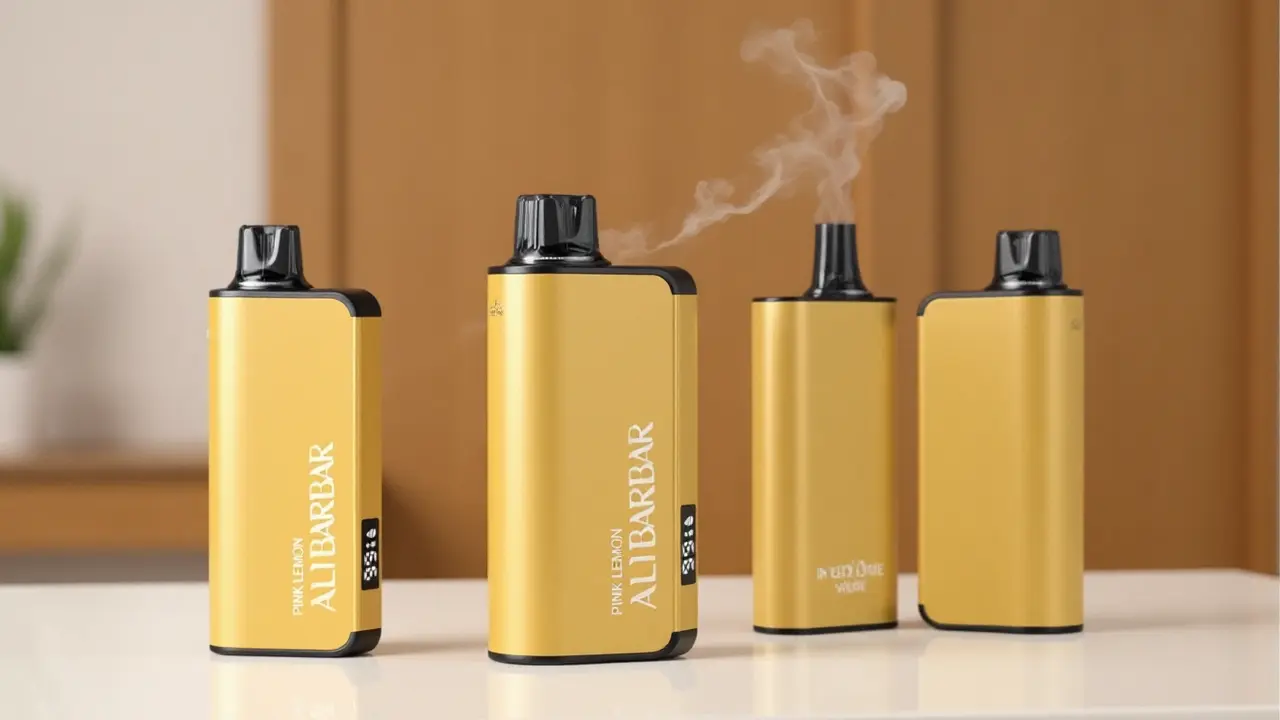
One of the reasons the ALIBARBAR product range has attracted attention in Australia is its emphasis on materials and assembly quality. While a 510 battery is not itself an ALIBARBAR device, the engineering philosophy of reducing friction and maximising durability is the same. Retailers who stock both batteries and the ALIBARBAR line are often well-positioned to advise on which power source complements those devices best.
Sign 3: Safety Certifications and Protections Are Genuine
Safety should never be an afterthought when selecting a 510 vape battery. The right battery will include multiple layers of protection built into its circuit design. These protections typically include overcharge prevention, over-discharge prevention, short-circuit protection, and temperature monitoring. Some batteries also include an automatic shutoff after a certain number of seconds of continuous use, which reduces the risk of overheating from prolonged activation.
But the presence of these features is not enough. The right battery will have them documented in a way that allows verification. Look for batteries that have been tested by recognised laboratories and that display certification marks such as CE, RoHS, or other relevant industry standards. It is important to note that a certification mark alone does not guarantee quality, but its absence is a concerning signal.
A more subtle safety sign is the behaviour of the battery when it is placed on a charging cable. A well-designed battery charges at a controlled rate, avoids overcharging, and communicates its status clearly through indicator lights or a screen. If a battery becomes noticeably hot during charging or takes an unusually short or long time to fully charge, that is a sign the charging circuitry may be poorly implemented.
There have been industry reports indicating that a meaningful portion of incorrect batteries sold through online marketplaces do not meet the specifications printed on their labels. In contrast, batteries sourced through dedicated retailers who work with authorised distribution networks are less likely to be counterfeit or mislabelled. This is one of the reasons that OZVAPE Shop emphasises its sourcing practices — the aim is to reduce the uncertainty that can come with unregulated channels.
Sign 4: Battery Capacity Matches the Claimed Milliamp-Hours
A common frustration among adult vapers is discovering that a battery labelled with a high milliamp-hour (mAh) rating does not actually last as long as a comparable battery with a lower rating from a different brand. The capacity of a 510 vape battery is measured in mAh, and this number directly impacts how long the battery will last between charges. But the printed number is only meaningful if it is accurate.
There is no simple way to test battery capacity without specialised equipment, but there are indirect indicators. A battery with a true 650 mAh capacity will typically not weigh as much or be as large as a battery with a true 1100 mAh capacity, assuming similar chemistry. If a small, light battery claims an unusually high mAh rating, you should be sceptical. Likewise, a battery that takes an extremely short time to charge relative to its claimed capacity may be overstating its rating.
Another useful comparison is real-world runtime. If you use your device at a similar rate across different batteries, you can track how many hours or days each battery lasts. This kind of practical observation is more meaningful than marketing text. The right battery for your daily use might not be the highest mAh model available, but it will be one that honestly delivers something close to its claimed capacity.
For Australian consumers, the range of capacities available through local retailers is broad. Batteries from reputable brands often list their capacities alongside the recommended resistance range for cartridges. A battery that works well with a 1.0-ohm cartridge may not be suitable for a 0.5-ohm coil, and the capacity you need will depend on how heavily you vape. Understanding the relationship between capacity, resistance, and your typical draw length is part of selecting a battery that feels right.
Sign 5: Threading Is Clean and Provides a Secure Fit
The 510 thread itself can be a source of irritation if manufacturing tolerance is poor. The right battery will have threads that are cleanly cut, free from burrs, and that allow you to screw on a cartridge or tank with just a small amount of resistance. When it is fully tightened, there should be no gap, no wobble, and no need to overtighten to achieve a good connection.
Over time, the threads can wear down or collect residue. This is true of all 510 connections, but higher-quality batteries use harder materials and sometimes apply a plating that resists corrosion. If you notice that your cartridge does not sit straight on the battery, or that it becomes loose after a few minutes of use, that points to a substandard thread finish.
A related factor is the centre pin. Some batteries feature a fixed centre pin, while others use a spring-loaded pin that adjusts to the length of the cartridge connection. The spring-loaded design is usually more forgiving, but it must be well constructed. A pin that is too short may fail to make contact with certain cartridges, while a pin that is too long can push the cartridge connection too far and damage the cartridge. The right battery will have a pin that sits flush or slightly recessed when no cartridge is attached, and that extends just enough when the cartridge is screwed in.
If you are using an ALIBARBAR device or another popular tank system, check whether the battery model is listed as compatible. Many manufacturers publish compatibility lists, and a battery that is recommended by the device maker is more likely to deliver a satisfactory experience. Retailers like OZVAPE Shop often group batteries and devices by interoperability, which can be a practical guide for those who are new to 510 connections or who are upgrading from an older battery.
Sign 6: Power Range Covers Your Typical Draw Preferences
Not all 510 batteries are the same in terms of power delivery. Some offer a single fixed output, others provide multiple voltage settings, and many newer models include variable wattage or temperature control. The right battery for you is one that gives you enough adjustment to dial in the experience you prefer, without overcomplicating the device.
For instance, if you prefer a warmer vapour with a slightly fuller throat hit, a battery with a voltage range of 3.2V to 4.8V will generally give you room to experiment. If you prefer a gentler experience, a battery that starts lower at around 2.8V may be more useful. The trick is to choose a battery whose range actually aligns with your preferred settings. Choosing a battery with a very wide range but poor precision can be just as frustrating as a battery with no range at all.
Another factor is the user interface. Some batteries use a simple button where clicking cycles through preset voltage levels, indicated by LED colours or a small display. Others use a screen with detailed menus. There is no one right answer, but the interface should be intuitive enough that you can change settings easily while holding the device in one hand.
It is also worth considering how the power range interacts with the resistance of your cartridge. A battery that cannot deliver enough power to heat a particular coil may produce weak vapour, while a battery that pushes too much power can burn the coil. The right battery will be one that operates comfortably within the recommended wattage or voltage range of your cartridge, providing a buffer on both sides to avoid accidental overheating.
Sign 7: Charging Behaviour Is Predictable and Reliable
Charging is one of the most frequently abused aspects of portable electronic devices, and 510 vape batteries are no exception. The right battery will have a charging system that is predictable and reliable across each cycle. This means it charges at a sensible current, does not overheat, and communicates its status clearly.
Most 510 batteries charge via a USB connection, often using a standard USB-C port in newer models. A well-designed battery will accept a standard charger and negotiate the appropriate charging current. If a battery only charges with a very specific cable or charger, or if it requires you to press the button to activate charging, that is a sign of a more primitive design.
Pay close attention to the indicator light during charging. The right battery will show a steady change in colour or a percentage display that advances evenly. It should not flash erratically or turn green immediately. Also, ensure the battery stops charging when it reaches full capacity, rather than continuing to draw current. This is a safety feature that protects both the battery and the connected device.
A practical test is to time the charge from empty to full, and then compare that with the claimed capacity. While charging time depends on the charger, a 650 mAh battery should not take eight hours to charge unless the charging current is extremely low. Conversely, a battery that claims to fully charge in fifteen minutes may lack the protective circuits necessary to avoid long-term degradation. The right battery will strike a sensible balance between charging speed and safety.
How a Trusted Retailer Can Help You Identify These Signs
The seven signs above are useful for evaluating a 510 vape battery that you already own or are considering. But knowing what to look for is not always enough. Accessing reliable specifications and genuine products is equally important. This is where the role of a retailer becomes central.
OZVAPE Shop is an Australian-operated retailer that focuses on factory-certified personal electronic devices and the batteries that power them. While their catalogue includes the ALIBARBAR product range, they also supply and service batteries that use the 510 standard. Their emphasis is on providing consistent product information, authorised sourcing, and local support. When you purchase a battery through a channel with these qualities, you reduce the risk of encountering a counterfeit or a product whose specifications have been overstated.
A good retailer will also be transparent about what they do not know. If a battery has not been independently tested, they should say so rather than imply certainty. Trustworthy retailers also tend to invite inspection of their returns and warranty policies, because they are confident that their products will meet reasonable expectations. In the wider Australian market, there is growing awareness of the value of buying from local suppliers who have a physical presence or an established customer support structure, rather than risk an overseas marketplace without a clear point of contact.
It is worth mentioning that the ALIBARBAR family of devices is not built around a single 510 battery brand. Instead, the devices are designed to work with any quality 510 battery that meets the recommended specifications. This flexibility is an advantage, because it allows adult users to choose a battery based on their personal preferences rather than being tied to a proprietary system. A knowledgeable retailer can guide that selection by comparing specifications and acknowledging that the “right” battery is the one that fits your habits, not the most expensive model on the shelf.
Additional Considerations for Australian Users
Australian conditions can be different from the conditions in other markets. The climate in parts of the country is hot and humid, and batteries can be exposed to significant temperature variation. Heat accelerates the degradation of lithium-ion cells, so a battery that might be acceptable in a milder climate could fail more quickly in northern Australia in the middle of summer. When selecting a 510 vape battery, it is worth considering how it will be carried and stored. Avoid leaving batteries in vehicles or in direct sunlight, and choose a battery with a robust temperature cutoff if you know you will be in challenging conditions.
Charging infrastructure also matters. Australian mains power operates at 230–240 volts, but USB chargers are standardised. It is important to use a charger from a reputable manufacturer and to avoid charging a battery unattended for long periods, particularly if you are using a generic USB wall adaptor. The right battery will not start a fire on its own, but electrical safety is a shared responsibility between the user, the charger, and the battery itself.
Another consideration is the legal classification of vaping products in Australia. While this guide does not delve into regulatory detail, it is important for adult users to purchase batteries and cartridges from channels that comply with local laws. Retailers that are careful about sourcing and product representation tend to be more attuned to these requirements, and they are better placed to answer questions about what can and cannot be shipped across state lines.
Real-World Perspectives: What Users Report After Switching Batteries
The experience of adult vapers who have switched from a generic or low-quality 510 battery to a more considered unit is instructive. A pattern emerges in online communities and in feedback collected by retailers like OZVAPE Shop. Users often report that the biggest shift is not a dramatic change in flavour, but an improvement in consistency. The device fires more reliably on the first draw, it does not require as much fiddling with the cartridge, and the battery life feels more honest.
There are also reports of fewer “burnt hits” after switching to a battery with a regulated output. When a battery delivers unstable voltage, the coil can overheat in bursts, leading to degradation of the wicking material and a shorter cartridge lifespan. Over time, this small difference in electrical behaviour can amount to considerable savings in cartridge replacement costs.
Less commonly discussed, but equally important, is the psychological dimension. A battery you trust is a battery that fades into the background. You do not have to check whether it is going to die before the end of the day, and you do not have to worry about whether it will fire when you press the button. This kind of reliability is difficult to quantify but it is central to satisfaction. The right battery is not the one that looks the most impressive in a shop display; it is the one that you stop thinking about after the first week of use.
Comparing a Few Approachable Battery Styles
To make the seven signs more concrete, consider three common categories of 510 batteries. The first is a small, fixed-voltage pen style. These are light, simple, and often quite affordable. They can be ideal for cartridges with higher resistance and for people who prefer a uniform experience without any settings to adjust. The sign that you have chosen well within this category is that the device feels mechanically solid and the output is smooth.
The second category is a variable voltage battery with a button and an LED display or indicator. These are more versatile, allowing you to adjust the intensity of the draw. They tend to be longer and slightly heavier, but they offer the ability to dial in a personalised setting. Here, the right choice is one where the adjustment range is genuinely useful to you, not simply a broad specification that means little in practice.
The third category is a high-capacity, multifunction battery, sometimes known as a box mod. These can handle a wider range of cartridge resistances and often include safety features and a small screen. They are the most capable but also the largest. The sign of a right choice in this category is that the battery gives you something other simpler options cannot — be that longer runtime, finer control, or the ability to run a low-resistance coil without sagging.
Each category has a place, and none is objectively superior. The right battery is the one that aligns with the way you use your device, not the one that looks most impressive in a specification table.
Red Flags That Suggest You Have the Wrong Battery
It can be just as important to identify the wrong battery as it is to recognise the right one. Some common red flags include a battery that becomes hot after only a few draws, a battery that fires intermittently, or a battery that needs to be jiggled or re-seated before it will work. A button that feels sticky or that takes a firm press to activate is also a concern, as is a charging port that is loose from day one.
Poor battery life is another red flag. If a battery with a generous mAh rating dies within a short time even when it has been properly charged, the rating may be exaggerated or the internal cells may be damaged. It is also concerning if a battery discharges even when not in use — a battery that loses its full charge while sitting on a shelf has a high internal drain, which suggests low-quality components.
Another warning sign is difficulty in finding a replacement cartridge that sits correctly on the battery. A battery that limits your choice of cartridges, or that requires an adapter for common thread types, may not be manufactured to standard tolerances. This can become a persistent annoyance and may eventually lead to a damaged cartridge. If you encounter these problems, it is worth replacing the battery rather than continuing to work around it.
Summary and Outlook
Selecting the right 510 vape battery is a matter of observation, measurement, and a little bit of patience. The seven signs discussed here — steady voltage, solid construction, genuine safety features, honest capacity, clean threading, a useful power range, and predictable charging — provide a practical framework for evaluation. None of these signs should be considered in isolation. A battery that satisfies only one or two is unlikely to give you a satisfactory long-term experience.
As the Australian market for personal electronic devices continues to evolve, consumers are becoming more discerning. Retailers such as OZVAPE Shop play a role in this evolution by providing access to authentic products and by being transparent about the limitations of their catalogue. The ALIBARBAR product family, with its focus on reliability and user experience, is one example of a range that encourages thoughtful battery pairing rather than accepting any random 510 unit.
Looking ahead, we can expect to see continued innovation in battery chemistry, charging speed, and user interface design. However, the fundamental principles behind a good battery are unlikely to change. The right 510 battery will always be the one that responds instantly, lasts for your entire day, and works quietly behind the scenes without demanding attention. If you have found a battery that does all of that, you have likely picked the right one.
The next time you are comparing batteries — whether online or in a local store — return to these seven signs. Weight them against your own habits and priorities, and do not be swayed by marketing language that promises more than a product can realistically deliver. The best evidence always comes from your own experience, preceded by a little research and a clear idea of what you are looking for.