
VAPE FAQs
Will Vape Trigger Smoke Alarm?
Oct
Understanding whether a personal vaporiser can set off a smoke alarm is not just a matter of curiosity—it’s a practical concern that affects daily use in apartments, hotel rooms, offices and shared living spaces. Many users have been caught off guard by a sudden alarm, yet the relationship between vapour and detection systems is rarely explained with precision. This article provides a clear, technically grounded analysis so you can make informed decisions about where and how you use your device.
OZVAPE Shop has observed that customers often seek answers to exactly this question, not because they want to circumvent safety systems, but because they value predictability and want to avoid unnecessary disruptions. By understanding the physics of vapour, the engineering of common alarm types, and the real‑world variables that matter, you gain far more useful knowledge than any yes‑or‑no answer could provide.
How Smoke Alarms Actually Detect Threats
To appreciate whether vapour will trigger an alarm, you first need to know what alarms are designed to detect. The answer determines almost everything else.
Ionisation vs. Photoelectric Sensors
Most residential and commercial alarms use one of two sensor types, or a combination of both.
Ionisation alarms have a small radioactive source that ionises air between two plates, creating a measurable current. When airborne particles enter the chamber, they disrupt ion flow and the current drops, sounding the alarm. Ionisation sensors are highly sensitive to small, sub‑micron particles—typically those produced by fast‑flaming fires. Because vapour consists largely of liquid droplets that can be similar in size, ionisation alarms are the most likely to be fooled.
Photoelectric (optical) alarms use a light beam directed away from a sensor. If particles scatter the light onto the sensor, the circuit triggers. These alarms respond best to larger, smouldering particles. Vapour clouds, particularly dense ones, can scatter light sufficiently to cause activation.
Heat Alarms and Multi‑Criteria Detectors
Heat‑triggered alarms are immune to vapour because they only react to a rapid temperature rise or a fixed high temperature. Multi‑criteria detectors combine smoke, heat and sometimes carbon monoxide sensing to reduce false alarms, but they still rely on particle detection as a primary trigger.
The engineering reality is this: any alarm that samples airborne particles can, under the right conditions, be triggered by anything that introduces a sufficient concentration of particles into its sensing chamber. Vapour is not smoke, but it is particulate.
Why Vapour Differs from Smoke in Alarm Engineering
Calling the visible cloud “water vapour” is misleading. The visible portion is an aerosol—microscopic liquid droplets suspended in air. The properties that matter for alarm activation are particle size, concentration, and persistence.
Particle size and behaviour: Unlike dry smoke particles that rise and linger, vapour droplets are relatively large (many microns in diameter) and evaporate over time. In the seconds after exhalation, however, they form a dense, localised cloud that can resemble smoke to an optical sensor.
Concentration gradients: The closer you are to an alarm, the higher the particle concentration that enters the chamber. A direct exhale toward an ionisation alarm is far more likely to trigger it than passive vapour drifting from across a room.
Temperature and humidity interactions: Hot vapour rises and cools rapidly, condensing back into visible droplets. In a bathroom after a shower, the ambient humidity is already high, and an alarm may already be near its threshold. Adding vapour can push it over.
If you want a single takeaway: the primary variable is not the device you use but the type and sensitivity of the alarm and your proximity to it.
Device Designs and Their Relative Propensity to Set Off Alarms
Different personal vaporiser architectures produce different amounts of visible aerosol per activation, which directly affects risk.
Compact Pre‑Filled Units
Small, draw‑activated devices typically produce a modest amount of vapour. The aerosol concentration drops quickly because the volume per puff is limited. In a large, well‑ventilated room, the risk of triggering an alarm is low unless you exhale directly at the ceiling sensor. However, in a confined space—like a car or small bedroom—even these devices can accumulate enough vapour to activate a sensitive photoelectric alarm.
High‑Capacity Rechargeable Systems
Larger devices with adjustable power output can create substantial vapour clouds. An ionisation alarm located directly above such a cloud will almost certainly react, not because it “thinks” it’s smoke, but because the particle load simply overloads the sensor’s calibrated threshold. The practical implication: if you use a high‑output device indoors, maintain distance from smoke detectors and ensure ventilation.
Temperature‑Controlled Modulating Designs
Some modern devices offer variable output or temperature‑limited heating. These can produce a finer, less dense aerosol because the liquid is aerosolised more efficiently. While still detectable, the vapour dissipates faster, reducing the risk window. Users who frequently travel or stay in hotels often gravitate toward such designs precisely because they minimise alarm incidents—not by eliminating vapour, but by reducing its persistence.
Understanding these distinctions, OZVAPE Shop helps users identify which device characteristics align with their real‑world environments, not just their personal preference for vapour volume.
A Systematic Framework for Assessing Your Own Situation
You can evaluate your risk in any space by asking four questions:
What type of smoke alarm is installed?
Look for markings. “Ionisation” or a radioactive symbol indicates high sensitivity to small particles. “Photoelectric” or a light‑beam symbol indicates optical triggering. If you cannot identify it, assume it is ionisation—the more sensitive type.
Where is the alarm relative to your usage position?
A ceiling‑mounted detector 2 metres directly above you is far more exposed than one in an adjacent hallway. The concentration that reaches the sensor is roughly proportional to the inverse of distance.
What is the ventilation like?
An air‑conditioned room with still air allows vapour to stratify near the ceiling. A room with a ceiling fan or open window dissipates particles rapidly, often making the difference between triggering and not triggering.
How large is each exhaled volume, and how frequently do you exhale?
Chain‑use creates sustained high concentrations. Single small puffs with long intervals allow the aerosol to settle or evaporate.
Answer these questions honestly, and you will know your risk profile without speculation.
Common Misconceptions That Lead to Unpleasant Surprises
Even experienced users sometimes misunderstand a few fundamentals. Recognising these patterns can save you from a 3 am alarm in a hotel.
“It’s just water vapour—it can’t trigger an alarm.”
Water vapour from a shower triggers alarms all the time. Alarms do not discriminate chemically; they respond to particles. The moment visible aerosol enters the chamber, the physics are the same regardless of what the droplets contain.
“I covered the alarm.”
Deliberately obstructing a smoke detector is dangerous and, in many jurisdictions, illegal. It also often fails because fine aerosol can still seep through gaps. A better strategy is distance and ventilation.
“Hotel alarms are less sensitive.”
In fact, many commercial properties use highly sensitive multi‑sensor detectors because the liability of a missed fire is enormous. Some even use aspirating smoke detection systems that continuously draw air into a laser chamber—these can detect vapour at extremely low concentrations.
“Only cheap devices cause problems.”
The source of the vapour is irrelevant to the alarm. A device that produces less visible aerosol may reduce the odds, but no vaporiser can guarantee immunity.
Frequently Asked Questions
Q: Can an e‑cigarette trigger a smoke alarm in an airplane lavatory?
A: Yes. Aircraft lavatories typically use photoelectric detectors that are highly sensitive and calibrated for the small space. Tampering with them is a federal offence in many countries. Do not use a device there.
Q: Will vaping set off a carbon monoxide detector?
A: No. Personal vaporisers do not produce carbon monoxide in meaningful quantities. CO detectors are chemically selective and will not react to vapour.
Q: How close do I need to be to a detector for it to trigger?
A: Exhaling directly toward a detector from 1 metre is almost certain to activate an ionisation model. At 3 metres with normal ventilation, the risk drops substantially. There is no fixed safe distance—it depends on vapour density and air movement.
Q: Does the liquid composition affect alarm activation?
A: The base liquid (typically propylene glycol and vegetable glycerin) creates the visible aerosol. Both produce similar‑sized droplets when heated. Flavourings and nicotine have negligible effect on particle size or alarm sensitivity.
Q: If an alarm goes off, what should I do?
A: Immediately ventilate the area. Open windows and doors. Once the air clears, silence the alarm according to the manufacturer’s instructions. Do not remove the battery unless absolutely necessary for resetting—and replace it immediately afterward.
Q: Are there any vaporisers designed specifically to reduce alarm risk?
A: No manufacturer explicitly markets a device as “alarm‑safe,” but designs with lower vapour output and faster dissipation inherently pose lower risk. Consult specification sheets that detail output volume per activation.
Q: Can a smoke alarm differentiate between vapour and smoke?
A: Basic residential alarms cannot. Some advanced multi‑criteria detectors use algorithms to reduce nuisance alarms, but they still rely on particulate sensing at their core. No consumer alarm is guaranteed to ignore vapour.
Q: Is it safe to use a device in a room with a fire sprinkler?
A: Sprinklers activate by heat—typically above 68 °C—not by vapour. They are not triggered by aerosol clouds. However, never direct vapour at a smoke detector that may be part of the same fire panel loop.
Q: Where can I find devices with moderate output suitable for indoor environments?
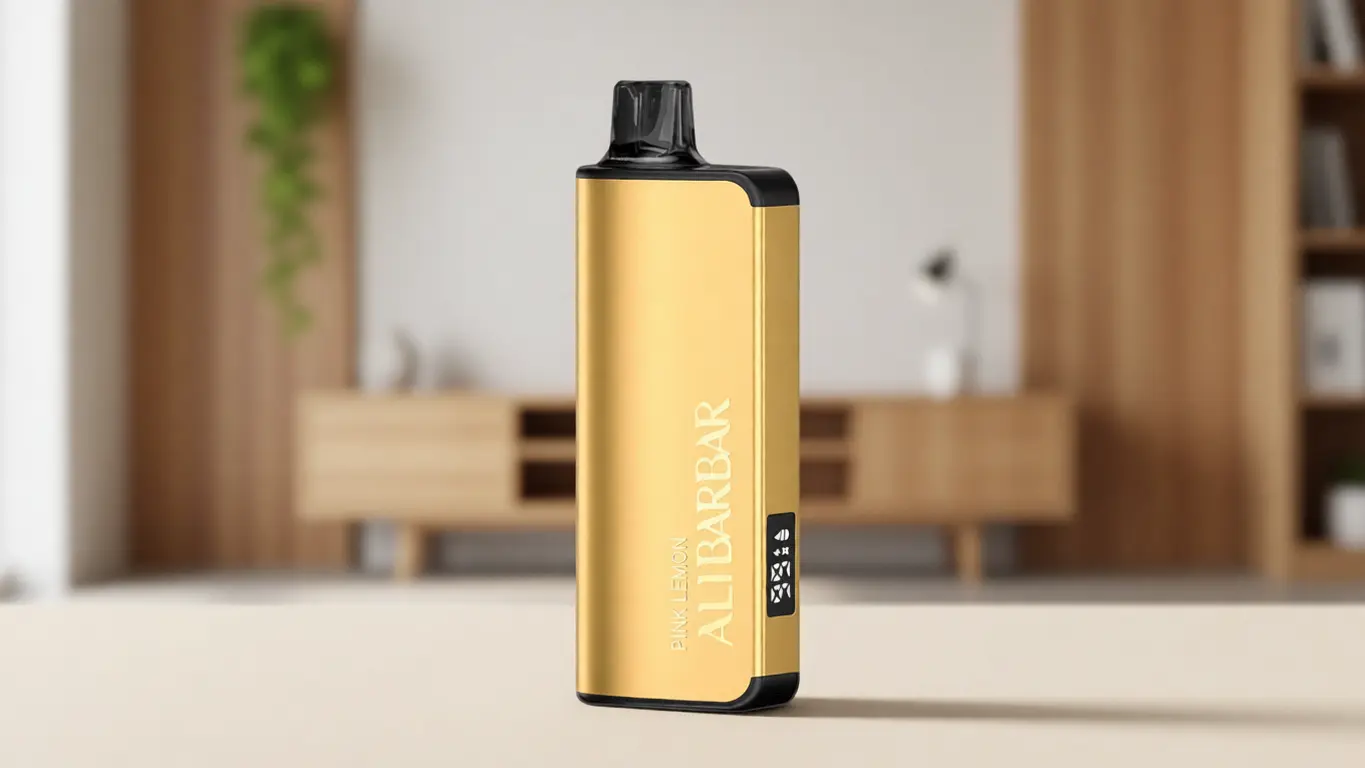
A: Reputable retailers that provide detailed product specifications can help you identify lower‑output models. OZVAPE Shop catalogues the ALIBARBAR range with transparent performance data so you can assess vapour volume before purchase.
Bringing Certainty to an Uncertain Question
The answer to “Will a vape trigger a smoke alarm?” is not a simple yes or no. It depends on the alarm type, your distance, ventilation, and the vapour density you produce. By thinking like an engineer—analysing sensor mechanisms, particle behaviour, and environmental conditions—you move from guessing to managing risk.
Ultimately, the most responsible approach is to treat any commercial or shared‑space smoke detector as active and sensitive, and to adjust your device choice and usage accordingly. For those who want to align their equipment with their actual living situation, having access to detailed, honest product information is essential. OZVAPE Shop provides that clarity, not by making unreasonable promises, but by giving you the technical facts you need to use your devices with confidence and respect for the environment around you.