
VAPE FAQs
Will Vape Set Off Hotel Smoke Alarm?
Sep
That moment of hesitation when you’re standing in a hotel room, device in hand, eyeing the ceiling-mounted sensor with legitimate concern – it’s an experience nearly every adult user has faced. The question isn’t abstract: will using your device trigger a cascade of inconvenient consequences, from a blaring alarm to an awkward conversation with hotel staff? The short answer is nuanced, but understanding the underlying detection technology makes it predictable.
Understanding What Hotel Smoke Alarms Actually Detect
To answer the question definitively, we need to look at what these devices are designed to sense and how they differentiate between legitimate threats and benign vapour.
Photoelectric vs. Ionisation Sensors
The vast majority of hotel smoke alarms use one of two detection mechanisms:
Photoelectric sensors contain a light source and a light-sensitive sensor positioned at an angle. Under normal conditions, light travels in a straight line away from the sensor. When smoke particles enter the chamber, they scatter the light, causing some of it to hit the sensor, which triggers the alarm. These are particularly sensitive to larger particles produced by smouldering fires.
Ionisation sensors use a small amount of radioactive material to ionise the air between two electrically charged plates. Smoke particles disrupt this ionisation current, reducing it and triggering the alarm. These are more responsive to smaller particles from fast-flaming fires.
Critical distinction: Both sensor types respond to particulate matter suspended in air. The difference is in particle size, concentration, and composition.
How Vapour Interacts with These Sensors
Here is where engineering meets real-world conditions. The aerosol produced by electronic devices consists predominantly of liquid droplets – propylene glycol, vegetable glycerin, and flavour compounds – suspended in air. These droplets fall within a specific size range that is not identical to but can overlap with the particle sizes that trigger photoelectric sensors.
The threshold question is one of concentration and proximity. A single, casual exhalation in a large, well-ventilated room is unlikely to produce sufficient particle density to trigger an alarm. However, sustained use in a small, enclosed space – a hotel bathroom with the door closed, for instance – can absolutely accumulate enough vapour to be interpreted as smoke.
Key factor: Most hotel alarms are calibrated to trigger at particle densities that represent genuine fire risk. Vapour from a device is significantly less dense than smoke from combustion, which means it takes sustained output to reach that threshold. But it is not impossible.
Real-World Scenarios: When It Happens and When It Doesn’t
Understanding the theoretical mechanisms is one thing. Observing actual outcomes across hundreds of documented user experiences provides a clearer picture.
Low-Risk Conditions
Well-ventilated rooms with open windows or balcony access where vapour disperses rapidly
Devices used sparingly with significant time between exhalations
Rooms with high ceilings where vapour has more volume to dilute
Alarms located far from user position, particularly in larger suites
In these conditions, the risk is genuinely minimal. The vapour dissipates before reaching sufficient concentration near the sensor.
Higher-Risk Conditions
Hotel bathrooms – small, enclosed, often with the alarm positioned directly above
Excessive continuous use – chain-vaping without allowing the room to clear
Older alarm systems that may have lower trigger thresholds
Ceiling-mounted sensors directly above the user where vapour rises immediately toward the detector
Multiple reports from hospitality industry sources indicate that bathroom use is the most common trigger scenario. The combination of concentrated vapour in a small volume and the alarm’s proximity creates conditions where particle density reaches alarm thresholds.
Dual-Sensor Systems
Many modern hotels employ combination alarms that include both photoelectric and carbon monoxide sensors. Carbon monoxide detection is not triggered by vapour – it responds to CO gas from incomplete combustion. However, the photoelectric component remains sensitive to particulate matter.
Important distinction: A device does not produce carbon monoxide. If an alarm activates solely due to CO sensing, vapour is not the cause. However, most hotel alarms are primarily smoke (particulate) detectors.
Practical Considerations for Hotel Use
The question is not just whether an alarm can be triggered, but how to use devices responsibly in accommodations.
Risk Mitigation Strategies
Steam method: Running a hot shower creates steam, which disperses and masks vapour. This is perhaps the most widely reported workaround, though it is not foolproof.
Directed exhalation: Exhaling toward an open window, balcony door, or into a towel can significantly reduce vapour concentration in the room. The towel method is surprisingly effective because the vapour condenses on the fabric rather than dispersing into the air.
Ventilation management: A room with continuous air exchange – an open window or a functioning bathroom exhaust fan – maintains lower ambient particle concentration. Stale, still air allows vapour to accumulate.
Reducing device output: Lower power settings produce less vapour overall, reducing the particle load on the room’s air. This is a straightforward engineering solution that costs nothing.
What Happens If an Alarm Triggers
If the alarm does sound, the typical response from hotel staff is not punitive. They are responding to a potential fire threat, and their priority is safety verification. An honest explanation – “I was using a personal electronic device in the bathroom” – is almost always sufficient. The staff will reset the alarm and likely ask you to be more cautious.
Attempting to disable, cover, or tamper with a smoke alarm is a different matter entirely. That is a genuine safety violation and can result in fines or eviction. Never cover or obstruct a smoke detector. The consequences far outweigh any convenience.
Device Selection and Considerations
The device itself influences vapour output, and by extension, the likelihood of triggering a sensor. Devices with higher power output and larger wicking capacity produce more aerosol per activation. This does not mean they are unsuitable for hotel use – it simply means the user should adjust their approach.

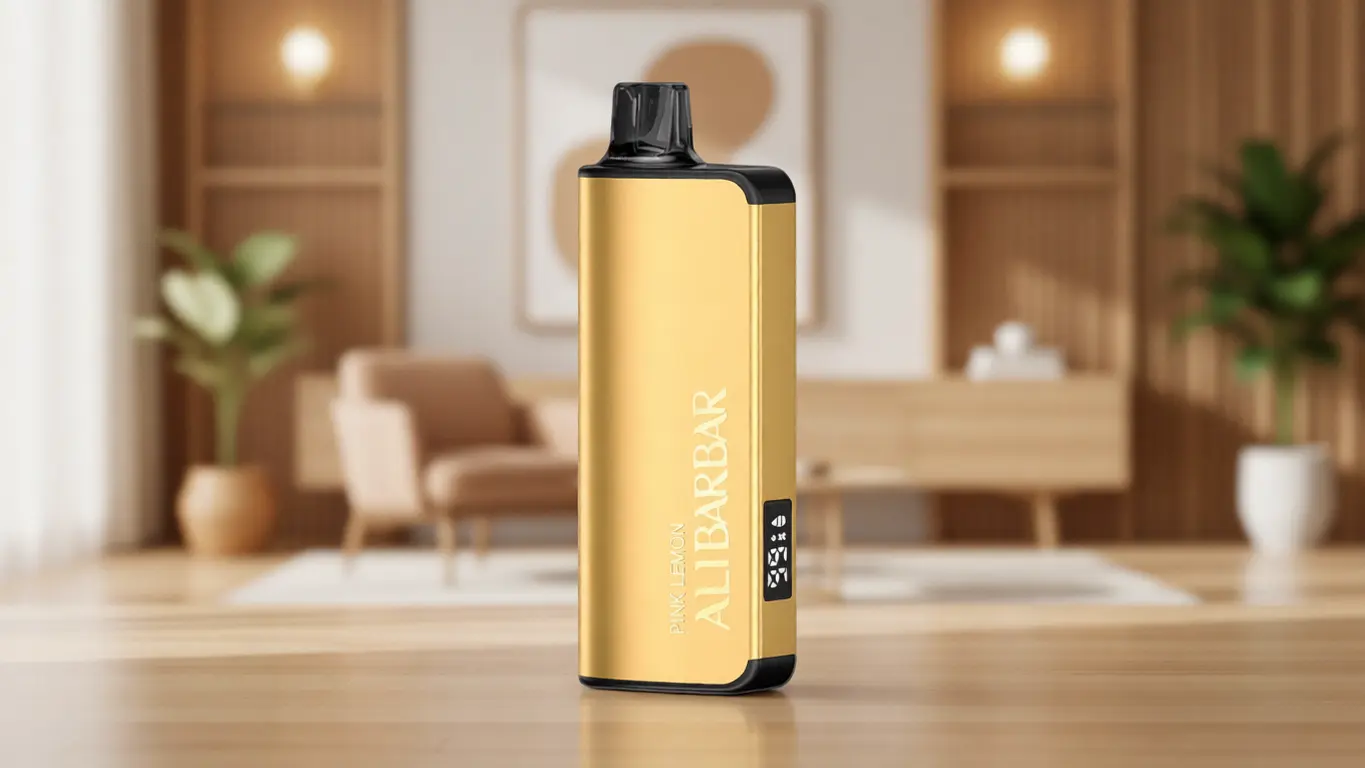
At OZVAPE Shop, the ALIBARBAR device family includes a range of options that vary in output characteristics. The INGOT 9000, for instance, is calibrated for balanced output that is not excessive, while higher-capacity models like the INGOT 15000 deliver more sustained performance. Both can be used in hotel environments – the distinction is in how the user manages their pattern of use.
The Engineering and Design Principles section earlier in this article provides a framework for evaluating device output relative to your intended use environment. Understanding your device’s characteristics is the first step in using it intelligently in any context.
Frequently Asked Questions
Q: Can a single exhalation trigger a hotel smoke alarm?
A: Extremely unlikely. Most alarms require sustained particle concentration to trigger. A single, casual exhalation in a standard hotel room dissipates before reaching threshold density.
Q: Are hotel smoke alarms different from residential ones?
A: Generally, no. The same detection technologies – photoelectric and ionisation – are used. Some hotels may use interconnected systems that sound all alarms simultaneously, but the trigger mechanism is identical.
Q: Does the type of device matter for alarm triggering risk?
A: Yes. Devices producing larger vapour clouds – higher power settings, sub-ohm configurations – output more particulate matter per activation, increasing the cumulative concentration in a room.
Q: Will a device produce carbon monoxide that triggers a CO alarm?
A: No. Electronic devices do not produce carbon monoxide. CO alarms respond to combustion byproducts. If a hotel alarm includes CO detection, vapour alone cannot trigger that sensor.
Q: Is it safe to use a device in a hotel room with children present?
A: This is a separate concern from alarm triggering. The aerosol contains compounds that are not intended for inhalation by minors. Use discretion and maintain adequate distance.
Q: What should I do if the alarm triggers falsely?
A: Remain calm. Contact the front desk or wait for hotel staff to respond. Explain honestly that you were using a personal electronic device. Do not attempt to silence or disable the alarm yourself.
Q: Do hotels have specific policies about device use?
A: Policies vary. Many hotels classify device use alongside smoking and prohibit it in rooms. Others have designated areas. Check the hotel’s policy in advance to avoid issues. Hotels like Marriott and Hilton have explicitly banned vaping in rooms, matching existing smoking prohibitions.
Q: Can I use a device in a hotel with a balcony?
A: If the balcony is private and exterior to the building’s interior ventilation system, the risk is significantly reduced. However, some balconies are still within building air intake zones.
Q: Are there devices that produce less vapour for discretion?
A: Lower-powered devices, mouth-to-lung configurations, and devices with restricted airflow produce less aerosol per activation, which reduces the particle load in any environment.
Q: What about hotels in Australia specifically?
A: Australian hotels generally follow the same safety standards as international properties. Some Australian states have specific regulations about vaping in enclosed public spaces, which may extend to hotel rooms. Check local regulations.
The Practical Bottom Line
The question “Will vape set off hotel smoke alarm?” deserves a direct answer: It can, but it usually won’t under typical, moderate use in a ventilated room. The risk is real but manageable when the user understands the underlying detection mechanics and adjusts their behaviour accordingly.
The responsible approach involves awareness of your environment, consideration for other guests, and a conservative use pattern. Hotel stays are temporary situations, and a few days of modified behaviour is a small price for avoiding a midnight conversation with security personnel.
OZVAPE Shop recommends that users familiarise themselves with their device’s output characteristics before travelling, and exercise the same courtesy they would expect from others sharing a building. The right choice is the one that respects both your preferences and the shared environment you occupy.
Informed users make better decisions – and better decisions mean fewer surprises, regardless of your destination.