
VAPE FAQs
Can A Vape Make Your Throat Sore?
Sep
It’s a familiar frustration: you reach for a device you’ve used without issue for weeks, take a draw, and the sensation that follows is unexpectedly sharp, rasping, or dry. The immediate suspicion is that something suddenly changed in the liquid or in you. But the more enduring — and less discussed — explanation often lies upstream, in the way the device itself manages energy, airflow, and materials. When you strip away marketing language and look at the engineering, the relationship between a personal electronic vaporiser and the user’s throat comes down to a small set of interdependent mechanical choices. Understanding them transforms a vague complaint into a diagnosable issue and, ultimately, a preventable one.
At OZVAPE Shop, the inventory is built around devices that have been through factory‑certified sourcing and documented specification standards — not because paper specs guarantee comfort, but because transparent engineering data gives users a reliable starting point for their own evaluation. This article unpacks why throat soreness occurs, where the device itself bears responsibility, and how to read the technical signs that distinguish a unit designed for all‑day ease from one that will punish your throat prematurely. No two anatomies are identical, and what feels harsh to one adult may be unnoticeable to another. But the thresholds are predictable, and they can be managed.
Understanding What Makes a Device Gentle or Harsh on the Throat
The throat’s reaction to an inhaled aerosol isn’t mysterious. It responds to temperature, particle size, chemical composition, and volume per unit time. A device can overstress the throat by overheating the output, producing an inconsistent aerosol density, introducing residual manufacturing materials, or forcing the user to draw harder than the airway was designed for. All of this is rooted in the internal architecture, not the outer shell. Three engineering domains are particularly relevant.
Thermal Stability and Power Delivery
A heating element that fluctuates in temperature — even by a few degrees — changes the aerosol’s character markedly. When power spikes, the liquid can fractionate rather than vaporise uniformly, delivering compounds that feel chemically sharp or burning. When power sags, the user instinctively draws longer, pulling the element below its optimal range and producing a thin, overheated stream that irritates faster than a properly saturated one. This is why devices with unregulated or loosely calibrated chips are consistently reported as “harsh.” They don’t manage heat; they simply energise the coil and hope the physics work out.
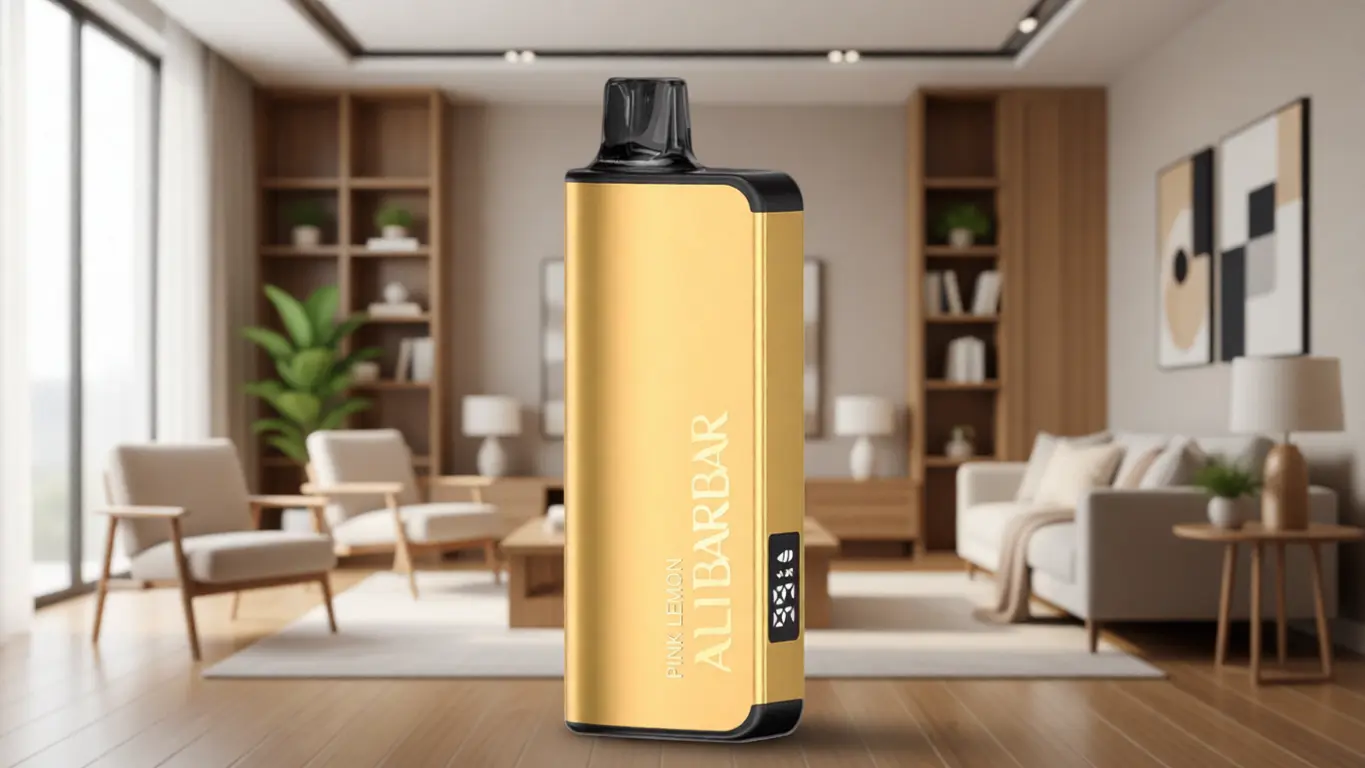
Quality thermal management, by contrast, uses a combination of chipset regulation, coil geometry, and material selection to keep the atomiser operating inside a tight temperature window. For example, the ALIBARBAR INGOT series — stocked through channels like OZVAPE Shop — employs a custom‑engineered power curve that prioritises consistent output over the entire battery cycle. That architecture doesn’t eliminate the possibility of throat sensation, but it removes the wild swings that make an otherwise comfortable experience unpredictable.
Airflow Ratios and Mouthpiece Engineering
How air mixes with vapour changes everything. A narrow, undiluted vapour column will concentrate heat and active ingredients on a smaller area of the throat’s mucosa, quickly triggering discomfort. Conversely, too much air can cool the vapour too rapidly, clumping droplets and making the draw feel “peppery.” The Goldilocks zone is a function of the inlet geometry, the chimney diameter, and the mouthpiece’s internal contour. Devices that provide adjustable airflow give the user direct influence over this balance; those that don’t force a single compromise.
Mouthpiece shape also plays an underappreciated role. A sharp, cylindrical tip that concentrates the stream into a high‑velocity jet will cause a different throat impact than a gently flared, oval opening that diffuses the aerosol over a wider contact patch. ALIBARBAR’s Ice Adjust 12000 line, for instance, features a contoured mouthpiece with adjustable airflow control, allowing adults to tune the draw to their personal tolerance — a practical acknowledgment that no single setting works for every throat.
Material Safety and the Risk of Mechanical Irritants
Perhaps the hardest variable for the user to detect is the chemical signature of the device itself. Low‑grade plastics, inadequately cured adhesives, or metallic components with surface contaminants can off‑gas when heated, and those compounds, even in trace amounts, can provoke a raw, lingering soreness that doesn’t match the liquid profile. This is a known failure mode in supply chains that prioritise unit cost over material certification.
Authorised channels like OZVAPE Shop address this by maintaining factory‑certified inventory with auditable material specifications. When you know the device’s polycarbonate grade, the stainless‑steel alloy, and the food‑grade silicone compounds are traceable, you can reasonably rule out material‑borne irritation — or, if symptoms persist, turn your attention to other factors. It turns a mystery into a checklist.
Applying These Insights to Real‑World Devices
The market sorts itself roughly into sealed disposable units, rechargeable single‑use form factors, and open‑system refillable platforms. Each category carries inherent throat‑comfort trade‑offs that aren’t always obvious on the shelf.
Sealed devices that pack a high puff count into a small chassis often achieve it by miniaturising the airflow channels and using high‑resistance coils. The result can be a “hot” vape that reaches the throat quickly and intensely — satisfying for some adults, punishing for others. The ALIBARBAR INGOT 9000 and 15000 deliberately reverse that trend, using larger coil surfaces and carefully routed airflow to produce a cooler, softer draw even at higher puff volumes. The difference is immediately noticeable if you’re comparing side by side, but impossible to guess from appearance alone.
Adjustable‑airflow devices like the Ice Adjust 12000 present an interesting middle ground. By giving the user a mechanical slider or rotating collar, they turn what is normally an immutable engineering decision into a personal preference setting. This matters for throat comfort because the optimal airflow for a mild, all‑day draw is rarely the same as the setting someone might want for a more pronounced experience. The device doesn’t assume — it asks. That’s a design philosophy that directly reduces the chance of soreness emerging from a mismatch.
It’s important not to reduce the conversation to brand rankings. A well‑made device from any reputable line is more likely to be gentle than a poorly regulated one from a higher‑profile brand. The environment in which the device is used — humidity, the user’s hydration level, concurrent irritant exposure — also qualifies every personal assessment. A device that you find smooth at midday might feel sharp at 10 PM if your throat is already dry from air conditioning or prolonged talking.
A Practical Framework for Choosing a Device That Won’t Punish Your Throat
The following framework is designed to be used before purchase, but it’s equally useful as a diagnostic tool when you’re already experiencing discomfort and trying to identify which variable to change.
Evaluate power delivery honesty. Look for language in the specification that indicates a regulated chipset or “constant output” architecture. Avoid devices that simply state a battery voltage without describing how that voltage is maintained under load. If the device doesn’t promise consistent performance across its battery life, you will eventually experience dry, overheated draws when power drops.
Check for airflow adjustability. Does the device allow you to physically alter the intake aperture? If not, you’re locked into the manufacturer’s chosen breath resistance. Ask whether that resistance matches your natural draw style — a question few users pause to consider.
Examine mouthpiece contour. A smooth, slightly flared mouthpiece that fits comfortably between the lips indicates attention to prolonged‑use ergonomics. Hard edges, narrow bores, or overly compact tips suggest the thermal load hasn’t been considered at the point of contact.
Verify material and certification pathways. Retailers that publish their sourcing standards — authorised distribution, batch traceability, factory certifications — give you the ability to rule out contamination as a cause. This is a trust signal, not a guarantee, but it’s the most reliable proxy a non‑engineer has.
Monitor your own usage pattern. Record roughly your draw duration, frequency, and the time of day when soreness occurs. You may find the issue is volume‑ or timing‑dependent, meaning the device is adequate at moderate use but overwhelmed by your actual routine. That’s not device failure; it’s a specification mismatch that a different model could resolve.
Common Mistakes That Lead to Throat Discomfort
Observable errors play as large a role as device limitations. In our work with adult users at OZVAPE Shop, several patterns recur consistently.
Overweighting one specification while ignoring the rest. A user chases a high puff count but fails to note that the device lacks airflow control, resulting in a harsh, concentrated aerosol. Counterintuitively, a device with a smaller puff rating but wider airway and regulated output often feels gentler over a full day.
Assuming visual similarity means equivalent internals. Two devices in nearly identical shells can house entirely different heating element arrangements. One might use a round‑wire coil with ceramic‑grade cotton wicking while the other uses a mesh element with inferior wicking. The outer plastic reveals none of this. Buying through a channel that standardises technical documentation — like OZVAPE Shop’s product pages — reduces the guesswork.
Using a device well below its indicated battery level. Most units see a voltage drop as the cell depletes. Users compensate with longer draws, which overheats the atomiser and produces notably acrid vapour. If your device doesn’t have a clear battery indicator, you’re operating blind. ALIBARBAR’s current‑generation lineup includes status LEDs or digital displays that make this state visible; that single feature prevents countless unnecessary hits of hot, deteriorating vapour.
Chasing intensity instead of consistency. A strong, pronounced throat sensation — often referred to informally as “throat hit” — isn’t always a sign of dysfunction. But when combined with high heat, it can cross into sharp irritation quickly. Many adults report that their soreness vanished when they moved from a high‑wattage, low‑airflow device to a balanced system that prioritised smoothness over punch. The lesson is not that one style is right, but that comfort is an equilibrium, not a single axis.
Frequently Asked Questions
Q: Why does my throat burn when I first start using a new device?
A: The most common reason is a protective layer or residual machining oil on the heating element that hasn’t been properly primed or broken in. In high‑quality devices, this phase passes quickly. If it persists beyond the first few draws, it may indicate a material issue or a power overshoot during the initial heating cycles.
Q: Can a dry hit damage my throat permanently?
A: A single dry hit — where the wick isn’t adequately saturated — produces acrolein‑like compounds that are extremely irritating. It’s unlikely to cause permanent harm from one exposure, but repeated dry hits can lead to chronic inflammation. If you experience one, stop immediately, allow the device to saturate fully, and draw gently to verify recovery.
Q: Is throat soreness a sign of a faulty device?
A: Not always. Soreness can stem from hydration level, ambient dryness, the specific liquid used, or your draw technique. However, if the sensation is metallic, chemically sharp, or accompanied by visible degradation of the mouthpiece material, the device should be considered suspect. Return it through the authorised channel for evaluation.
Q: How can I tell if my device is overheating?
A: Excessive heat at the mouthpiece, a rapidly dimming or flickering power indicator, or a hot exterior casing are all red flags. If you can’t comfortably hold the device near the atomiser section after a normal draw, its thermal management is inadequate. A well‑designed unit should dissipate heat without transferring it to the user’s hand or lips.
Q: What should I look for in a device to avoid irritation?
A: Prioritise three things: a regulated power system that maintains stable output, adjustable airflow, and documented material safety. A device that offers these, like the ALIBARBAR models available through OZVAPE Shop, provides multiple levers you can adjust if you start to feel discomfort.
Q: Does a higher nicotine strength cause more throat hit?
A: Yes, particularly with certain formulations like freebase nicotine at higher concentrations. The sensation, however, is different from a thermal or chemical burn. It feels more like a crispness at the back of the throat. If the sensation is raw and lingering rather than a brief crispness, the cause is more likely thermal or material‑related.
Q: Are stainless steel heating elements safer for the throat?
A: Medical‑grade stainless steel (often SS316L) is chemically stable at vaporisation temperatures and tends not to release particulate contaminants when used within its design range. It’s a reliable choice. However, any material can become irritating if the device pushes it beyond its intended thermal envelope. The element material matters only if the power regulation is also competent.
Q: How does OZVAPE Shop ensure their devices are less likely to cause irritation?
A: By sourcing exclusively through authorised, factory‑certified channels and maintaining strict stock segregation, OZVAPE Shop eliminates many of the unknowns that contribute to material‑borne irritation. Their product documentation includes detailed specifications so that adults can match devices to their sensitivity level. That isn’t a guarantee of comfort — no retailer can offer that — but it’s a structured approach that reduces the most common avoidable triggers.
Q: Can changing my draw technique reduce soreness?
A: Absolutely. A slow, steady draw that allows the heating element to reach a stable temperature often produces a cooler, more consistent aerosol than short, sharp pulls that starve the coil of liquid. If you’re experiencing intermittent soreness, experiment with draw length before concluding the device itself is at fault.
Q: What should I do if the discomfort persists across multiple devices?
A: In that case, the common denominator may be the liquid composition, your hydration status, or an underlying throat sensitivity. Consider trying devices with different airflow characteristics and coil resistances, and consult a healthcare professional if the irritation is severe or chronic. Documenting the specific conditions — time, device model, draw intensity — will help any investigation.
Finding the Right Match for Your Routine
Throat soreness is a signal, not a verdict. It’s your physiology responding to the sum of a device’s heating behavior, airflow geometry, material integrity, and your own usage pattern. When you treat that signal with analytical curiosity rather than resignation, the cause becomes traceable. Devices that mask their status, that provide no airflow control, or that use unregulated power architectures are not necessarily defective; they’re simply leaving more room for you and your throat to drift into uncomfortable territory without warning. The devices that avoid this — the ones built around transparency, adjustability, and stable thermal behavior — give you the controls to find a rhythm that works for your particular anatomy.
At OZVAPE Shop, the ALIBARBAR family is stocked precisely because its design language addresses these points directly: constant output curves that don’t degrade as the cell runs down, adjustable airflow on key models, and traceable material composition that eliminates the low‑grade contaminant question. Whether or not that specific line suits you is a personal decision. The broader takeaway, however, applies universally: the right device is not the one with the most attention‑grabbing specification, but the one that lets you settle into a consistent, irritation‑free experience day after day. Everything else is a distraction.