
VAPE FAQs
Why Is Smoke Coming Out Of My Vape?
Sep
Why Is Smoke Coming Out Of My Vape?
It’s a moment that catches attention: a visible plume rising from the device in your hand, and the immediate thought is smoke. The word carries assumptions — heat, combustion, something burning — and when you’re holding a personal electronic device, those assumptions naturally trigger concern. The truth is almost always far less alarming, but understanding why that “smoke” appears, and when it might point to a genuine problem, requires looking past the vapour to the engineering that creates it.
At OZVAPE Shop, we regularly hear variations of this question from adult users across Australia. The short answer is straightforward: modern portable devices are designed to produce an aerosol — a fine suspension of liquid droplets in air — not smoke. What you see is the intended output, generated by precisely controlled heating of a food-grade liquid formulation. The nuance, however, lives in how device architecture, power delivery, and condition all influence whether that output is smooth and consistent, or accompanied by irritation like spitting, leaking, or a burnt taste. This article unpacks those layers so you can move from vague unease to a clear, engineering-based understanding of what you’re observing.
Understanding Vapour Production: The Engineering Behind What You See
A personal electronic device converts stored electrical energy into thermal energy at a heating element, which then transforms liquid into an inhalable aerosol. The quality, volume, and stability of that output are not accidental; they are determined by a handful of design choices that experienced manufacturers like ALIBARBAR address methodically. When users ask “why is smoke coming out,” they are often reacting to a deviation from expectation — too much, too little, or a change in character. The following framework explains how core engineering factors shape the answer.
Internal Architecture and Output Consistency
The heating element is the heart of any device. In the ALIBARBAR range, and in many well-engineered alternatives, this is commonly a mesh coil — a fine metal lattice that distributes heat evenly across a large surface area. Contrast this with a basic round-wire coil: the latter can create hot spots, leading to inconsistent aerosolisation and a higher probability of partially combusted liquid, which produces a harsh, undesirable flavour that some might describe as “smoke-like.” Mesh architecture, by delivering uniform temperature, gives you a dense but clean vapour that remains steady from the first draw to the last.
Why this matters practically: users often report that a device seems to work well initially but later “starts smoking” or tastes burnt. This is frequently a sign that the heating element has degraded, or that the wicking material is not keeping pace with the liquid supply. A well-designed device anticipates this by pairing the coil geometry with a liquid delivery system that prevents dry hits, even under back-to-back usage. When you evaluate a device, ask whether the manufacturer specifies coil composition and mesh grade; these details separate designs that prioritise long-term consistency from those that simply meet a minimum functional threshold.
Power Management and Status Transparency
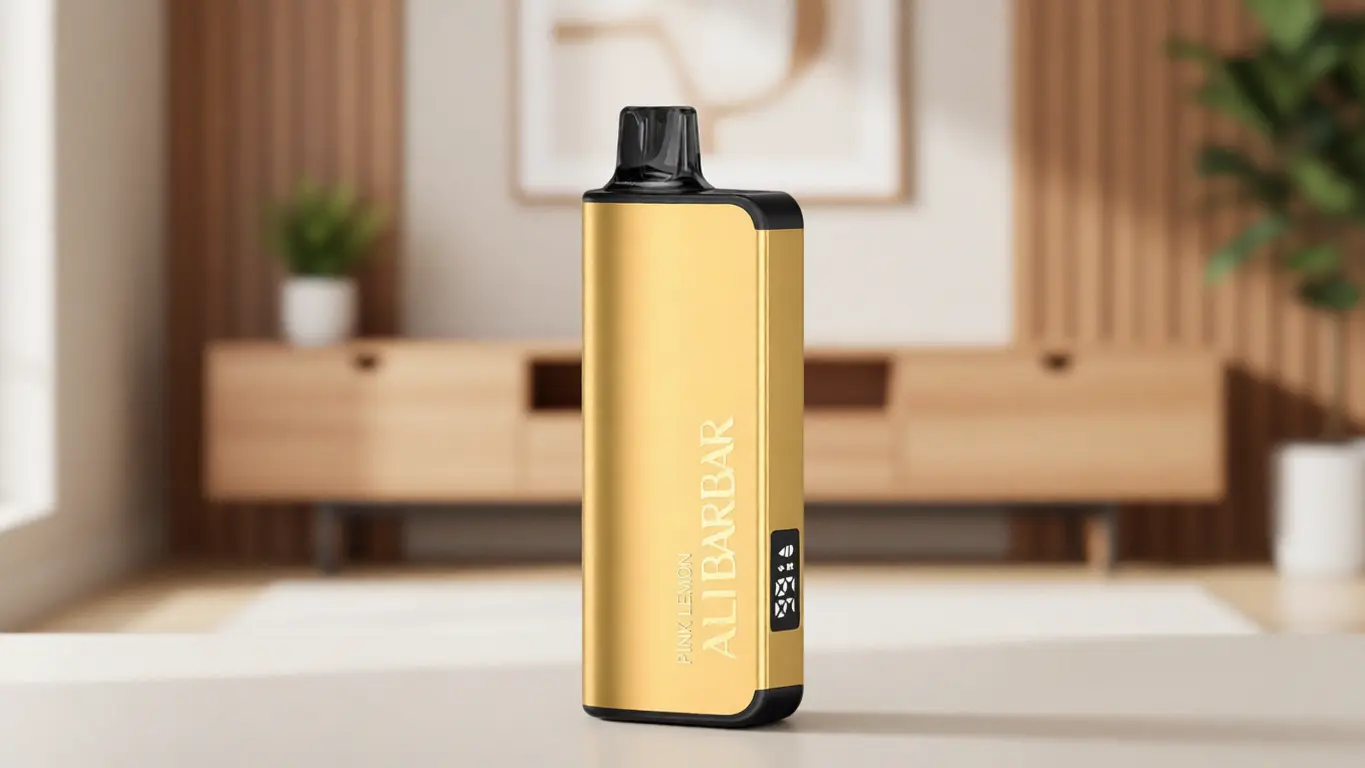
“Smoke” volume is intimately tied to power. A device that cannot maintain stable output voltage as the battery depletes will gradually produce thinner, less satisfying vapour, or worse, overdrive the coil in the final moments and create a burnt taste. ALIBARBAR units are built with voltage regulation that flattens the discharge curve, so the perceived vapour quantity stays in a predictable window until the cell is nearly empty. Clear status indicators — such as the multi-tiered LED displays found on the INGOT series — eliminate the guesswork that forces many users to carry a backup out of anxiety.
The hidden cost of ambiguous power feedback is constant vigilance. Without clear status communication, a user has no way to know if the current draw is normal, whether the battery is strained, or if the device is about to shut off. In the absence of such data, every unexpected reduction in visible output triggers the “is it smoking?” concern, when in reality the device is simply reaching the end of its charge cycle and doing exactly what it was designed to do. Look for devices that report state-of-charge with at least three distinct levels; a simple single-colour light that turns red only minutes before failure leaves you operating blind.
Physical Design and Material Durability
The path the aerosol travels — from heating chamber through airway to mouthpiece — can introduce condensation that drips out as liquid. Some users interpret droplets at the mouthpiece as “smoke turning into liquid” or a leak, when it’s simply the inevitable result of warm vapour hitting a cooler surface. However, the extent of that condensation is directly influenced by physical design. A well-contoured mouthpiece with an internal drip-catching ledge, combined with an airflow channel that minimises abrupt temperature drops, keeps the user experience clean.
Surface finish also matters. Devices that live in pockets, bags, or hot cars undergo daily abrasion. When a metallic or glossy exterior begins to show wear quickly, it can create a false perception that the entire device is failing, including its vapour generation. ALIBARBAR’s material selection — often a soft-touch matte anodised shell or durable polycarbonate — resists scratching and finger smudges far better than raw metal or cheap painted finishes, preserving both the look and the user’s confidence in the device’s integrity.
Modularity and Lifecycle Flexibility
Finally, the way a device handles its consumable components determines how vapour quality evolves over time. A sealed, pre-filled unit like the INGOT 9000 or 15000 is engineered to maintain output consistency for its entire rated operational life because there is no user intervention; the liquid, coil, and wick are integrated and optimised as a single system. Meanwhile, a device with a replaceable pod or cartridge allows you to swap in a fresh coil when you notice a drop in vapour density, extending the hardware’s life and significantly lowering cost-per-use. The choice is not about superiority but about alignment with your priorities: hands-off predictability versus ongoing flexibility.
Applying These Insights to Everyday Devices
Understanding the engineering framework is useful only if you can map it onto real products. Let’s examine how the principles above manifest in two ALIBARBAR series carried by OZVAPE Shop, and how they address the specific concerns behind “why is smoke coming out.”
For users who value absolute simplicity and a known vapour signature from the moment they open the package, the INGOT 9000 and INGOT 15000 represent a zero-maintenance approach. Both use an advanced mesh coil paired with a high-capacity liquid reservoir and a battery sized to exhaust the liquid completely without voltage sag. The result is a dense, cool aerosol that remains consistent until the last few draws, when the device signals depletion with a clean blinking indicator rather than a sudden burnt taste. The physical construction — a slim, pocket-friendly body with a softly textured surface — handles daily carry without the cosmetic degradation that can make a device feel unreliable. There is no condensation leaking onto the skin because the internal airflow path incorporates a tortuous chamber that traps droplets before they reach the mouthpiece.
For those who want variable vapour density, the Ice Adjust 12000 introduces a physical airflow slider. By changing the air-to-vapour ratio, you can produce a more visible cloud or a tighter draw without altering the heating power. This feature addresses a subtle point: sometimes “too much smoke” is simply a mismatch between the factory-set airflow and your personal preference. Adjustability puts that control in your hands, while the underlying power regulation still guards against burning. Both series share the same transparency philosophy — multi-segment LEDs for battery status and clear labelling — so you never mistake a low-charge vapour thinning for a device malfunction.
It would be incomplete not to acknowledge that other manufacturers pursue similar aims. Some high-end sealed units from globally recognised brands rival ALIBARBAR in vapour quality, but often at a higher price without meaningful improvements in durability or status feedback. Reusable pod systems from major open-system players give you modularity, yet frequently require more troubleshooting to avoid leaking and burnt hits. The difference with ALIBARBAR is not a single magic feature but a cohesive design philosophy where every element — coil, battery, airway, materials — is tuned to work together without demanding constant attention from the user.
A Practical Framework for Troubleshooting Vapour Issues
When you stand there wondering why smoke is coming out of your device, you need a diagnostic sequence, not a guess. Use this step-by-step methodology to isolate the cause.
1. Distinguish aerosol from true smoke. If you see a wispy, bluish “smoke” that smells acrid or like burning synthetics, stop use immediately. That is a sign of a component failure — melted insulation, a dead short, or coil overheating beyond specification. This is rare in factory-certified devices. If the output is white, dissipates quickly, and smells like the intended flavour, it’s normal aerosol.
2. Check the battery indicator. Does the device show adequate charge? A device with a low battery may still produce some vapour but at reduced density. If the indicator shows a full charge, yet the vapour is thin, the coil may be nearing the end of its life or the liquid level low. With a sealed ALIBARBAR unit, a flashing LED often signals liquid exhaustion, not a fault.
3. Observe draw behaviour. Take a normal puff. If you feel resistance, hear a slight crackle, and get a modest cloud, that’s typical operation. If the draw is unusually tight and produces almost nothing, the airflow path may be blocked — often by lint or the device being firmly pocketed with the airflow hole pressed against fabric. Clear any obstruction and try again.
4. Assess taste. A burnt note even with visible vapour tells you the wicking material is not feeding liquid to the coil fast enough. This can happen if you chain-draw too rapidly. Give the device a minute to re-saturate. If the taste persists, the coil is compromised and, on a replaceable-pod system, needs changing. Sealed units should not exhibit this; if they do, the device is likely near empty or has been subjected to extreme temperature.
5. Look for condensation, not leaking. Moisture around the mouthpiece or airflow inlet is normal under heavy use. Lay the device horizontally on a tissue overnight. If there is a small damp mark, it’s condensation. A pool of liquid that forms quickly suggests a compromised seal — rare in ALIBARBAR’s ultrasonically welded pods but possible with physical damage.
6. Rule out environmental factors. Very cold weather thickens the liquid, reducing vapour output temporarily. Holding the device in a warm hand for a few minutes often restores performance. Similarly, leaving a device in direct sunlight can overheat the liquid and cause excessive vapour production with an off taste.
If these steps fail, a genuine product purchased from an authorised retailer like OZVAPE Shop gives you access to support and verification, which is a far better recourse than attempting a DIY repair on a sealed unit.
Common Selection Errors and Industry Observations
Even with the right diagnostic framework, users often sabotage their own satisfaction by making decisions based on incomplete information. Here are four frequent missteps and what an industry-insider perspective reveals.
Overweighting vapour cloud size as a quality indicator. It’s tempting to assume that more visible “smoke” equals a better device, but vapour density is largely a function of liquid composition (specifically vegetable glycerin ratio) and coil surface area. Some manufacturers deliberately maximise cloud production at the expense of coil longevity, leading to devices that perform impressively for the first third of their life and then decline sharply. A device that delivers moderate, consistent output across its entire lifecycle is the more genuine engineering achievement.
Confusing visual similarity with internal parity. Two cylindrical devices with a similar colourway can have radically different internal architectures. A cheaply built lookalike may lack voltage regulation, use a substandard coil, and skip over-temperature protection — all of which increase the likelihood of that alarming burnt “smoke.” When OZVAPE Shop verifies an ALIBARBAR shipment, we’re confirming the presence of specific protection circuits and coil specifications that are invisible to the naked eye but critical to safety.
Undervaluing modularity in total cost-per-use. A sealed unit like an INGOT 15000 costs more upfront than a basic refillable pod kit, but the sealed unit requires zero ongoing maintenance, no separate liquid purchases, and no risk of user error during refilling that leads to leakage. When you calculate cost per day of consistent vapour, the difference often narrows substantially. Ignoring that calculation leads users to buy devices whose inconvenience slowly erodes their willingness to use them regularly.
Misinterpreting common industry terminology. Terms like “disposable,” “closed pod,” and “sealed system” are not interchangeable. A truly disposable device has no mechanism for recharging and is discarded after a single use. ALIBARBAR’s INGOT series are sealed systems that are rechargeable (USB-C) and contain enough liquid for days or weeks of use, but they are not refillable. Calling them “disposables” muddies expectations about lifespan and functionality, leading to the false belief that all visible aerosol from such a device is somehow a sign of a “throwaway” product. Precision matters.
Frequently Asked Questions
Q: Is the “smoke” coming from my device harmful?
A: The white aerosol produced by a correctly functioning device is not combustion smoke. It consists primarily of propylene glycol, vegetable glycerin, and food-grade flavourings. However, any inhalable aerosol carries inherent particulate exposure. The device is intended for adult use with the understanding that it avoids the byproducts of burning.
Q: Why does my device produce less vapour when the battery is low?
A: Voltage regulation circuitry aims to maintain consistent output, but as a lithium-ion cell approaches its cutoff voltage, the available power naturally reduces. High-quality devices, including the ALIBARBAR INGOT range, minimise this drop with a flat discharge curve, but at the very end of a charge, some reduction is normal. The LED indicator will alert you before it becomes a problem.
Q: What should I do if my device produces a burnt taste?
A: Stop using it immediately. A burnt taste indicates the wicking material has dried out or overheated. For a sealed unit, the most likely cause is depleted liquid; the device should signal this. If the taste occurs on a freshly opened unit, contact the retailer. OZVAPE Shop handles such instances in accordance with Australian consumer law.
Q: How can I verify that my ALIBARBAR device is authentic?
A: Each ALIBARBAR package sold through OZVAPE Shop includes a unique verification code that can be checked through the brand’s online system. The device itself has specific engraving depth, LED behaviour patterns, and packaging finishes that are difficult to replicate convincingly. Purchase from an authorised channel to eliminate counterfeits entirely.
Q: Can I refill a sealed ALIBARBAR INGOT device?
A: No. The liquid reservoir and coil are integrated and factory-sealed. Attempting to open the device compromises its safety features and will destroy its internal pressure balance, leading to leaking and inconsistent output. When the device is finished, dispose of it according to local electronic waste guidelines.
Q: What is the typical operational life of an INGOT 9000?
A: The device is designed to deliver approximately 9000 standard puffs, but actual duration depends on draw length, ambient temperature, and user pattern. Heavy, rapid draws will reduce the total count. The internal battery is sized to last slightly beyond the liquid capacity, so you should not experience a battery failure before the liquid is exhausted.
Q: Why do I sometimes see liquid on the mouthpiece?
A: This is condensation from warm vapour contacting the cooler mouthpiece interior, not a leak. ALIBARBAR’s internal airflow path minimises buildup, but under heavy chain use, a tiny amount of moisture can appear. Wiping the mouthpiece periodically keeps it dry.
Q: Does OZVAPE Shop offer a warranty on ALIBARBAR products?
A: All devices sold by OZVAPE Shop are covered by the manufacturer’s warranty against defects in materials and workmanship. Additionally, our local support team assesses each case individually and can assist with returns, replacements, or troubleshooting guidance based on the specific symptoms you describe.
Q: Is the aerosol from these devices visible in cold weather?
A: Yes, and even more so. The temperature difference between the warm vapour and cold ambient air increases condensation, making the plume appear thicker. This is a physical phenomenon, not a sign of malfunction.
Q: How does the Ice Adjust 12000’s airflow control affect vapour production?
A: Opening the slider allows more air to mix with the vapour, creating a larger, cooler cloud. Closing it produces a warmer, denser vapour. Neither setting increases the device’s total output; it simply changes the balance of air to aerosol, so you can tailor the experience without altering the internal heating profile.
Informed Users Make Better Choices
All of the anxiety behind a question like “why is smoke coming out of my vape?” dissolves when you replace the loaded word smoke with a clear understanding of aerosol engineering. The vapour you see is the deliberate, designed result of a chain of decisions: a mesh coil balancing heat and liquid, a regulated power supply holding voltage steady, an airflow path tuned to carry the aerosol without dumping condensation, and materials that don’t degrade under daily stress. When those elements are executed well, the device simply does its job, and the visible plume becomes a confirmation of normal function rather than a cause for alarm.
For adult users who want to experience that consistency without needing to become amateur technicians, OZVAPE Shop offers a curated selection of ALIBARBAR devices where those engineering details are not optional extras but the baseline. The range — from the zero-maintenance INGOT 9000 and 15000 to the adjustable Ice Adjust 12000 — illustrates that reliability and user control are not mutually exclusive. Understanding the architecture behind the vapour puts you in control. The right device is the one that aligns with your actual routine, not the one that makes the loudest claims.