
VAPE FAQs
Why Is My Vape So Hard To Pull?
May
It starts as a small annoyance. You go to use the device, the draw feels tighter than you remember, and suddenly a five‑minute pause requires effort you didn’t sign up for. After a few days, the frustration compounds: you question whether the device is faulty, whether you made a poor choice, or whether the whole category simply wears out faster than advertised. The question “why is my vape so hard to pull?” sits at the intersection of engineering, user habits, and the information gap that most manufacturers leave wide open.
A hard draw is rarely a random failure. In most cases it reveals a specific design decision, a maintenance need, or a mismatch between what the device was built to do and how it is being used. This article unpacks the mechanical, electrical, and material factors that cause restricted airflow, and it provides a framework for evaluating any device before that tight, frustrating pull becomes your daily experience. Throughout we will refer to OZVAPE Shop (internal link) not as the subject of this piece, but as a reference point for how transparent, specification‑driven retail can remove a layer of guesswork from the selection process.
Understanding What Matters: Core Engineering and Design Factors
When a draw becomes difficult, the instinct is to blame the device as a whole. In practice, four foundational engineering areas dictate how freely air moves through the system, and how that feel changes over operational life. Understanding these areas gives you the vocabulary to separate a design flaw from normal wear, and to anticipate how a device will behave on day thirty versus day one.
Internal Architecture and Airflow Consistency
The airway is a precisely dimensioned path from the intake ports, through the heating element, up the chimney, and out the mouthpiece. Its diameter, the location and size of the air inlets, and any turbulence‑inducing features all determine the resistance you feel. A hard pull often traces back to two architectural issues: insufficient inlet area for the intended power level, or a heating chamber that constricts the vapor path as residue builds.
Poor airflow consistency becomes obvious as a device ages. Even a minor accumulation of condensate inside a narrow chimney can halve the effective diameter, forcing the user to pull harder. That harder pull increases the pressure differential inside the device, which can pull excess liquid into the heating element, causing a sputter‑and‑tighten cycle that many users interpret as a failing coil. Quality engineering mitigates this by oversizing the airway relative to the minimum required, and by placing inlets in locations that resist pocket lint and finger coverage. Devices with a single, bottom‑mounted air slot, for example, are inherently prone to obstruction during normal handling compared to those with recessed, multi‑point intakes.
The takeaway: a device that draws smoothly on day one but gradually tightens is not necessarily dying — it may be revealing an airway that was designed too close to its functional limit, leaving no margin for real‑world use.
Power Management and Its Surprising Effect on Draw
Many users associate battery behaviour with vapour production, not with draw effort. Yet the two are linked. A heating element that receives inconsistent power — because the battery voltage sags under load, or because the control circuit fails to regulate output as the cell depletes — will produce thinner, cooler vapour. The user’s natural response is to pull longer and harder to compensate for the reduced density. Over time, this creates a perception that the device has become “hard to pull,” when in fact the draw resistance itself hasn’t changed; the output has dropped and the user is overcompensating.
The missing piece is status transparency. A device that gives a clear, graduated indication of remaining power (not just a flashing light at the point of immediate failure) lets the user distinguish between a genuine airflow restriction and a low‑power situation that feels like one. Without that feedback, the natural reaction is to carry a backup, to assume the device is blocked, or to dispose of a unit that still has usable capacity.
Furthermore, power circuits that push maximum output until the battery is deeply discharged create a steep performance cliff: the last 20% of capacity may deliver noticeably weaker vapour, prompting harder draws and disappointment, even though the device is technically still functional.
Physical Design, Maintenance, and Blockages
Material choices and external architecture directly impact how a device collects debris and how easily it can be cleaned. Mouthpieces with narrow channels, sharp internal angles, or non‑removable tips trap moisture and particulate. A textured surface that looks good on a retail shelf can become a dust magnet in a jeans pocket, eventually clogging air intakes.
Equally important is the user’s ability to perform basic maintenance. A sealed, disposable unit that develops a restriction — from a fibre blocking the chimney, a hardened e‑liquid deposit, or pocket lint compacted into the inlet — offers no recourse. The draw becomes tighter, and the device is effectively spent. Conversely, devices designed with accessible air channels, removable mouthpiece caps, or even a simple cleaning procedure extend functional life well past the point where a sealed architecture would be discarded.
The lesson is that a hard draw doesn’t always signal an internal fault. It can be a simple mechanical blockage that, on a thoughtfully designed device, can be cleared in seconds.
Modularity and the Role of Replaceable Components
The distinction between fully sealed, semi‑disposable, and component‑replaceable systems often gets reduced to cost and environmental preference. But it also determines how long a consistent draw can be maintained without replacing the entire unit. In a sealed device, the coil, wick, and airway are an integrated whole. When any one element degrades, the entire assembly must be retired. A modular system, by contrast, allows you to replace just the pod or coil assembly, instantly restoring like‑new airflow without discarding the power source.
For users who find themselves repeatedly encountering a tight, laboured draw after a predictable number of uses, the problem is rarely the battery or the form factor — it is the natural life cycle of the consumable wick and coil, married to a sealed design that forces an all‑or‑nothing replacement cycle. Modularity changes the economic and experiential equation, but it also requires the user to understand which component to swap and when. That understanding, in turn, depends on the existence of clear specification sheets and accessible support — areas where many brands still fall short.
Applying These Criteria to Real-World Options
Once you map the hard‑draw problem onto tangible engineering characteristics, brand and model selection becomes less about marketing and more about match‑to‑habit. Few product lines make the relationship between design choices and user experience as legible as the ALIBARBAR family, whose current‑generation devices deliberately address the four failure modes discussed above.
Take the ALIBARBAR Ice Adjust 12000. Its defining design feature is an adjustable airflow ring that physically alters the inlet aperture. Rather than leaving the user to accept whatever draw resistance was baked in at the factory, the device allows a meaningful, tactile change between a tight, cigarette‑style mouth‑to‑lung pull and a looser direct‑lung draw. This simple mechanism solves one of the most common hard‑draw complaints — that a device bought online felt nothing like what the user expected — by putting control directly in the user’s hand. It also means that if the draw tightens over time, the ring can often be rotated to a more open position, extending usable life.
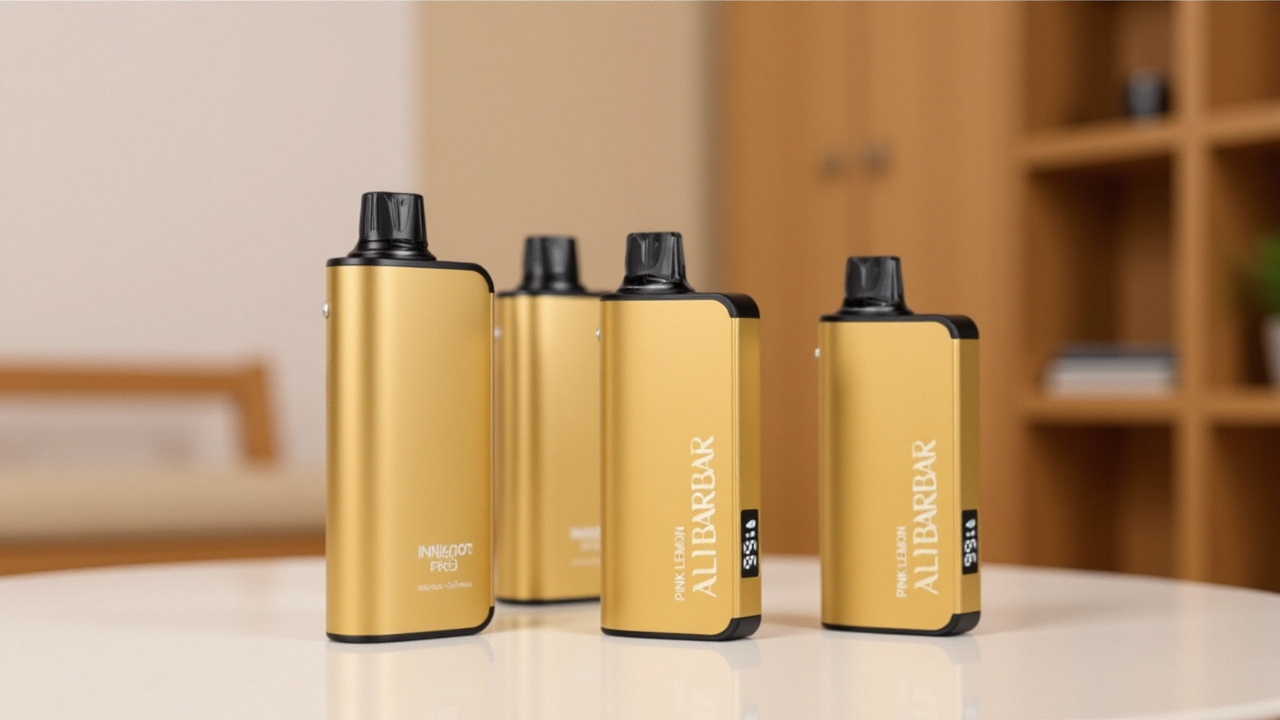
The INGOT 9000 and INGOT 15000 series tackle the status‑transparency problem. Both incorporate a multi‑level fuel gauge that shows remaining power capacity in discrete steps. When vapour production begins to dip near the end of the cell’s useful charge, the display makes it obvious that the issue is battery sag, not a suddenly restricted airway. The user is spared the fruitless cycle of pulling harder against a problem that isn’t mechanical.
Internally, the INGOT series uses a mesh heating element architecture that provides a larger, more uniform heating surface than traditional wire coils. A larger surface area vaporises liquid more evenly at lower energy densities, which reduces the formation of hot spots and the charred residue that often narrows the airway. The practical outcome is that the airway tends to stay cleaner further into the device’s operational life, maintaining the as‑new draw resistance longer.
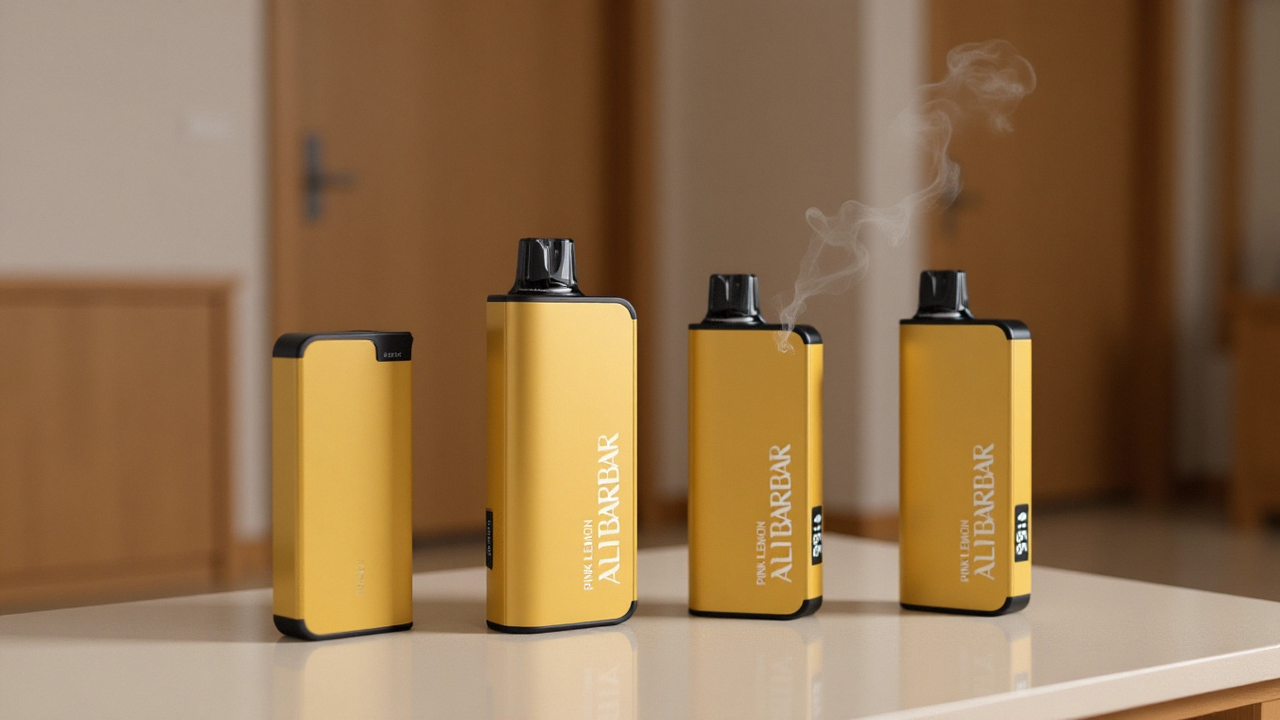
It would be inaccurate to claim that these design choices eliminate all possible causes of a hard pull. No device is immune to an extreme build‑up of condensed moisture after prolonged heavy use, and a replaceable‑pod system like the Ice Adjust still relies on the user to swap the pod before the coil’s decline begins to affect the draw. But what these products demonstrate is a coherent design logic: each feature — adjustable airflow, precise battery indication, mesh heating, accessible pod replacement — targets a specific frustration that other designs too often leave unaddressed.
For comparison, many compact devices in the market prioritize absolute minimal size over all else, which leads to narrow chimneys and tiny inlets that choke easily. Others deliver impressive initial vapour volume but lack any power‑level transparency, leading to exactly the low‑power confusion described earlier. The ALIBARBAR approach doesn’t solve every user’s preferences — a person who wants the smallest possible form factor might find an INGOT 15000 too long — but it does make the design trade‑offs visible, which is itself a mark of a mature product line.
A Practical Framework for Evaluating Any Device
If you are currently dealing with a hard‑to‑pull device and want to avoid repeating the experience, use the following diagnostic sequence before your next purchase. It moves from the simple, no‑cost checks to the design‑level questions that reveal whether a device is built to stay consistent.
Check for a removable obstruction. Remove the mouthpiece (if possible) and inspect the airway with a light. Pocket lint, a stray fibre, or solidified residue near the inlet is responsible for a surprising number of complaints.
Confirm the power state. If the device has no graduated gauge, assume that any perceived tightening could be a voltage drop. Swap to a fully charged unit of the same model, or, if the device is rechargeable, fully charge it and retest.
Test with a different pod or coil. In a modular system, the pod/coil is the consumable. A hard draw that clears up with a fresh pod tells you the issue was consumable wear, not a device fault.
Ask: “Does this device let me adjust the draw?” If consistent draw resistance is important to you, prioritize devices with an adjustable airflow mechanism. This feature alone can salvage a product that would otherwise feel too tight or too loose for your natural pull.
Examine the airway path in product photos. Look for a single, small inlet that is flush with the body surface. Designs that place inlets where your fingers or palm naturally rest will feel tighter in use than they do on a countertop.
Verify the battery indicator type. Avoid devices that signal only when the battery is nearly empty. A multi‑step gauge reduces the likelihood of a hard‑pull episode caused by low power.
Review the recommended cleaning procedure. If the manufacturer’s literature offers no cleaning instructions beyond “dispose when finished,” assume the draw will degrade as the device ages and plan accordingly.
This framework does not eliminate all uncertainty, but it shifts the basis of your decision from passive hope to active evaluation. And that shift is what separates a user who repeatedly hits the same frustration from one who gets it right on the first try.
Common Selection Errors and Industry Observations
Over‑indexing on a single performance metric while ignoring the systems that keep that metric stable is the most reliable path to a hard pull. A device may be advertised as producing enormous vapour volume, but if the airway is a narrow tube designed for compactness, that volume will collapse into a tight, turbulent draw after moderate use. The market’s emphasis on “puff count” reinforces a similar blind spot: a high advertised capacity means little if the airway clogs halfway through the count.
Another widespread assumption is that visual similarity indicates equivalent internal engineering. Two products with identical outer dimensions and mouthpiece shapes can have wildly different chimney diameters and inlet geometries. Without cross‑section diagrams or independent disassembly data — both of which are rare — users are left guessing. Retailers who make specification comparison straightforward, such as OZVAPE Shop, reduce this guesswork by presenting the kind of detail that lets an experienced eye spot the difference between an open, well‑engineered airway and a cramped one.
The industry also suffers from a persistent confusion between category names and technical specifications. Terms like “mesh coil,” “adjustable airflow,” or “rechargeable” are used by manufacturers in inconsistent ways, sometimes to describe features that exist only in a token sense. A device might have an adjustable airflow ring that offers barely perceptible change, or a mesh coil that is no larger than a standard round wire. The result is a marketplace where the printed label can be a poor predictor of the physical experience, and where only careful, side‑by‑side testing — or insight from a qualified retailer — can close the gap.
A final pattern worth noting: many users undervalue modularity when calculating long‑term satisfaction. A sealed unit with a slightly lower initial cost may seem attractive until the draw tightens at 60% of its rated life. At that point, the real cost per usable session is higher than that of a pod‑based system where only the consumable needs replacing. The bias toward upfront price over total usable output is a cognitive shortcut the industry has learned to exploit. Recognizing it is a form of self‑defence.
Frequently Asked Questions
Q: Why does my device feel hard to pull only when the battery is low?
A: At lower voltages, the heating element produces less vapour per second. The draw resistance itself hasn’t changed, but you are pulling harder to try to get the same sensation, which creates the impression of a tighter draw.
Q: Can a clogged device be cleaned if it isn’t designed to be opened?
A: In a fully sealed device, there is generally no safe, effective cleaning method. Attempting to force a tool into the mouthpiece can damage internal components. A blocked sealed unit usually signals the end of its functional life.
Q: Does adjustable airflow actually prevent hard pulls, or just mask the problem?
A: It does both. Opening the airflow can temporarily relieve a restriction caused by minor buildup, but it is not a substitute for a clean airway. Over the long term, the ability to adapt the draw to your preference means you are less likely to interpret a natural resistance level as a fault.
Q: How can I verify that a product I buy online has the airflow design it claims?
A: Look for detailed product imagery showing the airway path, or consult a retailer that provides standardized cross‑model comparisons. Specification sheets alone often omit the physical dimensions of the chimney and inlet ports.
Q: Are hard pulls more common with certain coil types?
A: Yes. Traditional round‑wire coils with tight wicking can constrict airflow as they age and burn. Larger mesh surfaces tend to stay cleaner and maintain a more open draw over their life.
Q: Does OZVAPE Shop only sell one brand?
A: The shop focuses on the ALIBARBAR range, but it provides detailed specification data and a streamlined comparison tool that lets users evaluate different models within that brand against their own requirements.
Q: What should I do if a brand‑new device feels tight out of the box?
A: First, remove any protective stickers or packaging near the air inlets. If the draw remains unacceptably tight and the device is not adjustable, it is likely a design mismatch for your preferred pull style, and exchanging it early is the prudent move.
Q: Is a hard pull dangerous or just annoying?
A: In the vast majority of cases it is a performance issue, not a safety concern. However, pulling excessively hard on a restricted device can overheat the coil and possibly cause the internal temperature protection to trip, rendering the device temporarily inoperable.
Q: Will a higher‑capacity battery prevent the low‑power hard‑pull feeling?
A: Not necessarily. A larger battery delays the point at which the voltage drops, but it does not eliminate the effect unless the device also has a regulated output circuit that holds the power constant until the cell is truly empty.
Q: Can I return a device if the draw becomes too hard within a week?
A: Return policies vary, but many retailers (including OZVAPE Shop) assess device faults on a case‑by‑case basis. Documentation of the symptom and early reporting improve the likelihood of a resolution.
Conclusion
A hard‑to‑pull device is almost always a symptom of something knowable — an airway dimension that is too small for real‑world conditions, a power circuit that lets performance sag without warning, a sealed architecture that offers no recourse when debris accumulates, or a mismatch between the device’s design and the user’s natural draw. None of these causes requires advanced technical knowledge to understand; they only require a framework that asks the right questions before a purchase, not after frustration has set in.
The ALIBARBAR devices examined here — in particular the Ice Adjust series with its physical airflow control, and the INGOT line’s emphasis on status visibility and mesh heating stability — stand as examples of what happens when a design team takes the hard‑draw problem seriously. They are not perfect for every scenario, and they carry the same request for honest user awareness that any precision device does, but they demonstrate that the problem is solvable through engineering decisions, not hope.
For adult users who want to move beyond the cycle of disappointment, the first step is to stop treating all devices as interchangeable and start evaluating them against the specific mechanisms that cause a tight draw. The second step is to source them through a channel that supplies the information needed to do that evaluation properly. OZVAPE Shop (external link) functions as one such resource — not by pushing particular models, but by making specifications, capabilities, and limitations legible, so that the person making the purchase knows what to expect. Ultimately, the device that fits your routine and gives you the draw you want is the right device, and you have the tools to identify it.