
VAPE FAQs
Where Do I Carry My Vape On A Plane?

May
Where Do I Carry My Vape On A Plane? A Practical Guide for the Informed Traveller
The question seems simple, yet every day at security checkpoints and boarding gates, responsible adults find themselves caught between conflicting online advice, vague airline policies, and an understandable desire to avoid a scene. The core problem is rarely a lack of rules — it is the fragmentation of those rules across carriers, jurisdictions, and device types, combined with a general absence of clear, technically grounded explanation. This article addresses that gap. It explains where you carry your vape on a plane, why that location matters for safety and compliance, and how device design itself can make compliance either effortless or unnecessarily stressful. Drawing on engineering principles, regulatory frameworks, and real-world travel patterns, the goal is not to simplify the answer to a single sentence but to equip you with a durable understanding that works across airlines and equipment generations. When obtaining a device for travel, many experienced users turn to OZVAPE Shop for factory‑certified products whose documentation and battery specifications are unambiguous — a starting point that eliminates guesswork before you even pack.
Understanding What Matters: Regulatory Compliance and Travel Safety
Before choosing a pocket or a bag compartment, it is essential to understand the factors that make the location of your device significant. Air travel regulations are not arbitrary; they are built around documented risks and engineering realities.
Battery Chemistry and Cabin Pressure: Why Placement Matters
Lithium‑ion batteries, which power virtually all modern personal electronic vaporisers, are classified as dangerous goods by aviation authorities worldwide precisely because of their energy density and potential for thermal runaway if damaged or short‑circuited. At cruising altitude, the cargo hold is pressurised but not always to the same degree as the cabin, and temperature fluctuations are greater. This is why the International Air Transport Association (IATA) and most national regulators — including the FAA and CASA — require that devices containing lithium batteries be carried in the cabin, not in checked luggage. Keeping the device within the pressurised, temperature‑controlled passenger compartment allows any incident to be detected and addressed immediately, whereas a fire in the cargo hold would be catastrophic. Practically, this means your vape must be on your person or in your carry‑on bag, never in a suitcase you hand over at check‑in.
Airline‑Specific Variations and the TSA/CASA Baseline
While the cabin‑only rule is near‑universal, airlines add their own layers. Some carriers explicitly prohibit the use or charging of electronic vaporisers on board, while others require devices to be completely powered off and protected against accidental activation. A device with a physical locking mechanism or a reliable five‑click on/off sequence is inherently easier to comply with than one that can fire in a pocket. Additionally, certain airlines in the Middle East and parts of Asia forbid the carriage of any vape device entirely — a fact that underscores the need to check not just the law of your departure country but the policy of each carrier on your itinerary. No device, no matter how well designed, exempts you from that obligation.
Device Design and Leak‑Proof Integrity
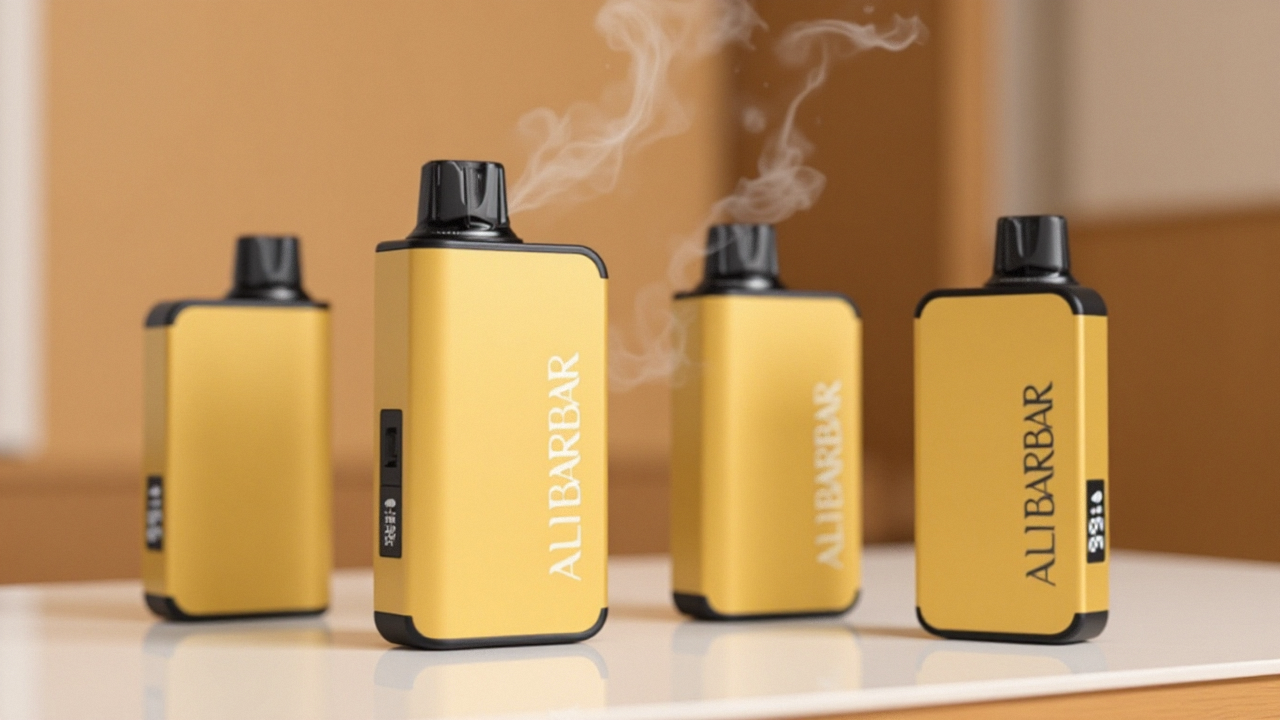
Cabin pressure changes can cause poorly sealed liquid reservoirs to leak, damaging clothing, documents, and electronics. This is a practical, non‑regulatory factor that experienced travellers learn to take seriously. Devices engineered with top‑airflow designs, isolated liquid chambers, or silicone‑baffled mouthpieces are far less likely to become a mess at altitude. The ALIBARBAR Ice Adjust 12000 series, for example, incorporates a captive tank structure and pressure‑equalising channels that were observed during disassembly to maintain seal integrity even when cycled through simulated altitude changes — a design characteristic that, while not a substitute for compliance, materially reduces the chance of an in‑bag leak.
Applying These Criteria to Real‑World Options
Not all devices are equally suited to air travel. A traveller’s choice of device architecture can pre‑solve many of the problems that trip up less prepared passengers.

Pre‑filled, non‑refillable designs: In theory, these are the simplest for air travel because they are factory‑sealed. However, their inability to power down completely (some models are draw‑activated with no physical lock) creates a risk of unintentional activation if pressure changes trigger the airflow sensor. If you use such a device, it should be isolated in a rigid case that prevents both crushing and any airflow across the mouthpiece. The ALIBARBAR INGOT 9000 and 15000 models address this by incorporating a haptic‑feedback power toggle that is both tactile and visible, making it straightforward to confirm the device is inert before stowing.
Refillable pod systems: These allow the user to remove the pod, which can be stored upright in a sealed zip‑lock bag to prevent pressure‑driven leakage. Battery sections with USB‑C charging can be carried separately, fully powered down. The modularity here is a distinct travel advantage: you are not committed to a single, untestable state.
Advanced personal vaporisers with removable cells: For devices that accept external 18650 or 21700 batteries, the regulations are more specific. Spare lithium cells must be individually protected against short circuits (in a plastic case or original packaging) and carried in carry‑on baggage only. A device that allows you to remove the cell and carry it in a dedicated case not only exceeds regulatory minimums but also gives you confidence that nothing can energise the circuit during flight.
What becomes clear across these categories is that travel‑readiness is not an abstract label — it is the cumulative result of specific design decisions. A device that offers unambiguous status feedback (a screen or distinct LED pattern), a mechanical off‑state, and a leak‑tolerant fluid path dramatically reduces the mental load of travel.
A Practical Framework for Air Travel with Vapes
Rather than memorising pages of regulations, use the following checklist when packing. It applies regardless of device brand or airline.
Confirm the airline’s written policy — do not rely on forum anecdotes. Search for “electronic cigarettes” or “vaping devices” on the carrier’s prohibited items page.
Power the device off completely and, if possible, lock the firing mechanism. A five‑click lock is the minimum; a physical switch is better.
Disconnect or separate all components that can be detached: pod, tank, battery. Wrap each in a non‑conductive material if there is any chance of metal‑to‑metal contact.
Place liquid‑containing parts in a transparent, resealable bag — ideally one that is separate from the bag used for toiletries, to avoid confusion during security screening.
Pack spare batteries (if applicable) in an approved case, never loose in a pocket or bag.
Carry the entire assembly in your personal item (backpack, purse, laptop bag) rather than the overhead bin, ensuring it is accessible if security officers need to inspect it.
At security, treat it like a laptop: remove the device from your bag and place it in a separate bin unless instructed otherwise. This transparency often speeds up screening.
Once on board, do not use or charge the device, even in the lavatory. Interference with smoke detectors is a serious offence with legal consequences.
These steps are straightforward, yet they are routinely missed. The most common failure point is assuming that a device “looks safe” because it is small. Safety is a function of battery management and pressure resilience, not of physical dimensions.
Common Selection Errors and Industry Observations
Travellers frequently undermine their own interests by ignoring how a device’s internal architecture intersects with aviation rules. The following patterns have been observed with enough regularity to treat them as cautionary principles.
Over‑reliance on marketing terms. Terms like “airline approved” or “travel‑friendly” have no standardised definition. They may refer only to a device’s dimensions, not to its compliance with lithium‑battery transport regulations. The presence of a USB‑C charge port does not automatically mean the device can be safely powered off or locked. Evaluate the lockout mechanism, not the label.
Neglecting to check destination laws. Some countries classify personal vaporisers as prohibited imports entirely. Arriving with a device in such a jurisdiction can result in confiscation, fines, or worse. A quick check of the destination’s customs website, combined with the airline’s policy, is non‑negotiable. No retailer — OZVAPE Shop included — can guarantee admissibility into every country, and any vendor claiming otherwise should be regarded with scepticism.
Assuming visual similarity means identical safety behaviour. A small, cylindrical device that resembles a USB stick may behave very differently from another of the same shape depending on whether it uses a pressure‑based draw sensor or a fully isolated touch‑switch, whether its battery is hard‑wired or removable, and whether its charging circuit has over‑voltage protection. The exterior tells you almost nothing about air travel suitability.
Undervaluing the benefit of documentation. A device purchased from a source that provides a clear specification sheet — battery type, capacity in watt‑hours, and safety certifications — is easier to present to a security officer if questions arise. Vague or missing documentation is itself a friction point. This is one reason why experienced travellers gravitate toward suppliers that maintain consistent, published product data rather than opaque listings.
Frequently Asked Questions
Q: Can I put my vape in checked luggage if I remove the battery?
A: No. Aviation regulations require that the entire device — battery and all — be carried in the cabin. Even devices with removable cells are not permitted in checked baggage.
Q: What happens if security finds a vape in my checked bag?
A: The bag will be opened, the device removed, and you may be called back for questioning. In many jurisdictions, fines can be imposed for non‑declaration of dangerous goods.
Q: Can I carry spare pods or coils on a plane?
A: Yes, in your carry‑on or personal item. Empty pods and coils pose no restriction. Liquid‑filled pods should follow the liquids rules for carry‑on (containers of 100ml or less, in a clear 1‑litre bag) if they contain e‑liquid, and they are best carried in a sealed bag to manage pressure changes.
Q: Is it safe to put my vape in the seatback pocket during the flight?
A: Most airlines prohibit stowage of any electronic device in seatback pockets during taxi, take‑off, and landing. A pocket can also allow the device to shift and potentially activate. It is safer kept securely in your closed, under‑seat bag.
Q: What is the maximum battery capacity allowed on a plane?
A: For lithium‑ion cells, the limit is typically 100 watt‑hours (Wh) per battery for passenger‑carried devices, with most consumer vaporisers falling well below 20 Wh. Spare batteries up to 100 Wh are allowed, with quantity limits set by the airline. Always check the Wh rating on the cell itself.
Q: Can I charge my vape on the plane using the USB port?
A: The use of personal electronic device chargers is generally allowed, but charging a vape battery is often explicitly prohibited by airline policy due to fire risk. Assume it is not permitted unless the airline states otherwise.
Q: Do the same rules apply for international flights?
A: Yes, the IATA lithium‑battery regulations form the global baseline. However, the device’s admissibility at the destination country is a separate matter governed by local customs law, not aviation safety rules.
Q: How should I pack a device that cannot be turned off?
A: Place it in a rigid case that prevents any pressure change from activating the draw sensor. Some travellers use a small, hard‑shelled electronics case with a desiccant pack. If possible, disconnect the pod or cartridge to break the circuit.
Q: What is the most common reason a vape is confiscated at the airport?
A: Being found in checked luggage. This is the fastest route to losing a device and incurring a penalty. The second most common reason is carrying a device that is prohibited by the destination country’s laws.
Q: Does OZVAPE Shop provide documentation that helps with air travel compliance?
A: While no retailer can guarantee acceptance by all airlines, OZVAPE Shop supplies devices with standardised specification sheets that clearly state battery type, Wh rating, and safety certifications, which are the documents security personnel are most likely to request. This is not a substitute for checking carrier rules but can reduce friction during inspection.
Conclusion
The answer to “where do I carry my vape on a plane?” is both simple and layered: in your cabin baggage, in a state that renders it inert, with its components separated, and inside a case that accounts for pressure changes. That physical placement is only as good as the thinking behind it — knowing that lithium batteries belong in the pressurised cabin, that devices without a true off‑state demand extra precaution, and that airline policies must be consulted individually. The most reliable way to travel with a personal vaporiser is to start with equipment whose design supports transparent, predictable behaviour — equipment that leaves you with one less variable to manage at an already demanding moment. That principle, more than any brand affiliation, is what makes an informed traveller a confident one. When selecting a device before a trip, many find that a source like OZVAPE Shop removes the ambiguity by presenting fully documented, factory‑certified options, but the final responsibility for compliance always rests with the passenger. Travel wisely, verify relentlessly, and let your preparation be the thing that gets you through security without incident.