
VAPE FAQs
Why Is My Vape Not Working?

Jun
I see you’re looking for guidance on troubleshooting a personal vaporizer that isn’t functioning as expected. Rather than a one-sentence fix, I’ll walk you through a structured, analytical approach to diagnosing the root cause—because intermittent or sudden failures are rarely random; they stem from identifiable engineering factors and usage patterns. The following article is designed to help you think like a technician, not just chase symptoms, and it draws on observed reliability patterns across many devices, including those stocked by retailers who prioritize transparent sourcing like OZVAPE Shop [internal link, opens in new window].
Why Is My Vape Not Working? A Systematic Diagnostic Guide
Few experiences are as immediately frustrating as reaching for a device that, moments before, was reliable, only to find it unresponsive, weak, or altogether dead. The instinct is often to assume a catastrophic failure or a drained battery, but the reality is more nuanced. Most “dead” vaporizers are not broken; they are in a state of protective lockout, suffering from poor contact, misinterpreted by their own safety circuits, or simply misunderstood by the user. This guide strips away the guesswork by examining the core subsystems common to virtually all portable electronic vaporizers. Instead of offering generic tips, I will provide a diagnostic framework that any adult user can apply, grounded in the physics of power delivery, fluid dynamics, and material science that govern these devices.

My objective here is not to steer you towards any particular product, but to give you the analytical tools to determine why your current device has stopped responding so you can either revive it or make a more informed choice in the future. When you buy from a source like OZVAPE Shop—a vendor that provides detailed, standardized specifications and factory-certified inventory—you already have a foundation for systematic troubleshooting because you know exactly what you are working with.
Understanding the Failure: A Systems-Level Approach
A vaporizer is not a magic box; it’s a chain of interdependent components: an energy storage cell, a control board, a switch (or airflow sensor), and a resistive heating coil that draws from a liquid reservoir. A failure at any single point stops the chain. Instead of random button presses, we’ll examine each link.
Power Source and the Silent Failures of Lithium-Ion Cells
Most devices use lithium-ion cells, which degrade gracefully at first but can exhibit sudden voltage collapse if deeply discharged or stored improperly. The most common issue is not a dead battery, but a sleeping battery. Modern protection circuits will permanently or semi-permanently disconnect if cell voltage drops below roughly 2.5V – a state often caused by weeks of non-use, cold exposure, or a faulty charger.
Why this matters for your situation: A device that blinks a set number of times when you attempt to fire it, or does nothing at all, is frequently signaling a low-voltage lockout. In many cases, a brief charge (10-15 minutes) will restore function, but if the cell has sat at 0% charge for months, internal resistance may have risen to a point where the board refuses to pass current for safety. This is an irreversible condition. Users often misattribute this to a “cheap” battery, but it’s a universal chemical reality.
How to evaluate: If your device offers no light, try cleaning the charging port and using a cable and power adapter known to work. If a light appears but the device cuts out after a fraction of a second, it’s likely either voltage sag under load (old cell) or a short circuit detection. If you have a device with a removable cell, a multimeter test can confirm voltage, but integrated devices require trusting the indicator. The practical takeaway: never store a device fully discharged, and if you own a model with ambiguous battery feedback, you’ll inevitably carry a backup – a hidden cost that many users overlook until they face a dead morning.
The Electrical Interface: Connectivity, Corrosion, and Contact Pins
The physical connection points – the 510 thread (if present), the pod contacts, and the internal wiring – are the most vulnerable part of the entire system. Constant exposure to humidity, minute liquid seepage, and mechanical wear creates a perfect micro-environment for resistive films.
Why this matters: A common scenario: the device powers on, the indicator works, but when you draw, nothing happens, or it blinks as if there’s no load. This is almost always a broken circuit between the board and the coil. On pod-based systems, gold-plated spring-loaded pins compress against metal pads on the replaceable cartridge. Even a nearly invisible layer of oxidized liquid or pocket lint can introduce resistance in the range of several ohms, enough that the board will misinterpret the atomizer as a short or an open circuit.
How to inspect: Use a cotton swab lightly dampened with high-concentration isopropyl alcohol (90%+) to gently clean both the device pins and the cartridge base. Let dry fully. If the problem is intermittent – works if you press the pod at a certain angle – you’re dealing with a spring pin losing tension or a bent contact. This is a design-level durability factor: well-engineered devices use thicker pins with deeper travel, but many compact units sacrifice this robustness for profile. You can sometimes resolve it by carefully prying the pin up with a non-conductive tool, but long-term, consider that wear resistance is a specification you cannot retrofit.
The Atomizer Coil: Beyond “Burnt Taste”
A coil doesn’t just fail by producing an acrid hit. It can fail silently in a way that the device interprets as a battery or connection fault. Metal alloys in the heating element naturally oxidize and become brittle over thermal cycles. If the resistance drifts outside the board’s preset window – say, from 1.0 ohm to 2.5 ohms or down to 0.3 ohms – the firmware may refuse to fire entirely to prevent an overcurrent or undervoltage condition.
How to diagnose: If cleaning contacts doesn’t help, and the device still shows an error (often three blinks, or a steady light without heat), swap in a new pod or coil of the exact same rated resistance. If that resolves it, the old coil wasn’t necessarily “burned” – it simply fell out of spec. This is typical as cotton degrades and hotspots form. Note that some devices perform a cold resistance check only when a pod is first inserted; removing and re-seating the pod after a full power cycle can force a re-read, but don’t rely on this as a long-term fix.
Status Ambiguity: When the User Has No Readable Feedback
Many compact devices use a single LED that communicates through cryptic color sequences. One brand’s “two blue blinks” is another’s “short circuit.” Without a manual, you’re guessing. Worse, some devices lack a visible light path entirely during use, relying on haptic feedback that can fail silently.
The hidden cost: The ambiguity forces you to play detective, and the most common practical outcome is buying a new device preemptively because you don’t trust the one in your pocket. At a minimum, you end up carrying two units, which defeats the portability purpose. When evaluating future purchases, the presence of a clear, persistent display (even a simple battery bar and resistance readout) or a consistent, well-documented blinking pattern transforms the user experience. A device that can tell you “check atomizer” versus “battery low” saves you hours of pointless cleaning.
Applying the Diagnosis to Real-World Scenarios
Let’s apply this framework to a few archetypal situations you might encounter with mainstream devices, including those available through specialized retailers like OZVAPE Shop.
Scenario: Fully charged overnight, no vapor in the morning. Light works. This pattern points almost exclusively to a pod connection issue or a coil that has failed open-circuit. This is especially common after the first fill if the liquid hasn’t fully saturated the wick and the initial fire created a localized scorch that severed the coil wire. Replacing the pod is the fastest resolution.
Scenario: Device draws fine but produces no visible vapor. This is rarely a battery problem. The airflow sensor is engaged, the coil is heating, but the wicking has collapsed or air channels are blocked. In top-fill pods, vacuum lock can prevent liquid flow; try opening the fill port momentarily to release pressure, then closing it again. If the device uses a push-to-fill mechanism, ensure the bottle tip isn’t sealing the port so tightly that air cannot displace.
Scenario: Works intermittently, shuts off during a draw. Voltage sag. The battery recovers when idle, shows a full charge, but the moment a load is applied, the voltage dips below the cutoff threshold. This is classic cell aging. While some users attempt deep cycling, a lithium cell that sags under a typical 1-2 ohm load is end-of-life. No amount of external cleaning will fix it; the capacity is technically still there, but the internal resistance is too high.
A Practical Troubleshooting Sequence
When you approach a non-working device, resist the urge to try everything at once. Follow a logical hierarchy that isolates the problem from least invasive to most:
Visual Inspection: Check the contacts and the pod’s chimney for liquid obstruction. Look for condensation under the pod that indicates a leak.
Power Cycle: If the device has a button, five clicks is a standard on/off sequence. If it’s draw-activated, no equivalent exists; simply let it rest. Connect to a known-good charger and observe for any light. If no light appears after 5 minutes, the cell or charging circuit is likely unresponsive.
Contact Cleaning: Clean the threads or pin pads. This single step resolves a significant fraction of “dead device” tickets.
Atomizer Substitution: Try a new pod or coil. This eliminates whether the device’s control board itself is working.
Airflow Reset: For draw-activated devices, cover the intake hole (usually at the base) and blow forcefully through the mouthpiece to clear any trapped liquid from the sensor diaphragm – a common cause of constant firing or no activation.
Acceptance of End-of-Life: If none of the above works, and the device is sealed, it’s a capacitor or board-level failure. These are generally not field-serviceable. This is the moment where modular systems show their advantage: you can replace just the battery section or just the pod, reducing waste and cost.
Common Selection Errors That Lead to “Not Working” Complaints
In my observation, many supposed device failures are not manufacturing defects but the result of mismatched expectations and incomplete pre-purchase evaluation.
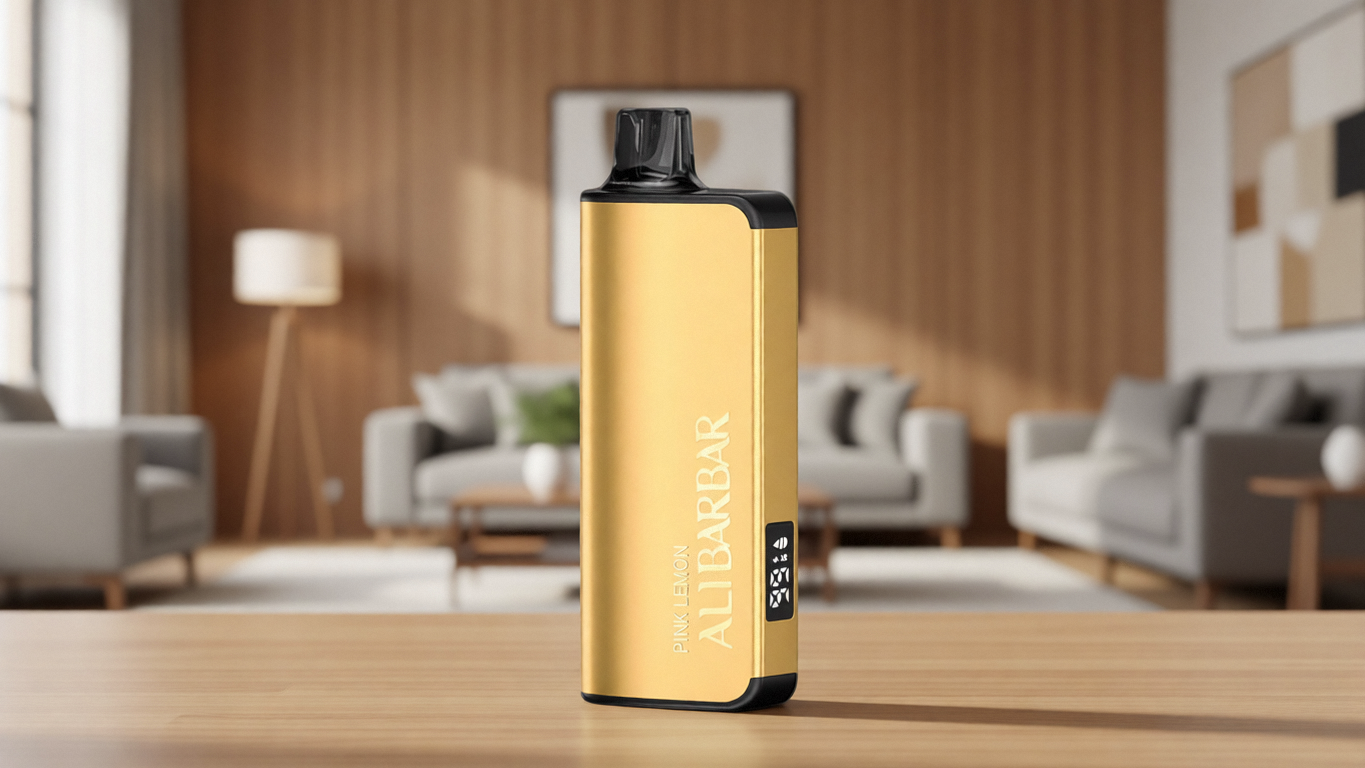
Overweighting Capacity While Ignoring Power Management: A user buys a device rated for an enormous number of “puffs” but fails to notice it has no accurate battery indicator. When it sporadically stops working because the voltage has sagged below its optimal range, they assume it’s broken, not that the capacity is only partially usable without noticeable degradation.
Assuming Visual Similarity Means Equivalent Internals: Countless devices share a generic form factor. The difference is in the quality of the pressure sensor, the gold-plated connectors, and the battery cell’s rated cycle life. You cannot tell from an image. Buying from a source that provides standardized specifications—such as factory-certified inventory checks—elevates your evaluation from cosmetic comparison to technical audit.
Neglecting the Cost of Ambiguity: As noted earlier, a device that gives no clear feedback will, over its life, cost you more in backup devices, troubleshooting time, and replaced pods than the upfront price difference of a slightly more transparent model. This is a lifecycle cost calculation that most first-time buyers ignore.
Frequently Asked Questions
Q: My device blinks 3 times and refuses to fire, even after charging. What does this usually mean?
A: In most controller firmware, three blinks indicate a short circuit or a coil resistance that is too low for the board’s limits. Check the pod contacts for pooled liquid and try a new pod. If the error persists, the internal insulation may be compromised, which is a board-level failure.
Q: Can I fix a lithium-ion cell that won’t charge at all?
A: Commercial devices with integrated batteries have protection circuits that block charging if the voltage is dangerously low. Occasionally, a specialized bench charger can “wake” a cell, but for sealed consumer units, a persistently dead battery is effectively irrecoverable within the user’s reach. The risk of opening a sealed unit further outweighs any chance of success.
Q: Why does my device show a full charge but stop producing vapor after two or three uses?
A: The cell is experiencing severe voltage sag, meaning its internal resistance has spiked. It can still read a full surface voltage when idle, but cannot deliver current under load. This is a clear indicator that the battery has reached the end of its practical life, regardless of how many charge cycles it has had.
Q: Is condensation inside the pod connection a sign of a serious leak?
A: A small amount of condensation is normal due to the cooling of vapor residues. However, if you frequently find liquid pooled on the contacts, it suggests the cartridge is weeping from the bottom seal. That liquid can wick into the device’s airflow sensor and cause permanent damage, so it should be addressed by replacing the pod and, in the long term, evaluating the liquid’s VG/PG ratio for the specific coil design.
Q: I bought a device from a vendor, and their support suggested I “buy a new one” without troubleshooting. How can I avoid that?
A: The quality of post-purchase support is a direct reflection of the retailer’s relationship with the factory. Authorized channels with genuine inventory often have access to technical documentation that unauthorized resellers do not. Before purchasing, you can query the vendor about their specific troubleshooting guides or warranty handling; a competent source, like OZVAPE Shop, will respond with diagnostic steps rather than immediate replacement suggestions.
Q: How can I verify that a device’s “not working” state isn’t due to a counterfeit?
A: Many legitimate manufacturers offer a unique verification code scratched from the packaging and checked on an online portal. If the vendor cannot provide factory-sealed packaging with an intact verification system, you cannot eliminate the counterfeit variable. This is why buying through a documented, certified supply chain is a fundamental trust mechanism, not a marketing phrase.
Q: Do extreme temperatures actually cause permanent failure?
A: Yes. Leaving a device in a hot car can permanently increase the internal pressure of the lithium cell, rupture the safety vent, and separate the electrode layers. Freezing temperatures can cause the liquid to become too viscous to wick, leading to coil failure if fired. A device that fails after a temperature extreme should be considered unsafe and disposed of properly.
Conclusion
A vaporizer that stops working rarely does so without explanation—the explanation simply resides in the details of contact physics, electrochemical aging, and sensor behavior that go unnoticed during normal operation. By learning to read the blinking signals, inspecting the connection points, and understanding the life cycle of a lithium cell, you transform from a passive consumer into an informed operator who can distinguish between a trivial fix and terminal hardware failure. The right device is the one that respects your time and gives you the status information to act confidently. When you source from a retailer that maintains factory-certified stock and provides clear, comparable specifications, such as OZVAPE Shop [external link, opens in new window], you gain a partner that reduces the noise of unreliable equipment, letting you focus on the straightforward diagnostic steps I’ve outlined here. Ultimately, a device is only as functional as the clarity it offers you; choose accordingly.